
-
×
 TradeCraft: Your Path to Peak Performance Trading By Adam Grimes
1 × $15.00
TradeCraft: Your Path to Peak Performance Trading By Adam Grimes
1 × $15.00 -
×
 Advanced Spread Trading with Guy Bower - MasterClass Trader
1 × $15.00
Advanced Spread Trading with Guy Bower - MasterClass Trader
1 × $15.00 -
×
 WondaFX Signature Strategy with WondaFX
1 × $5.00
WondaFX Signature Strategy with WondaFX
1 × $5.00 -
×
 Advanced Trading Course with Edney Pinheiro
1 × $5.00
Advanced Trading Course with Edney Pinheiro
1 × $5.00 -
×
 Mastering Candlestick Charts II with Greg Capra
1 × $6.00
Mastering Candlestick Charts II with Greg Capra
1 × $6.00 -
×
 Matrix Spread Options Trading Course with Base Camp Trading
1 × $31.00
Matrix Spread Options Trading Course with Base Camp Trading
1 × $31.00 -
×
 Bond Market Course with The Macro Compass
1 × $15.00
Bond Market Course with The Macro Compass
1 × $15.00 -
×
 Greatest Trading Tools with Michael Parsons
1 × $6.00
Greatest Trading Tools with Michael Parsons
1 × $6.00 -
×
 $20 – 52k 20 pips a day challange with Rafał Zuchowicz - TopMasterTrader
1 × $5.00
$20 – 52k 20 pips a day challange with Rafał Zuchowicz - TopMasterTrader
1 × $5.00 -
×
 Ultimate Trading Course with Dodgy's Dungeon
1 × $8.00
Ultimate Trading Course with Dodgy's Dungeon
1 × $8.00 -
×
 Profiletraders - MARKET PROFILE TACTICAL STRATEGIES FOR DAY TRADING
1 × $23.00
Profiletraders - MARKET PROFILE TACTICAL STRATEGIES FOR DAY TRADING
1 × $23.00 -
×
 Butterfly and Condor Workshop with Aeromir
1 × $15.00
Butterfly and Condor Workshop with Aeromir
1 × $15.00 -
×
 Profiting In Bull Or Bear Markets with George Dagnino
1 × $6.00
Profiting In Bull Or Bear Markets with George Dagnino
1 × $6.00 -
×
 Planetary Harmonics of Speculative Markets with Larry Pesavento
1 × $6.00
Planetary Harmonics of Speculative Markets with Larry Pesavento
1 × $6.00 -
×
 Golden Pips Generator - DMA HACK with Hooman
1 × $62.00
Golden Pips Generator - DMA HACK with Hooman
1 × $62.00 -
×
 TRADING NFX Course with Andrew NFX
1 × $5.00
TRADING NFX Course with Andrew NFX
1 × $5.00 -
×
 SQX Mentorship with Tip Toe Hippo
1 × $23.00
SQX Mentorship with Tip Toe Hippo
1 × $23.00 -
×
 Compass Trading System with Right Line Trading
1 × $39.00
Compass Trading System with Right Line Trading
1 × $39.00 -
×
 The Naked Eye: Raw Data Analytics with Edgar Torres - Raw Data Analytics
1 × $8.00
The Naked Eye: Raw Data Analytics with Edgar Torres - Raw Data Analytics
1 × $8.00 -
×
 Essentials in Quantitative Trading QT01 By HangukQuant's
1 × $23.00
Essentials in Quantitative Trading QT01 By HangukQuant's
1 × $23.00 -
×
 The Orderflows Trade Opportunities Encyclopedia with Michael Valtos
1 × $8.00
The Orderflows Trade Opportunities Encyclopedia with Michael Valtos
1 × $8.00 -
×
 Order flow self-study training program with iMFtracker
1 × $10.00
Order flow self-study training program with iMFtracker
1 × $10.00 -
×
 Scalp Strategy and Flipping Small Accounts with Opes Trading Group
1 × $5.00
Scalp Strategy and Flipping Small Accounts with Opes Trading Group
1 × $5.00 -
×
 0 DTE Options Trading Workshop with Aeromir Corporation
1 × $15.00
0 DTE Options Trading Workshop with Aeromir Corporation
1 × $15.00 -
×
 The Complete Guide to Multiple Time Frame Analysis & Reading Price Action with Aiman Almansoori
1 × $13.00
The Complete Guide to Multiple Time Frame Analysis & Reading Price Action with Aiman Almansoori
1 × $13.00 -
×
 The 4 Horsemen CD with David Elliott
1 × $6.00
The 4 Horsemen CD with David Elliott
1 × $6.00 -
×
 Options Trading & Ultimate MasterClass With Tyrone Abela - FX Evolution
1 × $54.00
Options Trading & Ultimate MasterClass With Tyrone Abela - FX Evolution
1 × $54.00 -
×
 Investment Illusions with Martin S.Fridson
1 × $6.00
Investment Illusions with Martin S.Fridson
1 × $6.00 -
×
 The Japanese Money Tree with Andrew H.Shipley
1 × $6.00
The Japanese Money Tree with Andrew H.Shipley
1 × $6.00 -
×
 Trading Short TermSame Day Trades Sep 2023 with Dan Sheridan & Mark Fenton - Sheridan Options Mentoring
1 × $31.00
Trading Short TermSame Day Trades Sep 2023 with Dan Sheridan & Mark Fenton - Sheridan Options Mentoring
1 × $31.00 -
×
 HunterFX Video Course with HunterFX
1 × $6.00
HunterFX Video Course with HunterFX
1 × $6.00 -
×
 Best of the Best: Collars with Amy Meissner & Scott Ruble
1 × $15.00
Best of the Best: Collars with Amy Meissner & Scott Ruble
1 × $15.00 -
×
 CarterFX Membership with Duran Carter
1 × $23.00
CarterFX Membership with Duran Carter
1 × $23.00 -
×
 Geometry of Markets I with Bruce Gilmore
1 × $6.00
Geometry of Markets I with Bruce Gilmore
1 × $6.00 -
×
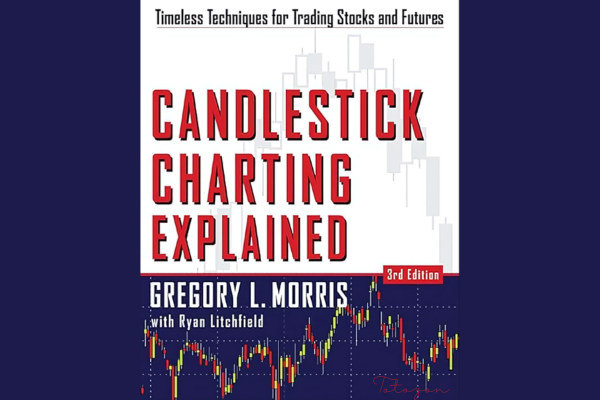 Candlestick Charting Explained with Greg Morris
1 × $8.00
Candlestick Charting Explained with Greg Morris
1 × $8.00 -
×
 Equity Trader 101 Course with KeyStone Trading
1 × $6.00
Equity Trader 101 Course with KeyStone Trading
1 × $6.00 -
×
 The A14 Weekly Option Strategy Workshop with Amy Meissner
1 × $23.00
The A14 Weekly Option Strategy Workshop with Amy Meissner
1 × $23.00 -
×
 The Orderflow Masterclass with PrimeTrading
1 × $17.00
The Orderflow Masterclass with PrimeTrading
1 × $17.00 -
×
 Algo Trading Masterclass with Ali Casey - StatOasis
1 × $23.00
Algo Trading Masterclass with Ali Casey - StatOasis
1 × $23.00 -
×
 Home Run Options Trading Course with Dave Aquino - Base Camp Trading
1 × $11.00
Home Run Options Trading Course with Dave Aquino - Base Camp Trading
1 × $11.00 -
×
 Gap Trading for Stock and Options Traders with Damon Verial
1 × $6.00
Gap Trading for Stock and Options Traders with Damon Verial
1 × $6.00 -
×
 Price Action Trader Training
1 × $6.00
Price Action Trader Training
1 × $6.00 -
×
 How To Read The Market Professionally with TradeSmart
1 × $27.00
How To Read The Market Professionally with TradeSmart
1 × $27.00 -
×
 Stock Trading Success - You Make The Call - How To Set Entries And Exits with Steve Nison and K.Cal
1 × $6.00
Stock Trading Success - You Make The Call - How To Set Entries And Exits with Steve Nison and K.Cal
1 × $6.00 -
×
 Elite Gap Trading with Nick Santiago - InTheMoneyStocks
1 × $93.00
Elite Gap Trading with Nick Santiago - InTheMoneyStocks
1 × $93.00 -
×
 Crypto Trading Academy with Cheeky Investor - Aussie Day Trader
1 × $13.00
Crypto Trading Academy with Cheeky Investor - Aussie Day Trader
1 × $13.00 -
×
 Traders Winning Edge with Adrienne Laris Toghraie
1 × $6.00
Traders Winning Edge with Adrienne Laris Toghraie
1 × $6.00
Value, Price & Profit with Karl Marx
$6.00
File Size: Coming soon!
Delivery Time: 1–12 hours
Media Type: Online Course
Content Proof: Watch Here!
You may check content proof of “Value, Price & Profit with Karl Marx” below:

Value, Price & Profit with Karl Marx
Introduction
Karl Marx, one of the most influential philosophers and economists, delved deeply into the intricacies of value, price, and profit. His works provide a critical analysis of the capitalist system, offering insights that remain relevant today. This article explores Marx’s concepts of value, price, and profit, making them accessible and engaging for readers keen on understanding economic theories.
Understanding Marx’s Economic Theories
Who Was Karl Marx?
Karl Marx was a German philosopher, economist, and revolutionary socialist. His works laid the foundation for modern socialism and communism.
Marx’s Major Works
- Das Kapital
- The Communist Manifesto
- Value, Price, and Profit
The Concept of Value
What is Value?
Value, according to Marx, is derived from the labor invested in producing a commodity. It’s not just about the material costs but the human effort involved.
Use-Value vs. Exchange-Value
- Use-Value: The practical utility of a commodity.
- Exchange-Value: The market value of a commodity, determined by the amount of labor required to produce it.
Price: The Market Representation of Value
Defining Price
Price is the monetary expression of a commodity’s value. It’s influenced by supply and demand dynamics in the market.
Factors Influencing Price
- Production Costs: Raw materials, labor, and overheads.
- Market Demand: Consumer willingness to buy.
- Competition: Number of sellers in the market.
Market Price vs. Natural Price
- Market Price: Fluctuates based on immediate market conditions.
- Natural Price: Reflects the long-term average cost of production.
Profit: The Surplus Value
Understanding Profit
Profit, in Marxian terms, is the surplus value created by workers but appropriated by capitalists. It’s the difference between the value produced by labor and the wages paid to workers.
Surplus Value
Surplus value is generated when workers produce more value than they receive in wages. This excess is the source of profit for capitalists.
The Labor Theory of Value
Labor as the Source of Value
Marx’s labor theory of value posits that all value is created by labor. The more labor invested in a commodity, the higher its value.
Exploitation of Labor
Marx argued that capitalism exploits workers by paying them less than the value they produce. This exploitation is the root of profit.
Implications for Capitalism
Class Struggle
The capitalist system, according to Marx, is characterized by a fundamental conflict between the working class (proletariat) and the owning class (bourgeoisie).
Capital Accumulation
Capitalists reinvest profits to accumulate more capital, perpetuating the cycle of exploitation and inequality.
Economic Crises
Marx believed that capitalism is inherently unstable, leading to periodic economic crises due to overproduction and underconsumption.
Relevance Today
Modern Economic Systems
Marx’s theories continue to influence contemporary economic thought, especially in critiques of capitalism and discussions on inequality.
Labor Movements
Workers’ rights movements and unions often draw on Marxian concepts to advocate for fair wages and working conditions.
Critiques of Marx’s Theories
Criticisms of the Labor Theory of Value
Some economists argue that value is subjective and influenced by consumer preferences rather than solely by labor.
Alternative Theories
Neoclassical economics offers different perspectives on value, price, and profit, focusing on supply and demand rather than labor.
Applying Marx’s Theories
Analyzing Modern Markets
Marx’s insights can be used to analyze contemporary markets, particularly in understanding labor exploitation and wealth distribution.
Policy Implications
Policymakers can draw on Marxian theory to develop regulations that address inequality and protect workers’ rights.
Conclusion
Karl Marx’s exploration of value, price, and profit provides a critical lens through which we can understand the capitalist system. By examining the labor that underpins value and the dynamics of market prices and profit, we gain a deeper insight into the economic forces shaping our world.
FAQs
1. What is the main idea of Marx’s theory of value?
Marx’s theory of value centers on the concept that all value is derived from labor. The amount of labor invested in a commodity determines its value.
2. How does Marx define profit?
Marx defines profit as the surplus value created by workers but appropriated by capitalists. It’s the difference between the value produced by labor and the wages paid to workers.
3. What is the difference between use-value and exchange-value?
Use-value refers to the practical utility of a commodity, while exchange-value is its market value, determined by the amount of labor required to produce it.
4. Why is Marx’s theory of value important?
Marx’s theory of value is important because it provides a framework for understanding the dynamics of labor, exploitation, and profit in a capitalist economy.
5. How do Marx’s theories apply to modern economics?
Marx’s theories continue to influence contemporary economic thought, particularly in critiques of capitalism and discussions on inequality and labor rights.
Be the first to review “Value, Price & Profit with Karl Marx”
You must be logged in to post a review.
Related products

Original price was: $450.00.$23.00Current price is: $23.00.
Original price was: $4,995.00.$15.00Current price is: $15.00.
Forex Trading
Original price was: $2,997.00.$23.00Current price is: $23.00.
Original price was: $895.00.$15.00Current price is: $15.00.
Original price was: $999.00.$5.00Current price is: $5.00.

Original price was: $700.00.$39.00Current price is: $39.00.
Forex Trading
Original price was: $500.00.$5.00Current price is: $5.00.
Original price was: $997.00.$13.00Current price is: $13.00.

Forex Trading
Original price was: $2,995.00.$31.00Current price is: $31.00.
Original price was: $497.00.$31.00Current price is: $31.00.

Original price was: $1,849.00.$15.00Current price is: $15.00.
Original price was: $1,800.00.$54.00Current price is: $54.00.
Original price was: $197.00.$5.00Current price is: $5.00.
Forex Trading
Original price was: $799.00.$15.00Current price is: $15.00.
Original price was: $799.00.$15.00Current price is: $15.00.
Forex Trading
Original price was: $239.00.$8.00Current price is: $8.00.
Forex Trading
Original price was: $850.00.$23.00Current price is: $23.00.

Original price was: $649.00.$20.00Current price is: $20.00.
Forex Trading
Original price was: $1,898.00.$10.00Current price is: $10.00.
Original price was: $310.00.$23.00Current price is: $23.00.
Reviews
There are no reviews yet.