
-
×
 Forex Trading with Ed Ponsi
1 × $6.00
Forex Trading with Ed Ponsi
1 × $6.00 -
×
 Qualitative - Financial Statement Analysis with Sandesh Banger
1 × $5.00
Qualitative - Financial Statement Analysis with Sandesh Banger
1 × $5.00 -
×
 Optionetics Trading Strategies
1 × $5.00
Optionetics Trading Strategies
1 × $5.00 -
×
 Trading For A Living Course with Yvan Byeajee - Trading Composure
1 × $6.00
Trading For A Living Course with Yvan Byeajee - Trading Composure
1 × $6.00 -
×
 Three Tricks, Two Traps, One Truth Real Help for Traders and Investors with D.R.Barton
1 × $6.00
Three Tricks, Two Traps, One Truth Real Help for Traders and Investors with D.R.Barton
1 × $6.00 -
×
 Risk Stop Loss and Position Size with Daryl Guppy
1 × $6.00
Risk Stop Loss and Position Size with Daryl Guppy
1 × $6.00 -
×
 HEDGED STRATEGY SERIES IN VOLATILE MARKETS – HEDGED CREDIT SPREADS - Dan Sheridan
1 × $6.00
HEDGED STRATEGY SERIES IN VOLATILE MARKETS – HEDGED CREDIT SPREADS - Dan Sheridan
1 × $6.00 -
×
 Getting Started in Stocks with Alvin D.Hall
1 × $6.00
Getting Started in Stocks with Alvin D.Hall
1 × $6.00 -
×
 On Board Fanta Sea One Seminar with Felix Homogratus
1 × $6.00
On Board Fanta Sea One Seminar with Felix Homogratus
1 × $6.00 -
×
 Simulating Continuous Fuzzy Systems with James Buckley & Leonard Jowers
1 × $6.00
Simulating Continuous Fuzzy Systems with James Buckley & Leonard Jowers
1 × $6.00 -
×
 Psychology of the Stock Market (1912) with G.C.Selden
1 × $6.00
Psychology of the Stock Market (1912) with G.C.Selden
1 × $6.00 -
×
 Intra-day Trading Strategies. Proven Steps to Trading Profits
1 × $6.00
Intra-day Trading Strategies. Proven Steps to Trading Profits
1 × $6.00 -
×
 Fundamental Analysis with CA Rachana Ranade
1 × $5.00
Fundamental Analysis with CA Rachana Ranade
1 × $5.00 -
×
 Learn To Trade with Tori Trades
1 × $8.00
Learn To Trade with Tori Trades
1 × $8.00 -
×
 Crypto and Blockchain with MasterClass
1 × $6.00
Crypto and Blockchain with MasterClass
1 × $6.00 -
×
 How Do You Read Charts? A Guide to Classic Price Pattern Recognition Class with Professor Jeff Bierman
1 × $6.00
How Do You Read Charts? A Guide to Classic Price Pattern Recognition Class with Professor Jeff Bierman
1 × $6.00 -
×
 Mastering the Complex Sale: How to Compete and Win When the Stakes are High! with Jeff Thull
1 × $6.00
Mastering the Complex Sale: How to Compete and Win When the Stakes are High! with Jeff Thull
1 × $6.00 -
×
 Learn how to trade Volatility 75 Index Technical Analysis with Patrick Muke
1 × $6.00
Learn how to trade Volatility 75 Index Technical Analysis with Patrick Muke
1 × $6.00 -
×
 Simple Sector Trading Strategies with John Murphy
1 × $6.00
Simple Sector Trading Strategies with John Murphy
1 × $6.00 -
×
 Options University - Ron Ianieri – Options University Live Seminars
1 × $6.00
Options University - Ron Ianieri – Options University Live Seminars
1 × $6.00 -
×
 Practical Speculation with Victor Niederhoffer, Laurel Kenner
1 × $6.00
Practical Speculation with Victor Niederhoffer, Laurel Kenner
1 × $6.00 -
×
 Options for Begginers with Lucas Downey
1 × $6.00
Options for Begginers with Lucas Downey
1 × $6.00 -
×
 Four Dimensional Stock Market Structures & Cycles with Bradley Cowan
1 × $6.00
Four Dimensional Stock Market Structures & Cycles with Bradley Cowan
1 × $6.00 -
×
 Option Strategies with Courtney Smith
1 × $6.00
Option Strategies with Courtney Smith
1 × $6.00 -
×
 Options Bootcamp with Sid Woolfolk
1 × $6.00
Options Bootcamp with Sid Woolfolk
1 × $6.00 -
×
 Unlocking the Mysteries of Trend Analysis - Rick Bensignor
1 × $6.00
Unlocking the Mysteries of Trend Analysis - Rick Bensignor
1 × $6.00 -
×
 Complete Trading System with Segma Singh
1 × $6.00
Complete Trading System with Segma Singh
1 × $6.00 -
×
 Signals
1 × $6.00
Signals
1 × $6.00 -
×
 Study Guide for Technical Analysis Explained (1st Edition) with Martin Pring
1 × $6.00
Study Guide for Technical Analysis Explained (1st Edition) with Martin Pring
1 × $6.00 -
×
 SATYA 2 - Online Immersion - January 2023 By Tias Little
1 × $225.00
SATYA 2 - Online Immersion - January 2023 By Tias Little
1 × $225.00 -
×
 Sixpart Study Guide to Market Profile
1 × $6.00
Sixpart Study Guide to Market Profile
1 × $6.00 -
×
 Sequence Trading Course with Kevin Haggerty
1 × $4.00
Sequence Trading Course with Kevin Haggerty
1 × $4.00 -
×
 The Any Hour Trading System with Markets Mastered
1 × $6.00
The Any Hour Trading System with Markets Mastered
1 × $6.00 -
×
 The Indices Orderflow Masterclass with The Forex Scalpers
1 × $23.00
The Indices Orderflow Masterclass with The Forex Scalpers
1 × $23.00 -
×
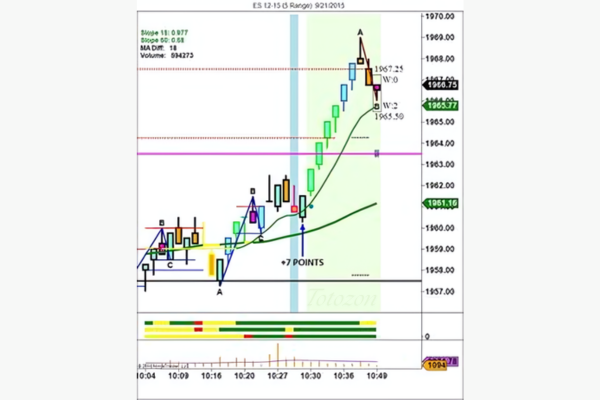 Right Line Trading IndicatorSuite (May 2015)
1 × $31.00
Right Line Trading IndicatorSuite (May 2015)
1 × $31.00 -
×
 Neall Concord-Cushing - Secret of Forecasting Using Wave59 Tools (Book I & II)
1 × $6.00
Neall Concord-Cushing - Secret of Forecasting Using Wave59 Tools (Book I & II)
1 × $6.00 -
×
 Metals Webinar
1 × $6.00
Metals Webinar
1 × $6.00 -
×
 MAP. Moving Average Patterns CD with David Elliott
1 × $6.00
MAP. Moving Average Patterns CD with David Elliott
1 × $6.00 -
×
 Small and Mighty Association with Ryan Lee
1 × $6.00
Small and Mighty Association with Ryan Lee
1 × $6.00 -
×
 Inside the Minds Leading Wall Street Investors with Aspatore Books
1 × $6.00
Inside the Minds Leading Wall Street Investors with Aspatore Books
1 × $6.00 -
×
 Futures Trading (German)
1 × $6.00
Futures Trading (German)
1 × $6.00 -
×
 All About Bonds, Bond Mutual Funds & Bond ETFs (3rd Ed.) with Esme Faerber
1 × $6.00
All About Bonds, Bond Mutual Funds & Bond ETFs (3rd Ed.) with Esme Faerber
1 × $6.00 -
×
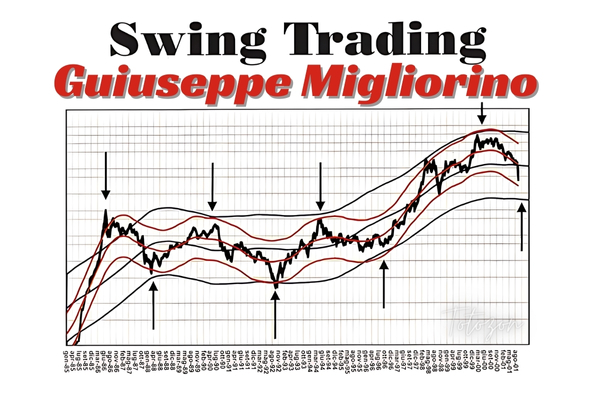 Swing Trading (Italian) with Guiuseppe Migliorino
1 × $6.00
Swing Trading (Italian) with Guiuseppe Migliorino
1 × $6.00 -
×
 Hubert Senters’ Squeeze Play Strategy & Tradestation Code with Hubert Senters
1 × $6.00
Hubert Senters’ Squeeze Play Strategy & Tradestation Code with Hubert Senters
1 × $6.00 -
×
 The Banks Code with Smart Money Trader
1 × $34.00
The Banks Code with Smart Money Trader
1 × $34.00 -
×
 Formula to a Fortune with Steve Briese, Glen Ring
1 × $6.00
Formula to a Fortune with Steve Briese, Glen Ring
1 × $6.00 -
×
 Profit in the Futures Markets! with Jack Bernstein
1 × $6.00
Profit in the Futures Markets! with Jack Bernstein
1 × $6.00 -
×
 X-Factor Day-Trading
1 × $5.00
X-Factor Day-Trading
1 × $5.00 -
×
 Predicting Market Trends with Alan S.Farley
1 × $6.00
Predicting Market Trends with Alan S.Farley
1 × $6.00 -
×
 Adx Mastery Complete Course
1 × $6.00
Adx Mastery Complete Course
1 × $6.00 -
×
 Practical Applications of Candlestick Charts with Gary Wagner
1 × $6.00
Practical Applications of Candlestick Charts with Gary Wagner
1 × $6.00 -
×
 Mind Over Markets
1 × $6.00
Mind Over Markets
1 × $6.00 -
×
 Physicists on Wall Street and Other Essays on Science and Society with Jeremy Bernstein
1 × $6.00
Physicists on Wall Street and Other Essays on Science and Society with Jeremy Bernstein
1 × $6.00 -
×
 High Reward Low Risk Forex Trading with Jarratt Davis and Vic Noble
1 × $6.00
High Reward Low Risk Forex Trading with Jarratt Davis and Vic Noble
1 × $6.00 -
×
 Yarimi University Course
1 × $56.00
Yarimi University Course
1 × $56.00 -
×
 Andy’s EMini Bar – 60 Min System
1 × $6.00
Andy’s EMini Bar – 60 Min System
1 × $6.00 -
×
 Forex Avenger Trading System with David Curran
1 × $6.00
Forex Avenger Trading System with David Curran
1 × $6.00 -
×
 Get Rich with Dividends
1 × $6.00
Get Rich with Dividends
1 × $6.00 -
×
 The Dynamic Trading Master Course with Robert Miner
1 × $54.00
The Dynamic Trading Master Course with Robert Miner
1 × $54.00 -
×
 My Life as a Quant with Emanuel Derman
1 × $6.00
My Life as a Quant with Emanuel Derman
1 × $6.00 -
×
 Professional Trader Course
1 × $5.00
Professional Trader Course
1 × $5.00 -
×
 Quarterly Theory with Trader Daye
1 × $20.00
Quarterly Theory with Trader Daye
1 × $20.00 -
×
 Ron Wagner - Creating a Profitable Trading & Investing Plan + Techniques to Perfect Your Intraday GAP
1 × $6.00
Ron Wagner - Creating a Profitable Trading & Investing Plan + Techniques to Perfect Your Intraday GAP
1 × $6.00 -
×
 The MMXM Traders Course - The MMXM Trader
1 × $5.00
The MMXM Traders Course - The MMXM Trader
1 × $5.00 -
×
 Strategy Factory Workshop with Kevin Davey - KJ Trading Systems
1 × $5.00
Strategy Factory Workshop with Kevin Davey - KJ Trading Systems
1 × $5.00 -
×
 W. D Gann 's Square Of 9 Applied To Modern Markets with Sean Avidar - Hexatrade350
1 × $23.00
W. D Gann 's Square Of 9 Applied To Modern Markets with Sean Avidar - Hexatrade350
1 × $23.00 -
×
 My General Counsel™
1 × $23.00
My General Counsel™
1 × $23.00 -
×
 The Trading Blueprint with Brad Goh - The Trading Geek
1 × $5.00
The Trading Blueprint with Brad Goh - The Trading Geek
1 × $5.00
Extreme Events: Robust Portfolio Construction in the Presence of Fat Tails with Malcolm Kemp
Original price was: $87.00.$6.00Current price is: $6.00.
File Size: Coming soon!
Delivery Time: 1–12 hours
Media Type: Online Course
Content Proof: Watch Here!
You may check content proof of “Extreme Events: Robust Portfolio Construction in the Presence of Fat Tails with Malcolm Kemp” below:

Extreme Events: Robust Portfolio Construction in the Presence of Fat Tails with Malcolm Kemp
Introduction to Extreme Events
Financial markets are no strangers to extreme events. These events, often unpredictable and with significant impact, can derail even the most well-constructed portfolios. Malcolm Kemp’s insights on robust portfolio construction in the presence of fat tails provide valuable strategies for navigating these turbulent times.
Understanding Fat Tails
What Are Fat Tails?
Fat tails refer to the probability distribution of returns that show higher than normal likelihood of extreme outcomes. Unlike the normal distribution, which assumes most data points lie close to the mean, fat tails indicate a greater chance of extreme values.
Significance of Fat Tails in Finance
In finance, fat tails mean that extreme events (both positive and negative) are more likely than traditional models predict. Recognizing this helps investors prepare for potential market shocks.
Challenges of Extreme Events
Market Volatility
Extreme events often lead to heightened market volatility, making it challenging to predict price movements and manage risk.
Portfolio Risk
Traditional risk management techniques may fail during extreme events. Portfolios need to be constructed with an understanding of the potential for fat tails.
Malcolm Kemp’s Approach to Robust Portfolio Construction
Emphasizing Robustness
Kemp stresses the importance of building portfolios that can withstand extreme events. This involves incorporating strategies that mitigate the impact of fat tails.
Diversification
Diversification remains a cornerstone strategy. By spreading investments across various asset classes, sectors, and geographies, investors can reduce the impact of any single extreme event.
Key Components of Robust Portfolio Construction
Risk Assessment
Value at Risk (VaR)
Value at Risk (VaR) measures the maximum potential loss over a specified period at a given confidence level. While useful, VaR may underestimate risk during extreme events.
Stress Testing
Stress testing involves simulating extreme market conditions to assess portfolio resilience. This helps identify weaknesses and areas for improvement.
Asset Allocation
Allocating assets based on their risk and return profiles is crucial. Including a mix of equities, bonds, commodities, and alternative investments can enhance portfolio robustness.
Tail Risk Hedging
Tail risk hedging involves strategies designed to protect against extreme market moves. Options and derivatives can be used to hedge against significant losses.
Strategies for Managing Fat Tails
Using Derivatives
Options
Options provide a way to hedge against extreme events by giving the right, but not the obligation, to buy or sell an asset at a predetermined price.
Futures
Futures contracts can be used to lock in prices and reduce uncertainty, offering protection against extreme price movements.
Alternative Investments
Including alternative investments like real estate, private equity, and hedge funds can diversify risk and provide additional protection during extreme events.
Dynamic Rebalancing
Regularly rebalancing the portfolio ensures that it remains aligned with risk tolerance and investment goals, especially during volatile periods.
Case Studies in Robust Portfolio Construction
Successful Hedge Funds
Hedge funds that navigated the 2008 financial crisis effectively often employed robust strategies, including diversification and tail risk hedging.
Institutional Investors
Institutional investors, such as pension funds, use sophisticated models and stress tests to build resilient portfolios capable of withstanding extreme events.
Common Pitfalls in Managing Extreme Events
Overconfidence in Models
Relying too heavily on models that assume normal distribution can lead to underestimating the risk of extreme events. Kemp advises maintaining a healthy skepticism and regularly updating models.
Ignoring Correlations
During extreme events, asset correlations can change dramatically. Ignoring this can lead to unexpected losses, highlighting the need for dynamic risk management.
Practical Steps for Building a Robust Portfolio
Step-by-Step Guide
- Assess Risk Tolerance: Understand your risk tolerance and investment goals.
- Diversify Investments: Spread investments across various asset classes.
- Incorporate Derivatives: Use options and futures for hedging.
- Conduct Stress Tests: Simulate extreme scenarios to test portfolio resilience.
- Regularly Rebalance: Adjust the portfolio to maintain alignment with risk tolerance and goals.
Tools and Resources
Utilize financial software for risk assessment and stress testing. Platforms like Bloomberg, MSCI, and RiskMetrics offer robust tools for portfolio management.
Future Trends in Robust Portfolio Construction
Artificial Intelligence and Machine Learning
AI and machine learning can enhance portfolio construction by identifying patterns and predicting extreme events more accurately.
Real-Time Data Analysis
Advancements in real-time data analysis enable quicker response to market changes, improving portfolio resilience.
Sustainable Investing
Incorporating environmental, social, and governance (ESG) factors can enhance portfolio robustness by focusing on sustainable and resilient companies.
Conclusion
Building a robust portfolio capable of withstanding extreme events requires a deep understanding of fat tails and market dynamics. Malcolm Kemp’s strategies provide a comprehensive framework for managing risk and optimizing returns in the face of uncertainty. By focusing on diversification, dynamic rebalancing, and innovative risk management techniques, investors can navigate the complexities of financial markets more effectively.
FAQs
1. What are fat tails in finance?
Fat tails refer to the higher probability of extreme outcomes in the distribution of returns, indicating a greater likelihood of significant market events.
2. How can diversification help in robust portfolio construction?
Diversification spreads investments across various asset classes, reducing the impact of any single extreme event on the portfolio.
3. What is tail risk hedging?
Tail risk hedging involves using strategies, such as options and derivatives, to protect against significant losses during extreme market movements.
4. Why is stress testing important in portfolio management?
Stress testing simulates extreme market conditions to assess portfolio resilience, identifying weaknesses and areas for improvement.
5. How can AI and machine learning improve portfolio construction?
AI and machine learning can identify patterns, predict extreme events more accurately, and enhance real-time data analysis, improving portfolio robustness.
Be the first to review “Extreme Events: Robust Portfolio Construction in the Presence of Fat Tails with Malcolm Kemp”
You must be logged in to post a review.
Related products

Forex Trading
Original price was: $2,000.00.$23.00Current price is: $23.00.

Original price was: $649.00.$20.00Current price is: $20.00.

Forex Trading
Original price was: $1,098.00.$39.00Current price is: $39.00.

Original price was: $799.00.$15.00Current price is: $15.00.

Forex Trading
Original price was: $249.00.$15.00Current price is: $15.00.

Original price was: $4,995.00.$15.00Current price is: $15.00.

Forex Trading
Original price was: $550.00.$5.00Current price is: $5.00.

Forex Trading
Original price was: $239.00.$8.00Current price is: $8.00.

Original price was: $497.00.$31.00Current price is: $31.00.

Original price was: $310.00.$23.00Current price is: $23.00.

Forex Trading
Quantamentals – The Next Great Forefront Of Trading and Investing with Trading Markets
Original price was: $1,495.00.$8.00Current price is: $8.00.
Original price was: $450.00.$23.00Current price is: $23.00.

Original price was: $695.00.$41.00Current price is: $41.00.

Original price was: $1,200.00.$23.00Current price is: $23.00.

Forex Trading
Original price was: $500.00.$5.00Current price is: $5.00.

Original price was: $497.00.$11.00Current price is: $11.00.
Original price was: $139.00.$23.00Current price is: $23.00.

Forex Trading
Original price was: $125.00.$17.00Current price is: $17.00.

Forex Trading
Original price was: $397.00.$31.00Current price is: $31.00.

Original price was: $1,800.00.$54.00Current price is: $54.00.

Reviews
There are no reviews yet.