
-
×
 Algo Trading Masterclass with Ali Casey - StatOasis
1 × $23.00
Algo Trading Masterclass with Ali Casey - StatOasis
1 × $23.00 -
×
 The Naked Eye: Raw Data Analytics with Edgar Torres - Raw Data Analytics
1 × $8.00
The Naked Eye: Raw Data Analytics with Edgar Torres - Raw Data Analytics
1 × $8.00 -
×
 The Prop Trading Code with Brannigan Barrett - Axia Futures
1 × $23.00
The Prop Trading Code with Brannigan Barrett - Axia Futures
1 × $23.00 -
×
 $20 – 52k 20 pips a day challange with Rafał Zuchowicz - TopMasterTrader
1 × $5.00
$20 – 52k 20 pips a day challange with Rafał Zuchowicz - TopMasterTrader
1 × $5.00 -
×
 High Probability Trading Using Elliott Wave And Fibonacci Analysis withVic Patel - Forex Training Group
1 × $10.00
High Probability Trading Using Elliott Wave And Fibonacci Analysis withVic Patel - Forex Training Group
1 × $10.00 -
×
 Essentials in Quantitative Trading QT01 By HangukQuant's
1 × $23.00
Essentials in Quantitative Trading QT01 By HangukQuant's
1 × $23.00 -
×
 0 DTE Options Trading Workshop with Aeromir Corporation
1 × $15.00
0 DTE Options Trading Workshop with Aeromir Corporation
1 × $15.00 -
×
 SQX Mentorship with Tip Toe Hippo
1 × $23.00
SQX Mentorship with Tip Toe Hippo
1 × $23.00 -
×
 Crystal Ball Pack PLUS bonus Live Trade By Pat Mitchell - Trick Trades
1 × $20.00
Crystal Ball Pack PLUS bonus Live Trade By Pat Mitchell - Trick Trades
1 × $20.00 -
×
 Ultimate Trading Course with Dodgy's Dungeon
1 × $8.00
Ultimate Trading Course with Dodgy's Dungeon
1 × $8.00 -
×
 Options Trading & Ultimate MasterClass With Tyrone Abela - FX Evolution
1 × $54.00
Options Trading & Ultimate MasterClass With Tyrone Abela - FX Evolution
1 × $54.00 -
×
 Quantamentals - The Next Great Forefront Of Trading and Investing with Trading Markets
1 × $8.00
Quantamentals - The Next Great Forefront Of Trading and Investing with Trading Markets
1 × $8.00 -
×
 TRADING NFX Course with Andrew NFX
1 × $5.00
TRADING NFX Course with Andrew NFX
1 × $5.00 -
×
 How To Read The Market Professionally with TradeSmart
1 × $27.00
How To Read The Market Professionally with TradeSmart
1 × $27.00 -
×
 The Trading Blueprint with Brad Goh - The Trading Geek
1 × $5.00
The Trading Blueprint with Brad Goh - The Trading Geek
1 × $5.00 -
×
 The Orderflow Masterclass with PrimeTrading
1 × $17.00
The Orderflow Masterclass with PrimeTrading
1 × $17.00 -
×
 The Orderflows Trade Opportunities Encyclopedia with Michael Valtos
1 × $8.00
The Orderflows Trade Opportunities Encyclopedia with Michael Valtos
1 × $8.00 -
×
 Scalp Strategy and Flipping Small Accounts with Opes Trading Group
1 × $5.00
Scalp Strategy and Flipping Small Accounts with Opes Trading Group
1 × $5.00 -
×
 White Phoenix’s The Smart (Money) Approach to Trading with Jayson Casper
1 × $39.00
White Phoenix’s The Smart (Money) Approach to Trading with Jayson Casper
1 × $39.00 -
×
 AI For Traders with Trading Markets
1 × $31.00
AI For Traders with Trading Markets
1 × $31.00 -
×
 Deep Dive Butterfly Trading Strategy Class with SJG Trades
1 × $41.00
Deep Dive Butterfly Trading Strategy Class with SJG Trades
1 × $41.00 -
×
 ICT Prodigy Trading Course – $650K in Payouts with Alex Solignani
1 × $15.00
ICT Prodigy Trading Course – $650K in Payouts with Alex Solignani
1 × $15.00 -
×
 Advanced Spread Trading with Guy Bower - MasterClass Trader
1 × $15.00
Advanced Spread Trading with Guy Bower - MasterClass Trader
1 × $15.00 -
×
 The A14 Weekly Option Strategy Workshop with Amy Meissner
1 × $23.00
The A14 Weekly Option Strategy Workshop with Amy Meissner
1 × $23.00 -
×
 The Indices Orderflow Masterclass with The Forex Scalpers
1 × $23.00
The Indices Orderflow Masterclass with The Forex Scalpers
1 × $23.00 -
×
 W. D Gann 's Square Of 9 Applied To Modern Markets with Sean Avidar - Hexatrade350
1 × $23.00
W. D Gann 's Square Of 9 Applied To Modern Markets with Sean Avidar - Hexatrade350
1 × $23.00 -
×
 The Complete Guide to Multiple Time Frame Analysis & Reading Price Action with Aiman Almansoori
1 × $13.00
The Complete Guide to Multiple Time Frame Analysis & Reading Price Action with Aiman Almansoori
1 × $13.00 -
×
 Trading Short TermSame Day Trades Sep 2023 with Dan Sheridan & Mark Fenton - Sheridan Options Mentoring
1 × $31.00
Trading Short TermSame Day Trades Sep 2023 with Dan Sheridan & Mark Fenton - Sheridan Options Mentoring
1 × $31.00 -
×
 Butterfly and Condor Workshop with Aeromir
1 × $15.00
Butterfly and Condor Workshop with Aeromir
1 × $15.00 -
×
 Order flow self-study training program with iMFtracker
1 × $10.00
Order flow self-study training program with iMFtracker
1 × $10.00 -
×
 The Best Option Trading Course with David Jaffee - Best Stock Strategy
1 × $15.00
The Best Option Trading Course with David Jaffee - Best Stock Strategy
1 × $15.00 -
×
 Crypto Trading Academy with Cheeky Investor - Aussie Day Trader
1 × $13.00
Crypto Trading Academy with Cheeky Investor - Aussie Day Trader
1 × $13.00 -
×
 Best of the Best: Collars with Amy Meissner & Scott Ruble
1 × $15.00
Best of the Best: Collars with Amy Meissner & Scott Ruble
1 × $15.00
How to Predict and Prepare for a Stock Market Crash with Damon Verial
$6.00
File Size: Coming soon!
Delivery Time: 1–12 hours
Media Type: Online Course
Content Proof: Watch Here!
You may check content proof of “How to Predict and Prepare for a Stock Market Crash with Damon Verial” below:
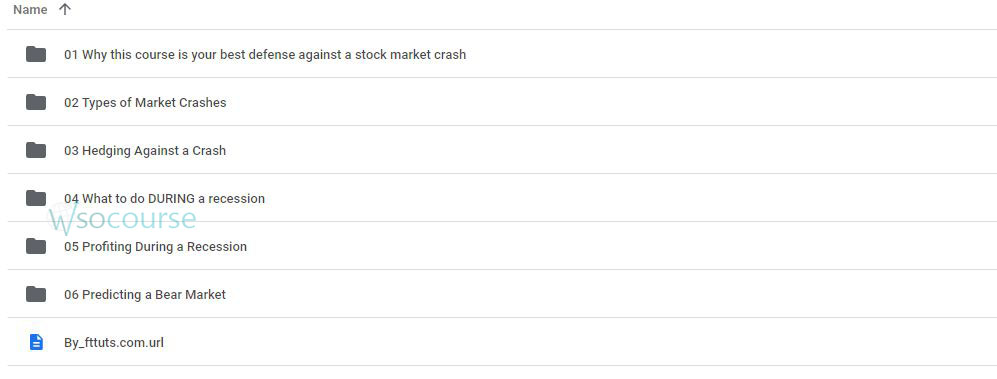
How to Predict and Prepare for a Stock Market Crash with Damon Verial
Predicting and preparing for a stock market crash can be a daunting task, but with the right strategies, it’s possible to safeguard your investments. Damon Verial, a seasoned market analyst, provides invaluable insights into anticipating market downturns and protecting your portfolio. In this article, we explore how to predict and prepare for a stock market crash with guidance from Damon Verial.
Introduction
Who is Damon Verial?
Damon Verial is a respected market analyst and financial educator known for his expertise in stock market trends and crash predictions. His strategies focus on data-driven analysis and proactive planning.
Why Predict a Stock Market Crash?
Predicting a stock market crash allows investors to take preventive measures, minimizing losses and capitalizing on potential opportunities. Understanding market signals and preparing accordingly is crucial for long-term financial health.
Identifying Warning Signs
Economic Indicators
GDP Growth Rates
Gross Domestic Product (GDP) growth rates are a key economic indicator. A significant slowdown or negative growth can signal an impending market downturn.
Unemployment Rates
Rising unemployment rates often precede economic recessions, indicating potential market instability.
Market Indicators
Price-to-Earnings (P/E) Ratios
High P/E ratios can indicate overvalued stocks, suggesting that a market correction might be imminent.
Market Breadth
Market breadth, the ratio of advancing stocks to declining stocks, provides insights into market health. A narrowing breadth can be a precursor to a market decline.
Technical Analysis
Moving Averages
Moving averages smooth out price data to identify trends. Crossovers of short-term and long-term moving averages can signal trend reversals.
Relative Strength Index (RSI)
RSI measures the magnitude of recent price changes. An RSI above 70 indicates an overbought market, while below 30 suggests an oversold market.
Predictive Models
Historical Patterns
Studying Past Crashes
Analyzing past market crashes helps identify common patterns and triggers. Verial emphasizes the importance of understanding historical context.
Pattern Recognition
Look for recurring patterns in market behavior, such as the build-up of speculative bubbles or rapid increases in market volatility.
Sentiment Analysis
Investor Sentiment
Tracking investor sentiment through surveys and market data can provide clues about market direction. Extreme optimism or pessimism often precedes market reversals.
News and Media Impact
Monitor news headlines and media coverage for signs of market euphoria or panic, which can signal a potential crash.
Preparing Your Portfolio
Diversification
Why Diversify?
Diversification spreads risk across various assets, reducing the impact of a market crash on your portfolio.
How to Diversify
Invest in a mix of asset classes, including stocks, bonds, real estate, and commodities, to achieve a balanced portfolio.
Hedging Strategies
Using Options
Options can be used to hedge against potential losses. Verial suggests strategies like buying put options to protect your investments.
Inverse ETFs
Inverse ETFs gain value when the market declines. Incorporating these into your portfolio can provide a hedge against downturns.
Cash Reserves
Importance of Liquidity
Maintaining cash reserves provides flexibility to take advantage of buying opportunities during a market crash.
Allocating Cash
Determine a percentage of your portfolio to keep in cash, ensuring you have enough liquidity without sacrificing growth potential.
Implementing Defensive Strategies
Stop-Loss Orders
Setting Stop-Loss Orders
Stop-loss orders automatically sell a stock when it reaches a predetermined price, limiting potential losses.
Adjusting Stop-Loss Levels
Regularly review and adjust stop-loss levels based on market conditions and investment goals.
Rebalancing Your Portfolio
Regular Rebalancing
Regularly rebalance your portfolio to maintain your desired asset allocation and reduce risk exposure.
Responding to Market Conditions
Adjust your portfolio in response to market signals, increasing defensive assets when warning signs appear.
Staying Informed
Continuous Learning
Educational Resources
Utilize books, articles, and online courses to stay informed about market trends and strategies.
Market Analysis Tools
Leverage market analysis tools and platforms to monitor economic indicators and market signals in real-time.
Expert Insights
Following Analysts
Follow experienced market analysts like Damon Verial for ongoing insights and updates.
Joining Investment Communities
Participate in investment communities and forums to share knowledge and gain diverse perspectives.
Conclusion
Why Prepare for a Market Crash?
Preparing for a market crash is essential for protecting your investments and ensuring long-term financial stability. By understanding market signals and implementing defensive strategies, you can navigate downturns with confidence.
FAQs
1. What are the key indicators of a market crash?
Key indicators include economic factors like GDP growth rates and unemployment, as well as market factors like high P/E ratios and narrowing market breadth.
2. How can diversification protect my portfolio?
Diversification spreads risk across various asset classes, reducing the impact of a crash on your overall portfolio.
3. What are some effective hedging strategies?
Effective hedging strategies include using options, such as buying put options, and incorporating inverse ETFs into your portfolio.
4. Why are stop-loss orders important?
Stop-loss orders limit potential losses by automatically selling a stock when it reaches a predetermined price.
5. How can I stay informed about market trends?
Stay informed by following expert analysts, participating in investment communities, and utilizing market analysis tools and resources.
Be the first to review “How to Predict and Prepare for a Stock Market Crash with Damon Verial”
You must be logged in to post a review.
Related products
Forex Trading
Quantamentals – The Next Great Forefront Of Trading and Investing with Trading Markets
Original price was: $1,495.00.$8.00Current price is: $8.00.

Original price was: $497.00.$31.00Current price is: $31.00.
Forex Trading
Original price was: $239.00.$8.00Current price is: $8.00.
Original price was: $197.00.$5.00Current price is: $5.00.
Original price was: $695.00.$41.00Current price is: $41.00.
Original price was: $999.00.$5.00Current price is: $5.00.
Original price was: $997.00.$8.00Current price is: $8.00.
Forex Trading
Original price was: $2,000.00.$23.00Current price is: $23.00.
Original price was: $1,849.00.$15.00Current price is: $15.00.

Forex Trading
Original price was: $249.00.$15.00Current price is: $15.00.
Forex Trading
Original price was: $125.00.$17.00Current price is: $17.00.
Forex Trading
Original price was: $850.00.$23.00Current price is: $23.00.
Original price was: $1,800.00.$54.00Current price is: $54.00.
Original price was: $799.00.$15.00Current price is: $15.00.
Original price was: $450.00.$23.00Current price is: $23.00.

Forex Trading
Original price was: $550.00.$5.00Current price is: $5.00.
Original price was: $2,120.00.$15.00Current price is: $15.00.
Original price was: $895.00.$15.00Current price is: $15.00.
Forex Trading
Original price was: $2,995.00.$31.00Current price is: $31.00.
Forex Trading
Original price was: $697.00.$5.00Current price is: $5.00.
Reviews
There are no reviews yet.