
-
×
 Advanced Spread Trading with Guy Bower - MasterClass Trader
1 × $15.00
Advanced Spread Trading with Guy Bower - MasterClass Trader
1 × $15.00 -
×
 Scalp Strategy and Flipping Small Accounts with Opes Trading Group
1 × $5.00
Scalp Strategy and Flipping Small Accounts with Opes Trading Group
1 × $5.00 -
×
 Introduction to Futures & Options Markets (2nd Ed.)
1 × $6.00
Introduction to Futures & Options Markets (2nd Ed.)
1 × $6.00 -
×
 Introduction to the Elliot Wave Principle Seminar - Robert Prechter
1 × $6.00
Introduction to the Elliot Wave Principle Seminar - Robert Prechter
1 × $6.00 -
×
 The Naked Eye: Raw Data Analytics with Edgar Torres - Raw Data Analytics
1 × $8.00
The Naked Eye: Raw Data Analytics with Edgar Torres - Raw Data Analytics
1 × $8.00 -
×
 SQX Mentorship with Tip Toe Hippo
1 × $23.00
SQX Mentorship with Tip Toe Hippo
1 × $23.00 -
×
 Deep Dive Butterfly Trading Strategy Class with SJG Trades
1 × $41.00
Deep Dive Butterfly Trading Strategy Class with SJG Trades
1 × $41.00 -
×
 Master The Art of Technical Analysis with Raul Gonzalez
1 × $31.00
Master The Art of Technical Analysis with Raul Gonzalez
1 × $31.00 -
×
 Best of the Best: Collars with Amy Meissner & Scott Ruble
1 × $15.00
Best of the Best: Collars with Amy Meissner & Scott Ruble
1 × $15.00 -
×
 The Indices Orderflow Masterclass with The Forex Scalpers
1 × $23.00
The Indices Orderflow Masterclass with The Forex Scalpers
1 × $23.00 -
×
 0 DTE Options Trading Workshop with Aeromir Corporation
1 × $15.00
0 DTE Options Trading Workshop with Aeromir Corporation
1 × $15.00 -
×
 Crystal Ball Pack PLUS bonus Live Trade By Pat Mitchell - Trick Trades
1 × $20.00
Crystal Ball Pack PLUS bonus Live Trade By Pat Mitchell - Trick Trades
1 × $20.00 -
×
 Fractal Market Analysis with Edgar Peters
1 × $6.00
Fractal Market Analysis with Edgar Peters
1 × $6.00 -
×
 WondaFX Signature Strategy with WondaFX
1 × $5.00
WondaFX Signature Strategy with WondaFX
1 × $5.00 -
×
 Bond Market Course with The Macro Compass
1 × $15.00
Bond Market Course with The Macro Compass
1 × $15.00 -
×
 The Prop Trading Code with Brannigan Barrett - Axia Futures
1 × $23.00
The Prop Trading Code with Brannigan Barrett - Axia Futures
1 × $23.00 -
×
 Quantamentals - The Next Great Forefront Of Trading and Investing with Trading Markets
1 × $8.00
Quantamentals - The Next Great Forefront Of Trading and Investing with Trading Markets
1 × $8.00 -
×
 Home Run Options Trading Course with Dave Aquino - Base Camp Trading
1 × $11.00
Home Run Options Trading Course with Dave Aquino - Base Camp Trading
1 × $11.00 -
×
 Line In The Sand with Trick Trades
1 × $23.00
Line In The Sand with Trick Trades
1 × $23.00 -
×
 Ultimate Trading Course with Dodgy's Dungeon
1 × $8.00
Ultimate Trading Course with Dodgy's Dungeon
1 × $8.00 -
×
 Algo Trading Masterclass with Ali Casey - StatOasis
1 × $23.00
Algo Trading Masterclass with Ali Casey - StatOasis
1 × $23.00 -
×
 Rich Jerk Program
1 × $15.00
Rich Jerk Program
1 × $15.00 -
×
 Going Global 2015
1 × $6.00
Going Global 2015
1 × $6.00 -
×
 W. D Gann 's Square Of 9 Applied To Modern Markets with Sean Avidar - Hexatrade350
1 × $23.00
W. D Gann 's Square Of 9 Applied To Modern Markets with Sean Avidar - Hexatrade350
1 × $23.00 -
×
 Order flow self-study training program with iMFtracker
1 × $10.00
Order flow self-study training program with iMFtracker
1 × $10.00 -
×
 $20 – 52k 20 pips a day challange with Rafał Zuchowicz - TopMasterTrader
1 × $5.00
$20 – 52k 20 pips a day challange with Rafał Zuchowicz - TopMasterTrader
1 × $5.00 -
×
 Mastering the Trade
1 × $6.00
Mastering the Trade
1 × $6.00 -
×
 Master Bundle with Gemify Academy
1 × $5.00
Master Bundle with Gemify Academy
1 × $5.00 -
×
 The A14 Weekly Option Strategy Workshop with Amy Meissner
1 × $23.00
The A14 Weekly Option Strategy Workshop with Amy Meissner
1 × $23.00 -
×
 TradeCraft: Your Path to Peak Performance Trading By Adam Grimes
1 × $15.00
TradeCraft: Your Path to Peak Performance Trading By Adam Grimes
1 × $15.00 -
×
 The Trading Blueprint with Brad Goh - The Trading Geek
1 × $5.00
The Trading Blueprint with Brad Goh - The Trading Geek
1 × $5.00 -
×
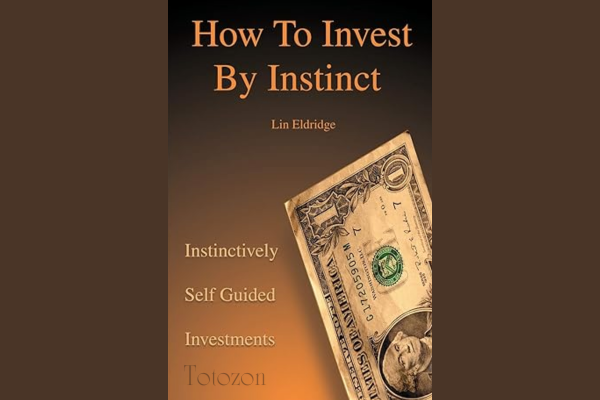 How To Invest By Instinct: Instinctively Self Guided Investments with Lin Eldridge
1 × $6.00
How To Invest By Instinct: Instinctively Self Guided Investments with Lin Eldridge
1 × $6.00 -
×
 Investing Classroom 2022 with Danny Devan
1 × $15.00
Investing Classroom 2022 with Danny Devan
1 × $15.00 -
×
 White Phoenix’s The Smart (Money) Approach to Trading with Jayson Casper
1 × $39.00
White Phoenix’s The Smart (Money) Approach to Trading with Jayson Casper
1 × $39.00 -
×
 Advanced Calculus with Applications in Statistics
1 × $6.00
Advanced Calculus with Applications in Statistics
1 × $6.00 -
×
 The Best Option Trading Course with David Jaffee - Best Stock Strategy
1 × $15.00
The Best Option Trading Course with David Jaffee - Best Stock Strategy
1 × $15.00 -
×
 Trading Short TermSame Day Trades Sep 2023 with Dan Sheridan & Mark Fenton - Sheridan Options Mentoring
1 × $31.00
Trading Short TermSame Day Trades Sep 2023 with Dan Sheridan & Mark Fenton - Sheridan Options Mentoring
1 × $31.00 -
×
 The Orderflow Masterclass with PrimeTrading
1 × $17.00
The Orderflow Masterclass with PrimeTrading
1 × $17.00 -
×
 Crypto Trading Academy with Cheeky Investor - Aussie Day Trader
1 × $13.00
Crypto Trading Academy with Cheeky Investor - Aussie Day Trader
1 × $13.00 -
×
 High Probability Trading Using Elliott Wave And Fibonacci Analysis withVic Patel - Forex Training Group
1 × $10.00
High Probability Trading Using Elliott Wave And Fibonacci Analysis withVic Patel - Forex Training Group
1 × $10.00 -
×
 Timing Solution Advanced Build February 2014
1 × $15.00
Timing Solution Advanced Build February 2014
1 × $15.00 -
×
 CFA Core Video on Quantitative Finance with Connel Fullenkamp
1 × $6.00
CFA Core Video on Quantitative Finance with Connel Fullenkamp
1 × $6.00 -
×
 CREDIT SPREAD SURGERY - Bear Call and Bull Put Mastery with Hari Swaminathan
1 × $6.00
CREDIT SPREAD SURGERY - Bear Call and Bull Put Mastery with Hari Swaminathan
1 × $6.00 -
×
 Stock Speculation (Volume I & II) with Joseph A.Wyler
1 × $4.00
Stock Speculation (Volume I & II) with Joseph A.Wyler
1 × $4.00 -
×
 Forecast 2024 Clarification with Larry Williams
1 × $15.00
Forecast 2024 Clarification with Larry Williams
1 × $15.00 -
×
 Leading Indicators
1 × $23.00
Leading Indicators
1 × $23.00 -
×
 How to Get Rich Buying Stocks with Ira U.Cobleigh
1 × $6.00
How to Get Rich Buying Stocks with Ira U.Cobleigh
1 × $6.00 -
×
 My Trading Strategy with Evolved Traders
1 × $5.00
My Trading Strategy with Evolved Traders
1 × $5.00 -
×
 Instant Cash With Judgment Liens with Mike Warren
1 × $6.00
Instant Cash With Judgment Liens with Mike Warren
1 × $6.00 -
×
 Butterfly and Condor Workshop with Aeromir
1 × $15.00
Butterfly and Condor Workshop with Aeromir
1 × $15.00 -
×
 Foolproof Forex Trading with Louise Woof
1 × $6.00
Foolproof Forex Trading with Louise Woof
1 × $6.00 -
×
 What Works in Online Trading with Mark Etzkorn
1 × $6.00
What Works in Online Trading with Mark Etzkorn
1 × $6.00 -
×
 Bookmap Masterclass with Trading To Win
1 × $6.00
Bookmap Masterclass with Trading To Win
1 × $6.00 -
×
 The Handbook of Equity Style Management (3rd Ed) with Daniel Coggin & Frank Fabozzi
1 × $6.00
The Handbook of Equity Style Management (3rd Ed) with Daniel Coggin & Frank Fabozzi
1 × $6.00 -
×
 Portfolio Management-Earn 12 Hours CE Credits
1 × $85.00
Portfolio Management-Earn 12 Hours CE Credits
1 × $85.00 -
×
 ICT Prodigy Trading Course – $650K in Payouts with Alex Solignani
1 × $15.00
ICT Prodigy Trading Course – $650K in Payouts with Alex Solignani
1 × $15.00 -
×
 The Complete Guide to Multiple Time Frame Analysis & Reading Price Action with Aiman Almansoori
1 × $13.00
The Complete Guide to Multiple Time Frame Analysis & Reading Price Action with Aiman Almansoori
1 × $13.00 -
×
 TRADING NFX Course with Andrew NFX
1 × $5.00
TRADING NFX Course with Andrew NFX
1 × $5.00 -
×
 Essentials in Quantitative Trading QT01 By HangukQuant's
1 × $23.00
Essentials in Quantitative Trading QT01 By HangukQuant's
1 × $23.00 -
×
 Learn to Trade Forex and Stocks – From Beginner to Advanced
1 × $6.00
Learn to Trade Forex and Stocks – From Beginner to Advanced
1 × $6.00 -
×
 AI For Traders with Trading Markets
1 × $31.00
AI For Traders with Trading Markets
1 × $31.00 -
×
 How To Read The Market Professionally with TradeSmart
1 × $27.00
How To Read The Market Professionally with TradeSmart
1 × $27.00 -
×
 OneUmbrellaFX
1 × $5.00
OneUmbrellaFX
1 × $5.00 -
×
 Sample and Mock Exams 2008 with CFA Institute
1 × $6.00
Sample and Mock Exams 2008 with CFA Institute
1 × $6.00 -
×
 The Orderflows Trade Opportunities Encyclopedia with Michael Valtos
1 × $8.00
The Orderflows Trade Opportunities Encyclopedia with Michael Valtos
1 × $8.00 -
×
 The Tickmaster Indicator with Alphashark
1 × $54.00
The Tickmaster Indicator with Alphashark
1 × $54.00
Myths of the Free Market with Kenneth Friedman
$6.00
File Size: Coming soon!
Delivery Time: 1–12 hours
Media Type: Online Course
Content Proof: Watch Here!
You may check content proof of “Myths of the Free Market with Kenneth Friedman” below:

Myths of the Free Market with Kenneth Friedman
Understanding the myths surrounding the free market is essential for anyone looking to delve into economic theories. Kenneth Friedman, a renowned economist, has extensively discussed these myths, providing valuable insights that challenge common perceptions. In this article, we will explore the most pervasive myths of the free market and reveal the truths behind them.
Introduction to Free Market Myths
The free market is often touted as the perfect system for economic growth and efficiency. However, several myths perpetuate misunderstandings about how free markets function. Kenneth Friedman offers a critical analysis that debunks these myths, providing a clearer picture of economic realities.
What is the Free Market?
Before diving into the myths, it’s essential to understand what we mean by a free market. In its purest form, a free market operates with minimal government intervention, where supply and demand dictate prices and production.
The Ideal vs. Reality
The ideal free market is often romanticized, but the reality is much more complex. While free markets can lead to innovation and growth, they also have significant limitations and challenges.
Myth 1: Free Markets Lead to Perfect Competition
One of the most common myths is that free markets naturally lead to perfect competition. This myth assumes that all market participants have equal access to information and resources, leading to fair competition.
The Reality of Market Power
In reality, markets are often dominated by large players with significant market power. These entities can influence prices and outcomes, creating an uneven playing field.
Information Asymmetry
Information asymmetry, where one party has more or better information than the other, further skews competition. This imbalance can lead to suboptimal market outcomes.
Myth 2: Free Markets Ensure Efficient Resource Allocation
Another prevalent myth is that free markets always allocate resources efficiently. This belief is rooted in the idea that market forces of supply and demand will naturally lead to the best use of resources.
Market Failures
Market failures, such as externalities, public goods, and monopolies, demonstrate that free markets do not always allocate resources efficiently. These failures require intervention to correct inefficiencies.
The Role of Government
Government intervention can help address these market failures by regulating industries, providing public goods, and correcting externalities.
Myth 3: Free Markets Promote Equality
The myth that free markets promote equality assumes that everyone benefits equally from market activities. However, this is rarely the case.
Income Inequality
Free markets often lead to significant income inequality, as those with more capital and resources can reap greater benefits. This disparity can widen the gap between the rich and the poor.
Barriers to Entry
High barriers to entry in certain industries can prevent new players from competing, further entrenching inequality.
Myth 4: Free Markets Are Self-Regulating
The notion that free markets are self-regulating suggests that they can correct themselves without external intervention.
The Need for Regulation
While markets can adjust to some extent, they often require regulation to prevent fraud, ensure safety, and protect consumers.
Historical Examples
Historical examples, such as the Great Depression and the 2008 financial crisis, highlight the dangers of relying solely on self-regulation.
Myth 5: Free Markets Lead to Innovation
Free markets are often credited with driving innovation through competition. While competition can spur innovation, it’s not the only factor at play.
Investment in Research and Development
Significant investment in research and development, often funded by government grants and subsidies, is crucial for innovation.
Monopolistic Practices
Monopolistic practices can stifle innovation by reducing the incentive for firms to improve their products and services.
Myth 6: Free Markets Eliminate Poverty
Some proponents of free markets claim that they eliminate poverty by creating opportunities for wealth generation.
Persistent Poverty
Despite economic growth, poverty often persists due to unequal distribution of wealth and opportunities.
Social Safety Nets
Social safety nets and welfare programs are necessary to support those left behind by the free market.
Debunking the Myths
Kenneth Friedman’s analysis helps us understand that while free markets have benefits, they are not a panacea. Recognizing the limitations and potential downsides of free markets is crucial for creating a more equitable and efficient economic system.
Conclusion
The myths of the free market perpetuate misunderstandings that can lead to misguided policies and expectations. By critically examining these myths, as Kenneth Friedman does, we can work towards a more balanced and realistic view of economic systems. Understanding the true nature of free markets allows us to harness their strengths while mitigating their weaknesses.
FAQs
1. What is the biggest myth about free markets?
The biggest myth is that free markets naturally lead to perfect competition, which is rarely the case due to market power and information asymmetry.
2. Can free markets exist without government intervention?
In practice, no. Government intervention is often necessary to address market failures and ensure fair competition.
3. Do free markets always lead to innovation?
Not always. While competition can drive innovation, significant investment in research and development, often supported by government funding, is also crucial.
4. How do free markets affect income inequality?
Free markets can exacerbate income inequality by allowing those with more resources to benefit disproportionately.
5. Are free markets self-regulating?
Free markets are not entirely self-regulating and often require government intervention to prevent abuses and ensure stability.
Be the first to review “Myths of the Free Market with Kenneth Friedman”
You must be logged in to post a review.
Related products
Forex Trading
Original price was: $125.00.$17.00Current price is: $17.00.
Original price was: $1,200.00.$23.00Current price is: $23.00.

Original price was: $497.00.$31.00Current price is: $31.00.
Forex Trading
Original price was: $239.00.$8.00Current price is: $8.00.
Original price was: $450.00.$23.00Current price is: $23.00.
Original price was: $895.00.$15.00Current price is: $15.00.
Original price was: $649.00.$20.00Current price is: $20.00.
Original price was: $1,849.00.$15.00Current price is: $15.00.
Original price was: $299.00.$8.00Current price is: $8.00.
Original price was: $139.00.$23.00Current price is: $23.00.
Forex Trading
Original price was: $249.00.$15.00Current price is: $15.00.
Forex Trading
Original price was: $397.00.$31.00Current price is: $31.00.
Forex Trading
Original price was: $797.00.$10.00Current price is: $10.00.

Forex Trading
Original price was: $1,098.00.$39.00Current price is: $39.00.
Forex Trading
Original price was: $2,997.00.$23.00Current price is: $23.00.
Original price was: $997.00.$8.00Current price is: $8.00.
Original price was: $497.00.$11.00Current price is: $11.00.
Forex Trading
Quantamentals – The Next Great Forefront Of Trading and Investing with Trading Markets
Original price was: $1,495.00.$8.00Current price is: $8.00.
Forex Trading
Original price was: $2,995.00.$31.00Current price is: $31.00.
Original price was: $999.00.$5.00Current price is: $5.00.

Reviews
There are no reviews yet.