
 The Trading Blueprint with Brad Goh - The Trading Geek
Mean Reversion Strategy with The Chartist
Original price was: $900.00.$78.00Current price is: $78.00.
File Size: 269.7 MB
Delivery Time: 1–12 hours
Media Type: Online Course
Content Proof: Watch Here!
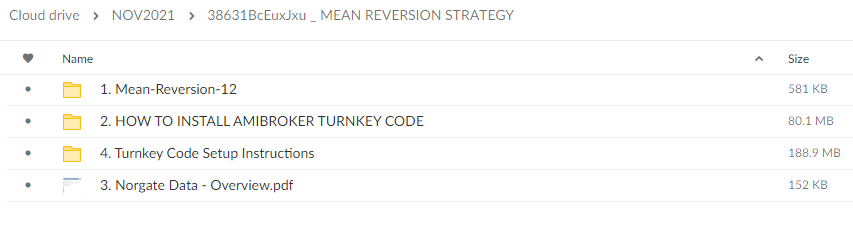
You may check content proof of “Mean Reversion Strategy with The Chartist” below:
Unveiling the Mean Reversion Strategy with The Chartist
In the dynamic world of trading, various strategies aim to capitalize on market inefficiencies and anomalies. One such strategy, known as mean reversion, has gained popularity among traders seeking to exploit temporary deviations from a security’s long-term trend. In this article, we delve into the mean reversion strategy with insights from The Chartist, exploring its principles, implementation, and potential benefits.
Understanding Mean Reversion
What is Mean Reversion?
Mean reversion is a trading strategy based on the belief that prices tend to revert to their historical mean or average over time. This strategy assumes that when prices deviate significantly from their average, they are likely to reverse direction and return to their mean.
Key Concepts in Mean Reversion
- Mean or Average: The central concept of mean reversion is the calculation of the mean or average price over a specified period.
- Standard Deviation: Traders often use standard deviation to measure the extent of price fluctuations around the mean. Deviations beyond a certain threshold may signal potential trading opportunities.
The Chartist’s Approach
Overview of The Chartist
The Chartist is a prominent figure in the trading community known for their expertise in technical analysis and market insights. Their approach to mean reversion combines quantitative analysis with charting techniques to identify potential entry and exit points.
Key Components of The Chartist’s Mean Reversion Strategy
- Identifying Overextended Moves: The Chartist looks for securities that have experienced significant price movements away from their mean, signaling potential opportunities for mean reversion.
- Confirmation Signals: To validate potential trading signals, The Chartist employs additional technical indicators or chart patterns to confirm the likelihood of a reversal.
- Risk Management: Effective risk management is paramount in The Chartist’s approach, with predefined stop-loss levels and position sizing strategies to mitigate potential losses.
Implementing the Strategy
Entry and Exit Criteria
- Entry: Traders may enter positions when a security’s price deviates significantly from its mean, combined with confirmation from technical indicators or chart patterns.
- Exit: Exiting positions may occur when prices revert towards the mean or when predetermined profit targets or stop-loss levels are reached.
Trade Management
The Chartist emphasizes the importance of actively managing trades, including adjusting stop-loss levels, trailing stop orders, and scaling in or out of positions as market conditions evolve.
Potential Benefits and Considerations
Benefits of Mean Reversion Trading
- Profit Potential: Mean reversion strategies can offer profit opportunities when prices revert to their mean.
- Risk Management: By employing strict risk management rules, traders can limit potential losses and preserve capital.
Considerations
- Market Conditions: Mean reversion strategies may perform differently in trending versus range-bound markets.
- Timing: Successfully timing entries and exits is crucial, as mean reversion relies on identifying reversals before they occur.
Conclusion
The mean reversion strategy with insights from The Chartist offers traders a systematic approach to capitalize on short-term price deviations from the long-term trend. By combining quantitative analysis with technical expertise, traders can potentially exploit market inefficiencies and achieve consistent returns.
FAQs
1. Can mean reversion strategies be applied to all financial markets?
Yes, mean reversion strategies can be applied to various markets, including stocks, forex, and commodities.
2. How do I determine the optimal lookback period for calculating the mean?
The optimal lookback period may vary depending on the characteristics of the security and market conditions. Experimentation and backtesting can help identify suitable parameters.
3. What risk management techniques are recommended when trading mean reversion?
Effective risk management techniques include setting stop-loss orders, diversifying positions, and adhering to position sizing rules to limit potential losses.
4. Are there any drawbacks to mean reversion trading?
Mean reversion strategies may underperform in strongly trending markets or during periods of high volatility. Additionally, mistimed entries or exits can lead to losses.
5. How can I learn more about implementing mean reversion strategies in my trading approach?
Consider studying The Chartist’s publications, attending educational webinars, or seeking guidance from experienced traders to deepen your understanding of mean reversion trading.
Be the first to review “Mean Reversion Strategy with The Chartist”
You must be logged in to post a review.
Related products

Forex Trading

Forex Trading





Forex Trading

Forex Trading

Forex Trading





Forex Trading

Forex Trading

Forex Trading

Forex Trading

Forex Trading



Reviews
There are no reviews yet.