
-
×
 White Phoenix’s The Smart (Money) Approach to Trading with Jayson Casper
1 × $39.00
White Phoenix’s The Smart (Money) Approach to Trading with Jayson Casper
1 × $39.00 -
×
 TradeCraft: Your Path to Peak Performance Trading By Adam Grimes
1 × $15.00
TradeCraft: Your Path to Peak Performance Trading By Adam Grimes
1 × $15.00 -
×
 Home Run Options Trading Course with Dave Aquino - Base Camp Trading
1 × $11.00
Home Run Options Trading Course with Dave Aquino - Base Camp Trading
1 × $11.00 -
×
 Deep Dive Butterfly Trading Strategy Class with SJG Trades
1 × $41.00
Deep Dive Butterfly Trading Strategy Class with SJG Trades
1 × $41.00 -
×
 AI For Traders with Trading Markets
1 × $31.00
AI For Traders with Trading Markets
1 × $31.00 -
×
 Scalp Strategy and Flipping Small Accounts with Opes Trading Group
1 × $5.00
Scalp Strategy and Flipping Small Accounts with Opes Trading Group
1 × $5.00 -
×
 Trading Short TermSame Day Trades Sep 2023 with Dan Sheridan & Mark Fenton - Sheridan Options Mentoring
1 × $31.00
Trading Short TermSame Day Trades Sep 2023 with Dan Sheridan & Mark Fenton - Sheridan Options Mentoring
1 × $31.00 -
×
 Crypto Trading Academy with Cheeky Investor - Aussie Day Trader
1 × $13.00
Crypto Trading Academy with Cheeky Investor - Aussie Day Trader
1 × $13.00 -
×
 Best of the Best: Collars with Amy Meissner & Scott Ruble
1 × $15.00
Best of the Best: Collars with Amy Meissner & Scott Ruble
1 × $15.00 -
×
 The Indices Orderflow Masterclass with The Forex Scalpers
1 × $23.00
The Indices Orderflow Masterclass with The Forex Scalpers
1 × $23.00 -
×
 The Prop Trading Code with Brannigan Barrett - Axia Futures
1 × $23.00
The Prop Trading Code with Brannigan Barrett - Axia Futures
1 × $23.00 -
×
 Algo Trading Masterclass with Ali Casey - StatOasis
1 × $23.00
Algo Trading Masterclass with Ali Casey - StatOasis
1 × $23.00 -
×
 High Probability Trading Using Elliott Wave And Fibonacci Analysis withVic Patel - Forex Training Group
1 × $10.00
High Probability Trading Using Elliott Wave And Fibonacci Analysis withVic Patel - Forex Training Group
1 × $10.00 -
×
 The Orderflows Trade Opportunities Encyclopedia with Michael Valtos
1 × $8.00
The Orderflows Trade Opportunities Encyclopedia with Michael Valtos
1 × $8.00 -
×
 Quantamentals - The Next Great Forefront Of Trading and Investing with Trading Markets
1 × $8.00
Quantamentals - The Next Great Forefront Of Trading and Investing with Trading Markets
1 × $8.00 -
×
 The A14 Weekly Option Strategy Workshop with Amy Meissner
1 × $23.00
The A14 Weekly Option Strategy Workshop with Amy Meissner
1 × $23.00 -
×
 Essentials in Quantitative Trading QT01 By HangukQuant's
1 × $23.00
Essentials in Quantitative Trading QT01 By HangukQuant's
1 × $23.00 -
×
 Butterfly and Condor Workshop with Aeromir
1 × $15.00
Butterfly and Condor Workshop with Aeromir
1 × $15.00 -
×
 Crystal Ball Pack PLUS bonus Live Trade By Pat Mitchell - Trick Trades
1 × $20.00
Crystal Ball Pack PLUS bonus Live Trade By Pat Mitchell - Trick Trades
1 × $20.00 -
×
 $20 – 52k 20 pips a day challange with Rafał Zuchowicz - TopMasterTrader
1 × $5.00
$20 – 52k 20 pips a day challange with Rafał Zuchowicz - TopMasterTrader
1 × $5.00 -
×
 Bond Market Course with The Macro Compass
1 × $15.00
Bond Market Course with The Macro Compass
1 × $15.00 -
×
 W. D Gann 's Square Of 9 Applied To Modern Markets with Sean Avidar - Hexatrade350
1 × $23.00
W. D Gann 's Square Of 9 Applied To Modern Markets with Sean Avidar - Hexatrade350
1 × $23.00 -
×
 WondaFX Signature Strategy with WondaFX
1 × $5.00
WondaFX Signature Strategy with WondaFX
1 × $5.00 -
×
 Compass Trading System with Right Line Trading
1 × $39.00
Compass Trading System with Right Line Trading
1 × $39.00 -
×
 0 DTE Options Trading Workshop with Aeromir Corporation
1 × $15.00
0 DTE Options Trading Workshop with Aeromir Corporation
1 × $15.00 -
×
 Ultimate Trading Course with Dodgy's Dungeon
1 × $8.00
Ultimate Trading Course with Dodgy's Dungeon
1 × $8.00 -
×
 The Complete Guide to Multiple Time Frame Analysis & Reading Price Action with Aiman Almansoori
1 × $13.00
The Complete Guide to Multiple Time Frame Analysis & Reading Price Action with Aiman Almansoori
1 × $13.00 -
×
 Practical Speculation with Victor Niederhoffer, Laurel Kenner
1 × $6.00
Practical Speculation with Victor Niederhoffer, Laurel Kenner
1 × $6.00 -
×
 SQX Mentorship with Tip Toe Hippo
1 × $23.00
SQX Mentorship with Tip Toe Hippo
1 × $23.00 -
×
 The Naked Eye: Raw Data Analytics with Edgar Torres - Raw Data Analytics
1 × $8.00
The Naked Eye: Raw Data Analytics with Edgar Torres - Raw Data Analytics
1 × $8.00 -
×
 Matrix Spread Options Trading Course with Base Camp Trading
1 × $31.00
Matrix Spread Options Trading Course with Base Camp Trading
1 × $31.00 -
×
 Order flow self-study training program with iMFtracker
1 × $10.00
Order flow self-study training program with iMFtracker
1 × $10.00 -
×
 The Trading Blueprint with Brad Goh - The Trading Geek
1 × $5.00
The Trading Blueprint with Brad Goh - The Trading Geek
1 × $5.00 -
×
 Options Trading & Ultimate MasterClass With Tyrone Abela - FX Evolution
1 × $54.00
Options Trading & Ultimate MasterClass With Tyrone Abela - FX Evolution
1 × $54.00 -
×
 The Best Option Trading Course with David Jaffee - Best Stock Strategy
1 × $15.00
The Best Option Trading Course with David Jaffee - Best Stock Strategy
1 × $15.00 -
×
 The Orderflow Masterclass with PrimeTrading
1 × $17.00
The Orderflow Masterclass with PrimeTrading
1 × $17.00
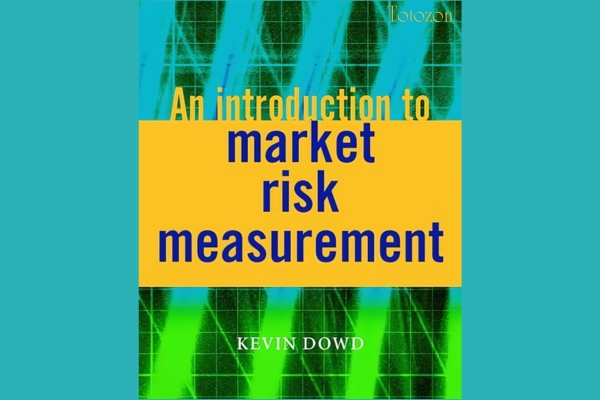
An Introduction to Market Risk Measurement with Kevin Dowd
$6.00
File Size: Coming soon!
Delivery Time: 1–12 hours
Media Type: Online Course
Content Proof: Watch Here!
You may check content proof of “An Introduction to Market Risk Measurement with Kevin Dowd” below:

An Introduction to Market Risk Measurement with Kevin Dowd
Understanding market risk is essential for any financial professional or investor. Kevin Dowd’s work provides a comprehensive guide to the principles and practices of market risk measurement. In this article, we will explore the key concepts, methodologies, and applications of market risk measurement as presented by Dowd.
What is Market Risk?
Market risk, also known as systematic risk, refers to the potential for financial loss due to fluctuations in market prices. It affects all securities and cannot be diversified away.
Types of Market Risk
- Equity Risk: The risk of loss due to changes in stock prices.
- Interest Rate Risk: The risk of loss due to changes in interest rates.
- Currency Risk: The risk of loss due to changes in exchange rates.
- Commodity Risk: The risk of loss due to changes in commodity prices.
The Importance of Measuring Market Risk
Measuring market risk is crucial for several reasons:
- Risk Management: Helps in identifying, assessing, and mitigating potential losses.
- Regulatory Compliance: Ensures adherence to financial regulations and standards.
- Performance Evaluation: Assists in evaluating the risk-adjusted performance of investments.
Kevin Dowd: An Authority on Market Risk
Kevin Dowd is a well-respected economist and professor known for his extensive research and publications on risk management and financial economics. His book “Measuring Market Risk” is considered a seminal work in the field.
Core Concepts in Market Risk Measurement
Value at Risk (VaR)
Value at Risk (VaR) is a statistical technique used to measure the potential loss in value of a portfolio over a defined period for a given confidence interval.
Types of VaR
- Historical VaR: Based on historical price data.
- Parametric VaR: Assumes normal distribution of returns.
- Monte Carlo Simulation: Uses random sampling to estimate potential losses.
Expected Shortfall (ES)
Expected Shortfall, also known as conditional VaR, measures the average loss that exceeds the VaR threshold. It provides a more comprehensive risk assessment than VaR alone.
Stress Testing
Stress testing evaluates the impact of extreme market conditions on a portfolio. It helps in understanding potential vulnerabilities.
Types of Stress Testing
- Scenario Analysis: Examines the effects of specific hypothetical scenarios.
- Sensitivity Analysis: Measures the impact of changes in key variables on the portfolio.
Backtesting
Backtesting involves comparing the predicted risk measures with actual outcomes to validate the accuracy of risk models.
Advanced Techniques in Market Risk Measurement
Extreme Value Theory (EVT)
EVT focuses on modeling and assessing the risk of extreme market events, such as financial crises.
Copulas
Copulas are used to model and analyze the dependence structure between different financial instruments, helping in understanding complex risk interactions.
Risk Metrics and Risk Budgeting
These techniques involve setting risk limits and allocating risk across various assets or strategies to manage overall portfolio risk effectively.
Applications of Market Risk Measurement
Portfolio Management
Effective market risk measurement is crucial for constructing and managing diversified investment portfolios.
Regulatory Compliance
Financial institutions must comply with regulatory standards, such as Basel III, which require accurate risk measurement and reporting.
Corporate Risk Management
Corporations use market risk measurement to manage financial risks associated with their business operations.
Challenges in Measuring Market Risk
Model Risk
Model risk arises from inaccuracies or assumptions in risk measurement models, potentially leading to incorrect risk assessments.
Data Quality
Accurate risk measurement depends on high-quality, reliable data. Poor data quality can compromise risk analysis.
Dynamic Market Conditions
Rapid changes in market conditions can affect the reliability of risk models, necessitating continuous monitoring and adjustment.
Strategies for Effective Risk Measurement
Continuous Monitoring
Regular monitoring and updating of risk models ensure they remain relevant and accurate in changing market conditions.
Diversification
Diversifying investments across different asset classes helps manage and mitigate market risk.
Risk Mitigation Techniques
Using financial instruments like options, futures, and swaps can help hedge against potential market risks.
Conclusion
Kevin Dowd’s “Measuring Market Risk” provides invaluable insights into understanding and managing market risk. By applying the concepts and techniques discussed, investors and financial professionals can enhance their risk management strategies and make more informed decisions.
FAQs
1. What is market risk?
Market risk is the potential for financial loss due to fluctuations in market prices, affecting all securities.
2. What is Value at Risk (VaR)?
Value at Risk (VaR) is a statistical technique used to measure the potential loss in value of a portfolio over a defined period for a given confidence interval.
3. Why is stress testing important?
Stress testing evaluates the impact of extreme market conditions on a portfolio, helping to identify potential vulnerabilities.
4. What are the challenges in measuring market risk?
Challenges include model risk, data quality, and dynamic market conditions, which can affect the reliability of risk assessments.
5. How can market risk be mitigated?
Market risk can be mitigated through continuous monitoring, diversification, and using financial instruments like options and futures.
Be the first to review “An Introduction to Market Risk Measurement with Kevin Dowd”
You must be logged in to post a review.
Related products
Original price was: $1,849.00.$15.00Current price is: $15.00.
Forex Trading
Original price was: $2,997.00.$23.00Current price is: $23.00.
Original price was: $1,800.00.$54.00Current price is: $54.00.
Original price was: $4,995.00.$15.00Current price is: $15.00.
Original price was: $310.00.$23.00Current price is: $23.00.
Forex Trading
Original price was: $999.00.$15.00Current price is: $15.00.
Forex Trading
Original price was: $2,000.00.$23.00Current price is: $23.00.
Original price was: $450.00.$23.00Current price is: $23.00.
Forex Trading
Original price was: $125.00.$17.00Current price is: $17.00.
Original price was: $999.00.$5.00Current price is: $5.00.
Forex Trading
Original price was: $397.00.$31.00Current price is: $31.00.
Original price was: $497.00.$31.00Current price is: $31.00.

Original price was: $2,120.00.$15.00Current price is: $15.00.
Forex Trading
Original price was: $797.00.$10.00Current price is: $10.00.
Original price was: $1,200.00.$23.00Current price is: $23.00.
Forex Trading
Original price was: $1,098.00.$39.00Current price is: $39.00.

Forex Trading
Original price was: $4,997.00.$27.00Current price is: $27.00.
Forex Trading
Original price was: $2,995.00.$31.00Current price is: $31.00.

Forex Trading
Original price was: $500.00.$5.00Current price is: $5.00.
Original price was: $799.00.$15.00Current price is: $15.00.
Reviews
There are no reviews yet.