
-
×
 Equity Research and Valuation Techniques with Kemp Dolliver
1 × $6.00
Equity Research and Valuation Techniques with Kemp Dolliver
1 × $6.00 -
×
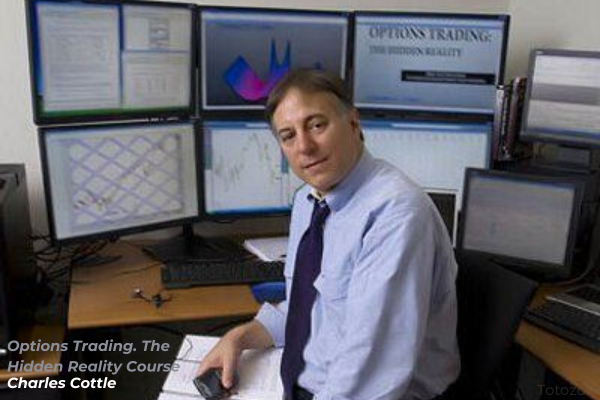 Options Trading. The Hidden Reality Course with Charles Cottle
1 × $6.00
Options Trading. The Hidden Reality Course with Charles Cottle
1 × $6.00 -
×
 The Indices Orderflow Masterclass with The Forex Scalpers
1 × $23.00
The Indices Orderflow Masterclass with The Forex Scalpers
1 × $23.00 -
×
 Opening Bell Income Strategy with Todd Mitchell
1 × $54.00
Opening Bell Income Strategy with Todd Mitchell
1 × $54.00 -
×
 Planetary Harmonics of Speculative Markets with Larry Pesavento
1 × $6.00
Planetary Harmonics of Speculative Markets with Larry Pesavento
1 × $6.00 -
×
 Trading Short TermSame Day Trades Sep 2023 with Dan Sheridan & Mark Fenton - Sheridan Options Mentoring
1 × $31.00
Trading Short TermSame Day Trades Sep 2023 with Dan Sheridan & Mark Fenton - Sheridan Options Mentoring
1 × $31.00 -
×
 Profit.ly - Bitcoin Basics
1 × $6.00
Profit.ly - Bitcoin Basics
1 × $6.00 -
×
 Small and Mighty Association with Ryan Lee
1 × $6.00
Small and Mighty Association with Ryan Lee
1 × $6.00 -
×
 Math Trading Course 2023
1 × $34.00
Math Trading Course 2023
1 × $34.00 -
×
 Private Access Pro Webinars 2021-2022 with Trader Lion
1 × $5.00
Private Access Pro Webinars 2021-2022 with Trader Lion
1 × $5.00 -
×
 Forecast 2024 Clarification with Larry Williams
1 × $15.00
Forecast 2024 Clarification with Larry Williams
1 × $15.00 -
×
 Gap Trading for Stock and Options Traders with Damon Verial
1 × $6.00
Gap Trading for Stock and Options Traders with Damon Verial
1 × $6.00 -
×
 Essentials in Quantitative Trading QT01 By HangukQuant's
1 × $23.00
Essentials in Quantitative Trading QT01 By HangukQuant's
1 × $23.00 -
×
 Compass Trading System with Right Line Trading
1 × $39.00
Compass Trading System with Right Line Trading
1 × $39.00 -
×
 Butterfly and Condor Workshop with Aeromir
1 × $15.00
Butterfly and Condor Workshop with Aeromir
1 × $15.00 -
×
 W. D Gann 's Square Of 9 Applied To Modern Markets with Sean Avidar - Hexatrade350
1 × $23.00
W. D Gann 's Square Of 9 Applied To Modern Markets with Sean Avidar - Hexatrade350
1 × $23.00 -
×
 Smart Money Course with Forex XL
1 × $6.00
Smart Money Course with Forex XL
1 × $6.00 -
×
 The Trading Blueprint with Brad Goh - The Trading Geek
1 × $5.00
The Trading Blueprint with Brad Goh - The Trading Geek
1 × $5.00 -
×
 Lessons 1-30 & Tradestation Code with Charles Drummond
1 × $6.00
Lessons 1-30 & Tradestation Code with Charles Drummond
1 × $6.00 -
×
 FX Pips Predator
1 × $54.00
FX Pips Predator
1 × $54.00 -
×
 Star Traders Forex Intermediate Course I with Karen Foo
1 × $8.00
Star Traders Forex Intermediate Course I with Karen Foo
1 × $8.00 -
×
 High Probability Trading Using Elliott Wave And Fibonacci Analysis withVic Patel - Forex Training Group
1 × $10.00
High Probability Trading Using Elliott Wave And Fibonacci Analysis withVic Patel - Forex Training Group
1 × $10.00 -
×
 ICT Prodigy Trading Course – $650K in Payouts with Alex Solignani
1 × $15.00
ICT Prodigy Trading Course – $650K in Payouts with Alex Solignani
1 × $15.00 -
×
 Quantamentals - The Next Great Forefront Of Trading and Investing with Trading Markets
1 × $8.00
Quantamentals - The Next Great Forefront Of Trading and Investing with Trading Markets
1 × $8.00 -
×
 Deep Dive Butterfly Trading Strategy Class with SJG Trades
1 × $41.00
Deep Dive Butterfly Trading Strategy Class with SJG Trades
1 × $41.00 -
×
 Order flow self-study training program with iMFtracker
1 × $10.00
Order flow self-study training program with iMFtracker
1 × $10.00 -
×
 Master Class with Gerald Appel
1 × $6.00
Master Class with Gerald Appel
1 × $6.00 -
×
 Starter Guide to Investing Stocks, Crypto & Precious Metals with Ryan Hogue
1 × $5.00
Starter Guide to Investing Stocks, Crypto & Precious Metals with Ryan Hogue
1 × $5.00 -
×
 The Orderflows Trade Opportunities Encyclopedia with Michael Valtos
1 × $8.00
The Orderflows Trade Opportunities Encyclopedia with Michael Valtos
1 × $8.00 -
×
 Simulating Continuous Fuzzy Systems with James Buckley & Leonard Jowers
1 × $6.00
Simulating Continuous Fuzzy Systems with James Buckley & Leonard Jowers
1 × $6.00 -
×
 WondaFX Signature Strategy with WondaFX
1 × $5.00
WondaFX Signature Strategy with WondaFX
1 × $5.00 -
×
 The A14 Weekly Option Strategy Workshop with Amy Meissner
1 × $23.00
The A14 Weekly Option Strategy Workshop with Amy Meissner
1 × $23.00 -
×
 Relationship of the StockMarket Fluctuations to the Lunarcycle with Frank J.Guarino
1 × $6.00
Relationship of the StockMarket Fluctuations to the Lunarcycle with Frank J.Guarino
1 × $6.00 -
×
 Elev8 Trading Complete Course
1 × $10.00
Elev8 Trading Complete Course
1 × $10.00 -
×
 Bond Market Course with The Macro Compass
1 × $15.00
Bond Market Course with The Macro Compass
1 × $15.00 -
×
 AI For Traders with Trading Markets
1 × $31.00
AI For Traders with Trading Markets
1 × $31.00 -
×
 Winning with Options with Michael Thomsett
1 × $6.00
Winning with Options with Michael Thomsett
1 × $6.00 -
×
 Algo Trading Masterclass with Ali Casey - StatOasis
1 × $23.00
Algo Trading Masterclass with Ali Casey - StatOasis
1 × $23.00 -
×
 CarterFX Membership with Duran Carter
1 × $23.00
CarterFX Membership with Duran Carter
1 × $23.00 -
×
 SATYA 2 - Online Immersion - January 2023 By Tias Little
1 × $225.00
SATYA 2 - Online Immersion - January 2023 By Tias Little
1 × $225.00 -
×
 Global Equity Investing By Alberto Vivanti & Perry Kaufman
1 × $6.00
Global Equity Investing By Alberto Vivanti & Perry Kaufman
1 × $6.00 -
×
 How Do You Read Charts? A Guide to Classic Price Pattern Recognition Class with Professor Jeff Bierman
1 × $6.00
How Do You Read Charts? A Guide to Classic Price Pattern Recognition Class with Professor Jeff Bierman
1 × $6.00 -
×
 Matrix Spread Options Trading Course with Base Camp Trading
1 × $31.00
Matrix Spread Options Trading Course with Base Camp Trading
1 × $31.00 -
×
 Stock Market Crash of 1929 with Aron Abrams
1 × $6.00
Stock Market Crash of 1929 with Aron Abrams
1 × $6.00 -
×
 White Phoenix’s The Smart (Money) Approach to Trading with Jayson Casper
1 × $39.00
White Phoenix’s The Smart (Money) Approach to Trading with Jayson Casper
1 × $39.00 -
×
 Futures Commodity Trading with G. Scott Martin
1 × $6.00
Futures Commodity Trading with G. Scott Martin
1 × $6.00 -
×
 Crypto Trading Academy with Cheeky Investor - Aussie Day Trader
1 × $13.00
Crypto Trading Academy with Cheeky Investor - Aussie Day Trader
1 × $13.00
Investment Strategies of Hedge Funds with Filippo Stefanini
Original price was: $109.00.$6.00Current price is: $6.00.
File Size: Coming soon!
Delivery Time: 1–12 hours
Media Type: Online Course
Content Proof: Watch Here!
You may check content proof of “Investment Strategies of Hedge Funds with Filippo Stefanini” below:

Investment Strategies of Hedge Funds with Filippo Stefanini
Introduction
Hedge funds have long been viewed as enigmatic entities in the world of finance, celebrated for their sophisticated investment techniques and often secretive operations. In this comprehensive exploration, we delve into the world as seen through the lens of renowned expert Filippo Stefanini and his insights on hedge fund strategies.
Understanding Hedge Funds
What is a Hedge Fund?
At its core, a hedge fund is a pooled investment vehicle that uses various strategies to earn active returns for its investors. Hedge funds may trade in equities, bonds, commodities, and derivatives, and they often employ leverage to enhance returns.
The Appeal of Hedge Funds
Hedge funds attract high-net-worth individuals and institutional investors thanks to their potential for high returns and diversification benefits. Unlike mutual funds, hedge funds are not bound by the same regulatory constraints, which allows for more flexibility in investment choices.
Key Investment Strategies
Equity Long-Short
This classic hedge fund strategy involves buying undervalued stocks while short-selling overvalued ones. The goal is to benefit from both rising and falling markets, balancing the investment portfolio.
Global Macro
Filippo Stefanini highlights global macro strategies as pivotal in understanding economic trends worldwide. Hedge funds employing this strategy make leveraged bets on currency movements, interest rates, and country-specific economic indicators.
Event-Driven Strategies
These strategies are predicated on exploiting pricing inefficiencies that may occur before or after a significant event, such as mergers, acquisitions, or corporate bankruptcies. This approach requires deep market knowledge and a knack for predicting future events.
Quantitative and Algorithmic Trading
The Rise of Quants
Stefanini notes the increasing reliance on quantitative models in hedge funds. These models are designed to identify profitable trading opportunities based on mathematical and statistical analyses.
Algorithmic Innovations
Algorithmic trading has revolutionized the hedge fund industry by enabling high-speed trading strategies that can execute orders in milliseconds, far quicker than any human.
Risk Management Techniques
Diversification
Diversification is a cornerstone of hedge fund risk management, spreading investments across various asset classes to mitigate potential losses.
Use of Derivatives
Hedge funds commonly use derivatives to hedge against potential downturns in the markets, protecting the portfolio from unexpected market movements.
Ethical Considerations
Transparency and Regulation
While hedge funds operate with less transparency than other investment vehicles, recent trends have moved towards more open communication with investors, driven by demands for greater transparency and regulatory pressures.
Conclusion
Filippo Stefanini’s insights provide a valuable framework for understanding the sophisticated mechanisms at play within hedge funds. By employing diverse strategies and advanced risk management techniques, hedge funds continue to offer unique opportunities for investors seeking to maximize returns.
FAQs
- What makes hedge funds different from mutual funds? Hedge funds often employ more complex strategies, including the use of leverage and derivatives, and have fewer regulatory restrictions compared to mutual funds.
- How do hedge funds manage risk? Hedge funds use a variety of techniques including diversification, derivatives, and quantitative risk models to manage and mitigate potential losses.
- What is an equity long-short strategy? This strategy involves buying stocks that are expected to increase in value and short-selling stocks that are expected to decrease in value.
- Can anyone invest in a hedge fund? Typically, only accredited investors and institutions can invest in hedge funds due to their complex nature and higher risk profiles.
- What are the typical fees associated with hedge funds? Hedge funds usually charge a management fee and a performance fee, which can vary significantly between funds.
Be the first to review “Investment Strategies of Hedge Funds with Filippo Stefanini”
You must be logged in to post a review.
Related products

Forex Trading
Original price was: $4,997.00.$27.00Current price is: $27.00.

Forex Trading
Original price was: $999.00.$15.00Current price is: $15.00.
Forex Trading
Original price was: $1,898.00.$10.00Current price is: $10.00.

Forex Trading
Original price was: $125.00.$17.00Current price is: $17.00.

Forex Trading
Original price was: $2,997.00.$23.00Current price is: $23.00.
Original price was: $695.00.$41.00Current price is: $41.00.
Original price was: $310.00.$23.00Current price is: $23.00.

Original price was: $1,200.00.$23.00Current price is: $23.00.
Forex Trading
Original price was: $2,995.00.$31.00Current price is: $31.00.

Original price was: $497.00.$11.00Current price is: $11.00.
Original price was: $299.00.$8.00Current price is: $8.00.
Forex Trading
Original price was: $1,098.00.$39.00Current price is: $39.00.

Original price was: $895.00.$15.00Current price is: $15.00.

Original price was: $1,849.00.$15.00Current price is: $15.00.
Original price was: $497.00.$31.00Current price is: $31.00.
Original price was: $2,120.00.$15.00Current price is: $15.00.
Forex Trading
Original price was: $850.00.$23.00Current price is: $23.00.

Original price was: $197.00.$5.00Current price is: $5.00.
Original price was: $997.00.$13.00Current price is: $13.00.

Original price was: $799.00.$15.00Current price is: $15.00.
Reviews
There are no reviews yet.