
-
×
 Trading From Your Gut with Curtis Faith
1 × $6.00
Trading From Your Gut with Curtis Faith
1 × $6.00 -
×
 Advanced Course with Jtrader
1 × $6.00
Advanced Course with Jtrader
1 × $6.00 -
×
 Altucher’s Top 1% Advisory Newsletter 2016 with James Altucher
1 × $6.00
Altucher’s Top 1% Advisory Newsletter 2016 with James Altucher
1 × $6.00 -
×
 AI For Traders with Trading Markets
1 × $31.00
AI For Traders with Trading Markets
1 × $31.00 -
×
 Code 6 + 7 Course with Oil Trading Academy
1 × $41.00
Code 6 + 7 Course with Oil Trading Academy
1 × $41.00 -
×
 Options Master Class
1 × $54.00
Options Master Class
1 × $54.00 -
×
 The Market Maker’s Edge with Josh Lukeman
1 × $6.00
The Market Maker’s Edge with Josh Lukeman
1 × $6.00 -
×
 The Jupiter Effect with John Gribbin & Stephen Plagemann
1 × $6.00
The Jupiter Effect with John Gribbin & Stephen Plagemann
1 × $6.00 -
×
 Power Charting - Robert’s Indicator Webinar
1 × $6.00
Power Charting - Robert’s Indicator Webinar
1 × $6.00 -
×
 0 DTE Options Trading Workshop with Aeromir Corporation
1 × $15.00
0 DTE Options Trading Workshop with Aeromir Corporation
1 × $15.00 -
×
 EasyLanguage Home Study Course PDF Book + CD
1 × $6.00
EasyLanguage Home Study Course PDF Book + CD
1 × $6.00 -
×
 Advance Courses for Members
1 × $15.00
Advance Courses for Members
1 × $15.00 -
×
 How to Spot Trading Opportunities
1 × $6.00
How to Spot Trading Opportunities
1 × $6.00 -
×
 Safety in the Market. Smarter Starter Pack 1st Edition
1 × $6.00
Safety in the Market. Smarter Starter Pack 1st Edition
1 × $6.00 -
×
 All About Dividend Investing with Don Schreiber & Gary Stroik
1 × $6.00
All About Dividend Investing with Don Schreiber & Gary Stroik
1 × $6.00 -
×
 Ron Wagner – Creating a Profitable Trading & Investing Plan. 6 Key Components with Pristine
1 × $4.00
Ron Wagner – Creating a Profitable Trading & Investing Plan. 6 Key Components with Pristine
1 × $4.00 -
×
 Investment Illusions with Martin S.Fridson
1 × $6.00
Investment Illusions with Martin S.Fridson
1 × $6.00 -
×
 The Box Strategy with Blue Capital Academy
1 × $23.00
The Box Strategy with Blue Capital Academy
1 × $23.00 -
×
 SATYA 2 - Online Immersion - January 2023 By Tias Little
1 × $225.00
SATYA 2 - Online Immersion - January 2023 By Tias Little
1 × $225.00 -
×
 CFA Level 2 - Sample Item Sets 2003
1 × $6.00
CFA Level 2 - Sample Item Sets 2003
1 × $6.00 -
×
 Trading Short TermSame Day Trades Sep 2023 with Dan Sheridan & Mark Fenton - Sheridan Options Mentoring
1 × $31.00
Trading Short TermSame Day Trades Sep 2023 with Dan Sheridan & Mark Fenton - Sheridan Options Mentoring
1 × $31.00 -
×
 Acclimation Course with Base Camp Trading
1 × $10.00
Acclimation Course with Base Camp Trading
1 × $10.00 -
×
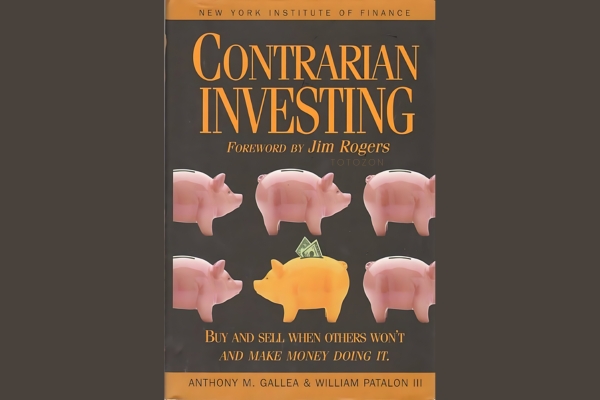 Contrarian Investing with Anthony M.Gallea, William Patalon
1 × $6.00
Contrarian Investing with Anthony M.Gallea, William Patalon
1 × $6.00 -
×
 The Management of Equity Investments with Dimitris Chorafas
1 × $6.00
The Management of Equity Investments with Dimitris Chorafas
1 × $6.00 -
×
 Whats In Your Name – The Science of Letters and Numbers (1916)
1 × $6.00
Whats In Your Name – The Science of Letters and Numbers (1916)
1 × $6.00 -
×
 Investment Science with David G.Luenberger
1 × $6.00
Investment Science with David G.Luenberger
1 × $6.00 -
×
 How To Read The Market Professionally with TradeSmart
1 × $27.00
How To Read The Market Professionally with TradeSmart
1 × $27.00 -
×
 The Handbook of Alternative Investments with Darrell R.Jobman
1 × $6.00
The Handbook of Alternative Investments with Darrell R.Jobman
1 × $6.00 -
×
 Traders Positioning System with Lee Gettess
1 × $4.00
Traders Positioning System with Lee Gettess
1 × $4.00 -
×
 Reading & Understanding Charts with Andrew Baxter
1 × $6.00
Reading & Understanding Charts with Andrew Baxter
1 × $6.00 -
×
 Range Trading with D.Singleton
1 × $6.00
Range Trading with D.Singleton
1 × $6.00 -
×
 What Products to Watch and Why Class with Don Kaufman
1 × $6.00
What Products to Watch and Why Class with Don Kaufman
1 × $6.00 -
×
 How To Create Your Own Trading Strategy with Simon Klein - Trade Smart
1 × $5.00
How To Create Your Own Trading Strategy with Simon Klein - Trade Smart
1 × $5.00 -
×
 WondaFX Signature Strategy with WondaFX
1 × $5.00
WondaFX Signature Strategy with WondaFX
1 × $5.00 -
×
 W. D Gann 's Square Of 9 Applied To Modern Markets with Sean Avidar - Hexatrade350
1 × $23.00
W. D Gann 's Square Of 9 Applied To Modern Markets with Sean Avidar - Hexatrade350
1 × $23.00 -
×
 Learn To Day-Trade the E-Mini S&P 500. Simple-as-123 with Marshall Jones
1 × $6.00
Learn To Day-Trade the E-Mini S&P 500. Simple-as-123 with Marshall Jones
1 × $6.00 -
×
 Trading For Busy People with Josias Kere
1 × $6.00
Trading For Busy People with Josias Kere
1 × $6.00 -
×
 The Art of the Trade: What I Learned (and Lost) Trading the Chicago Futures Markets - Jason Alan Jankovsky
1 × $6.00
The Art of the Trade: What I Learned (and Lost) Trading the Chicago Futures Markets - Jason Alan Jankovsky
1 × $6.00 -
×
 Future Energy with Bill Paul
1 × $6.00
Future Energy with Bill Paul
1 × $6.00 -
×
 Advanced Spread Trading with Guy Bower - MasterClass Trader
1 × $15.00
Advanced Spread Trading with Guy Bower - MasterClass Trader
1 × $15.00 -
×
 Investing Smart. How to Pick Stocks with Investors Business Daily By Dhun H.Sethna
1 × $4.00
Investing Smart. How to Pick Stocks with Investors Business Daily By Dhun H.Sethna
1 × $4.00 -
×
 Tape Reading Big Caps 1 on 1 with Jtrader
1 × $6.00
Tape Reading Big Caps 1 on 1 with Jtrader
1 × $6.00 -
×
 Using Robert’s Indicators with Rob Hoffman
1 × $6.00
Using Robert’s Indicators with Rob Hoffman
1 × $6.00 -
×
 TraderSumo Academy Course
1 × $13.00
TraderSumo Academy Course
1 × $13.00 -
×
 Live in London (5 DVD) with Martin Pring
1 × $6.00
Live in London (5 DVD) with Martin Pring
1 × $6.00 -
×
 EURUSD Trading System with CopperChips
1 × $6.00
EURUSD Trading System with CopperChips
1 × $6.00 -
×
 Candlestick and Pivot Point Trading Triggers with John Person
1 × $6.00
Candlestick and Pivot Point Trading Triggers with John Person
1 × $6.00 -
×
 Traders Winning Edge (Presentation) with Adrienne Laris Toghraie
1 × $6.00
Traders Winning Edge (Presentation) with Adrienne Laris Toghraie
1 × $6.00 -
×
 Affinity Foundation Option Course with Affinitytrading
1 × $6.00
Affinity Foundation Option Course with Affinitytrading
1 × $6.00 -
×
 Bond Market Course with The Macro Compass
1 × $15.00
Bond Market Course with The Macro Compass
1 × $15.00 -
×
 The Zone Trader Training Series with Timon Weller
1 × $8.00
The Zone Trader Training Series with Timon Weller
1 × $8.00 -
×
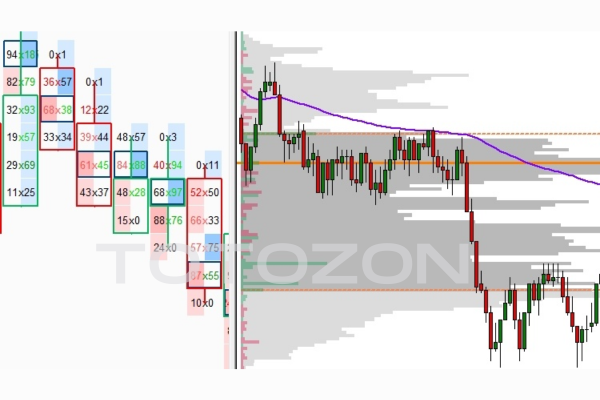 Day Trading with Volume Profile and Orderflow - Price Action Volume Trader
1 × $6.00
Day Trading with Volume Profile and Orderflow - Price Action Volume Trader
1 × $6.00 -
×
 TradingMind Course with Jack Bernstein
1 × $6.00
TradingMind Course with Jack Bernstein
1 × $6.00 -
×
 Marber on Markets – How to Make Money from Charts with Brian Marber
1 × $6.00
Marber on Markets – How to Make Money from Charts with Brian Marber
1 × $6.00 -
×
 Part I Basic and Part II Beyond the Basic with Strategic Trading
1 × $6.00
Part I Basic and Part II Beyond the Basic with Strategic Trading
1 × $6.00 -
×
 Gillen Predicts with Jack Gillen
1 × $6.00
Gillen Predicts with Jack Gillen
1 × $6.00 -
×
 Royal Exchange Forex with Jan Teslar
1 × $6.00
Royal Exchange Forex with Jan Teslar
1 × $6.00 -
×
 Dan Sheridan Volatility Class
1 × $6.00
Dan Sheridan Volatility Class
1 × $6.00 -
×
 Geometric Angles Applied To Modern Markets with Sean Avidar
1 × $39.00
Geometric Angles Applied To Modern Markets with Sean Avidar
1 × $39.00 -
×
 Star Traders Forex Intermediate Course I with Karen Foo
1 × $8.00
Star Traders Forex Intermediate Course I with Karen Foo
1 × $8.00 -
×
 Small Stocks for Big Profits: Generate Spectacular Returns by Investing in Up-and-Coming Companies with George Angell
1 × $6.00
Small Stocks for Big Profits: Generate Spectacular Returns by Investing in Up-and-Coming Companies with George Angell
1 × $6.00 -
×
 HINT (High Income No Taxes) with Jeff Watson
1 × $54.00
HINT (High Income No Taxes) with Jeff Watson
1 × $54.00 -
×
 AstroFibonacci 7.3722 magisociety
1 × $6.00
AstroFibonacci 7.3722 magisociety
1 × $6.00 -
×
 Pricing of Bond Options with Detlef Repplinger
1 × $6.00
Pricing of Bond Options with Detlef Repplinger
1 × $6.00 -
×
 The Trading Blueprint with Brad Goh - The Trading Geek
1 × $5.00
The Trading Blueprint with Brad Goh - The Trading Geek
1 × $5.00

Equity Research and Valuation Techniques with Kemp Dolliver
$6.00
File Size: Coming soon!
Delivery Time: 1–12 hours
Media Type: Online Course
Content Proof: Watch Here!
You may check content proof of “Equity Research and Valuation Techniques with Kemp Dolliver” below:

Equity Research and Valuation Techniques with Kemp Dolliver
Introduction
In the dynamic world of finance, mastering equity research and valuation techniques is crucial for making informed investment decisions. Kemp Dolliver, a renowned expert in this field, offers valuable insights that help investors navigate the complexities of the stock market. This article delves into Dolliver’s methodologies, providing a comprehensive guide for both novice and seasoned investors.
Understanding Equity Research
What is Equity Research?
Equity research involves analyzing financial data, market trends, and economic factors to assess the value of a company’s stock. It aims to provide investors with a thorough understanding of a company’s performance and potential.
Importance of Equity Research
- Informed Decisions: Enables investors to make data-driven investment choices.
- Risk Management: Helps identify potential risks and opportunities.
- Market Insights: Offers a deep dive into industry and market trends.
Key Components of Equity Research
Financial Statement Analysis
Analyzing financial statements is fundamental in equity research. This includes evaluating:
- Income Statements: Understanding revenue, expenses, and profitability.
- Balance Sheets: Assessing assets, liabilities, and shareholders’ equity.
- Cash Flow Statements: Analyzing cash inflows and outflows.
Industry Analysis
Industry analysis involves examining the economic and competitive landscape in which a company operates. This helps in understanding the external factors that can impact a company’s performance.
Management Evaluation
Assessing the competence and track record of a company’s management team is critical. Effective leadership often translates into better company performance.
Valuation Techniques
Intrinsic Valuation
Intrinsic valuation focuses on estimating the true value of a company based on its fundamentals. Key methods include:
- Discounted Cash Flow (DCF) Analysis: Projects future cash flows and discounts them to present value.
- Dividend Discount Model (DDM): Values a company based on its expected future dividends.
Relative Valuation
Relative valuation compares a company to its peers using multiples such as:
- Price-to-Earnings (P/E) Ratio: Compares a company’s share price to its earnings per share.
- Price-to-Book (P/B) Ratio: Compares market value to book value.
Comparative Valuation
This technique involves comparing key metrics of similar companies to assess relative value.
Steps in Equity Research and Valuation
Step 1: Define the Objective
Clearly define the objective of your research. Are you looking to buy, hold, or sell a stock?
Step 2: Gather Data
Collect relevant financial data, industry reports, and market analysis.
Step 3: Analyze Financial Statements
Perform a detailed analysis of the company’s financial statements.
Step 4: Conduct Industry Analysis
Understand the industry dynamics and competitive landscape.
Step 5: Evaluate Management
Assess the leadership team’s effectiveness and strategic vision.
Step 6: Choose Valuation Method
Select the appropriate valuation method(s) based on the company’s characteristics.
Step 7: Perform Valuation
Execute the chosen valuation technique to estimate the company’s value.
Step 8: Make a Recommendation
Based on your analysis, make a well-informed investment recommendation.
Practical Tips for Effective Equity Research
Stay Updated
Keep abreast of the latest market trends, economic indicators, and company news.
Use Reliable Sources
Rely on credible and up-to-date sources for your data and analysis.
Be Objective
Maintain an objective and unbiased perspective throughout your research.
Diversify Your Analysis
Consider multiple valuation methods and perspectives to ensure a comprehensive analysis.
Common Mistakes in Equity Research
Overlooking Key Data
Failing to consider important data can lead to inaccurate conclusions.
Bias in Analysis
Allowing personal biases to influence your analysis can compromise objectivity.
Inadequate Industry Knowledge
Lack of understanding of industry dynamics can lead to flawed analysis.
Conclusion
Mastering equity research and valuation techniques is essential for making informed investment decisions. Kemp Dolliver’s approaches provide a solid foundation for understanding and evaluating stocks. By following the outlined steps and tips, investors can enhance their ability to assess companies and make strategic investment choices.
FAQs
1. What is the primary goal of equity research?
The primary goal is to provide investors with detailed insights into a company’s financial health, market position, and potential for future growth.
2. How does intrinsic valuation differ from relative valuation?
Intrinsic valuation estimates a company’s true value based on its fundamentals, while relative valuation compares a company to its peers using market multiples.
3. Why is management evaluation important in equity research?
Effective management often correlates with better company performance and strategic direction, impacting overall valuation.
4. What are the key components of financial statement analysis?
The key components include income statements, balance sheets, and cash flow statements, which provide insights into a company’s financial performance.
5. How can investors avoid common mistakes in equity research?
Investors can avoid mistakes by staying objective, using reliable sources, and maintaining a comprehensive understanding of industry dynamics.
Be the first to review “Equity Research and Valuation Techniques with Kemp Dolliver”
You must be logged in to post a review.
Related products

Original price was: $799.00.$15.00Current price is: $15.00.
Original price was: $139.00.$23.00Current price is: $23.00.

Forex Trading
Original price was: $799.00.$15.00Current price is: $15.00.

Original price was: $649.00.$20.00Current price is: $20.00.

Original price was: $197.00.$5.00Current price is: $5.00.
Forex Trading
Original price was: $499.00.$15.00Current price is: $15.00.

Original price was: $700.00.$39.00Current price is: $39.00.
Forex Trading
Original price was: $999.00.$15.00Current price is: $15.00.

Original price was: $1,200.00.$23.00Current price is: $23.00.

Original price was: $450.00.$23.00Current price is: $23.00.

Original price was: $497.00.$11.00Current price is: $11.00.

Forex Trading
Original price was: $1,898.00.$10.00Current price is: $10.00.

Original price was: $1,800.00.$54.00Current price is: $54.00.
Forex Trading
Original price was: $2,995.00.$31.00Current price is: $31.00.

Forex Trading
Quantamentals – The Next Great Forefront Of Trading and Investing with Trading Markets
Original price was: $1,495.00.$8.00Current price is: $8.00.

Forex Trading
The Complete Guide to Multiple Time Frame Analysis & Reading Price Action with Aiman Almansoori
Original price was: $1,399.00.$13.00Current price is: $13.00.

Forex Trading
Original price was: $797.00.$10.00Current price is: $10.00.

Original price was: $2,120.00.$15.00Current price is: $15.00.

Original price was: $4,995.00.$15.00Current price is: $15.00.
Forex Trading
Original price was: $397.00.$31.00Current price is: $31.00.

Reviews
There are no reviews yet.