
-
×
 Freedom Challenge Course with Steven Dux
1 × $5.00
Freedom Challenge Course with Steven Dux
1 × $5.00 -
×
 Mastering Risk Modeling with Excel by Alastair Day
1 × $6.00
Mastering Risk Modeling with Excel by Alastair Day
1 × $6.00 -
×
 How to Collect Income Being Short with Don Kaufman
1 × $6.00
How to Collect Income Being Short with Don Kaufman
1 × $6.00 -
×
 A Treasure House of Bayer. 32 Articles and Forecasts with George Bayer
1 × $6.00
A Treasure House of Bayer. 32 Articles and Forecasts with George Bayer
1 × $6.00 -
×
 Traders Trick Advanced Concepts - Recorded Webinar with Joe Ross
1 × $23.00
Traders Trick Advanced Concepts - Recorded Webinar with Joe Ross
1 × $23.00 -
×
 Advanced Management Strategies - Home Study with Pristine Capital
1 × $27.00
Advanced Management Strategies - Home Study with Pristine Capital
1 × $27.00 -
×
 Live in London (5 DVD) with Martin Pring
1 × $6.00
Live in London (5 DVD) with Martin Pring
1 × $6.00 -
×
 Daily Price Action Lifetime Membership
1 × $23.00
Daily Price Action Lifetime Membership
1 × $23.00 -
×
 Tradezilla 2.0
1 × $5.00
Tradezilla 2.0
1 × $5.00 -
×
 Video On Demand Pathway with Trade With Profile
1 × $5.00
Video On Demand Pathway with Trade With Profile
1 × $5.00 -
×
 Daytrade (Italian) with Guiuseppe Migliorino
1 × $6.00
Daytrade (Italian) with Guiuseppe Migliorino
1 × $6.00 -
×
 Four Books with J.L.Lord
1 × $23.00
Four Books with J.L.Lord
1 × $23.00 -
×
 Earnings Engine Class with Sami Abusaad - T3 Live
1 × $23.00
Earnings Engine Class with Sami Abusaad - T3 Live
1 × $23.00 -
×
 My Life as a Quant with Emanuel Derman
1 × $6.00
My Life as a Quant with Emanuel Derman
1 × $6.00 -
×
 White Phoenix’s The Smart (Money) Approach to Trading with Jayson Casper
1 × $39.00
White Phoenix’s The Smart (Money) Approach to Trading with Jayson Casper
1 × $39.00 -
×
 Applying Fibonacci Analysis to Price Action
1 × $6.00
Applying Fibonacci Analysis to Price Action
1 × $6.00 -
×
 Deep Dive Butterfly Trading Strategy Class with SJG Trades
1 × $41.00
Deep Dive Butterfly Trading Strategy Class with SJG Trades
1 × $41.00 -
×
 Quant Edge with T3 Live
1 × $6.00
Quant Edge with T3 Live
1 × $6.00 -
×
 Candle Charting Essentials & Beyond Volume 1 & 2 with Steve Nison - Candle Charts
1 × $15.00
Candle Charting Essentials & Beyond Volume 1 & 2 with Steve Nison - Candle Charts
1 × $15.00 -
×
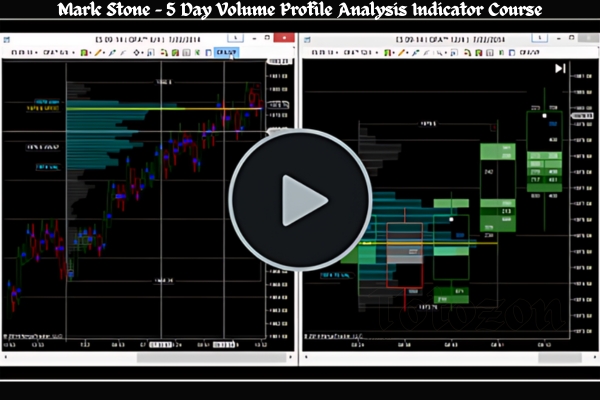 5 Day Volume Profile Analysis Indicator Course with Mark Stone
1 × $54.00
5 Day Volume Profile Analysis Indicator Course with Mark Stone
1 × $54.00 -
×
 Advanced Risk Reversals and Rolling Thunder with Stratagem Trade
1 × $54.00
Advanced Risk Reversals and Rolling Thunder with Stratagem Trade
1 × $54.00 -
×
 SATYA 2 - Online Immersion - January 2023 By Tias Little
1 × $225.00
SATYA 2 - Online Immersion - January 2023 By Tias Little
1 × $225.00 -
×
 Adx Mastery Complete Course
1 × $6.00
Adx Mastery Complete Course
1 × $6.00 -
×
 Forex Wave Theory: A Technical Analysis for Spot and Futures Curency Traders - James Bickford
1 × $6.00
Forex Wave Theory: A Technical Analysis for Spot and Futures Curency Traders - James Bickford
1 × $6.00 -
×
 Trading Academy 2024 with Tradeciety
1 × $5.00
Trading Academy 2024 with Tradeciety
1 × $5.00 -
×
 AI For Traders with Trading Markets
1 × $31.00
AI For Traders with Trading Markets
1 × $31.00 -
×
 Pristine Seminar - Guerrilla Trading Tactics with Oliver Velez
1 × $6.00
Pristine Seminar - Guerrilla Trading Tactics with Oliver Velez
1 × $6.00 -
×
 Dan Sheridan Delta Force
1 × $6.00
Dan Sheridan Delta Force
1 × $6.00 -
×
 A Mathematician Plays The Stock Market with John Allen Paulos
1 × $6.00
A Mathematician Plays The Stock Market with John Allen Paulos
1 × $6.00 -
×
 Examination Book Morning Section (1999)
1 × $6.00
Examination Book Morning Section (1999)
1 × $6.00 -
×
 The Complete Short Course on Ripple Cryptocurrency with Saad Hameed
1 × $5.00
The Complete Short Course on Ripple Cryptocurrency with Saad Hameed
1 × $5.00 -
×
 AbleTrend with John Wang & Grace Wang
1 × $6.00
AbleTrend with John Wang & Grace Wang
1 × $6.00 -
×
 FXStreet Unrecorded Webinars Sept & Oct, 2011 with Sam Seiden
1 × $6.00
FXStreet Unrecorded Webinars Sept & Oct, 2011 with Sam Seiden
1 × $6.00 -
×
 Secrets to Succesful Forex Trading Course with Jose Soto
1 × $6.00
Secrets to Succesful Forex Trading Course with Jose Soto
1 × $6.00 -
×
 Investment Strategies of Hedge Funds with Filippo Stefanini
1 × $6.00
Investment Strategies of Hedge Funds with Filippo Stefanini
1 × $6.00 -
×
 W. D Gann 's Square Of 9 Applied To Modern Markets with Sean Avidar - Hexatrade350
1 × $23.00
W. D Gann 's Square Of 9 Applied To Modern Markets with Sean Avidar - Hexatrade350
1 × $23.00 -
×
 Naked Trading Part 1 with Base Camp Trading
1 × $6.00
Naked Trading Part 1 with Base Camp Trading
1 × $6.00 -
×
 System Building Masterclass with Scott Phillips
1 × $15.00
System Building Masterclass with Scott Phillips
1 × $15.00 -
×
 Home Run Options Trading Course with Dave Aquino - Base Camp Trading
1 × $11.00
Home Run Options Trading Course with Dave Aquino - Base Camp Trading
1 × $11.00
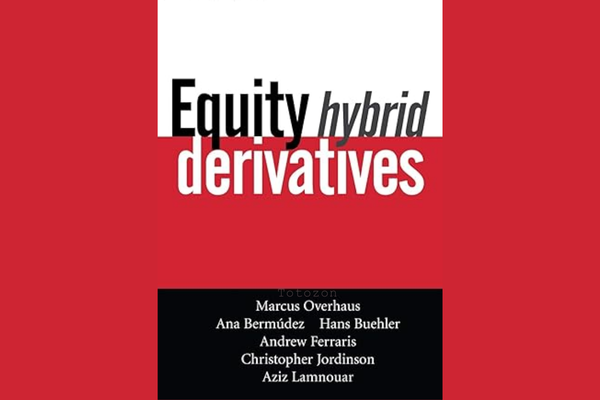
Equity Derivates with Marcus Overhaus, Andrew Ferraris, Thomas Knudsen, Ross Milward, Laurent Nguyen-Ngoc & Gero Schindlmayr
$6.00
File Size: Coming soon!
Delivery Time: 1–12 hours
Media Type: Online Course
Content Proof: Watch Here!
You may check content proof of “Equity Derivates with Marcus Overhaus, Andrew Ferraris, Thomas Knudsen, Ross Milward, Laurent Nguyen-Ngoc & Gero Schindlmayr” below:

Introduction to Equity Derivatives
Equity derivatives are financial instruments whose value is derived from the price movements of underlying equity securities. These sophisticated tools allow investors to hedge risks, speculate on market movements, and enhance portfolio performance. In the comprehensive work by Marcus Overhaus, Andrew Ferraris, Thomas Knudsen, Ross Milward, Laurent Nguyen-Ngoc, and Gero Schindlmayr, the intricacies of equity derivatives are thoroughly explored.
Understanding the Basics
What Are Equity Derivatives?
Equity derivatives include options, futures, swaps, and other structured products. These instruments can be complex, but at their core, they are contracts that derive their value from the performance of underlying equity assets.
Types of Equity Derivatives
Options
Options give the holder the right, but not the obligation, to buy or sell an asset at a predetermined price before a specific date. They are classified into two main types: calls and puts.
Futures
Futures are contracts obligating the buyer to purchase, and the seller to sell, an asset at a predetermined future date and price. They are standardized and traded on exchanges.
Swaps
Swaps are agreements between two parties to exchange sequences of cash flows for a set period. The most common equity swap is where one party pays the return of a stock or stock index and receives a fixed or floating interest rate in return.
Benefits of Equity Derivatives
Equity derivatives offer several advantages, including risk management, leveraging positions, and access to otherwise inaccessible markets.
Advanced Concepts in Equity Derivatives
Pricing Models
Black-Scholes Model
The Black-Scholes model is a mathematical model for pricing an options contract. It considers factors such as the stock price, strike price, time to expiration, risk-free rate, and volatility.
Binomial Model
The Binomial model calculates the various possible paths the stock price could take and the value of the option at each path’s end. It is particularly useful for American options, which can be exercised before expiration.
Risk Management with Derivatives
Hedging Strategies
Hedging involves taking a position in a derivative to offset potential losses in another investment. Common strategies include protective puts and covered calls.
Speculation and Arbitrage
Speculators use derivatives to bet on the future direction of the market, while arbitrageurs exploit price discrepancies in different markets to earn risk-free profits.
Market Participants
Hedge Funds
Hedge funds use equity derivatives to achieve higher returns through sophisticated strategies that may include leveraging and short selling.
Pension Funds
Pension funds use derivatives to manage the risk associated with their long-term obligations to retirees.
Retail Investors
Retail investors also engage in derivatives trading, often seeking to enhance returns or hedge individual stock positions.
Regulation and Market Structure
Regulatory Environment
The trading of equity derivatives is heavily regulated to protect investors and ensure market integrity. Key regulatory bodies include the SEC in the United States and ESMA in Europe.
Market Structure
Equity derivatives are traded on exchanges such as the Chicago Board Options Exchange (CBOE) and the International Securities Exchange (ISE), as well as over-the-counter (OTC) markets.
Challenges in Trading Equity Derivatives
Market Risk
Market risk refers to the potential losses due to adverse movements in the price of the underlying equity.
Liquidity Risk
Liquidity risk arises when there is not enough volume in the market to easily enter or exit positions without significantly affecting the price.
Operational Risk
Operational risk involves losses due to failures in internal processes, systems, or external events.
Future Trends in Equity Derivatives
Technological Advancements
Advancements in technology, including algorithmic trading and artificial intelligence, are transforming the equity derivatives market.
Sustainability and ESG
The integration of Environmental, Social, and Governance (ESG) factors into derivatives trading is gaining traction, as investors seek to align their portfolios with sustainable practices.
Globalization
The globalization of financial markets is increasing access to equity derivatives across different regions, enhancing liquidity and offering more opportunities for diversification.
Conclusion
Equity derivatives are powerful financial instruments that offer numerous benefits, including risk management, speculation, and enhanced portfolio performance. The work of Marcus Overhaus, Andrew Ferraris, Thomas Knudsen, Ross Milward, Laurent Nguyen-Ngoc, and Gero Schindlmayr provides an in-depth understanding of these tools, making them accessible to both novice and experienced investors.
FAQs
1. What are equity derivatives?
Equity derivatives are financial instruments whose value is derived from the price movements of underlying equity securities, such as stocks.
2. How are options different from futures?
Options give the holder the right to buy or sell an asset at a specific price, while futures obligate the buyer and seller to transact at a set price and date in the future.
3. What is the Black-Scholes model?
The Black-Scholes model is a mathematical model used to price options by considering factors like stock price, strike price, time to expiration, risk-free rate, and volatility.
4. How do hedge funds use derivatives?
Hedge funds use derivatives to implement sophisticated strategies aimed at achieving higher returns, including leveraging and short selling.
5. What are the risks associated with trading equity derivatives?
The primary risks include market risk, liquidity risk, and operational risk, each of which can impact the profitability and feasibility of trading these instruments.
Be the first to review “Equity Derivates with Marcus Overhaus, Andrew Ferraris, Thomas Knudsen, Ross Milward, Laurent Nguyen-Ngoc & Gero Schindlmayr”
You must be logged in to post a review.
Related products

Forex Trading
Original price was: $797.00.$10.00Current price is: $10.00.

Original price was: $4,995.00.$15.00Current price is: $15.00.

Forex Trading
Original price was: $499.00.$15.00Current price is: $15.00.

Forex Trading
Original price was: $1,898.00.$10.00Current price is: $10.00.

Original price was: $310.00.$23.00Current price is: $23.00.

Original price was: $999.00.$5.00Current price is: $5.00.

Original price was: $450.00.$23.00Current price is: $23.00.

Original price was: $799.00.$15.00Current price is: $15.00.

Original price was: $2,120.00.$15.00Current price is: $15.00.
Original price was: $139.00.$23.00Current price is: $23.00.
Original price was: $700.00.$39.00Current price is: $39.00.

Forex Trading
Original price was: $850.00.$23.00Current price is: $23.00.

Forex Trading
Original price was: $697.00.$5.00Current price is: $5.00.

Forex Trading
Original price was: $2,000.00.$23.00Current price is: $23.00.

Forex Trading
Original price was: $550.00.$5.00Current price is: $5.00.

Forex Trading
The Complete Guide to Multiple Time Frame Analysis & Reading Price Action with Aiman Almansoori
Original price was: $1,399.00.$13.00Current price is: $13.00.

Original price was: $1,200.00.$23.00Current price is: $23.00.

Original price was: $649.00.$20.00Current price is: $20.00.

Forex Trading
Original price was: $249.00.$15.00Current price is: $15.00.

Forex Trading
Original price was: $2,997.00.$23.00Current price is: $23.00.
Reviews
There are no reviews yet.