
-
×
 Options Trading & Ultimate MasterClass With Tyrone Abela - FX Evolution
1 × $54.00
Options Trading & Ultimate MasterClass With Tyrone Abela - FX Evolution
1 × $54.00 -
×
 How To Read The Market Professionally with TradeSmart
1 × $27.00
How To Read The Market Professionally with TradeSmart
1 × $27.00 -
×
 Crystal Ball Pack PLUS bonus Live Trade By Pat Mitchell - Trick Trades
1 × $20.00
Crystal Ball Pack PLUS bonus Live Trade By Pat Mitchell - Trick Trades
1 × $20.00 -
×
 Ultimate Trading Course with Dodgy's Dungeon
1 × $8.00
Ultimate Trading Course with Dodgy's Dungeon
1 × $8.00 -
×
 Essentials in Quantitative Trading QT01 By HangukQuant's
1 × $23.00
Essentials in Quantitative Trading QT01 By HangukQuant's
1 × $23.00 -
×
 Forecast 2024 Clarification with Larry Williams
1 × $15.00
Forecast 2024 Clarification with Larry Williams
1 × $15.00 -
×
 Deep Dive Butterfly Trading Strategy Class with SJG Trades
1 × $41.00
Deep Dive Butterfly Trading Strategy Class with SJG Trades
1 × $41.00 -
×
 The Naked Eye: Raw Data Analytics with Edgar Torres - Raw Data Analytics
1 × $8.00
The Naked Eye: Raw Data Analytics with Edgar Torres - Raw Data Analytics
1 × $8.00 -
×
 The Orderflow Masterclass with PrimeTrading
1 × $17.00
The Orderflow Masterclass with PrimeTrading
1 × $17.00 -
×
 Bond Market Course with The Macro Compass
1 × $15.00
Bond Market Course with The Macro Compass
1 × $15.00 -
×
 Advanced Spread Trading with Guy Bower - MasterClass Trader
1 × $15.00
Advanced Spread Trading with Guy Bower - MasterClass Trader
1 × $15.00 -
×
 High Probability Trading Using Elliott Wave And Fibonacci Analysis withVic Patel - Forex Training Group
1 × $10.00
High Probability Trading Using Elliott Wave And Fibonacci Analysis withVic Patel - Forex Training Group
1 × $10.00 -
×
 White Phoenix’s The Smart (Money) Approach to Trading with Jayson Casper
1 × $39.00
White Phoenix’s The Smart (Money) Approach to Trading with Jayson Casper
1 × $39.00 -
×
 Crypto Trading Academy with Cheeky Investor - Aussie Day Trader
1 × $13.00
Crypto Trading Academy with Cheeky Investor - Aussie Day Trader
1 × $13.00 -
×
 The Best Option Trading Course with David Jaffee - Best Stock Strategy
1 × $15.00
The Best Option Trading Course with David Jaffee - Best Stock Strategy
1 × $15.00 -
×
 Algo Trading Masterclass with Ali Casey - StatOasis
1 × $23.00
Algo Trading Masterclass with Ali Casey - StatOasis
1 × $23.00 -
×
 Trading Short TermSame Day Trades Sep 2023 with Dan Sheridan & Mark Fenton - Sheridan Options Mentoring
1 × $31.00
Trading Short TermSame Day Trades Sep 2023 with Dan Sheridan & Mark Fenton - Sheridan Options Mentoring
1 × $31.00 -
×
 Scalp Strategy and Flipping Small Accounts with Opes Trading Group
1 × $5.00
Scalp Strategy and Flipping Small Accounts with Opes Trading Group
1 × $5.00 -
×
 Home Run Options Trading Course with Dave Aquino - Base Camp Trading
1 × $11.00
Home Run Options Trading Course with Dave Aquino - Base Camp Trading
1 × $11.00 -
×
 The Indices Orderflow Masterclass with The Forex Scalpers
1 × $23.00
The Indices Orderflow Masterclass with The Forex Scalpers
1 × $23.00 -
×
 Order flow self-study training program with iMFtracker
1 × $10.00
Order flow self-study training program with iMFtracker
1 × $10.00
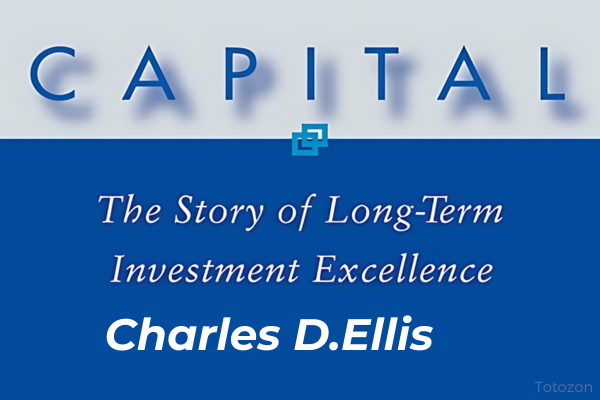
Capital with Charles D.Ellis
$6.00
File Size: Coming soon!
Delivery Time: 1–12 hours
Media Type: Online Course
Content Proof: Watch Here!
You may check content proof of “Capital with Charles D.Ellis” below:

Capital with Charles D. Ellis
Charles D. Ellis, a distinguished figure in the finance world, has profoundly influenced our understanding of capital management. His insights into investing and capital allocation are indispensable for anyone looking to navigate the complex waters of modern finance. In this article, we explore Ellis’s key principles and strategies for effective capital management, offering a comprehensive guide for both novice and seasoned investors.
Introduction to Charles D. Ellis
Who is Charles D. Ellis?
Charles D. Ellis is known for his prolific writings and thought leadership in investment management. His work has shaped the strategies of numerous investment funds and individual investors globally.
Why Study Ellis’s Approach to Capital?
Understanding Ellis’s approach to capital provides investors with a robust framework for making informed investment decisions, particularly in terms of long-term asset management.
Core Principles of Ellis’s Financial Philosophy
The Long-Term Perspective
Ellis advocates for a long-term perspective when it comes to investment. He argues that the true measure of investment success is not short-term gains but sustainable, long-term growth.
Understanding Market Efficiency
According to Ellis, markets are generally efficient. Investors should focus on areas where they can gain an informational or analytical advantage.
Tools and Techniques for Capital Allocation
Risk Assessment and Management
Risk management is central to Ellis’s philosophy. He emphasizes the importance of understanding and managing the risks associated with different investment vehicles.
Diversification Strategies
Ellis is a staunch advocate of diversification. By spreading investments across various asset classes, investors can mitigate risks and improve the stability of their returns.
Ellis’s Investment Strategies
Active vs. Passive Investment
Ellis often discusses the merits and drawbacks of active and passive investment strategies, providing guidance on when to employ each.
The Role of Alternative Investments
Ellis explores the use of alternative investments in a portfolio, such as real estate and private equity, to enhance potential returns and reduce volatility.
Implementing Ellis’s Concepts
Building a Balanced Portfolio
This section provides practical advice on how to build a portfolio that reflects Ellis’s principles, tailored to individual risk tolerances and financial goals.
Monitoring and Rebalancing
Ellis underscores the importance of regularly monitoring and rebalancing your portfolio to maintain its alignment with your strategic goals.
Challenges in Modern Investment
Navigating Low-Interest Environments
Ellis offers strategies for investing in low-interest environments, a common challenge for today’s investors.
Dealing with Market Volatility
Practical tips from Ellis on handling market volatility help investors stay the course during turbulent times.
Case Studies: Success with Ellis’s Methods
Real-World Applications
This section examines several case studies where Ellis’s strategies have been successfully applied, showcasing their effectiveness in diverse scenarios.
Lessons Learned from Investment Failures
Learning from failures is just as important as celebrating successes. Here, we explore lessons learned from investments that didn’t pan out, even when following Ellis’s advice.
Conclusion
Charles D. Ellis’s strategies for managing capital are more relevant today than ever. By adopting his approaches, investors can navigate the complexities of the financial markets with greater confidence and achieve sustainable success.
Frequently Asked Questions:
- What is Charles D. Ellis known for in the finance industry?
Ellis is renowned for his deep insights into investment strategies and capital management. - How does Charles D. Ellis define risk management?
Ellis defines risk management as the process of understanding, analyzing, and mitigating potential losses in investment. - What are some key differences between active and passive investment strategies according to Ellis?
Active investment involves selecting stocks to beat the market, whereas passive investment focuses on long-term growth through market-matching returns. - Can Ellis’s strategies be applied to small personal portfolios?
Yes, Ellis’s strategies can be scaled down to suit personal investment portfolios of any size. - How often should an investor rebalance their portfolio according to Ellis?
Ellis recommends rebalancing at least annually or whenever there is a significant shift in the market or personal financial goals.
Be the first to review “Capital with Charles D.Ellis”
You must be logged in to post a review.
Related products

Forex Trading
Original price was: $2,995.00.$31.00Current price is: $31.00.

Original price was: $310.00.$23.00Current price is: $23.00.
Original price was: $895.00.$15.00Current price is: $15.00.

Original price was: $799.00.$15.00Current price is: $15.00.

Original price was: $1,200.00.$23.00Current price is: $23.00.

Forex Trading
Original price was: $999.00.$15.00Current price is: $15.00.
Original price was: $1,800.00.$54.00Current price is: $54.00.

Forex Trading
Original price was: $550.00.$5.00Current price is: $5.00.
Original price was: $1,849.00.$15.00Current price is: $15.00.
Original price was: $700.00.$39.00Current price is: $39.00.
Forex Trading
Original price was: $397.00.$31.00Current price is: $31.00.
Forex Trading
Original price was: $4,997.00.$27.00Current price is: $27.00.

Original price was: $497.00.$31.00Current price is: $31.00.

Original price was: $197.00.$5.00Current price is: $5.00.
Forex Trading
Original price was: $2,000.00.$23.00Current price is: $23.00.

Forex Trading
Original price was: $1,098.00.$39.00Current price is: $39.00.
Forex Trading
Original price was: $125.00.$17.00Current price is: $17.00.
Forex Trading
Original price was: $249.00.$15.00Current price is: $15.00.
Forex Trading
Original price was: $1,898.00.$10.00Current price is: $10.00.

Original price was: $4,995.00.$15.00Current price is: $15.00.
Reviews
There are no reviews yet.