
-
×
 Divorcing the Dow: Using Revolutionary Market Indicators to Profit from the Stealth Boom Ahead - Jim Troup & Sharon Michalsky
1 × $6.00
Divorcing the Dow: Using Revolutionary Market Indicators to Profit from the Stealth Boom Ahead - Jim Troup & Sharon Michalsky
1 × $6.00 -
×
 Proven Swing Trading Strat & Multiple Time Frame Analysis - Robert Krausz & Thom Hartle
1 × $6.00
Proven Swing Trading Strat & Multiple Time Frame Analysis - Robert Krausz & Thom Hartle
1 × $6.00 -
×
 TRADING NFX Course with Andrew NFX
1 × $5.00
TRADING NFX Course with Andrew NFX
1 × $5.00 -
×
 The Ultimate Trading Resource with Clayton Bell, Alex Viscusi & Ben Chaffee
1 × $6.00
The Ultimate Trading Resource with Clayton Bell, Alex Viscusi & Ben Chaffee
1 × $6.00 -
×
 Traders Winning Edge (Presentation) with Adrienne Laris Toghraie
1 × $6.00
Traders Winning Edge (Presentation) with Adrienne Laris Toghraie
1 × $6.00 -
×
 Trading Aplications of Japanese Candlestick Charting with Gary S.Wagner & Bradley L.Matheny
1 × $6.00
Trading Aplications of Japanese Candlestick Charting with Gary S.Wagner & Bradley L.Matheny
1 × $6.00 -
×
 Crypto Trading Academy with Cheeky Investor - Aussie Day Trader
1 × $13.00
Crypto Trading Academy with Cheeky Investor - Aussie Day Trader
1 × $13.00 -
×
 Forex Trading For Beginners with John Jagerson - Investopedia Academy
1 × $6.00
Forex Trading For Beginners with John Jagerson - Investopedia Academy
1 × $6.00 -
×
 The Practical Handbook of Genetic Algorithms with Lance Chambers
1 × $6.00
The Practical Handbook of Genetic Algorithms with Lance Chambers
1 × $6.00 -
×
 Financial Astrology Course with Brian James Sklenka
1 × $6.00
Financial Astrology Course with Brian James Sklenka
1 × $6.00 -
×
 Developing Mindfulness: The Observer of Thought with Traders State Of Mind
1 × $6.00
Developing Mindfulness: The Observer of Thought with Traders State Of Mind
1 × $6.00 -
×
 The Indices Orderflow Masterclass with The Forex Scalpers
1 × $23.00
The Indices Orderflow Masterclass with The Forex Scalpers
1 × $23.00 -
×
 WondaFX Signature Strategy with WondaFX
1 × $5.00
WondaFX Signature Strategy with WondaFX
1 × $5.00 -
×
 The Complete Guide To Futures & Commodities Trading with Stephen Jennings
1 × $6.00
The Complete Guide To Futures & Commodities Trading with Stephen Jennings
1 × $6.00 -
×
 The TradingKey - Mastering Elliott Wave by Rob Roy 2010 + Complete Workbooks with HUBB Financial
1 × $6.00
The TradingKey - Mastering Elliott Wave by Rob Roy 2010 + Complete Workbooks with HUBB Financial
1 × $6.00 -
×
 The Hindenburg Strategy with Todd Mitchell
1 × $23.00
The Hindenburg Strategy with Todd Mitchell
1 × $23.00 -
×
 SQX Mentorship with Tip Toe Hippo
1 × $23.00
SQX Mentorship with Tip Toe Hippo
1 × $23.00 -
×
 Superleverage The Only Sensible Way to Speculate with Steve Sarnoff
1 × $6.00
Superleverage The Only Sensible Way to Speculate with Steve Sarnoff
1 × $6.00 -
×
 The Heretics of Finance with Andrew Lo & Jasmina Hasanhodzic
1 × $4.00
The Heretics of Finance with Andrew Lo & Jasmina Hasanhodzic
1 × $4.00 -
×
 Academy of Financial Trading Foundation Trading Programme Webinar
1 × $6.00
Academy of Financial Trading Foundation Trading Programme Webinar
1 × $6.00 -
×
 Essential Skills for Consistency in Trading Class with Don Kaufman
1 × $6.00
Essential Skills for Consistency in Trading Class with Don Kaufman
1 × $6.00 -
×
 The Insured Portfolio: Your Gateway to Stress-Free Global Investments with Erika Nolan, Marc-Andre Sola & Shannon Crouch
1 × $6.00
The Insured Portfolio: Your Gateway to Stress-Free Global Investments with Erika Nolan, Marc-Andre Sola & Shannon Crouch
1 × $6.00 -
×
 Fractal Flow Strategy Video Course with Fractal Flow Pro
1 × $6.00
Fractal Flow Strategy Video Course with Fractal Flow Pro
1 × $6.00 -
×
 0 DTE Options Trading Workshop with Aeromir Corporation
1 × $15.00
0 DTE Options Trading Workshop with Aeromir Corporation
1 × $15.00 -
×
 Advanced Spread Trading with Guy Bower - MasterClass Trader
1 × $15.00
Advanced Spread Trading with Guy Bower - MasterClass Trader
1 × $15.00 -
×
 The Complete Guide to Multiple Time Frame Analysis & Reading Price Action with Aiman Almansoori
1 × $13.00
The Complete Guide to Multiple Time Frame Analysis & Reading Price Action with Aiman Almansoori
1 × $13.00 -
×
 W. D Gann 's Square Of 9 Applied To Modern Markets with Sean Avidar - Hexatrade350
1 × $23.00
W. D Gann 's Square Of 9 Applied To Modern Markets with Sean Avidar - Hexatrade350
1 × $23.00 -
×
 The Prop Trading Code with Brannigan Barrett - Axia Futures
1 × $23.00
The Prop Trading Code with Brannigan Barrett - Axia Futures
1 × $23.00 -
×
 Bond Market Course with The Macro Compass
1 × $15.00
Bond Market Course with The Macro Compass
1 × $15.00 -
×
 AI For Traders with Trading Markets
1 × $31.00
AI For Traders with Trading Markets
1 × $31.00 -
×
 The Best Option Trading Course with David Jaffee - Best Stock Strategy
1 × $15.00
The Best Option Trading Course with David Jaffee - Best Stock Strategy
1 × $15.00 -
×
 ICT Prodigy Trading Course – $650K in Payouts with Alex Solignani
1 × $15.00
ICT Prodigy Trading Course – $650K in Payouts with Alex Solignani
1 × $15.00 -
×
 Crystal Ball Pack PLUS bonus Live Trade By Pat Mitchell - Trick Trades
1 × $20.00
Crystal Ball Pack PLUS bonus Live Trade By Pat Mitchell - Trick Trades
1 × $20.00 -
×
 Home Run Options Trading Course with Dave Aquino - Base Camp Trading
1 × $11.00
Home Run Options Trading Course with Dave Aquino - Base Camp Trading
1 × $11.00 -
×
 $20 – 52k 20 pips a day challange with Rafał Zuchowicz - TopMasterTrader
1 × $5.00
$20 – 52k 20 pips a day challange with Rafał Zuchowicz - TopMasterTrader
1 × $5.00 -
×
 Trading Non-Farm Payroll Report
1 × $6.00
Trading Non-Farm Payroll Report
1 × $6.00 -
×
 White Phoenix’s The Smart (Money) Approach to Trading with Jayson Casper
1 × $39.00
White Phoenix’s The Smart (Money) Approach to Trading with Jayson Casper
1 × $39.00 -
×
 Butterfly and Condor Workshop with Aeromir
1 × $15.00
Butterfly and Condor Workshop with Aeromir
1 × $15.00 -
×
 The Orderflows Trade Opportunities Encyclopedia with Michael Valtos
1 × $8.00
The Orderflows Trade Opportunities Encyclopedia with Michael Valtos
1 × $8.00 -
×
 Algo Trading Masterclass with Ali Casey - StatOasis
1 × $23.00
Algo Trading Masterclass with Ali Casey - StatOasis
1 × $23.00 -
×
 Order flow self-study training program with iMFtracker
1 × $10.00
Order flow self-study training program with iMFtracker
1 × $10.00 -
×
 Forecast 2024 Clarification with Larry Williams
1 × $15.00
Forecast 2024 Clarification with Larry Williams
1 × $15.00 -
×
 Trading Short TermSame Day Trades Sep 2023 with Dan Sheridan & Mark Fenton - Sheridan Options Mentoring
1 × $31.00
Trading Short TermSame Day Trades Sep 2023 with Dan Sheridan & Mark Fenton - Sheridan Options Mentoring
1 × $31.00 -
×
 The A14 Weekly Option Strategy Workshop with Amy Meissner
1 × $23.00
The A14 Weekly Option Strategy Workshop with Amy Meissner
1 × $23.00 -
×
 Options Trading & Ultimate MasterClass With Tyrone Abela - FX Evolution
1 × $54.00
Options Trading & Ultimate MasterClass With Tyrone Abela - FX Evolution
1 × $54.00
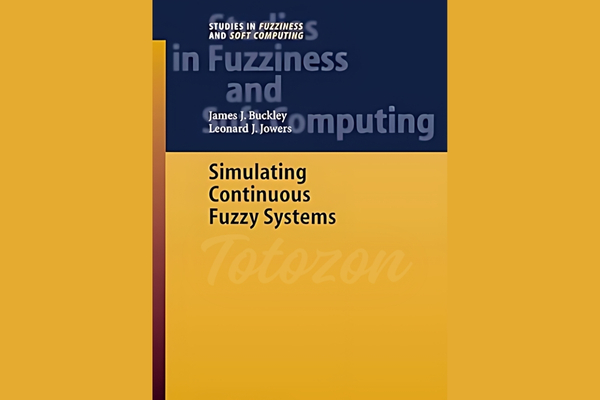
Simulating Continuous Fuzzy Systems with James Buckley & Leonard Jowers
$6.00
File Size: Coming soon!
Delivery Time: 1–12 hours
Media Type: Online Course
Simulating Continuous Fuzzy Systems with James Buckley & Leonard Jowers
In the realm of complex system analysis, simulating continuous fuzzy systems presents a unique challenge and opportunity for researchers and practitioners alike. Pioneered by experts like James Buckley and Leonard Jowers, this niche yet impactful field combines the rigor of mathematical modeling with the flexibility of fuzzy logic to tackle real-world problems. Today, we’ll delve deep into how continuous fuzzy systems are simulated and why they are crucial for advancing technology and decision-making processes.
Understanding Fuzzy Systems
What is a Fuzzy System?
Fuzzy systems are based on fuzzy logic, a form of many-valued logic that deals with reasoning that is approximate rather than fixed and exact. Unlike binary systems, which revolve around the absolute states of true and false, fuzzy systems embody degrees of truth.
Core Principles of Fuzzy Logic
Fuzzy logic incorporates a range of possibilities between the conventional binary limits. This flexibility allows it to simulate real-world scenarios more effectively, where the answers often aren’t merely ‘yes’ or ‘no’.
The Role of Continuous Systems
Definition of Continuous Systems
In contrast to discrete systems where variables can only take on distinct values, continuous systems allow for variables to exist on a spectrum, enhancing the modeling of dynamic processes.
Importance in Simulation
Continuous systems are vital in fields requiring nuanced control, such as robotics and automated systems, where precision and adaptability are paramount.
Pioneering Work of Buckley and Jowers
Contributions to Fuzzy Systems
James Buckley and Leonard Jowers have been instrumental in advancing the field of fuzzy systems, particularly in the area of continuous models. Their research has paved the way for more accurate and adaptable models.
Notable Publications and Theories
Their work includes seminal papers and books that have contributed foundational theories and methodologies to the discipline.
Simulating Continuous Fuzzy Systems
Step-by-Step Process
- Definition of Variables: Start by identifying and defining all relevant variables within the system.
- Application of Fuzzy Logic: Implement fuzzy logic to these variables, allowing for a range of values.
- Integration into Continuous Models: Seamlessly integrate these fuzzy variables into continuous models to simulate real-world processes.
Tools and Technologies Used
Modern simulations involve a mix of software tools that specialize in fuzzy logic and continuous system analysis, such as MATLAB and Simulink.
Challenges and Solutions
Common Challenges in Simulation
- Complexity in Design: Designing systems that accurately reflect fuzzy logic within a continuous domain.
- Computational Overhead: Managing the increased computational needs of such systems.
Innovative Solutions
- Algorithm Optimization: Developing more efficient algorithms to reduce computational load.
- Enhanced Software Capabilities: Leveraging advancements in software design to handle complex simulations.
Case Studies and Applications
Real-World Implementations
- Automotive Systems: Use in adaptive cruise control and suspension systems.
- Healthcare: Application in diagnostic systems and patient management.
Impact on Industry
The implementation of these systems has led to significant improvements in accuracy and efficiency across various industries.
Conclusion
The simulation of continuous fuzzy systems stands at the confluence of technology and innovation. Through the pioneering efforts of James Buckley and Leonard Jowers, this field continues to evolve, pushing the boundaries of what is possible in scientific modeling and practical applications. As we advance, the integration of fuzzy logic into continuous systems will play a pivotal role in the development of smarter, more adaptable technologies.
FAQs
- What is fuzzy logic? Fuzzy logic is a form of multi-valued logic derived from fuzzy set theory to deal with reasoning that is approximate rather than precise.
- How do continuous fuzzy systems differ from discrete systems? Unlike discrete systems that operate with fixed states, continuous fuzzy systems allow variables to have a spectrum of values, offering more granularity.
- What industries benefit most from continuous fuzzy systems? Industries such as automotive, healthcare, and manufacturing benefit greatly from the precision and adaptability offered by continuous fuzzy systems.
- What are the main challenges in simulating continuous fuzzy systems? The main challenges include the complexity of integrating fuzzy logic into continuous domains and the computational demands of such systems.
- How have Buckley and Jowers contributed to this field? They have developed foundational theories and practical methodologies that have significantly advanced the understanding and application of continuous fuzzy systems.
Be the first to review “Simulating Continuous Fuzzy Systems with James Buckley & Leonard Jowers”
You must be logged in to post a review.
Related products
Forex Trading
Original price was: $499.00.$15.00Current price is: $15.00.

Forex Trading
Original price was: $697.00.$5.00Current price is: $5.00.

Forex Trading
Original price was: $797.00.$10.00Current price is: $10.00.
Forex Trading
Original price was: $249.00.$15.00Current price is: $15.00.
Original price was: $700.00.$39.00Current price is: $39.00.
Original price was: $649.00.$20.00Current price is: $20.00.

Original price was: $4,995.00.$15.00Current price is: $15.00.
Original price was: $1,800.00.$54.00Current price is: $54.00.
Forex Trading
Original price was: $999.00.$15.00Current price is: $15.00.

Original price was: $695.00.$41.00Current price is: $41.00.
Forex Trading
Original price was: $799.00.$15.00Current price is: $15.00.
Original price was: $197.00.$5.00Current price is: $5.00.

Original price was: $497.00.$31.00Current price is: $31.00.

Forex Trading
Quantamentals – The Next Great Forefront Of Trading and Investing with Trading Markets
Original price was: $1,495.00.$8.00Current price is: $8.00.
Original price was: $895.00.$15.00Current price is: $15.00.
Forex Trading
Original price was: $2,995.00.$31.00Current price is: $31.00.
Original price was: $1,200.00.$23.00Current price is: $23.00.
Original price was: $997.00.$13.00Current price is: $13.00.
Forex Trading
Original price was: $500.00.$5.00Current price is: $5.00.
Original price was: $497.00.$11.00Current price is: $11.00.
Reviews
There are no reviews yet.