
-
×
 Essentials in Quantitative Trading QT01 By HangukQuant's
1 × $23.00
Essentials in Quantitative Trading QT01 By HangukQuant's
1 × $23.00 -
×
 Quantamentals - The Next Great Forefront Of Trading and Investing with Trading Markets
1 × $8.00
Quantamentals - The Next Great Forefront Of Trading and Investing with Trading Markets
1 × $8.00 -
×
 Original Charting 1936 with W.D.Gann
1 × $6.00
Original Charting 1936 with W.D.Gann
1 × $6.00 -
×
 Options Academy Elevate with Simon Ree - Tao of Trading
1 × $109.00
Options Academy Elevate with Simon Ree - Tao of Trading
1 × $109.00 -
×
 W. D Gann 's Square Of 9 Applied To Modern Markets with Sean Avidar - Hexatrade350
1 × $23.00
W. D Gann 's Square Of 9 Applied To Modern Markets with Sean Avidar - Hexatrade350
1 × $23.00 -
×
 Candlestick Charting Explained with Greg Morris
1 × $8.00
Candlestick Charting Explained with Greg Morris
1 × $8.00 -
×
 Julian Robertson: A Tiger in the Land of Bulls and Bears with Daniel Strachman
1 × $6.00
Julian Robertson: A Tiger in the Land of Bulls and Bears with Daniel Strachman
1 × $6.00 -
×
 SQX Mentorship with Tip Toe Hippo
1 × $23.00
SQX Mentorship with Tip Toe Hippo
1 × $23.00 -
×
 Money Attraction Bootcamp - Video + Audio + Workbook by Greg Habstritt
1 × $6.00
Money Attraction Bootcamp - Video + Audio + Workbook by Greg Habstritt
1 × $6.00 -
×
 High Probability Trading Using Elliott Wave And Fibonacci Analysis withVic Patel - Forex Training Group
1 × $10.00
High Probability Trading Using Elliott Wave And Fibonacci Analysis withVic Patel - Forex Training Group
1 × $10.00 -
×
 Advanced Spread Trading with Guy Bower - MasterClass Trader
1 × $15.00
Advanced Spread Trading with Guy Bower - MasterClass Trader
1 × $15.00 -
×
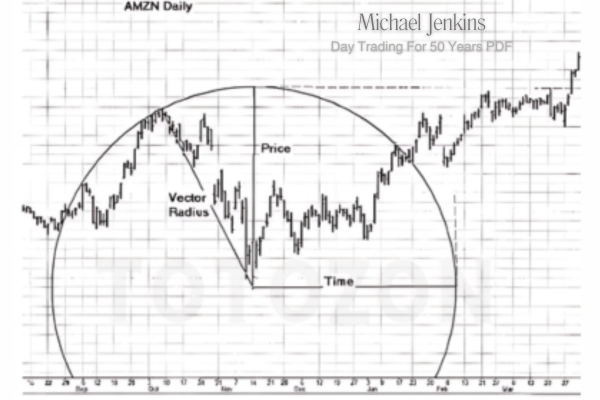 Day Trading For 50 Years PDF with Michael Jenkins
1 × $6.00
Day Trading For 50 Years PDF with Michael Jenkins
1 × $6.00 -
×
 A Course in Trading with Donald Mack & Wetsel Market Bureau
1 × $6.00
A Course in Trading with Donald Mack & Wetsel Market Bureau
1 × $6.00 -
×
 Guidelines for Analysis and Establishing a Trading Plan with Charles Drummond
1 × $6.00
Guidelines for Analysis and Establishing a Trading Plan with Charles Drummond
1 × $6.00 -
×
 Butterfly and Condor Workshop with Aeromir
1 × $15.00
Butterfly and Condor Workshop with Aeromir
1 × $15.00 -
×
 Forecast 2024 Clarification with Larry Williams
1 × $15.00
Forecast 2024 Clarification with Larry Williams
1 × $15.00 -
×
 Ultimate Trading Course with Dodgy's Dungeon
1 × $8.00
Ultimate Trading Course with Dodgy's Dungeon
1 × $8.00 -
×
 Secrets of the Trading Pros with Jack Bouroudjan & Terrence Duffy
1 × $6.00
Secrets of the Trading Pros with Jack Bouroudjan & Terrence Duffy
1 × $6.00 -
×
 Crypto Trading Academy with Cheeky Investor - Aussie Day Trader
1 × $13.00
Crypto Trading Academy with Cheeky Investor - Aussie Day Trader
1 × $13.00 -
×
 Crystal Ball Pack PLUS bonus Live Trade By Pat Mitchell - Trick Trades
1 × $20.00
Crystal Ball Pack PLUS bonus Live Trade By Pat Mitchell - Trick Trades
1 × $20.00 -
×
 The Prop Trading Code with Brannigan Barrett - Axia Futures
1 × $23.00
The Prop Trading Code with Brannigan Barrett - Axia Futures
1 × $23.00 -
×
 How You Can Be Right While the Crowd Loses with Jack Bernstein
1 × $6.00
How You Can Be Right While the Crowd Loses with Jack Bernstein
1 × $6.00 -
×
 Profit Generating System with Brian Williams
1 × $6.00
Profit Generating System with Brian Williams
1 × $6.00 -
×
 PRO COURSE Order Flow Strategy with Gova Trading Academy
1 × $5.00
PRO COURSE Order Flow Strategy with Gova Trading Academy
1 × $5.00 -
×
 Algo Trading Masterclass with Ali Casey - StatOasis
1 × $23.00
Algo Trading Masterclass with Ali Casey - StatOasis
1 × $23.00 -
×
 Fundamentals of the Securities Industry with William A.Rini
1 × $6.00
Fundamentals of the Securities Industry with William A.Rini
1 × $6.00 -
×
 The Loyalty Effect with Frederick Reichheld
1 × $6.00
The Loyalty Effect with Frederick Reichheld
1 × $6.00 -
×
 Traders Winning Edge (Presentation) with Adrienne Laris Toghraie
1 × $6.00
Traders Winning Edge (Presentation) with Adrienne Laris Toghraie
1 × $6.00 -
×
 Option Trading: Pricing and Volatility Strategies and Techniques with Euan Sinclair
1 × $6.00
Option Trading: Pricing and Volatility Strategies and Techniques with Euan Sinclair
1 × $6.00 -
×
 AI For Traders with Trading Markets
1 × $31.00
AI For Traders with Trading Markets
1 × $31.00 -
×
 Pablo Order Flow Education with Pablo
1 × $6.00
Pablo Order Flow Education with Pablo
1 × $6.00 -
×
 Options Trading & Ultimate MasterClass With Tyrone Abela - FX Evolution
1 × $54.00
Options Trading & Ultimate MasterClass With Tyrone Abela - FX Evolution
1 × $54.00 -
×
 Natural Language Processing in Trading with Dr. Terry Benzschawel
1 × $31.00
Natural Language Processing in Trading with Dr. Terry Benzschawel
1 × $31.00 -
×
 Harmonic Elliott Wave: The Case for Modification of R. N. Elliott's Impulsive Wave Structure with Ian Copsey
1 × $6.00
Harmonic Elliott Wave: The Case for Modification of R. N. Elliott's Impulsive Wave Structure with Ian Copsey
1 × $6.00 -
×
 Traders Winning Edge with Adrienne Laris Toghraie
1 × $6.00
Traders Winning Edge with Adrienne Laris Toghraie
1 × $6.00 -
×
 The Indices Orderflow Masterclass with The Forex Scalpers
1 × $23.00
The Indices Orderflow Masterclass with The Forex Scalpers
1 × $23.00 -
×
 Global Product with John Stark
1 × $6.00
Global Product with John Stark
1 × $6.00 -
×
 Guide to Scanning for Potential Stock Trades class with Jeff Bierman
1 × $6.00
Guide to Scanning for Potential Stock Trades class with Jeff Bierman
1 × $6.00 -
×
 Knowing Where the Energy is Coming From with Charles Drummond
1 × $6.00
Knowing Where the Energy is Coming From with Charles Drummond
1 × $6.00
Buying and Selling Volatility with Kevin B.Connolly
$6.00
File Size: 1.42 MB
Delivery Time: 1–12 hours
Media Type: Online Course
Content Proof: Watch Here!
You may check content proof of “Buying and Selling Volatility with Kevin B.Connolly” below:

Buying and Selling Volatility with Kevin B. Connolly
In the dynamic world of financial markets, volatility presents both opportunities and challenges for traders and investors. Kevin B. Connolly, a renowned expert in the field, provides deep insights into buying and selling volatility. In this article, we will explore the fundamental concepts, strategies, and practical applications of trading volatility, drawing from Connolly’s extensive expertise.
Understanding Volatility
Volatility refers to the degree of variation in the price of a financial instrument over time. It is a key measure of market risk and uncertainty.
Types of Volatility
- Historical Volatility: Calculated based on past price movements.
- Implied Volatility: Derived from the prices of options and reflects market expectations of future volatility.
- Realized Volatility: The actual volatility observed over a specific period.
The Importance of Volatility in Trading
Volatility is crucial for traders as it impacts the pricing of options and other derivatives. It also affects risk management and trading strategies.
Opportunities in Volatile Markets
- Higher Profit Potential: Volatile markets can offer significant profit opportunities due to large price swings.
- Diverse Strategies: Traders can employ various strategies to capitalize on volatility.
Kevin B. Connolly’s Approach to Volatility Trading
Kevin B. Connolly emphasizes a structured approach to trading volatility, incorporating rigorous analysis and strategic planning.
Analytical Techniques
Connolly advocates for a blend of technical and fundamental analysis to gauge market conditions and predict volatility trends.
Strategic Planning
Strategic planning involves setting clear goals, defining risk tolerance, and developing a comprehensive trading plan.
Buying Volatility
When to Buy Volatility
- Market Uncertainty: During periods of high uncertainty, implied volatility tends to rise.
- Earnings Announcements: Volatility often increases around earnings reports and other major events.
Strategies for Buying Volatility
- Long Straddle: Buying a call and put option at the same strike price, benefiting from large price movements in either direction.
- Long Strangle: Similar to a straddle, but with different strike prices for the call and put options.
Risk Management
- Set Limits: Define entry and exit points to manage risk effectively.
- Use Stop-Loss Orders: Protect against significant losses by setting stop-loss orders.
Selling Volatility
When to Sell Volatility
- Stable Markets: When the market is stable and volatility is low.
- Post-Event: After major events when volatility is expected to decrease.
Strategies for Selling Volatility
- Short Straddle: Selling a call and put option at the same strike price, profiting from low volatility.
- Short Strangle: Selling out-of-the-money call and put options, expecting minimal price movement.
Risk Management
- Hedging: Use other financial instruments to hedge against potential losses.
- Monitor Market Conditions: Continuously monitor the market to adjust strategies as needed.
Volatility Indicators
Common Volatility Indicators
- VIX (Volatility Index): Known as the “fear gauge,” it measures the market’s expectation of future volatility.
- Bollinger Bands: A technical indicator that depicts volatility through the width of bands placed around a moving average.
Using Indicators for Trading Decisions
- Trend Analysis: Analyze trends in volatility indicators to make informed trading decisions.
- Signal Confirmation: Use multiple indicators to confirm trading signals and reduce the risk of false signals.
Advanced Volatility Trading Techniques
Volatility Arbitrage
Volatility arbitrage involves exploiting differences in implied and realized volatility to make profits.
Gamma Scalping
Gamma scalping is a sophisticated trading strategy that involves adjusting delta positions to profit from volatility fluctuations.
Delta-Hedging
Delta-hedging involves adjusting the position in the underlying asset to offset the delta risk of options, aiming for a neutral position.
Challenges in Volatility Trading
Market Risks
Volatility trading is inherently risky, and traders must be prepared for sudden market changes.
Complexity
Strategies like gamma scalping and delta-hedging require advanced knowledge and experience.
Emotional Discipline
Maintaining emotional discipline is crucial for success in volatility trading, as markets can be highly unpredictable.
Conclusion
Trading volatility, as outlined by Kevin B. Connolly, offers a wealth of opportunities for those who master its complexities. By understanding the fundamentals, employing strategic planning, and managing risks effectively, traders can capitalize on the dynamic nature of volatile markets.
FAQs
1. What is volatility in financial markets?
Volatility refers to the degree of variation in the price of a financial instrument over time, indicating market risk and uncertainty.
2. What are common strategies for buying volatility?
Common strategies include long straddles and long strangles, which benefit from large price movements.
3. How can traders manage risk when selling volatility?
Traders can manage risk by setting limits, using stop-loss orders, and employing hedging techniques.
4. What are some advanced volatility trading techniques?
Advanced techniques include volatility arbitrage, gamma scalping, and delta-hedging.
5. Why is emotional discipline important in volatility trading?
Emotional discipline is crucial because volatility trading involves high risk and unpredictable market movements.
Be the first to review “Buying and Selling Volatility with Kevin B.Connolly”
You must be logged in to post a review.
Related products
Forex Trading
Quantamentals – The Next Great Forefront Of Trading and Investing with Trading Markets
Original price was: $1,495.00.$8.00Current price is: $8.00.

Forex Trading
Original price was: $500.00.$5.00Current price is: $5.00.
Forex Trading
Original price was: $799.00.$15.00Current price is: $15.00.
Forex Trading
Original price was: $850.00.$23.00Current price is: $23.00.

Forex Trading
Original price was: $999.00.$15.00Current price is: $15.00.
Original price was: $997.00.$13.00Current price is: $13.00.

Original price was: $2,120.00.$15.00Current price is: $15.00.
Forex Trading
Original price was: $797.00.$10.00Current price is: $10.00.
Original price was: $1,200.00.$23.00Current price is: $23.00.
Original price was: $649.00.$20.00Current price is: $20.00.

Original price was: $700.00.$39.00Current price is: $39.00.

Forex Trading
Original price was: $1,898.00.$10.00Current price is: $10.00.
Forex Trading
Original price was: $2,997.00.$23.00Current price is: $23.00.

Forex Trading
The Complete Guide to Multiple Time Frame Analysis & Reading Price Action with Aiman Almansoori
Original price was: $1,399.00.$13.00Current price is: $13.00.

Original price was: $695.00.$41.00Current price is: $41.00.

Original price was: $497.00.$11.00Current price is: $11.00.

Forex Trading
Original price was: $4,997.00.$27.00Current price is: $27.00.
Forex Trading
Original price was: $249.00.$15.00Current price is: $15.00.

Forex Trading
Original price was: $550.00.$5.00Current price is: $5.00.
Forex Trading
Original price was: $239.00.$8.00Current price is: $8.00.
Reviews
There are no reviews yet.