
-
×
 Long-Term Secrets to Short-Term Trading (Ebook) with Larry Williams
1 × $6.00
Long-Term Secrets to Short-Term Trading (Ebook) with Larry Williams
1 × $6.00 -
×
 Mastering Income Spread Trading with Dave Aquino - Base Camp Trading
1 × $23.00
Mastering Income Spread Trading with Dave Aquino - Base Camp Trading
1 × $23.00 -
×
 How To Write High Converting Copy with Tej Dosa
1 × $6.00
How To Write High Converting Copy with Tej Dosa
1 × $6.00 -
×
 Get 95% Win Rate With The Triple Candy Method - Eden
1 × $5.00
Get 95% Win Rate With The Triple Candy Method - Eden
1 × $5.00 -
×
 Ahead of the Curve with Joseph Ellis
1 × $6.00
Ahead of the Curve with Joseph Ellis
1 × $6.00 -
×
 Options University - Ron Ianieri – Options University Live Seminars
1 × $6.00
Options University - Ron Ianieri – Options University Live Seminars
1 × $6.00 -
×
 Forex Power Strategy Course with Jason Steele
1 × $6.00
Forex Power Strategy Course with Jason Steele
1 × $6.00 -
×
 Forty Cents for Financial Freedom with Darlene Nelson
1 × $6.00
Forty Cents for Financial Freedom with Darlene Nelson
1 × $6.00 -
×
 Handbook for Enviroment Risk Decision Making with C.Richard Cothern
1 × $6.00
Handbook for Enviroment Risk Decision Making with C.Richard Cothern
1 × $6.00 -
×
 Algo Trading Masterclass with Ali Casey - StatOasis
1 × $23.00
Algo Trading Masterclass with Ali Casey - StatOasis
1 × $23.00 -
×
 AI For Traders with Trading Markets
1 × $31.00
AI For Traders with Trading Markets
1 × $31.00 -
×
 Market Structure Matters with Haim Bodek
1 × $62.00
Market Structure Matters with Haim Bodek
1 × $62.00 -
×
 ETF Profit Driver Course with Bill Poulos
1 × $6.00
ETF Profit Driver Course with Bill Poulos
1 × $6.00 -
×
 A Comprehensive Guide to Intraday Trading Strategies & Setups Class with Jeff Bierman
1 × $6.00
A Comprehensive Guide to Intraday Trading Strategies & Setups Class with Jeff Bierman
1 × $6.00 -
×
 Master Class with Gerald Appel
1 × $6.00
Master Class with Gerald Appel
1 × $6.00 -
×
 Options 101 - The Basics and Beyond Class A 5-Part Course with Don Kaufman
1 × $6.00
Options 101 - The Basics and Beyond Class A 5-Part Course with Don Kaufman
1 × $6.00 -
×
 Practical Speculation with Victor Niederhoffer, Laurel Kenner
1 × $6.00
Practical Speculation with Victor Niederhoffer, Laurel Kenner
1 × $6.00 -
×
 Secrets of An Electronic Futures Trader with Larry Levin
1 × $6.00
Secrets of An Electronic Futures Trader with Larry Levin
1 × $6.00 -
×
 Mastering Fundamental Analysis with Michael Thomsett
1 × $6.00
Mastering Fundamental Analysis with Michael Thomsett
1 × $6.00 -
×
 RSI Unleashed: Building a Comprehensive Trading Framework By Doc Severson
1 × $6.00
RSI Unleashed: Building a Comprehensive Trading Framework By Doc Severson
1 × $6.00 -
×
 Best of the Best: Collars with Amy Meissner & Scott Ruble
1 × $15.00
Best of the Best: Collars with Amy Meissner & Scott Ruble
1 × $15.00 -
×
 Commodity Futures Traders Club (CTCN) Issues 01 – 77
1 × $6.00
Commodity Futures Traders Club (CTCN) Issues 01 – 77
1 × $6.00 -
×
 Financial Fortress with TradeSmart University
1 × $6.00
Financial Fortress with TradeSmart University
1 × $6.00 -
×
 Advanced GET 8.0 EOD
1 × $6.00
Advanced GET 8.0 EOD
1 × $6.00 -
×
 Entries & Exits Strategy with The Chart Guys
1 × $6.00
Entries & Exits Strategy with The Chart Guys
1 × $6.00 -
×
 New York Institute of Finance – Futures. A Personal Seminar
1 × $6.00
New York Institute of Finance – Futures. A Personal Seminar
1 × $6.00 -
×
 Mind Over Markets
1 × $6.00
Mind Over Markets
1 × $6.00 -
×
 0 DTE Options Trading Workshop with Aeromir Corporation
1 × $15.00
0 DTE Options Trading Workshop with Aeromir Corporation
1 × $15.00 -
×
 Best of Livestock with Timothy Sykes
1 × $5.00
Best of Livestock with Timothy Sykes
1 × $5.00 -
×
 Prometheus Course with QuantProgram
1 × $13.00
Prometheus Course with QuantProgram
1 × $13.00 -
×
 Learn To Fish Part II - Generating Consistent Income Through Day Trading with Daniel
1 × $6.00
Learn To Fish Part II - Generating Consistent Income Through Day Trading with Daniel
1 × $6.00 -
×
 Academy of Financial Trading Foundation Trading Programme Webinar
1 × $6.00
Academy of Financial Trading Foundation Trading Programme Webinar
1 × $6.00 -
×
 Forex Trading Course. Turn $1,260 Into $12,300 In 30 Days with David Arena
1 × $6.00
Forex Trading Course. Turn $1,260 Into $12,300 In 30 Days with David Arena
1 × $6.00 -
×
 HandBook of Parametric and Nonparametric Statistical Procedures with David J.Sheskin
1 × $6.00
HandBook of Parametric and Nonparametric Statistical Procedures with David J.Sheskin
1 × $6.00 -
×
 The Insured Portfolio: Your Gateway to Stress-Free Global Investments with Erika Nolan, Marc-Andre Sola & Shannon Crouch
1 × $6.00
The Insured Portfolio: Your Gateway to Stress-Free Global Investments with Erika Nolan, Marc-Andre Sola & Shannon Crouch
1 × $6.00 -
×
 Passages To Profitability: A Comprehensive Guide To Channel Trading with Professor Jeff Bierman, CMT
1 × $6.00
Passages To Profitability: A Comprehensive Guide To Channel Trading with Professor Jeff Bierman, CMT
1 × $6.00 -
×
 Intra-day Trading Strategies. Proven Steps to Trading Profits
1 × $6.00
Intra-day Trading Strategies. Proven Steps to Trading Profits
1 × $6.00 -
×
 Option Strategies with Courtney Smith
1 × $6.00
Option Strategies with Courtney Smith
1 × $6.00 -
×
 The Trading Blueprint with Brad Goh - The Trading Geek
1 × $5.00
The Trading Blueprint with Brad Goh - The Trading Geek
1 × $5.00 -
×
 Commitments of Traders : Strategies for Tracking the Market and Trading Profitably with Floyd Upperman
1 × $6.00
Commitments of Traders : Strategies for Tracking the Market and Trading Profitably with Floyd Upperman
1 × $6.00 -
×
 Master Traders: Strategies for Superior Returns from Today's Top Traders with Fari Hamzei & Steve Shobin
1 × $6.00
Master Traders: Strategies for Superior Returns from Today's Top Traders with Fari Hamzei & Steve Shobin
1 × $6.00 -
×
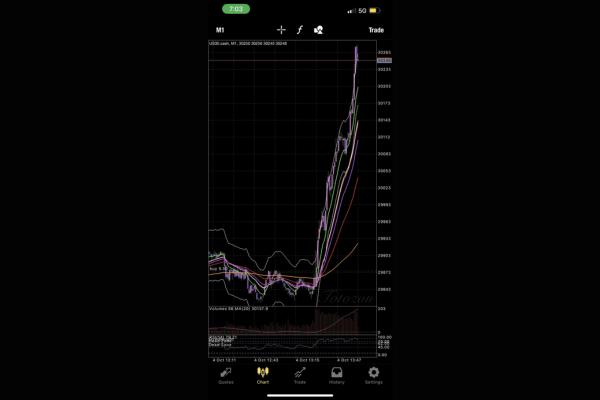 Cheatcode Trend System with Dominique Woodson
1 × $15.00
Cheatcode Trend System with Dominique Woodson
1 × $15.00 -
×
 How I Trade the QQQs with Don Miller
1 × $6.00
How I Trade the QQQs with Don Miller
1 × $6.00 -
×
 Kicker Signals with Stephen W.Bigalow
1 × $6.00
Kicker Signals with Stephen W.Bigalow
1 × $6.00 -
×
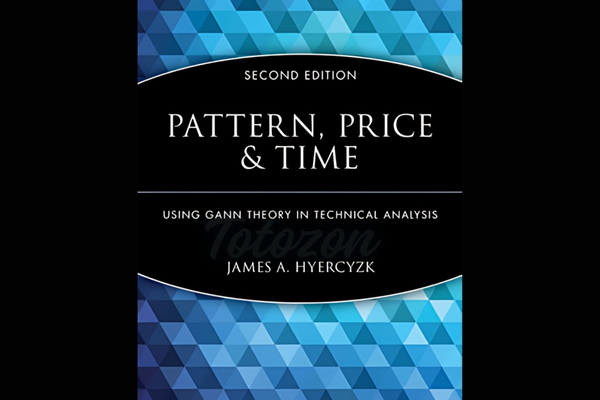 Pattern- Price & Time. Using Gann Theory in Trading Systems (2nd Ed.)
1 × $6.00
Pattern- Price & Time. Using Gann Theory in Trading Systems (2nd Ed.)
1 × $6.00 -
×
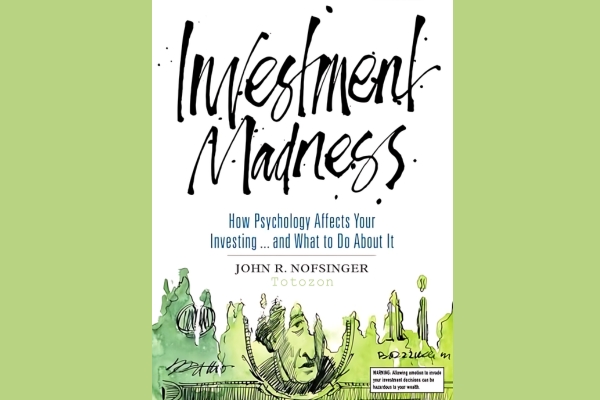 Investment Madness with John Nofsinger
1 × $6.00
Investment Madness with John Nofsinger
1 × $6.00 -
×
 Fast Track Course with Tradelikerocket
1 × $233.00
Fast Track Course with Tradelikerocket
1 × $233.00 -
×
 Futures Trading Secrets Home Study Course 2008 with Bill McCready
1 × $6.00
Futures Trading Secrets Home Study Course 2008 with Bill McCready
1 × $6.00 -
×
 The City Traders Course with Andrew Lockwood
1 × $10.00
The City Traders Course with Andrew Lockwood
1 × $10.00 -
×
 Gillen Predicts with Jack Gillen
1 × $6.00
Gillen Predicts with Jack Gillen
1 × $6.00 -
×
 Trading Against the Crowd with John Summa
1 × $6.00
Trading Against the Crowd with John Summa
1 × $6.00 -
×
 Trading as a Business with Alexander Elder
1 × $6.00
Trading as a Business with Alexander Elder
1 × $6.00 -
×
 AnkhFX Academy Course
1 × $17.00
AnkhFX Academy Course
1 × $17.00 -
×
 Day Trading and Swing Trading the Currency Market with Kathy Lien
1 × $6.00
Day Trading and Swing Trading the Currency Market with Kathy Lien
1 × $6.00 -
×
 Candlestick & Pivot Point Strategies with John L.Person
1 × $6.00
Candlestick & Pivot Point Strategies with John L.Person
1 × $6.00 -
×
 Commodity Options: Trading and Hedging Volatility in the World’s Most Lucrative Market with Carley Garner & Paul Brittain
1 × $6.00
Commodity Options: Trading and Hedging Volatility in the World’s Most Lucrative Market with Carley Garner & Paul Brittain
1 × $6.00 -
×
 Currency Strategy with Callum Henderson
1 × $6.00
Currency Strategy with Callum Henderson
1 × $6.00 -
×
 Trading - Candlelight - Ryan Litchfield
1 × $6.00
Trading - Candlelight - Ryan Litchfield
1 × $6.00 -
×
 The Psychology Of Trading with Brett N.Steenbarger
1 × $6.00
The Psychology Of Trading with Brett N.Steenbarger
1 × $6.00 -
×
 Matrix Spread Options Trading Course with Base Camp Trading
1 × $31.00
Matrix Spread Options Trading Course with Base Camp Trading
1 × $31.00 -
×
 Portfolio Management using Machine Learning: Hierarchical Risk Parity
1 × $39.00
Portfolio Management using Machine Learning: Hierarchical Risk Parity
1 × $39.00 -
×
 Short-Term Trading, Long-Term Profits with John Leizman - McGraw-Hill
1 × $6.00
Short-Term Trading, Long-Term Profits with John Leizman - McGraw-Hill
1 × $6.00 -
×
 Outsmarting Wall Street (3rd Ed) with Daniel Alan Seiver
1 × $6.00
Outsmarting Wall Street (3rd Ed) with Daniel Alan Seiver
1 × $6.00 -
×
 High Probability Trading Using Elliott Wave And Fibonacci Analysis withVic Patel - Forex Training Group
1 × $10.00
High Probability Trading Using Elliott Wave And Fibonacci Analysis withVic Patel - Forex Training Group
1 × $10.00

Streetsmart Guide To Valuing a Stock (2nd Ed.) with Gary Gray
$6.00
File Size: Coming soon!
Delivery Time: 1–12 hours
Media Type: Online Course
Content Proof: Watch Here!
You may check content proof of “Streetsmart Guide To Valuing a Stock (2nd Ed.) with Gary Gray” below:

Streetsmart Guide To Valuing a Stock (2nd Ed.) with Gary Gray
Valuing a stock accurately is crucial for making informed investment decisions. The “Streetsmart Guide to Valuing a Stock (2nd Ed.)” by Gary Gray provides comprehensive strategies and methodologies to help investors determine the true worth of a stock. In this article, we’ll delve into the key concepts and techniques outlined in Gray’s guide, offering practical insights to enhance your stock valuation skills.
Introduction to Stock Valuation
Why Valuation Matters
Stock valuation is essential for identifying investment opportunities and making informed decisions. It helps investors understand whether a stock is overvalued, undervalued, or fairly priced.
Who is Gary Gray?
Gary Gray is a seasoned financial analyst and author with extensive experience in stock valuation. His expertise has helped many investors achieve their financial goals through strategic stock analysis.
Fundamental Concepts of Stock Valuation
1. Intrinsic Value
Definition
Intrinsic value refers to the actual worth of a stock based on its fundamentals, including earnings, dividends, and growth potential.
Importance
Understanding intrinsic value helps investors make decisions based on a stock’s true worth rather than market speculation.
2. Market Value
Definition
Market value is the current price at which a stock is trading on the market.
Comparison with Intrinsic Value
Comparing market value to intrinsic value helps determine whether a stock is overvalued, undervalued, or fairly priced.
Valuation Methods
1. Discounted Cash Flow (DCF) Analysis
Overview
DCF analysis estimates the value of a stock based on its expected future cash flows, discounted back to their present value.
Steps Involved
- Project Future Cash Flows
- Determine the Discount Rate
- Calculate Present Value
2. Price-to-Earnings (P/E) Ratio
Overview
The P/E ratio compares a company’s current share price to its per-share earnings.
Usage
A high P/E ratio may indicate that a stock is overvalued, while a low P/E ratio may suggest it is undervalued.
3. Price-to-Book (P/B) Ratio
Overview
The P/B ratio compares a stock’s market value to its book value.
Usage
A lower P/B ratio may indicate a stock is undervalued, while a higher ratio could suggest overvaluation.
4. Dividend Discount Model (DDM)
Overview
DDM values a stock based on the present value of its expected future dividends.
Steps Involved
- Estimate Future Dividends
- Determine the Discount Rate
- Calculate Present Value
Applying Valuation Techniques
Step-by-Step Guide
Step 1: Gather Financial Data
Collect relevant financial data, including earnings reports, cash flow statements, and balance sheets.
Step 2: Choose Appropriate Valuation Method
Select the valuation method that best suits the stock and industry.
Step 3: Perform Calculations
Perform the necessary calculations to determine the intrinsic value of the stock.
Step 4: Compare with Market Value
Compare the intrinsic value with the current market value to assess whether the stock is overvalued, undervalued, or fairly priced.
Practical Examples
Example 1: DCF Analysis
Scenario
Applying DCF analysis to a technology company with high growth potential.
Process
- Project future cash flows based on past performance and growth forecasts.
- Determine an appropriate discount rate.
- Calculate the present value of future cash flows.
Example 2: P/E Ratio
Scenario
Evaluating a consumer goods company using the P/E ratio.
Process
- Obtain the current share price and earnings per share (EPS).
- Calculate the P/E ratio and compare it to industry averages.
Common Mistakes in Stock Valuation
1. Over-Reliance on a Single Method
Issue
Relying solely on one valuation method can lead to inaccurate assessments.
Solution
Use multiple valuation methods to get a comprehensive view of a stock’s value.
2. Ignoring Market Conditions
Issue
Market conditions can significantly impact stock prices and valuation accuracy.
Solution
Consider current market trends and economic factors when performing valuations.
3. Inaccurate Financial Projections
Issue
Incorrect financial projections can skew valuation results.
Solution
Use conservative estimates and validate projections with historical data.
Advanced Valuation Techniques
1. Earnings Yield
Overview
Earnings yield compares a company’s earnings to its market value, providing an alternative to the P/E ratio.
2. Economic Value Added (EVA)
Overview
EVA measures a company’s financial performance based on residual wealth, calculated by deducting the cost of capital from operating profit.
Implementing Valuation in Your Investment Strategy
Building a Valuation Model
Software and Tools
Use financial software and tools to build detailed valuation models.
Regular Updates
Continuous Monitoring
Regularly update your valuation models with the latest financial data and market trends.
Conclusion
Valuing a stock accurately is a crucial skill for successful investing. The “Streetsmart Guide to Valuing a Stock (2nd Ed.)” by Gary Gray provides a thorough framework for understanding and applying various valuation methods. By mastering these techniques, you can make informed investment decisions and achieve your financial goals.
FAQs
1. What is the intrinsic value of a stock?
Intrinsic value is the actual worth of a stock based on its fundamentals, such as earnings, dividends, and growth potential.
2. How does the P/E ratio help in valuing a stock?
The P/E ratio compares a company’s current share price to its per-share earnings, helping determine if a stock is overvalued or undervalued.
3. What is the purpose of DCF analysis?
DCF analysis estimates the value of a stock based on its expected future cash flows, discounted back to their present value.
4. Why is diversification important in stock valuation?
Diversification helps manage risk by spreading investments across various asset classes, reducing the impact of poor-performing stocks.
5. How can I improve my stock valuation skills?
Continuous learning, using multiple valuation methods, and staying informed about market trends and economic factors can enhance your stock valuation skills.
Be the first to review “Streetsmart Guide To Valuing a Stock (2nd Ed.) with Gary Gray”
You must be logged in to post a review.
Related products

Original price was: $299.00.$8.00Current price is: $8.00.

Forex Trading
The Complete Guide to Multiple Time Frame Analysis & Reading Price Action with Aiman Almansoori
Original price was: $1,399.00.$13.00Current price is: $13.00.

Original price was: $139.00.$23.00Current price is: $23.00.

Original price was: $1,849.00.$15.00Current price is: $15.00.

Original price was: $197.00.$5.00Current price is: $5.00.
Original price was: $497.00.$31.00Current price is: $31.00.

Original price was: $700.00.$39.00Current price is: $39.00.

Original price was: $997.00.$13.00Current price is: $13.00.

Forex Trading
Original price was: $1,098.00.$39.00Current price is: $39.00.

Original price was: $1,200.00.$23.00Current price is: $23.00.

Original price was: $4,995.00.$15.00Current price is: $15.00.

Forex Trading
Original price was: $550.00.$5.00Current price is: $5.00.

Original price was: $2,120.00.$15.00Current price is: $15.00.

Original price was: $1,800.00.$54.00Current price is: $54.00.
Forex Trading
Original price was: $999.00.$15.00Current price is: $15.00.

Forex Trading
Original price was: $239.00.$8.00Current price is: $8.00.

Original price was: $997.00.$8.00Current price is: $8.00.
Forex Trading
Original price was: $797.00.$10.00Current price is: $10.00.

Forex Trading
Original price was: $249.00.$15.00Current price is: $15.00.
Forex Trading
Original price was: $697.00.$5.00Current price is: $5.00.

Reviews
There are no reviews yet.