
-
×
 Stock Trader`s Almanac 2012 with Jeffrey Hirsch & Yale Hirsch
1 × $6.00
Stock Trader`s Almanac 2012 with Jeffrey Hirsch & Yale Hirsch
1 × $6.00 -
×
 Forex Master Class with Falcon Trading Academy
1 × $5.00
Forex Master Class with Falcon Trading Academy
1 × $5.00 -
×
 The Banker’s Edge Webinar & Extras
1 × $6.00
The Banker’s Edge Webinar & Extras
1 × $6.00 -
×
 Superleverage The Only Sensible Way to Speculate with Steve Sarnoff
1 × $6.00
Superleverage The Only Sensible Way to Speculate with Steve Sarnoff
1 × $6.00 -
×
 How Big Money Trades A Key Aspect of Systems Thinking - Van Tharp and Chuck Whitman – Van Tharp
1 × $46.00
How Big Money Trades A Key Aspect of Systems Thinking - Van Tharp and Chuck Whitman – Van Tharp
1 × $46.00 -
×
 The Day Trading ES Futures Blueprint Class with Corey Rosenbloom
1 × $6.00
The Day Trading ES Futures Blueprint Class with Corey Rosenbloom
1 × $6.00 -
×
 Time, Price & Pattern with John Crane
1 × $6.00
Time, Price & Pattern with John Crane
1 × $6.00 -
×
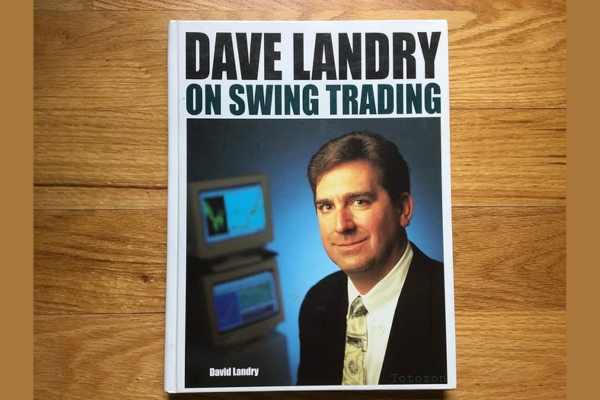 David Landry On Swing Trading
1 × $6.00
David Landry On Swing Trading
1 × $6.00 -
×
 Shawn Sharma Mentorship Program
1 × $34.00
Shawn Sharma Mentorship Program
1 × $34.00 -
×
 The McClellan Oscillator and Other Tools for with Tom McClellan
1 × $6.00
The McClellan Oscillator and Other Tools for with Tom McClellan
1 × $6.00 -
×
 CyberTrading University – Advanced Stock Course
1 × $31.00
CyberTrading University – Advanced Stock Course
1 × $31.00 -
×
 The Banks Code with Smart Money Trader
1 × $34.00
The Banks Code with Smart Money Trader
1 × $34.00 -
×
 Trading Course 2024 with ZMC x BMO
1 × $17.00
Trading Course 2024 with ZMC x BMO
1 × $17.00 -
×
 9-Pack of TOS Indicators
1 × $6.00
9-Pack of TOS Indicators
1 × $6.00 -
×
 Directional Calendars in 2023 with Dan Sheridan & Mark Fenton - Sheridan Options Mentoring
1 × $85.00
Directional Calendars in 2023 with Dan Sheridan & Mark Fenton - Sheridan Options Mentoring
1 × $85.00 -
×
 Cycle Hunter Book 4 with Brian James Sklenka
1 × $6.00
Cycle Hunter Book 4 with Brian James Sklenka
1 × $6.00 -
×
 Trading double Diagonals 2023 with Dan Sheridan - Sheridan Options Mentoring
1 × $39.00
Trading double Diagonals 2023 with Dan Sheridan - Sheridan Options Mentoring
1 × $39.00 -
×
 Scalp Strategy and Flipping Small Accounts with Opes Trading Group
1 × $5.00
Scalp Strategy and Flipping Small Accounts with Opes Trading Group
1 × $5.00 -
×
 Rounded Bottom Breakout Multimedia Course
1 × $31.00
Rounded Bottom Breakout Multimedia Course
1 × $31.00 -
×
 Advanced Breakthroughs in Day Trading DVD course with George Angell
1 × $6.00
Advanced Breakthroughs in Day Trading DVD course with George Angell
1 × $6.00 -
×
 Algo Trading Strategies 2017 with Autotrading Academy
1 × $6.00
Algo Trading Strategies 2017 with Autotrading Academy
1 × $6.00 -
×
 Value, Price & Profit with Karl Marx
1 × $6.00
Value, Price & Profit with Karl Marx
1 × $6.00 -
×
 ALGO™ Online Retail - Version 2.9
1 × $155.00
ALGO™ Online Retail - Version 2.9
1 × $155.00 -
×
 The Practical Handbook of Genetic Algorithms with Lance Chambers
1 × $6.00
The Practical Handbook of Genetic Algorithms with Lance Chambers
1 × $6.00 -
×
 The Inve$tment A$trology Articles with Alan Richter
1 × $6.00
The Inve$tment A$trology Articles with Alan Richter
1 × $6.00 -
×
 The Next Big Short Class (Risk Twist Spreads) Class with Don Kaufman
1 × $6.00
The Next Big Short Class (Risk Twist Spreads) Class with Don Kaufman
1 × $6.00 -
×
 VectorVest - Options Course - 4 CD Course + PDF Workbook
1 × $6.00
VectorVest - Options Course - 4 CD Course + PDF Workbook
1 × $6.00 -
×
 Trading Online
1 × $6.00
Trading Online
1 × $6.00 -
×
 Crystal Ball Pack PLUS bonus Live Trade By Pat Mitchell - Trick Trades
1 × $20.00
Crystal Ball Pack PLUS bonus Live Trade By Pat Mitchell - Trick Trades
1 × $20.00 -
×
 Smart Money Trading Course with Prosperity Academy
1 × $5.00
Smart Money Trading Course with Prosperity Academy
1 × $5.00 -
×
 The Handbook of Pairs Trading with Douglas Ehrman
1 × $6.00
The Handbook of Pairs Trading with Douglas Ehrman
1 × $6.00 -
×
 W. D Gann 's Square Of 9 Applied To Modern Markets with Sean Avidar - Hexatrade350
1 × $23.00
W. D Gann 's Square Of 9 Applied To Modern Markets with Sean Avidar - Hexatrade350
1 × $23.00 -
×
 Trading Halls Of Knowledge - Road to Consistent Trading Profits with Jarrod Goodwin
1 × $6.00
Trading Halls Of Knowledge - Road to Consistent Trading Profits with Jarrod Goodwin
1 × $6.00 -
×
 Strategy Week: Using High Probability Options Strategies with Don Kaufman
1 × $6.00
Strategy Week: Using High Probability Options Strategies with Don Kaufman
1 × $6.00 -
×
 Trading System Development 101,102,103
1 × $6.00
Trading System Development 101,102,103
1 × $6.00 -
×
 Come Into My Trading Room: A Complete Guide to Trading with Alexander Elder
1 × $6.00
Come Into My Trading Room: A Complete Guide to Trading with Alexander Elder
1 × $6.00 -
×
 Deep Dive Butterfly Trading Strategy Class with SJG Trades
1 × $41.00
Deep Dive Butterfly Trading Strategy Class with SJG Trades
1 × $41.00 -
×
 Forex Trading Like Banks - Step by Step by Live Examples with Taher Assaf
1 × $6.00
Forex Trading Like Banks - Step by Step by Live Examples with Taher Assaf
1 × $6.00 -
×
 Forecast 2024 Clarification with Larry Williams
1 × $15.00
Forecast 2024 Clarification with Larry Williams
1 × $15.00

Streetsmart Guide To Valuing a Stock (2nd Ed.) with Gary Gray
$6.00
File Size: Coming soon!
Delivery Time: 1–12 hours
Media Type: Online Course
Content Proof: Watch Here!
You may check content proof of “Streetsmart Guide To Valuing a Stock (2nd Ed.) with Gary Gray” below:

Streetsmart Guide To Valuing a Stock (2nd Ed.) with Gary Gray
Valuing a stock accurately is crucial for making informed investment decisions. The “Streetsmart Guide to Valuing a Stock (2nd Ed.)” by Gary Gray provides comprehensive strategies and methodologies to help investors determine the true worth of a stock. In this article, we’ll delve into the key concepts and techniques outlined in Gray’s guide, offering practical insights to enhance your stock valuation skills.
Introduction to Stock Valuation
Why Valuation Matters
Stock valuation is essential for identifying investment opportunities and making informed decisions. It helps investors understand whether a stock is overvalued, undervalued, or fairly priced.
Who is Gary Gray?
Gary Gray is a seasoned financial analyst and author with extensive experience in stock valuation. His expertise has helped many investors achieve their financial goals through strategic stock analysis.
Fundamental Concepts of Stock Valuation
1. Intrinsic Value
Definition
Intrinsic value refers to the actual worth of a stock based on its fundamentals, including earnings, dividends, and growth potential.
Importance
Understanding intrinsic value helps investors make decisions based on a stock’s true worth rather than market speculation.
2. Market Value
Definition
Market value is the current price at which a stock is trading on the market.
Comparison with Intrinsic Value
Comparing market value to intrinsic value helps determine whether a stock is overvalued, undervalued, or fairly priced.
Valuation Methods
1. Discounted Cash Flow (DCF) Analysis
Overview
DCF analysis estimates the value of a stock based on its expected future cash flows, discounted back to their present value.
Steps Involved
- Project Future Cash Flows
- Determine the Discount Rate
- Calculate Present Value
2. Price-to-Earnings (P/E) Ratio
Overview
The P/E ratio compares a company’s current share price to its per-share earnings.
Usage
A high P/E ratio may indicate that a stock is overvalued, while a low P/E ratio may suggest it is undervalued.
3. Price-to-Book (P/B) Ratio
Overview
The P/B ratio compares a stock’s market value to its book value.
Usage
A lower P/B ratio may indicate a stock is undervalued, while a higher ratio could suggest overvaluation.
4. Dividend Discount Model (DDM)
Overview
DDM values a stock based on the present value of its expected future dividends.
Steps Involved
- Estimate Future Dividends
- Determine the Discount Rate
- Calculate Present Value
Applying Valuation Techniques
Step-by-Step Guide
Step 1: Gather Financial Data
Collect relevant financial data, including earnings reports, cash flow statements, and balance sheets.
Step 2: Choose Appropriate Valuation Method
Select the valuation method that best suits the stock and industry.
Step 3: Perform Calculations
Perform the necessary calculations to determine the intrinsic value of the stock.
Step 4: Compare with Market Value
Compare the intrinsic value with the current market value to assess whether the stock is overvalued, undervalued, or fairly priced.
Practical Examples
Example 1: DCF Analysis
Scenario
Applying DCF analysis to a technology company with high growth potential.
Process
- Project future cash flows based on past performance and growth forecasts.
- Determine an appropriate discount rate.
- Calculate the present value of future cash flows.
Example 2: P/E Ratio
Scenario
Evaluating a consumer goods company using the P/E ratio.
Process
- Obtain the current share price and earnings per share (EPS).
- Calculate the P/E ratio and compare it to industry averages.
Common Mistakes in Stock Valuation
1. Over-Reliance on a Single Method
Issue
Relying solely on one valuation method can lead to inaccurate assessments.
Solution
Use multiple valuation methods to get a comprehensive view of a stock’s value.
2. Ignoring Market Conditions
Issue
Market conditions can significantly impact stock prices and valuation accuracy.
Solution
Consider current market trends and economic factors when performing valuations.
3. Inaccurate Financial Projections
Issue
Incorrect financial projections can skew valuation results.
Solution
Use conservative estimates and validate projections with historical data.
Advanced Valuation Techniques
1. Earnings Yield
Overview
Earnings yield compares a company’s earnings to its market value, providing an alternative to the P/E ratio.
2. Economic Value Added (EVA)
Overview
EVA measures a company’s financial performance based on residual wealth, calculated by deducting the cost of capital from operating profit.
Implementing Valuation in Your Investment Strategy
Building a Valuation Model
Software and Tools
Use financial software and tools to build detailed valuation models.
Regular Updates
Continuous Monitoring
Regularly update your valuation models with the latest financial data and market trends.
Conclusion
Valuing a stock accurately is a crucial skill for successful investing. The “Streetsmart Guide to Valuing a Stock (2nd Ed.)” by Gary Gray provides a thorough framework for understanding and applying various valuation methods. By mastering these techniques, you can make informed investment decisions and achieve your financial goals.
FAQs
1. What is the intrinsic value of a stock?
Intrinsic value is the actual worth of a stock based on its fundamentals, such as earnings, dividends, and growth potential.
2. How does the P/E ratio help in valuing a stock?
The P/E ratio compares a company’s current share price to its per-share earnings, helping determine if a stock is overvalued or undervalued.
3. What is the purpose of DCF analysis?
DCF analysis estimates the value of a stock based on its expected future cash flows, discounted back to their present value.
4. Why is diversification important in stock valuation?
Diversification helps manage risk by spreading investments across various asset classes, reducing the impact of poor-performing stocks.
5. How can I improve my stock valuation skills?
Continuous learning, using multiple valuation methods, and staying informed about market trends and economic factors can enhance your stock valuation skills.
Be the first to review “Streetsmart Guide To Valuing a Stock (2nd Ed.) with Gary Gray”
You must be logged in to post a review.
Related products

Forex Trading
Original price was: $2,000.00.$23.00Current price is: $23.00.

Forex Trading
Original price was: $500.00.$5.00Current price is: $5.00.

Original price was: $1,200.00.$23.00Current price is: $23.00.

Original price was: $197.00.$5.00Current price is: $5.00.

Original price was: $1,800.00.$54.00Current price is: $54.00.

Forex Trading
Original price was: $550.00.$5.00Current price is: $5.00.

Original price was: $997.00.$13.00Current price is: $13.00.

Forex Trading
Original price was: $4,997.00.$27.00Current price is: $27.00.
Forex Trading
Original price was: $249.00.$15.00Current price is: $15.00.
Original price was: $695.00.$41.00Current price is: $41.00.

Forex Trading
Original price was: $1,898.00.$10.00Current price is: $10.00.

Forex Trading
Original price was: $1,098.00.$39.00Current price is: $39.00.
Original price was: $999.00.$5.00Current price is: $5.00.

Forex Trading
Original price was: $125.00.$17.00Current price is: $17.00.

Original price was: $497.00.$31.00Current price is: $31.00.

Forex Trading
Original price was: $2,995.00.$31.00Current price is: $31.00.

Original price was: $310.00.$23.00Current price is: $23.00.

Forex Trading
Original price was: $697.00.$5.00Current price is: $5.00.

Original price was: $1,849.00.$15.00Current price is: $15.00.

Original price was: $450.00.$23.00Current price is: $23.00.

Reviews
There are no reviews yet.