
-
×
 WITS Turbo Seminars with Brian James Sklenka
1 × $6.00
WITS Turbo Seminars with Brian James Sklenka
1 × $6.00 -
×
 Greatest Trading Tools with Michael Parsons
1 × $6.00
Greatest Trading Tools with Michael Parsons
1 × $6.00 -
×
 VIP - One on One Coursework with Talkin Options
1 × $15.00
VIP - One on One Coursework with Talkin Options
1 × $15.00 -
×
 Oil Trading Academy Code 3 Video Course
1 × $6.00
Oil Trading Academy Code 3 Video Course
1 × $6.00 -
×
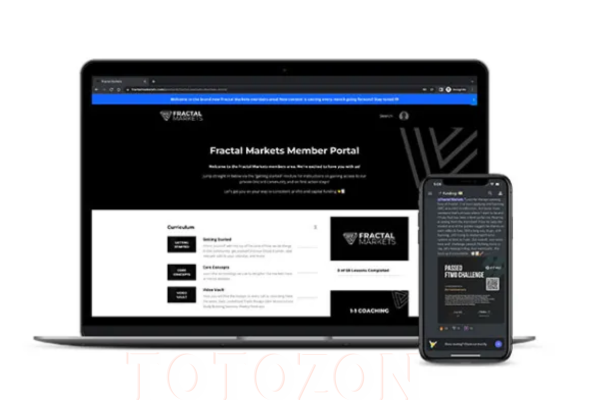 Fractal Markets SFX with Tyson Bieniek
1 × $5.00
Fractal Markets SFX with Tyson Bieniek
1 × $5.00 -
×
 Order flow self-study training program with iMFtracker
1 × $10.00
Order flow self-study training program with iMFtracker
1 × $10.00 -
×
 Investing Smart. How to Pick Stocks with Investors Business Daily By Dhun H.Sethna
1 × $4.00
Investing Smart. How to Pick Stocks with Investors Business Daily By Dhun H.Sethna
1 × $4.00 -
×
 HandBook of Parametric and Nonparametric Statistical Procedures with David J.Sheskin
1 × $6.00
HandBook of Parametric and Nonparametric Statistical Procedures with David J.Sheskin
1 × $6.00 -
×
 Bird Watch in Lion Country 2010 Ed with Dirk Du Toit
1 × $6.00
Bird Watch in Lion Country 2010 Ed with Dirk Du Toit
1 × $6.00 -
×
 Big Fish Shark Bite Strategy
1 × $15.00
Big Fish Shark Bite Strategy
1 × $15.00 -
×
 Trade Your Way to Wealth with Bill Kraft
1 × $6.00
Trade Your Way to Wealth with Bill Kraft
1 × $6.00 -
×
 AstuceFX Mentorship 2023
1 × $27.00
AstuceFX Mentorship 2023
1 × $27.00 -
×
 Euro Fractal Trading System with Cynthia Marcy, Erol Bortucene
1 × $6.00
Euro Fractal Trading System with Cynthia Marcy, Erol Bortucene
1 × $6.00 -
×
 Foreign Exchange Option Pricing: A Practitioner's Guide with Iain Clark
1 × $6.00
Foreign Exchange Option Pricing: A Practitioner's Guide with Iain Clark
1 × $6.00 -
×
 The Prop Trading Code with Brannigan Barrett - Axia Futures
1 × $23.00
The Prop Trading Code with Brannigan Barrett - Axia Futures
1 × $23.00 -
×
 Masterclass 2.0 with Dave Teaches
1 × $31.00
Masterclass 2.0 with Dave Teaches
1 × $31.00 -
×
 Small Account Options Trading Workshop Package with Doc Severson
1 × $6.00
Small Account Options Trading Workshop Package with Doc Severson
1 × $6.00 -
×
 Advanced Trading Applications of Candlestick Charting with Gary S.Wagner & Bradley L.Matheny
1 × $6.00
Advanced Trading Applications of Candlestick Charting with Gary S.Wagner & Bradley L.Matheny
1 × $6.00 -
×
 Marus FX 2023
1 × $5.00
Marus FX 2023
1 × $5.00 -
×
 Market Stalkers Level 1 - Swing trading school (2020)
1 × $8.00
Market Stalkers Level 1 - Swing trading school (2020)
1 × $8.00 -
×
 The City Traders Course with Andrew Lockwood
1 × $10.00
The City Traders Course with Andrew Lockwood
1 × $10.00 -
×
 The Hedge Bundle - SpotGamma Academy with Imran Lakha
1 × $8.00
The Hedge Bundle - SpotGamma Academy with Imran Lakha
1 × $8.00 -
×
 Finding Top Secret Statagies with AlphaShark Trading
1 × $109.00
Finding Top Secret Statagies with AlphaShark Trading
1 × $109.00 -
×
 The Handbook of Risk with Ben Warwick
1 × $6.00
The Handbook of Risk with Ben Warwick
1 × $6.00 -
×
 Flex EA Correlated Hedge V1.02
1 × $6.00
Flex EA Correlated Hedge V1.02
1 × $6.00 -
×
 Study Guide for Technical Analysis Explained (1st Edition) with Martin Pring
1 × $6.00
Study Guide for Technical Analysis Explained (1st Edition) with Martin Pring
1 × $6.00 -
×
 Harmonic Vibrations with Larry Pesavento
1 × $6.00
Harmonic Vibrations with Larry Pesavento
1 × $6.00 -
×
 FX Cartel Online Course
1 × $31.00
FX Cartel Online Course
1 × $31.00 -
×
 Market Profile Video with FutexLive
1 × $6.00
Market Profile Video with FutexLive
1 × $6.00 -
×
 Confessions of a Pit Trader 2003 with Rick Burgess
1 × $6.00
Confessions of a Pit Trader 2003 with Rick Burgess
1 × $6.00 -
×
 The Ultimate Systems Trader (UST) Advanced - Trading with Rayner
1 × $62.00
The Ultimate Systems Trader (UST) Advanced - Trading with Rayner
1 × $62.00 -
×
 Learn To Trade with Tori Trades
1 × $8.00
Learn To Trade with Tori Trades
1 × $8.00 -
×
 Algo Trading Masterclass with Ali Casey - StatOasis
1 × $23.00
Algo Trading Masterclass with Ali Casey - StatOasis
1 × $23.00 -
×
 CFA Level 1,2 & 3 Complete Course 2010 48 CD’s with Schweser
1 × $6.00
CFA Level 1,2 & 3 Complete Course 2010 48 CD’s with Schweser
1 × $6.00 -
×
 Surefire Trading Plans with Mark McRae
1 × $6.00
Surefire Trading Plans with Mark McRae
1 × $6.00

Road Congestion Pricing in Europe: Implications for the United States with Harry Richardson & Chang-Hee Christine Bae
$6.00
File Size: Coming soon!
Delivery Time: 1–12 hours
Media Type: Online Course
Road Congestion Pricing in Europe: Implications for the United States with Harry Richardson & Chang-Hee Christine Bae
Introduction
In our bustling world, road congestion is a challenge that urban centers globally continue to face and tackle. Europe has been a pioneer in employing congestion pricing mechanisms to manage urban traffic and improve air quality. But what can the United States learn from these European models? Let’s delve into this topic with insights from experts Harry Richardson and Chang-Hee Christine Bae.
What is Congestion Pricing?
Definition and Purpose
Congestion pricing involves charging drivers a fee to use roadways during peak traffic times. The primary aim is to reduce road congestion, decrease greenhouse gas emissions, and fund public transportation improvements.
How It Works
- Time-Varying Fees: Higher charges during peak hours and lower or no charges at off-peak times.
- Automated Tolling: Utilizing technology to manage the system efficiently.
European Models of Congestion Pricing
Case Study: London
London introduced its congestion charge in 2003, leading to a significant reduction in traffic volumes and an improvement in air quality.
Case Study: Stockholm
Stockholm’s congestion pricing scheme has been successful in reducing traffic and increasing public transit usage since its permanent implementation in 2007.
Comparative Analysis: Europe vs. United States
Urban Structure Differences
European cities, often older and with more narrow streets, differ significantly from the sprawling urban areas common in the U.S.
Public Transport Availability
European cities generally have more robust public transport systems than many U.S. cities, supporting the effectiveness of congestion pricing.
Implications for the United States
Potential Benefits
- Reduced Traffic Congestion: Less congestion during peak times.
- Environmental Gains: Lower emissions from fewer idling vehicles.
- Economic Advantages: Revenue generation for city improvements.
Challenges to Implementation
- Public Resistance: Concerns about additional costs and privacy.
- Infrastructure Needs: Necessity for investment in public transportation.
Expert Insights: Harry Richardson & Chang-Hee Christine Bae
Harry Richardson and Chang-Hee Christine Bae discuss the nuanced application of European principles in the U.S. context, emphasizing the need for tailored approaches based on local conditions.
U.S. Cities Leading the Charge
New York City
Plans to implement congestion pricing in Manhattan as a measure to fund transit improvements and reduce traffic volumes.
San Francisco
Exploring dynamic pricing models to manage congestion on its busiest roads.
Future Outlook
Technological Innovations
Advancements in vehicle technology and traffic management systems could enhance the effectiveness of congestion pricing.
Policy Considerations
Need for comprehensive policy frameworks that address equity and accessibility, ensuring fair access to congested areas.
Conclusion
Congestion pricing in Europe offers valuable lessons for the United States as cities increasingly consider this tool to manage urban congestion. With expert guidance from figures like Harry Richardson and Chang-Hee Christine Bae, U.S. urban planners can adapt and refine European models to suit American contexts, paving the way for smarter, more sustainable cities.
FAQs
1. What is congestion pricing?
Congestion pricing involves charging drivers a fee to use busy roads during peak times to reduce traffic and pollution.
2. How successful has congestion pricing been in Europe?
Cities like London and Stockholm have seen reduced congestion and environmental improvements.
3. Could congestion pricing work in all U.S. cities?
The success depends on factors like urban layout and public transit availability.
4. What are the main barriers to implementing congestion pricing in the U.S.?
Challenges include public opposition, privacy concerns, and the need for infrastructure investment.
5. How could future technologies impact congestion pricing?
Emerging technologies could make these systems more efficient and widely acceptable.
Be the first to review “Road Congestion Pricing in Europe: Implications for the United States with Harry Richardson & Chang-Hee Christine Bae”
You must be logged in to post a review.
Related products

Original price was: $695.00.$41.00Current price is: $41.00.
Forex Trading
Original price was: $2,000.00.$23.00Current price is: $23.00.
Original price was: $1,200.00.$23.00Current price is: $23.00.

Forex Trading
Original price was: $999.00.$15.00Current price is: $15.00.

Original price was: $799.00.$15.00Current price is: $15.00.

Original price was: $450.00.$23.00Current price is: $23.00.
Forex Trading
Original price was: $1,898.00.$10.00Current price is: $10.00.

Forex Trading
Quantamentals – The Next Great Forefront Of Trading and Investing with Trading Markets
Original price was: $1,495.00.$8.00Current price is: $8.00.

Forex Trading
Original price was: $550.00.$5.00Current price is: $5.00.

Original price was: $299.00.$8.00Current price is: $8.00.

Forex Trading
Original price was: $2,997.00.$23.00Current price is: $23.00.

Original price was: $649.00.$20.00Current price is: $20.00.

Original price was: $1,800.00.$54.00Current price is: $54.00.

Forex Trading
Original price was: $1,098.00.$39.00Current price is: $39.00.

Original price was: $1,849.00.$15.00Current price is: $15.00.

Forex Trading
Original price was: $500.00.$5.00Current price is: $5.00.

Original price was: $139.00.$23.00Current price is: $23.00.

Original price was: $497.00.$31.00Current price is: $31.00.

Forex Trading
Original price was: $499.00.$15.00Current price is: $15.00.

Forex Trading
The Complete Guide to Multiple Time Frame Analysis & Reading Price Action with Aiman Almansoori
Original price was: $1,399.00.$13.00Current price is: $13.00.

Reviews
There are no reviews yet.