
-
×
 The Bible of Options Strategies: The Definitive Guide for Practical Trading Strategies with Guy Cohen
1 × $6.00
The Bible of Options Strategies: The Definitive Guide for Practical Trading Strategies with Guy Cohen
1 × $6.00 -
×
 Altucher’s Top 1% Advisory Newsletter 2016 with James Altucher
1 × $6.00
Altucher’s Top 1% Advisory Newsletter 2016 with James Altucher
1 × $6.00 -
×
 Advanced Nasdaq Trading Techniques with Alan Rich
1 × $6.00
Advanced Nasdaq Trading Techniques with Alan Rich
1 × $6.00 -
×
 Home Run Options Trading Course with Dave Aquino - Base Camp Trading
1 × $11.00
Home Run Options Trading Course with Dave Aquino - Base Camp Trading
1 × $11.00 -
×
 Day One Trader with John Sussex
1 × $6.00
Day One Trader with John Sussex
1 × $6.00 -
×
 Fixed Income Securities (2nd Ed.) with Bruce Tuckman
1 × $10.00
Fixed Income Securities (2nd Ed.) with Bruce Tuckman
1 × $10.00 -
×
 Traders Winning Edge with Adrienne Laris Toghraie
1 × $6.00
Traders Winning Edge with Adrienne Laris Toghraie
1 × $6.00 -
×
 Researching your Trade
1 × $6.00
Researching your Trade
1 × $6.00 -
×
 A Comprehensive Guide to Intraday Trading Strategies & Setups Class with Jeff Bierman
1 × $6.00
A Comprehensive Guide to Intraday Trading Strategies & Setups Class with Jeff Bierman
1 × $6.00 -
×
 Forex Strategy Course with Angel Traders
1 × $6.00
Forex Strategy Course with Angel Traders
1 × $6.00 -
×
 Trading to Win (Seminar WorkBook 2003) with Bruce Gilmore
1 × $6.00
Trading to Win (Seminar WorkBook 2003) with Bruce Gilmore
1 × $6.00 -
×
 The A14 Weekly Option Strategy Workshop with Amy Meissner
1 × $23.00
The A14 Weekly Option Strategy Workshop with Amy Meissner
1 × $23.00 -
×
 How to Call the Top in a Stock (To the Penny!) and Earn 9-11% Annualized Cash Yields Doing It with Dan Ferris
1 × $6.00
How to Call the Top in a Stock (To the Penny!) and Earn 9-11% Annualized Cash Yields Doing It with Dan Ferris
1 × $6.00 -
×
 $20 – 52k 20 pips a day challange with Rafał Zuchowicz - TopMasterTrader
1 × $5.00
$20 – 52k 20 pips a day challange with Rafał Zuchowicz - TopMasterTrader
1 × $5.00 -
×
 WondaFX Signature Strategy with WondaFX
1 × $5.00
WondaFX Signature Strategy with WondaFX
1 × $5.00 -
×
 Elite Gap Trading with Nick Santiago - InTheMoneyStocks
1 × $93.00
Elite Gap Trading with Nick Santiago - InTheMoneyStocks
1 × $93.00 -
×
 8 Strategies for Day Trading
1 × $31.00
8 Strategies for Day Trading
1 × $31.00 -
×
 Smart Money Trading Course with Prosperity Academy
1 × $5.00
Smart Money Trading Course with Prosperity Academy
1 × $5.00 -
×
 Deep Dive Butterfly Trading Strategy Class with SJG Trades
1 × $41.00
Deep Dive Butterfly Trading Strategy Class with SJG Trades
1 × $41.00 -
×
 The Best Option Trading Course with David Jaffee - Best Stock Strategy
1 × $15.00
The Best Option Trading Course with David Jaffee - Best Stock Strategy
1 × $15.00 -
×
 The Jupiter Effect with John Gribbin & Stephen Plagemann
1 × $6.00
The Jupiter Effect with John Gribbin & Stephen Plagemann
1 × $6.00 -
×
 The Orderflow Masterclass with PrimeTrading
1 × $17.00
The Orderflow Masterclass with PrimeTrading
1 × $17.00 -
×
 Essentials in Quantitative Trading QT01 By HangukQuant's
1 × $23.00
Essentials in Quantitative Trading QT01 By HangukQuant's
1 × $23.00 -
×
 W. D Gann 's Square Of 9 Applied To Modern Markets with Sean Avidar - Hexatrade350
1 × $23.00
W. D Gann 's Square Of 9 Applied To Modern Markets with Sean Avidar - Hexatrade350
1 × $23.00 -
×
 The 13-Week Cash Flow Model
1 × $15.00
The 13-Week Cash Flow Model
1 × $15.00 -
×
 Professional Level Trading (IPLT) Online Video Series with Anton Kreil
1 × $6.00
Professional Level Trading (IPLT) Online Video Series with Anton Kreil
1 × $6.00 -
×
 Order flow self-study training program with iMFtracker
1 × $10.00
Order flow self-study training program with iMFtracker
1 × $10.00 -
×
 0 DTE Options Trading Workshop with Aeromir Corporation
1 × $15.00
0 DTE Options Trading Workshop with Aeromir Corporation
1 × $15.00 -
×
 Simpler Options - Weekly Butterflies for Income
1 × $6.00
Simpler Options - Weekly Butterflies for Income
1 × $6.00 -
×
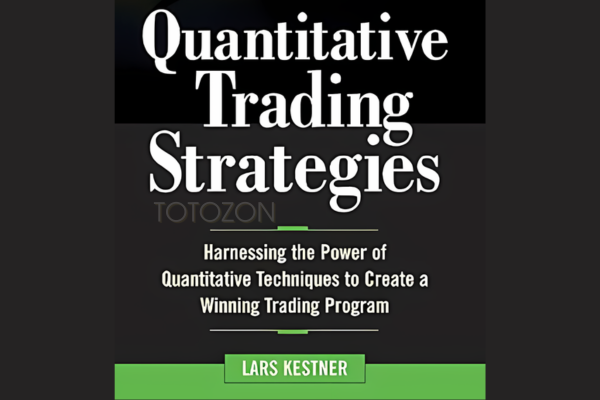 Quantitative Trading Strategies (1st Edition) with Lars Kestner
1 × $6.00
Quantitative Trading Strategies (1st Edition) with Lars Kestner
1 × $6.00 -
×
 Bond Market Course with The Macro Compass
1 × $15.00
Bond Market Course with The Macro Compass
1 × $15.00 -
×
 Harnessing Explosive Market Turns - 3 DVD with Jeff Greenblatt
1 × $6.00
Harnessing Explosive Market Turns - 3 DVD with Jeff Greenblatt
1 × $6.00 -
×
 Activedaytrader - Workshop: Practical Money Management
1 × $23.00
Activedaytrader - Workshop: Practical Money Management
1 × $23.00 -
×
 Create Winning MT4/MT5 Forex Trading Robots without Coding - Ransom Enupe
1 × $6.00
Create Winning MT4/MT5 Forex Trading Robots without Coding - Ransom Enupe
1 × $6.00 -
×
 Starter Guide to Investing Stocks, Crypto & Precious Metals with Ryan Hogue
1 × $5.00
Starter Guide to Investing Stocks, Crypto & Precious Metals with Ryan Hogue
1 × $5.00 -
×
 White Phoenix’s The Smart (Money) Approach to Trading with Jayson Casper
1 × $39.00
White Phoenix’s The Smart (Money) Approach to Trading with Jayson Casper
1 × $39.00 -
×
 Spread Trading E-Trading Stagionale (Italian) with Joe Ross
1 × $6.00
Spread Trading E-Trading Stagionale (Italian) with Joe Ross
1 × $6.00 -
×
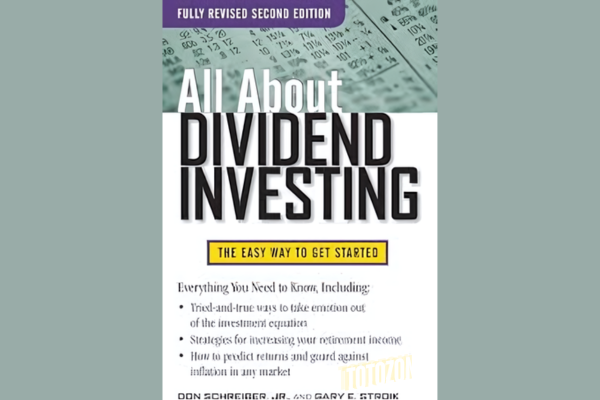 All About Dividend Investing with Don Schreiber & Gary Stroik
1 × $6.00
All About Dividend Investing with Don Schreiber & Gary Stroik
1 × $6.00 -
×
 The Orderflows Trade Opportunities Encyclopedia with Michael Valtos
1 × $8.00
The Orderflows Trade Opportunities Encyclopedia with Michael Valtos
1 × $8.00 -
×
 Getting New Insights from Old Indicators with Martin Pring
1 × $6.00
Getting New Insights from Old Indicators with Martin Pring
1 × $6.00 -
×
 Market Risk Analysis, Volume III, Pricing, Hedging and Trading Financial Instruments with Carol Alexander
1 × $6.00
Market Risk Analysis, Volume III, Pricing, Hedging and Trading Financial Instruments with Carol Alexander
1 × $6.00 -
×
 The A to Z of Mathematics: A Basic Guide with Thomas Sidebotham
1 × $6.00
The A to Z of Mathematics: A Basic Guide with Thomas Sidebotham
1 × $6.00 -
×
 Day Trading and Swing Trading Futures with Price Action by Humberto Malaspina
1 × $5.00
Day Trading and Swing Trading Futures with Price Action by Humberto Malaspina
1 × $5.00 -
×
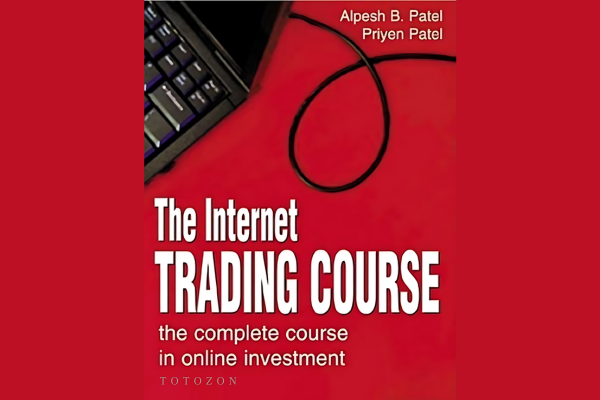 The Internet Trading Course with Alpesh Patel
1 × $6.00
The Internet Trading Course with Alpesh Patel
1 × $6.00 -
×
 Read The Market RTM Master Trader Course + Journals
1 × $5.00
Read The Market RTM Master Trader Course + Journals
1 × $5.00 -
×
 Consistently Profitable Trader with Pollinate Trading
1 × $13.00
Consistently Profitable Trader with Pollinate Trading
1 × $13.00 -
×
 Advanced Spread Trading with Guy Bower - MasterClass Trader
1 × $15.00
Advanced Spread Trading with Guy Bower - MasterClass Trader
1 × $15.00

The Triple Bottom Line
$6.00
File Size: Coming soon!
Delivery Time: 1–12 hours
Media Type: Online Course
The Triple Bottom Line
Introduction to the Triple Bottom Line
The Triple Bottom Line (TBL) is a transformative concept in business that broadens the focus beyond traditional financial metrics to include social and environmental impact. This holistic approach encourages companies to evaluate their performance based on three key dimensions: People, Planet, and Profit.
Understanding the Triple Bottom Line
The TBL framework is a sustainability-based accounting method that considers the full cost of doing business. Let’s break down each component.
People
The “People” aspect of TBL focuses on the social responsibility of a business. It involves considering the impact of company operations on all stakeholders, including employees, customers, suppliers, and the community.
Planet
The “Planet” dimension emphasizes environmental stewardship. Businesses assess their ecological footprint and strive to minimize negative impacts on the environment through sustainable practices.
Profit
While profit remains a crucial metric, within the TBL framework, it is considered alongside social and environmental responsibilities. This approach encourages sustainable economic growth.
The Origins of the Triple Bottom Line
The term “Triple Bottom Line” was coined by John Elkington in 1994. Elkington, a sustainability expert, proposed that businesses should prepare three different (and quite separate) bottom lines.
Historical Context
- 1990s: Growing awareness of corporate social responsibility.
- 2000s: Increasing adoption of sustainability practices in business.
Implementing the Triple Bottom Line
Adopting the TBL approach involves integrating it into the core strategy of a business. Here’s how companies can implement it effectively.
Set Clear Objectives
Define what you aim to achieve in each TBL dimension. For instance, reduce carbon emissions, enhance employee well-being, and maintain profitability.
Develop Sustainable Practices
Implement practices that support TBL goals, such as energy-efficient processes, fair labor policies, and community engagement initiatives.
Measure and Report Performance
Use metrics and reporting standards to evaluate and communicate your TBL performance. Tools like the Global Reporting Initiative (GRI) can help.
Benefits of the Triple Bottom Line
Embracing the TBL framework offers several benefits to businesses.
Enhanced Reputation
Companies that prioritize TBL often enjoy a better reputation, which can attract customers, investors, and talent.
Risk Management
Sustainable practices help mitigate risks associated with environmental regulations, social issues, and market fluctuations.
Long-Term Viability
By balancing profit with people and planet, businesses ensure long-term sustainability and resilience.
Challenges in Adopting the Triple Bottom Line
Despite its benefits, there are challenges to implementing the TBL approach.
Measurement Difficulties
Quantifying social and environmental impacts can be complex and subjective.
Balancing Priorities
Finding the right balance between economic, social, and environmental goals can be challenging.
Resource Allocation
Implementing TBL practices often requires significant time, effort, and financial investment.
Case Studies of Triple Bottom Line Success
Several companies have successfully adopted the TBL framework, showcasing its potential.
Patagonia
This outdoor apparel company is renowned for its commitment to environmental sustainability and social responsibility while maintaining profitability.
Unilever
Unilever’s Sustainable Living Plan integrates TBL principles, aiming to improve health and well-being, reduce environmental impact, and enhance livelihoods.
Strategies for Successful TBL Integration
For businesses looking to adopt the TBL framework, the following strategies can be helpful.
Engage Stakeholders
Involve employees, customers, suppliers, and the community in your sustainability initiatives.
Continuous Improvement
Regularly review and refine your TBL practices to adapt to changing conditions and improve performance.
Leadership Commitment
Ensure that top management is committed to TBL principles, as their support is crucial for successful implementation.
Future of the Triple Bottom Line
The future of TBL looks promising as more businesses recognize the importance of sustainability.
Increasing Adoption
Expect more companies to adopt TBL as stakeholders demand greater accountability and transparency.
Technological Advancements
Innovations in technology will provide new tools for measuring and enhancing TBL performance.
Regulatory Support
Governments and regulatory bodies are likely to introduce policies that encourage or mandate TBL practices.
Conclusion
The Triple Bottom Line offers a robust framework for businesses to achieve sustainable success. By balancing the needs of people, planet, and profit, companies can build a resilient and responsible enterprise that benefits all stakeholders.
Frequently Asked Questions:
1. What is the Triple Bottom Line?
The Triple Bottom Line is a sustainability framework that evaluates a business’s impact on people, planet, and profit.
2. Why is the Triple Bottom Line important?
It promotes a holistic approach to business, encouraging sustainable and responsible practices that benefit all stakeholders.
3. How can businesses implement the Triple Bottom Line?
Businesses can implement TBL by setting clear objectives, developing sustainable practices, and measuring and reporting their performance.
4. What are the challenges of adopting the Triple Bottom Line?
Challenges include measurement difficulties, balancing priorities, and resource allocation.
5. Can small businesses adopt the Triple Bottom Line?
Yes, small businesses can adopt TBL principles by integrating sustainable practices into their operations and engaging with their communities.
Be the first to review “The Triple Bottom Line”
You must be logged in to post a review.
Related products

Forex Trading
Original price was: $797.00.$10.00Current price is: $10.00.

Original price was: $4,995.00.$15.00Current price is: $15.00.
Original price was: $1,849.00.$15.00Current price is: $15.00.

Original price was: $997.00.$13.00Current price is: $13.00.

Forex Trading
Original price was: $239.00.$8.00Current price is: $8.00.

Original price was: $997.00.$8.00Current price is: $8.00.
Original price was: $139.00.$23.00Current price is: $23.00.
Original price was: $700.00.$39.00Current price is: $39.00.

Forex Trading
Original price was: $249.00.$15.00Current price is: $15.00.

Forex Trading
Quantamentals – The Next Great Forefront Of Trading and Investing with Trading Markets
Original price was: $1,495.00.$8.00Current price is: $8.00.
Forex Trading
Original price was: $1,898.00.$10.00Current price is: $10.00.
Original price was: $310.00.$23.00Current price is: $23.00.
Forex Trading
Original price was: $850.00.$23.00Current price is: $23.00.

Forex Trading
Original price was: $2,000.00.$23.00Current price is: $23.00.

Original price was: $1,800.00.$54.00Current price is: $54.00.

Forex Trading
Original price was: $2,995.00.$31.00Current price is: $31.00.
Forex Trading
Original price was: $499.00.$15.00Current price is: $15.00.
Forex Trading
Original price was: $999.00.$15.00Current price is: $15.00.

Original price was: $2,120.00.$15.00Current price is: $15.00.
Forex Trading
Original price was: $125.00.$17.00Current price is: $17.00.
Reviews
There are no reviews yet.