
-
×
 Wealth Management with Dimitris Chorafas
1 × $6.00
Wealth Management with Dimitris Chorafas
1 × $6.00 -
×
 The Dark Side Of Valuation with Aswath Damodaran
1 × $6.00
The Dark Side Of Valuation with Aswath Damodaran
1 × $6.00 -
×
 Finding Alpha: The Search for Alpha When Risk and Return Break Down with Eric Falkenstein
1 × $6.00
Finding Alpha: The Search for Alpha When Risk and Return Break Down with Eric Falkenstein
1 × $6.00 -
×
 Advanced Calculus with Applications in Statistics
1 × $6.00
Advanced Calculus with Applications in Statistics
1 × $6.00 -
×
 5-Week Portfolio (No Bonus) - Criticaltrading
1 × $39.00
5-Week Portfolio (No Bonus) - Criticaltrading
1 × $39.00 -
×
 Beyond Fibonacci Retracements with Dynamic Traders
1 × $5.00
Beyond Fibonacci Retracements with Dynamic Traders
1 × $5.00 -
×
 Evolved Trader with Mark Croock
1 × $69.00
Evolved Trader with Mark Croock
1 × $69.00 -
×
 Best of the Best: Collars with Amy Meissner & Scott Ruble
1 × $15.00
Best of the Best: Collars with Amy Meissner & Scott Ruble
1 × $15.00 -
×
 Technical Analysis for Short-Term Traders
1 × $6.00
Technical Analysis for Short-Term Traders
1 × $6.00 -
×
 Ultimate Trading Course with Dodgy's Dungeon
1 × $8.00
Ultimate Trading Course with Dodgy's Dungeon
1 × $8.00 -
×
 Yarimi University Course
1 × $56.00
Yarimi University Course
1 × $56.00 -
×
 Dynamic Time Cycles with Peter Eliades
1 × $6.00
Dynamic Time Cycles with Peter Eliades
1 × $6.00 -
×
 An Introduction to Market Risk Measurement with Kevin Dowd
1 × $6.00
An Introduction to Market Risk Measurement with Kevin Dowd
1 × $6.00 -
×
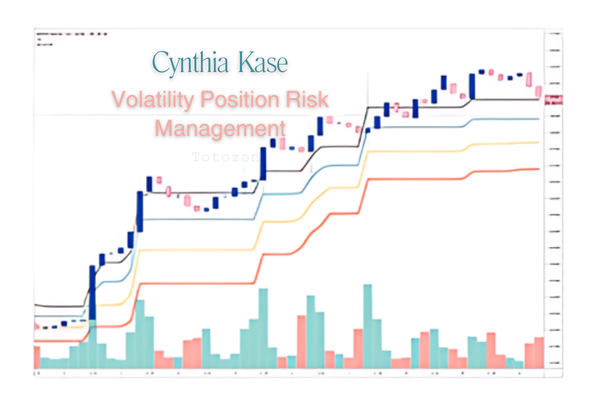 Volatility Position Risk Management with Cynthia Kase
1 × $6.00
Volatility Position Risk Management with Cynthia Kase
1 × $6.00 -
×
 The Complete Short Course on Ripple Cryptocurrency with Saad Hameed
1 × $5.00
The Complete Short Course on Ripple Cryptocurrency with Saad Hameed
1 × $5.00 -
×
 Classic Trading Tactics Theory and Practice with Linda Raschke
1 × $13.00
Classic Trading Tactics Theory and Practice with Linda Raschke
1 × $13.00 -
×
 Developing & Implementing Pattern-Based Trading Systems with Tushar S.Chande
1 × $6.00
Developing & Implementing Pattern-Based Trading Systems with Tushar S.Chande
1 × $6.00 -
×
 The Indices Orderflow Masterclass with The Forex Scalpers
1 × $23.00
The Indices Orderflow Masterclass with The Forex Scalpers
1 × $23.00 -
×
 3 Technical Indicators to Help You Ride the Elliott Wave Trend with Chris Carolan
1 × $6.00
3 Technical Indicators to Help You Ride the Elliott Wave Trend with Chris Carolan
1 × $6.00 -
×
 The Complete Guide to Multiple Time Frame Analysis & Reading Price Action with Aiman Almansoori
1 × $13.00
The Complete Guide to Multiple Time Frame Analysis & Reading Price Action with Aiman Almansoori
1 × $13.00 -
×
 Essentials in Quantitative Trading QT01 By HangukQuant's
1 × $23.00
Essentials in Quantitative Trading QT01 By HangukQuant's
1 × $23.00
Detecting Trend Direction & Strength (Article) with Barbara Star
$6.00
File Size: Coming soon!
Delivery Time: 1–12 hours
Media Type: Online Course
Content Proof: Watch Here!
You may check content proof of “Detecting Trend Direction & Strength (Article) with Barbara Star” below:

Detecting Trend Direction & Strength with Barbara Star
Introduction
When trading in the financial markets, one of the most critical skills a trader can develop is the ability to accurately detect the direction and strength of trends. Barbara Star, a renowned figure in technical analysis, offers insightful methods to accomplish this. In this article, we’ll delve into her techniques, which help traders make informed decisions based on market movements.
Understanding the Basics of Trend Analysis
Trend analysis is the backbone of technical trading. It involves identifying the direction in which the market is moving, which can be broadly classified into upward, downward, or sideways trends. By recognizing these patterns early, traders can tailor their strategies to capitalize on potential market shifts.
The Role of Technical Indicators
Technical indicators are essential tools in Barbara Star’s strategy. They provide visual cues and mathematical models of market behavior, which are crucial for assessing trend strength and direction.
Moving Averages
One of the simplest yet most effective indicators in trend analysis is the moving average. It helps smooth out price data by creating a constantly updated average price.
Momentum Indicators
Momentum indicators, such as the Relative Strength Index (RSI) and MACD, are crucial for determining the strength of a trend. These tools help traders understand whether a trend is likely to continue or reverse.
Strategies for Detecting Trend Strength
Barbara Star emphasizes the importance of combining various indicators to gauge trend strength accurately.
Using the ADX Indicator
The Average Directional Index (ADX) is a tool that measures the strength of a trend. A high ADX value generally indicates a strong trend, providing traders with the confidence to pursue more aggressive strategies.
Volume as a Trend Confirmator
Volume plays a pivotal role in confirming trend strength. An upward trend accompanied by high volume is more likely to be sustainable, as it shows widespread participation.
Integrating Multiple Time Frames
Analyzing multiple time frames can provide a more comprehensive view of the market’s trend. This method allows traders to confirm trends across different periods, enhancing the reliability of their predictions.
Practical Applications
Barbara Star’s methodologies are not just theoretical but have practical applications in day-to-day trading.
Case Studies
We’ll look at real-world examples where her techniques have successfully identified trend directions and strengths, helping traders achieve profitable outcomes.
Tips for Implementing Trend Analysis
Implementing these strategies requires practice and patience. Start with a demo account to hone your skills without financial risk.
Conclusion
Detecting the direction and strength of market trends is crucial for any trader. Barbara Star’s approach provides a robust framework for navigating the complexities of the markets. By mastering these techniques, traders can enhance their ability to make strategic decisions based on comprehensive trend analysis.
Frequently Asked Questions:
- What is the first step in trend analysis?
The first step is to identify the general market direction using basic indicators like moving averages. - How do you confirm the strength of a trend?
Confirm the strength of a trend by looking at momentum indicators and checking volume alongside price movements. - Can trend analysis be used for all types of markets?
Yes, trend analysis can be applied across different markets, including stocks, forex, and commodities. - How important is the use of multiple time frames?
Using multiple time frames is crucial as it helps verify the trends observed on a single chart, reducing the risk of false signals. - What should a trader do if trend indicators give conflicting signals?
When indicators conflict, it’s advisable to stay out of the market until clearer signals emerge.
Be the first to review “Detecting Trend Direction & Strength (Article) with Barbara Star”
You must be logged in to post a review.
Related products

Original price was: $1,800.00.$54.00Current price is: $54.00.

Forex Trading
Original price was: $500.00.$5.00Current price is: $5.00.

Original price was: $497.00.$11.00Current price is: $11.00.

Forex Trading
Original price was: $397.00.$31.00Current price is: $31.00.

Original price was: $197.00.$5.00Current price is: $5.00.
Forex Trading
The Complete Guide to Multiple Time Frame Analysis & Reading Price Action with Aiman Almansoori
Original price was: $1,399.00.$13.00Current price is: $13.00.

Original price was: $997.00.$13.00Current price is: $13.00.

Original price was: $700.00.$39.00Current price is: $39.00.

Original price was: $695.00.$41.00Current price is: $41.00.

Original price was: $4,995.00.$15.00Current price is: $15.00.

Forex Trading
Original price was: $125.00.$17.00Current price is: $17.00.

Original price was: $895.00.$15.00Current price is: $15.00.

Forex Trading
Original price was: $797.00.$10.00Current price is: $10.00.

Original price was: $999.00.$5.00Current price is: $5.00.

Forex Trading
Quantamentals – The Next Great Forefront Of Trading and Investing with Trading Markets
Original price was: $1,495.00.$8.00Current price is: $8.00.

Forex Trading
Original price was: $2,997.00.$23.00Current price is: $23.00.

Forex Trading
Original price was: $4,997.00.$27.00Current price is: $27.00.

Original price was: $1,200.00.$23.00Current price is: $23.00.

Forex Trading
Original price was: $499.00.$15.00Current price is: $15.00.

Original price was: $299.00.$8.00Current price is: $8.00.

Reviews
There are no reviews yet.