
-
×
 The Options Handbook with Bernie Schaeffer
1 × $6.00
The Options Handbook with Bernie Schaeffer
1 × $6.00 -
×
 Real Trade Examples Volume 1 with Steve Burns
1 × $15.00
Real Trade Examples Volume 1 with Steve Burns
1 × $15.00 -
×
 How to Trade Options 101 2021 with The Travel Trader
1 × $54.00
How to Trade Options 101 2021 with The Travel Trader
1 × $54.00 -
×
 Stock Options Day Trading Mindset for Success with Allen Maxwell, Scott Paton, & Scott Alex
1 × $5.00
Stock Options Day Trading Mindset for Success with Allen Maxwell, Scott Paton, & Scott Alex
1 × $5.00 -
×
 Thetimefactor - TRADING WITH PRICE
1 × $15.00
Thetimefactor - TRADING WITH PRICE
1 × $15.00 -
×
 Common Sense Commodities with David Duty
1 × $6.00
Common Sense Commodities with David Duty
1 × $6.00 -
×
 Read The Market RTM Master Trader Course + Journals
1 × $5.00
Read The Market RTM Master Trader Course + Journals
1 × $5.00 -
×
 Intra-Day Trading Nasdaq Futures Class with Tony Rago
1 × $6.00
Intra-Day Trading Nasdaq Futures Class with Tony Rago
1 × $6.00 -
×
 WITS Turbo Seminars with Brian James Sklenka
1 × $6.00
WITS Turbo Seminars with Brian James Sklenka
1 × $6.00 -
×
 Sami Abusaad Elite Mentorship
1 × $31.00
Sami Abusaad Elite Mentorship
1 × $31.00 -
×
 Tomorrow's Gold: Asia's Age of Discovery with Marc Faber
1 × $6.00
Tomorrow's Gold: Asia's Age of Discovery with Marc Faber
1 × $6.00 -
×
 Self-Managed Trading with Stochastics By George Lane
1 × $4.00
Self-Managed Trading with Stochastics By George Lane
1 × $4.00 -
×
 Level 2 Trading Warfare
1 × $6.00
Level 2 Trading Warfare
1 × $6.00 -
×
 The Fundamentals of Options Trading Basis with Joseph Frey
1 × $6.00
The Fundamentals of Options Trading Basis with Joseph Frey
1 × $6.00 -
×
 Crypto for Starters: All You Need to Know to Start Investing and Trading Cryptocurrency on Binance with Malcolm Yard
1 × $5.00
Crypto for Starters: All You Need to Know to Start Investing and Trading Cryptocurrency on Binance with Malcolm Yard
1 × $5.00 -
×
 FX Goat 4.0 Course
1 × $27.00
FX Goat 4.0 Course
1 × $27.00 -
×
 The Alvarez Factor
1 × $23.00
The Alvarez Factor
1 × $23.00 -
×
 Angel Capital How to Raise Early-Stage Private Equity Financing with Gerald A. Benjamin, Joel B. Margulis
1 × $6.00
Angel Capital How to Raise Early-Stage Private Equity Financing with Gerald A. Benjamin, Joel B. Margulis
1 × $6.00 -
×
 Charles Cottle Package ( Discount 50% )
1 × $23.00
Charles Cottle Package ( Discount 50% )
1 × $23.00 -
×
 Tradeguider Mentorship Collection
1 × $54.00
Tradeguider Mentorship Collection
1 × $54.00 -
×
 Getting Started in Value Investing with Charles Mizrahi
1 × $6.00
Getting Started in Value Investing with Charles Mizrahi
1 × $6.00 -
×
 Scalping Master Class with Day One Traders
1 × $5.00
Scalping Master Class with Day One Traders
1 × $5.00 -
×
 DOTS Method with Dean Malone
1 × $54.00
DOTS Method with Dean Malone
1 × $54.00 -
×
 ICT Prodigy Trading Course – $650K in Payouts with Alex Solignani
1 × $15.00
ICT Prodigy Trading Course – $650K in Payouts with Alex Solignani
1 × $15.00
Channel Analysis. The Key to Improved Timing of Trades with Brian J.Millard
$6.00
File Size: Coming soon!
Delivery Time: 1–12 hours
Media Type: Online Course
Content Proof: Watch Here!
You may check content proof of “Channel Analysis. The Key to Improved Timing of Trades with Brian J.Millard ” below:
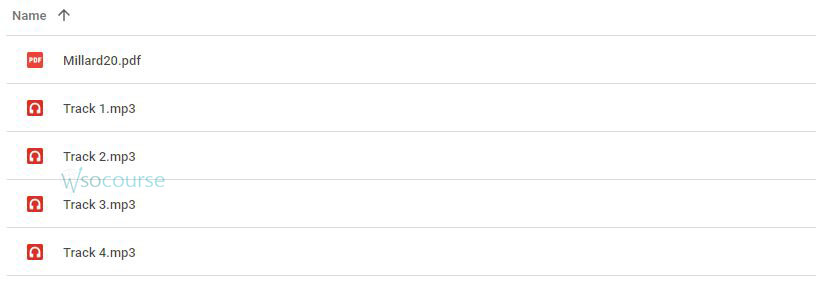
Channel Analysis: The Key to Improved Timing of Trades with Brian J. Millard
Introduction
In the complex world of trading, timing is everything. Brian J. Millard, renowned for his expertise in technical analysis, emphasizes the critical role of channel analysis in enhancing the timing of trades. This guide explores how traders can utilize channel analysis to refine their trading strategies and maximize profitability.
What is Channel Analysis?
Defining Channel Analysis
- Overview: Channel analysis is a technique used to identify the potential price movement paths of securities based on previous trends.
Importance in Trading
- Strategic Advantage: Understanding how channels work provides traders with insights into market trends and price boundaries.
The Fundamentals of Channel Analysis
Types of Channels
- Ascending, Descending, and Horizontal: Each type provides different insights and trading signals.
Constructing Channels
- Drawing Channels: Guidelines for identifying and drawing accurate channels on price charts.
Brian J. Millard’s Approach to Channel Analysis
Theoretical Background
- Millard’s Philosophy: How Millard integrates channel analysis with other technical indicators to improve trade accuracy.
Practical Applications
- Real-World Examples: Illustrations of how channel analysis has been successfully applied in various market conditions.
Enhancing Trade Timing with Channels
Entry and Exit Points
- Optimal Timing: Using the upper and lower bounds of channels to determine the best times to enter and exit trades.
Risk Management
- Minimizing Losses: How channel analysis can be used to set tighter stop-loss orders.
Tools and Techniques for Effective Channel Analysis
Software Recommendations
- Technical Analysis Tools: Overview of software that can help traders effectively implement channel analysis.
Indicator Integration
- Complementary Indicators: How to combine channel analysis with other indicators like moving averages and RSI.
Channel Analysis in Different Markets
Stocks and Bonds
- Market Specifics: Application of channel analysis across various asset classes.
Forex and Commodities
- Volatility and Liquidity: Special considerations for using channel analysis in highly volatile markets.
Advanced Channel Analysis Strategies
Breakout Patterns
- Identifying Breakouts: Strategies for recognizing and trading breakouts from established channels.
Reversal Signals
- Predicting Reversals: Using channel endpoints to anticipate potential market reversals.
The Psychology of Trading with Channels
Behavioral Insights
- Market Psychology: Understanding the psychological aspects that affect channel formation and sustainability.
Trader Confidence
- Building Trust: How proficiency in channel analysis can increase a trader’s confidence in their decision-making.
Challenges and Solutions in Channel Analysis
Common Pitfalls
- Avoidable Mistakes: Typical errors traders make when using channel analysis and how to avoid them.
Continuous Improvement
- Adapting Strategies: How to continuously refine channel analysis techniques to keep up with market changes.
Success Stories
Testimonials from Traders
- Case Studies: Examples of traders who have successfully implemented Millard’s channel analysis techniques.
Conclusion
Channel analysis, as advocated by Brian J. Millard, is an essential tool for traders seeking to improve the timing of their trades. By understanding and applying the principles of channel analysis, traders can enhance their market predictions, manage risks more effectively, and increase their overall trading performance.
Frequently Asked Questions:
- What is the primary benefit of using channel analysis in trading?
- Channel analysis helps traders identify potential price movement paths, improving the timing for entering and exiting trades.
- Can channel analysis be used for all types of trading instruments?
- Yes, channel analysis is versatile and can be applied across different trading instruments, including stocks, forex, and commodities.
- How does channel analysis aid in risk management?
- It allows traders to set more precise stop-loss orders by providing clear indications of support and resistance levels.
- What should traders combine with channel analysis to enhance its effectiveness?
- Traders should integrate channel analysis with other technical indicators like volume, RSI, and moving averages for better results.
- How can traders overcome common pitfalls in channel analysis?
- By continuously learning and practicing, using quality trading software, and staying updated with market changes and techniques.
Be the first to review “Channel Analysis. The Key to Improved Timing of Trades with Brian J.Millard”
You must be logged in to post a review.
Related products

Original price was: $649.00.$20.00Current price is: $20.00.

Original price was: $700.00.$39.00Current price is: $39.00.

Original price was: $695.00.$41.00Current price is: $41.00.

Forex Trading
Original price was: $125.00.$17.00Current price is: $17.00.

Original price was: $895.00.$15.00Current price is: $15.00.

Original price was: $497.00.$31.00Current price is: $31.00.

Forex Trading
Original price was: $550.00.$5.00Current price is: $5.00.

Original price was: $997.00.$8.00Current price is: $8.00.

Forex Trading
Quantamentals – The Next Great Forefront Of Trading and Investing with Trading Markets
Original price was: $1,495.00.$8.00Current price is: $8.00.

Forex Trading
Original price was: $499.00.$15.00Current price is: $15.00.

Original price was: $4,995.00.$15.00Current price is: $15.00.

Original price was: $197.00.$5.00Current price is: $5.00.

Original price was: $450.00.$23.00Current price is: $23.00.

Forex Trading
Original price was: $397.00.$31.00Current price is: $31.00.

Original price was: $1,200.00.$23.00Current price is: $23.00.
Original price was: $2,120.00.$15.00Current price is: $15.00.

Original price was: $999.00.$5.00Current price is: $5.00.

Forex Trading
Original price was: $797.00.$10.00Current price is: $10.00.

Forex Trading
Original price was: $2,995.00.$31.00Current price is: $31.00.

Forex Trading
Original price was: $999.00.$15.00Current price is: $15.00.

Reviews
There are no reviews yet.