
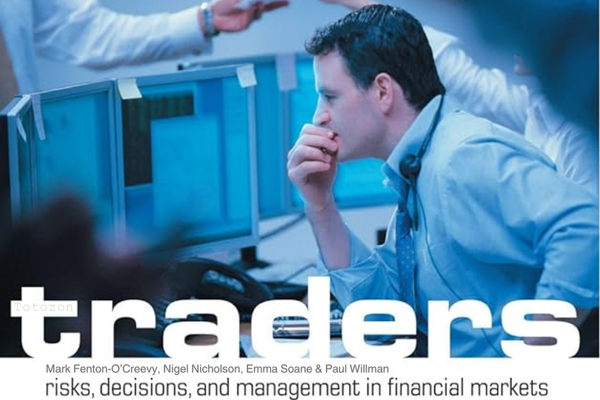
Traders: Risks, Decisions, and Management in Financial Markets – Mark Fenton-O’Creevy, Nigel Nicholson, Emma Soane & Paul Willman
$6.00
File Size: Coming soon!
Delivery Time: 1–12 hours
Media Type: Online Course
Traders: Risks, Decisions, and Management in Financial Markets with Mark Fenton-O’Creevy, Nigel Nicholson, Emma Soane & Paul Willman
Navigating the financial markets requires a deep understanding of risks, decision-making processes, and effective management strategies. “Traders: Risks, Decisions, and Management in Financial Markets” by Mark Fenton-O’Creevy, Nigel Nicholson, Emma Soane, and Paul Willman is an essential read for anyone looking to gain insights into the complexities of trading. This article delves into the key concepts, strategies, and practical advice offered by these experts to help you succeed in the financial markets.
Who Are the Authors?
Mark Fenton-O’Creevy
Mark Fenton-O’Creevy is a professor of organizational behavior with extensive research in trader behavior and decision-making processes.
Nigel Nicholson
Nigel Nicholson is a professor of organizational behavior and an expert in leadership and organizational change.
Emma Soane
Emma Soane is a senior lecturer in management with a focus on risk and decision-making in trading.
Paul Willman
Paul Willman is a professor of management specializing in employment relations and organizational behavior.
Understanding Financial Markets
Financial markets are platforms where assets such as stocks, bonds, currencies, and commodities are traded. These markets play a crucial role in the economy by facilitating the transfer of funds from savers to borrowers.
Key Concepts in Financial Markets
- Liquidity: The ease with which assets can be bought or sold.
- Volatility: The degree of variation in asset prices.
- Market Sentiment: The overall attitude of investors towards a particular market.
Risks in Financial Markets
Market Risk
Market risk refers to the potential losses due to changes in market prices. It is influenced by factors such as economic data, political events, and market sentiment.
Credit Risk
Credit risk is the risk of loss due to a counterparty’s failure to fulfill their financial obligations.
Liquidity Risk
Liquidity risk arises when an investor cannot buy or sell assets quickly enough to prevent or minimize losses.
Operational Risk
Operational risk involves losses due to failed internal processes, systems, or external events.
Decision-Making in Trading
Rational Decision-Making
Rational decision-making involves logical, structured, and data-driven approaches to making trading decisions.
Behavioral Decision-Making
Behavioral decision-making considers the psychological factors and biases that influence traders’ decisions.
Heuristics in Trading
Heuristics are mental shortcuts that traders use to make quick decisions. While useful, they can also lead to biases and errors.
Management Strategies in Trading
Risk Management
Effective risk management involves identifying, assessing, and prioritizing risks, followed by coordinated efforts to minimize or control the impact of those risks.
Techniques for Risk Management
- Diversification: Spreading investments across different assets to reduce risk.
- Hedging: Using financial instruments to offset potential losses.
- Stop-Loss Orders: Automatically selling assets when they reach a certain price to limit losses.
Portfolio Management
Portfolio management involves the selection and oversight of investments to achieve specific financial goals.
Principles of Portfolio Management
- Asset Allocation: Distributing investments among different asset categories.
- Rebalancing: Adjusting the portfolio to maintain the desired asset allocation.
- Performance Monitoring: Regularly reviewing the portfolio’s performance and making necessary adjustments.
Trading Psychology
Understanding the psychological aspects of trading is crucial for managing emotions and maintaining discipline.
Key Psychological Factors
- Fear and Greed: Emotions that can lead to irrational decision-making.
- Overconfidence: Overestimating one’s abilities and taking excessive risks.
- Loss Aversion: The tendency to prefer avoiding losses over acquiring gains.
Practical Applications of Trading Strategies
Case Studies
Analyzing real-life trading scenarios helps in understanding the application of theoretical concepts.
Simulations and Backtesting
Using simulations and backtesting allows traders to test strategies in a risk-free environment.
Common Mistakes in Trading
Overtrading
Overtrading refers to placing too many trades, often leading to higher costs and increased risk.
Ignoring Risk Management
Neglecting risk management can result in significant losses.
Chasing Losses
Trying to recover losses by taking excessive risks often leads to further losses.
Real-Life Success Stories
Testimonials from Traders
Many traders have successfully applied the strategies discussed in “Traders: Risks, Decisions, and Management in Financial Markets” to improve their trading performance.
- John D.: “The insights from this book transformed my trading approach. I now manage risks more effectively and make more informed decisions.”
- Emily R.: “Understanding the psychological aspects of trading has helped me maintain discipline and avoid common pitfalls.”
Conclusion
“Traders: Risks, Decisions, and Management in Financial Markets” by Mark Fenton-O’Creevy, Nigel Nicholson, Emma Soane, and Paul Willman is a comprehensive guide that provides valuable insights into the complexities of trading. By understanding and applying the concepts discussed in this book, you can enhance your trading performance and achieve better outcomes in the financial markets.
FAQs
1. What are the main risks in financial markets?
The main risks include market risk, credit risk, liquidity risk, and operational risk.
2. How can traders manage risks effectively?
Traders can manage risks through diversification, hedging, and using stop-loss orders.
3. What is the role of psychology in trading?
Psychological factors such as fear, greed, and overconfidence can significantly impact trading decisions.
4. What are common mistakes traders make?
Common mistakes include overtrading, ignoring risk management, and chasing losses.
5. Where can I learn more about trading strategies?
“Traders: Risks, Decisions, and Management in Financial Markets” offers comprehensive insights into effective trading strategies and risk management.
Be the first to review “Traders: Risks, Decisions, and Management in Financial Markets – Mark Fenton-O’Creevy, Nigel Nicholson, Emma Soane & Paul Willman”
You must be logged in to post a review.
Related products

Forex Trading

Forex Trading

Forex Trading

Forex Trading

Forex Trading

Forex Trading

Forex Trading
Quantamentals – The Next Great Forefront Of Trading and Investing with Trading Markets

Forex Trading



Forex Trading



Forex Trading


Forex Trading

Forex Trading



Forex Trading
Reviews
There are no reviews yet.