
-
×
 The 10 Essentials of Forex Trading with Jared Martinez
1 × $6.00
The 10 Essentials of Forex Trading with Jared Martinez
1 × $6.00 -
×
 Advanced Strategies for Option Trading Success with James Bittman
1 × $6.00
Advanced Strategies for Option Trading Success with James Bittman
1 × $6.00 -
×
 Scalp Strategy and Flipping Small Accounts with Opes Trading Group
1 × $5.00
Scalp Strategy and Flipping Small Accounts with Opes Trading Group
1 × $5.00 -
×
 Forex Trading Like Banks - Step by Step by Live Examples with Taher Assaf
1 × $6.00
Forex Trading Like Banks - Step by Step by Live Examples with Taher Assaf
1 × $6.00 -
×
 Investment Blunders with John Nofsinger
1 × $6.00
Investment Blunders with John Nofsinger
1 × $6.00 -
×
 3 Short Selling Strategies - Trading Strategy Bundles – Quantified Strategies
1 × $39.00
3 Short Selling Strategies - Trading Strategy Bundles – Quantified Strategies
1 × $39.00 -
×
 Mutual Funds for Dummies (6th edition) with Eric Tyson
1 × $6.00
Mutual Funds for Dummies (6th edition) with Eric Tyson
1 × $6.00 -
×
 Adz Trading Academy
1 × $5.00
Adz Trading Academy
1 × $5.00 -
×
 Intro To Short Selling with Madaz Money
1 × $31.00
Intro To Short Selling with Madaz Money
1 × $31.00 -
×
 Rockwell Trading - Can You Make A Living Day Trading - 2 DVD
1 × $6.00
Rockwell Trading - Can You Make A Living Day Trading - 2 DVD
1 × $6.00 -
×
 How to Manage a $25,000 Portfolio with Dan Sheridan - Sheridan Options Mentoring
1 × $6.00
How to Manage a $25,000 Portfolio with Dan Sheridan - Sheridan Options Mentoring
1 × $6.00 -
×
 Crystal Ball Pack PLUS bonus Live Trade By Pat Mitchell - Trick Trades
1 × $20.00
Crystal Ball Pack PLUS bonus Live Trade By Pat Mitchell - Trick Trades
1 × $20.00 -
×
 Home Run Options Trading Course with Dave Aquino - Base Camp Trading
1 × $11.00
Home Run Options Trading Course with Dave Aquino - Base Camp Trading
1 × $11.00 -
×
 Mastering Metatrader 4 in 90 Minutes & Members Site with Alan Benefield
1 × $15.00
Mastering Metatrader 4 in 90 Minutes & Members Site with Alan Benefield
1 × $15.00 -
×
 Best of the Best: Collars with Amy Meissner & Scott Ruble
1 × $15.00
Best of the Best: Collars with Amy Meissner & Scott Ruble
1 × $15.00 -
×
 Foundations of Technical Analysis (Article) with Andrew W.Lo
1 × $6.00
Foundations of Technical Analysis (Article) with Andrew W.Lo
1 × $6.00 -
×
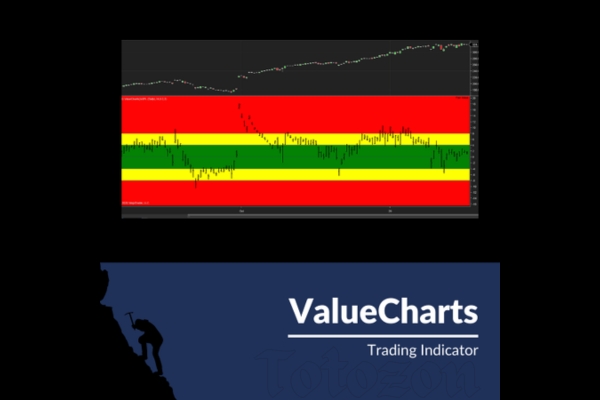 ValueCharts Ultimate Bundle with Base Camp Trading
1 × $54.00
ValueCharts Ultimate Bundle with Base Camp Trading
1 × $54.00 -
×
 The Orderflows Trade Opportunities Encyclopedia with Michael Valtos
1 × $8.00
The Orderflows Trade Opportunities Encyclopedia with Michael Valtos
1 × $8.00 -
×
 Advanced Spread Trading with Guy Bower - MasterClass Trader
1 × $15.00
Advanced Spread Trading with Guy Bower - MasterClass Trader
1 × $15.00 -
×
 The Afluent Desktop Currency Trader with Amin Sadak
1 × $6.00
The Afluent Desktop Currency Trader with Amin Sadak
1 × $6.00 -
×
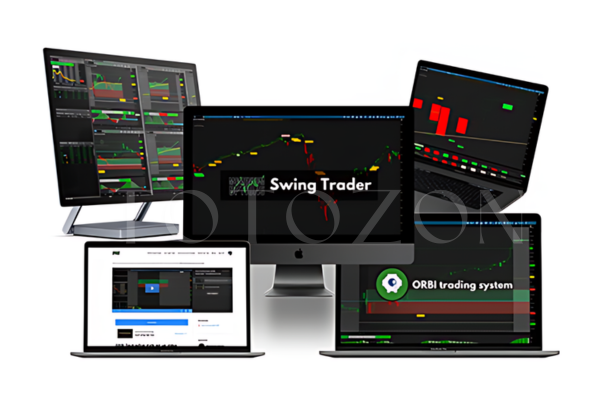 Momentum Options Trading Course with Eric Jellerson
1 × $272.00
Momentum Options Trading Course with Eric Jellerson
1 × $272.00 -
×
 Small and Mighty Association with Ryan Lee
1 × $6.00
Small and Mighty Association with Ryan Lee
1 × $6.00 -
×
 Neowave. Taking Elliott Wave into the 21st Century with Glenn Neely
1 × $6.00
Neowave. Taking Elliott Wave into the 21st Century with Glenn Neely
1 × $6.00 -
×
 VagaFX Academy Course with VAGAFX
1 × $41.00
VagaFX Academy Course with VAGAFX
1 × $41.00 -
×
 Mathematical Problems in Image Processing with Charles E.Chidume
1 × $6.00
Mathematical Problems in Image Processing with Charles E.Chidume
1 × $6.00 -
×
 MTI - Basics UTP
1 × $6.00
MTI - Basics UTP
1 × $6.00 -
×
 Building Winning Trading Systems
1 × $6.00
Building Winning Trading Systems
1 × $6.00 -
×
 Millionaire Traders with Kathy Lien & Boris Schlossberg
1 × $6.00
Millionaire Traders with Kathy Lien & Boris Schlossberg
1 × $6.00 -
×
 Market Stalkers Level 3 - Intraday Trading University
1 × $8.00
Market Stalkers Level 3 - Intraday Trading University
1 × $8.00 -
×
 How to Make Money with Real State Options with Thomas Lucier
1 × $6.00
How to Make Money with Real State Options with Thomas Lucier
1 × $6.00 -
×
 How to Create Better Trading Opportunities through Hedging with Jon Najarian
1 × $6.00
How to Create Better Trading Opportunities through Hedging with Jon Najarian
1 × $6.00 -
×
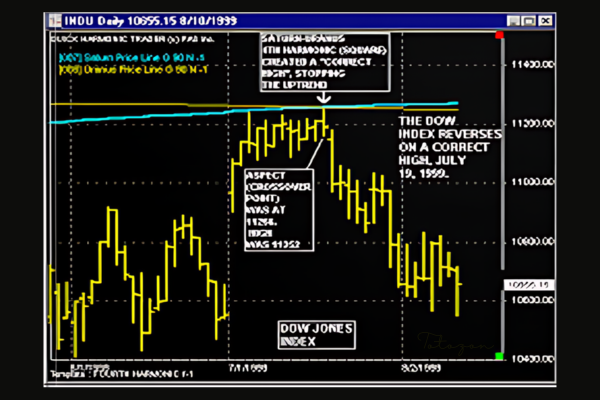 Gann’s Secret with Jeanne Long
1 × $4.00
Gann’s Secret with Jeanne Long
1 × $4.00 -
×
 Strategy, Value and Risk - The Real Options Approach with Jamie Rogers
1 × $6.00
Strategy, Value and Risk - The Real Options Approach with Jamie Rogers
1 × $6.00 -
×
 Quantifiable Edges Swing Trading Course with Quantifiable Edges
1 × $15.00
Quantifiable Edges Swing Trading Course with Quantifiable Edges
1 × $15.00 -
×
 Investing in Corporate Bonds and Credit Risk with Frank Hagenstein
1 × $6.00
Investing in Corporate Bonds and Credit Risk with Frank Hagenstein
1 × $6.00 -
×
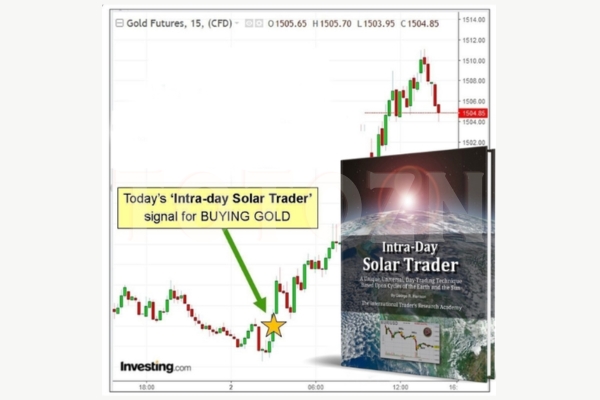 Intra-day Solar Trader with George Harrison
1 × $17.00
Intra-day Solar Trader with George Harrison
1 × $17.00 -
×
 International Assignments with Linda K.Stroh
1 × $6.00
International Assignments with Linda K.Stroh
1 × $6.00 -
×
 Practical Approach to Amibroker Backtesting with Rajandran R
1 × $6.00
Practical Approach to Amibroker Backtesting with Rajandran R
1 × $6.00 -
×
 The Day Trader: From the Pit to the PC with Lewis Borsellino
1 × $6.00
The Day Trader: From the Pit to the PC with Lewis Borsellino
1 × $6.00 -
×
 Professional Development Program (BRONZE Bundle) with Deeyana Angelo
1 × $78.00
Professional Development Program (BRONZE Bundle) with Deeyana Angelo
1 × $78.00 -
×
 Backtrade Marathon NEW with Real Life Trading
1 × $23.00
Backtrade Marathon NEW with Real Life Trading
1 × $23.00 -
×
 High Reward Low Risk Forex Trading with Jarratt Davis and Vic Noble
1 × $6.00
High Reward Low Risk Forex Trading with Jarratt Davis and Vic Noble
1 × $6.00 -
×
 New Market Mavericks with Geoff Cutmore
1 × $6.00
New Market Mavericks with Geoff Cutmore
1 × $6.00 -
×
 The Prop Trading Code with Brannigan Barrett - Axia Futures
1 × $23.00
The Prop Trading Code with Brannigan Barrett - Axia Futures
1 × $23.00
Trading Pairs: Capturing Profits and Hedging Risk with Statistical Arbitrage Strategies – Mark Whistler
$6.00
File Size: Coming soon!
Delivery Time: 1–12 hours
Media Type: Online Course
Trading Pairs: Capturing Profits and Hedging Risk with Statistical Arbitrage Strategies – Mark Whistler
Introduction to Trading Pairs
In the realm of sophisticated trading strategies, trading pairs, also known as pairs trading, stands out for its ability to capture profits while hedging risk. Mark Whistler, an expert in statistical arbitrage, offers deep insights into this method, making it accessible and profitable for traders. This article explores the concept of trading pairs, detailing the strategies, benefits, and practical applications for maximizing returns.
Who is Mark Whistler?
Expert in Statistical Arbitrage
Mark Whistler is a renowned trader and educator specializing in statistical arbitrage strategies. His expertise in pairs trading has helped many traders understand and implement these strategies effectively.
Educational Contributions
Whistler has authored several books and conducted numerous workshops focusing on statistical arbitrage and pairs trading, providing valuable resources for traders at all levels.
Understanding Trading Pairs
What is Pairs Trading?
Pairs trading involves simultaneously buying and selling two correlated securities to profit from their relative movements. This market-neutral strategy aims to capture the spread between the two securities, regardless of market direction.
Key Concepts
- Correlation: The degree to which two securities move in relation to each other.
- Spread: The price difference between the two securities.
- Mean Reversion: The tendency of the spread to revert to its historical average.
Why Trade Pairs?
Pairs trading offers several advantages, including reduced market risk, consistent returns, and the ability to profit in both rising and falling markets.
Components of a Pairs Trading Strategy
Selecting Pairs
Choosing the right pairs is crucial for successful pairs trading.
Criteria for Pair Selection
- High Correlation: Select pairs with a strong historical correlation.
- Liquidity: Ensure both securities are highly liquid to facilitate easy entry and exit.
- Fundamental Similarity: Choose pairs within the same industry or sector to maintain a fundamental relationship.
Analyzing the Spread
Monitoring and analyzing the spread between the selected pairs is essential.
Statistical Tools
- Standard Deviation: Measure the dispersion of the spread to identify trading opportunities.
- Z-Score: Calculate the Z-score to determine how far the spread is from its mean.
- Cointegration: Test for cointegration to ensure a stable long-term relationship between the pairs.
Entry and Exit Points
Identifying precise entry and exit points is key to maximizing profits.
Entry Criteria
- Deviations from the Mean: Enter trades when the spread deviates significantly from its mean.
- Z-Score Thresholds: Use Z-score thresholds (e.g., ±2) to signal entry points.
Exit Criteria
- Mean Reversion: Exit trades when the spread reverts to its mean.
- Profit Targets: Set profit targets based on historical spread movements.
- Stop-Loss Orders: Use stop-loss orders to limit potential losses.
Risk Management in Pairs Trading
Importance of Risk Management
Effective risk management is crucial to protect your capital and ensure long-term success.
Techniques for Managing Risk
- Position Sizing: Risk a fixed percentage of your trading capital on each pair.
- Diversification: Trade multiple pairs to spread risk.
- Stop-Loss Orders: Implement stop-loss orders to limit potential losses.
Hedging Strategies
Pairs trading inherently involves hedging since you are long one security and short the other.
Benefits of Hedging
- Reduced Market Risk: Mitigates exposure to market movements.
- Consistent Returns: Provides steady returns in various market conditions.
Implementing a Pairs Trading Strategy
Step-by-Step Guide
Step 1: Select Your Pairs
Use criteria such as correlation, liquidity, and fundamental similarity to choose your pairs.
Step 2: Analyze the Spread
Use statistical tools like standard deviation, Z-score, and cointegration tests to analyze the spread.
Step 3: Set Entry and Exit Points
Determine your entry and exit criteria based on deviations from the mean and Z-score thresholds.
Step 4: Execute and Monitor Trades
Enter trades based on your criteria and continuously monitor the spread and market conditions.
Step 5: Manage Risk
Implement risk management techniques, including position sizing, diversification, and stop-loss orders.
Common Challenges and Solutions
Market Volatility
High market volatility can affect the correlation between pairs.
Solution
Regularly review and adjust your pairs to ensure they maintain a strong correlation.
Execution Risk
Slippage and execution delays can impact your trades.
Solution
Use a reliable trading platform with fast execution speeds and minimal slippage.
Model Risk
Statistical models may not always predict future movements accurately.
Solution
Continuously backtest and refine your models to improve accuracy.
Practical Tips for Success
Stay Informed
Keep up with market news and trends that could affect your pairs.
Educational Resources
- Books: Read books on pairs trading and statistical arbitrage.
- Online Courses: Enroll in courses that focus on advanced trading strategies.
- Webinars: Attend webinars hosted by experienced traders like Mark Whistler.
Network with Other Traders
Join trading communities to share experiences and learn from others.
Benefits of Networking
- Knowledge Sharing: Exchange ideas and strategies with fellow traders.
- Support: Gain motivation and support from a community of like-minded individuals.
Continuous Learning
The financial markets are constantly evolving, requiring continuous learning and adaptation.
Strategies for Continuous Improvement
- Education: Regularly attend seminars, workshops, and courses.
- Research: Stay updated with market trends and new investment strategies.
- Feedback: Seek feedback from investors and peers to improve your strategies.
Conclusion
Trading pairs with statistical arbitrage strategies, as taught by Mark Whistler, provides a robust framework for capturing profits and hedging risk. By understanding the principles of pairs trading, implementing a disciplined strategy, and maintaining effective risk management, traders can achieve consistent returns in various market conditions. Stay informed, continuously learn, and leverage the tools and resources available to maximize your trading success.
FAQs
1. What is pairs trading?
Pairs trading involves simultaneously buying and selling two correlated securities to profit from their relative movements.
2. Who is Mark Whistler?
Mark Whistler is an expert in statistical arbitrage and pairs trading, known for his educational contributions in these areas.
3. How do you select pairs for trading?
Select pairs based on high correlation, liquidity, and fundamental similarity within the same industry or sector.
4. Why is risk management important in pairs trading?
Risk management protects your capital and ensures long-term success by limiting potential losses and spreading risk.
5. How can I start implementing pairs trading strategies?
Begin by selecting correlated pairs, analyzing the spread, setting entry and exit points, executing trades, and managing risk effectively.
Be the first to review “Trading Pairs: Capturing Profits and Hedging Risk with Statistical Arbitrage Strategies – Mark Whistler”
You must be logged in to post a review.
Related products
Original price was: $999.00.$5.00Current price is: $5.00.

Forex Trading
Original price was: $550.00.$5.00Current price is: $5.00.

Forex Trading
Original price was: $2,995.00.$31.00Current price is: $31.00.

Original price was: $310.00.$23.00Current price is: $23.00.

Forex Trading
Original price was: $239.00.$8.00Current price is: $8.00.

Original price was: $450.00.$23.00Current price is: $23.00.

Forex Trading
Original price was: $2,000.00.$23.00Current price is: $23.00.

Original price was: $695.00.$41.00Current price is: $41.00.

Original price was: $2,120.00.$15.00Current price is: $15.00.

Original price was: $197.00.$5.00Current price is: $5.00.

Forex Trading
Original price was: $249.00.$15.00Current price is: $15.00.
Original price was: $1,200.00.$23.00Current price is: $23.00.

Forex Trading
Original price was: $500.00.$5.00Current price is: $5.00.

Original price was: $997.00.$8.00Current price is: $8.00.

Original price was: $1,849.00.$15.00Current price is: $15.00.
Original price was: $649.00.$20.00Current price is: $20.00.

Forex Trading
Original price was: $397.00.$31.00Current price is: $31.00.

Forex Trading
Original price was: $850.00.$23.00Current price is: $23.00.
Original price was: $299.00.$8.00Current price is: $8.00.
Original price was: $799.00.$15.00Current price is: $15.00.

Reviews
There are no reviews yet.