
-
×
 Forex Profit Formula System with Jason Fielder
1 × $6.00
Forex Profit Formula System with Jason Fielder
1 × $6.00 -
×
 Forex Income Engine Course 2008 - 6 CDs + Manual
1 × $6.00
Forex Income Engine Course 2008 - 6 CDs + Manual
1 × $6.00 -
×
 Order Flow Mastery Course with OrderFlowForex
1 × $6.00
Order Flow Mastery Course with OrderFlowForex
1 × $6.00 -
×
 Create Your Trade Plan with Yuri Shramenko
1 × $6.00
Create Your Trade Plan with Yuri Shramenko
1 × $6.00 -
×
 Stock Detective Investor: Finding Market Gems Online with Kevin Lichtman & Lynn Duke
1 × $6.00
Stock Detective Investor: Finding Market Gems Online with Kevin Lichtman & Lynn Duke
1 × $6.00 -
×
 Dynamic Time and Price Analysis of Market Trends with Bruce Gilmore
1 × $6.00
Dynamic Time and Price Analysis of Market Trends with Bruce Gilmore
1 × $6.00 -
×
 Millionaire Traders with Kathy Lien & Boris Schlossberg
1 × $6.00
Millionaire Traders with Kathy Lien & Boris Schlossberg
1 × $6.00 -
×
 Forex Essentials in 15 Trades with John Bland, Jay Meisler & Michael Archer
1 × $6.00
Forex Essentials in 15 Trades with John Bland, Jay Meisler & Michael Archer
1 × $6.00 -
×
 The Option Pit VIX Primer
1 × $31.00
The Option Pit VIX Primer
1 × $31.00 -
×
 Range Trading with D.Singleton
1 × $6.00
Range Trading with D.Singleton
1 × $6.00 -
×
 Mindover Markets Enhanced: The Intensive Series 2 with Jim Dalton
1 × $20.00
Mindover Markets Enhanced: The Intensive Series 2 with Jim Dalton
1 × $20.00 -
×
 FOREX UNLIMITED WEALTH EA
1 × $6.00
FOREX UNLIMITED WEALTH EA
1 × $6.00 -
×
 Regression Diagnostics: Identifying Influential Data and Sources of Collinearity with David Belsey, Edwin Kuh & Roy Welsch
1 × $6.00
Regression Diagnostics: Identifying Influential Data and Sources of Collinearity with David Belsey, Edwin Kuh & Roy Welsch
1 × $6.00 -
×
 Inner Circle Course with Darius Fx
1 × $24.00
Inner Circle Course with Darius Fx
1 × $24.00 -
×
 Forex Powerband Dominator
1 × $6.00
Forex Powerband Dominator
1 × $6.00 -
×
 Master Class with Gerald Appel
1 × $6.00
Master Class with Gerald Appel
1 × $6.00 -
×
 Introduction to Amibroker with Howard B.Bandy
1 × $6.00
Introduction to Amibroker with Howard B.Bandy
1 × $6.00 -
×
 Recover Your Losses & Double Your Account Size with Tokyo The Trader - PLFCrypto
1 × $6.00
Recover Your Losses & Double Your Account Size with Tokyo The Trader - PLFCrypto
1 × $6.00 -
×
 Options Trading Workshop On Demand with Affordable Financial Education
1 × $69.00
Options Trading Workshop On Demand with Affordable Financial Education
1 × $69.00 -
×
 Technical & Fundamental Courses with Diamant Capital
1 × $5.00
Technical & Fundamental Courses with Diamant Capital
1 × $5.00 -
×
 Algo Trading Masterclass with Ali Casey - StatOasis
1 × $23.00
Algo Trading Masterclass with Ali Casey - StatOasis
1 × $23.00 -
×
 Master Time Factor & Forecasting with Mathematical Rules
1 × $6.00
Master Time Factor & Forecasting with Mathematical Rules
1 × $6.00 -
×
 Scalping Betfair For Daily Profits
1 × $6.00
Scalping Betfair For Daily Profits
1 × $6.00 -
×
 Investor’s Guide to Charting By Alistair Blair
1 × $6.00
Investor’s Guide to Charting By Alistair Blair
1 × $6.00 -
×
 Secrets of Swiss Banking with Hoyt Barber
1 × $6.00
Secrets of Swiss Banking with Hoyt Barber
1 × $6.00 -
×
 IncomeMAX Spreads and Straddles with Hari Swaminathan
1 × $15.00
IncomeMAX Spreads and Straddles with Hari Swaminathan
1 × $15.00 -
×
 Nasdaq Scalper Complete Video Course with Vadym Graifer - RealityTrader
1 × $23.00
Nasdaq Scalper Complete Video Course with Vadym Graifer - RealityTrader
1 × $23.00 -
×
 Mindful Trading e-Workbook with Traders State Of Mind
1 × $6.00
Mindful Trading e-Workbook with Traders State Of Mind
1 × $6.00 -
×
 TOP Momentum Bundle with Top Trade Tools
1 × $62.00
TOP Momentum Bundle with Top Trade Tools
1 × $62.00 -
×
 ChartEngineers Course
1 × $5.00
ChartEngineers Course
1 × $5.00 -
×
 Pocketing Premium Master Class (Basic) with Henrry Gambell
1 × $31.00
Pocketing Premium Master Class (Basic) with Henrry Gambell
1 × $31.00 -
×
 Technical Analysis By JC Parets - Investopedia Academy
1 × $15.00
Technical Analysis By JC Parets - Investopedia Academy
1 × $15.00 -
×
 Evolution Markets Forex Course - Evolution Markets
1 × $5.00
Evolution Markets Forex Course - Evolution Markets
1 × $5.00 -
×
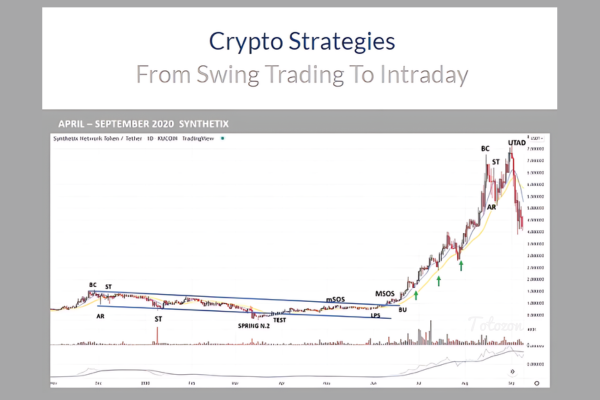 Crypto Strategies From Swing Trading To Intraday with Alessio Rutigliano & Roman Bogomazov
1 × $17.00
Crypto Strategies From Swing Trading To Intraday with Alessio Rutigliano & Roman Bogomazov
1 × $17.00 -
×
 The Realistic Trader - Crypto Currencies
1 × $31.00
The Realistic Trader - Crypto Currencies
1 × $31.00 -
×
 Market Stalkers Level 1 - Swing trading school (2020)
1 × $8.00
Market Stalkers Level 1 - Swing trading school (2020)
1 × $8.00 -
×
 The Vital Few vs. the Trivial Many: Invest with the Insiders, Not the Masses with George Muzea
1 × $6.00
The Vital Few vs. the Trivial Many: Invest with the Insiders, Not the Masses with George Muzea
1 × $6.00 -
×
 Master Forecasting Method & Unpublished Stock Market Forecasting Courses with W.D.Gann
1 × $6.00
Master Forecasting Method & Unpublished Stock Market Forecasting Courses with W.D.Gann
1 × $6.00 -
×
 Jtrader - A+ Setups Small Caps
1 × $23.00
Jtrader - A+ Setups Small Caps
1 × $23.00 -
×
 TradeCraft: Your Path to Peak Performance Trading By Adam Grimes
1 × $15.00
TradeCraft: Your Path to Peak Performance Trading By Adam Grimes
1 × $15.00 -
×
 Mastering the Stock Market with Andrew Baxter
1 × $6.00
Mastering the Stock Market with Andrew Baxter
1 × $6.00 -
×
 QuantZilla
1 × $39.00
QuantZilla
1 × $39.00 -
×
 How To Read The Market Professionally with TradeSmart
1 × $27.00
How To Read The Market Professionally with TradeSmart
1 × $27.00 -
×
 Simple Smart Forex Renko Program with Nikos Mermigas
1 × $10.00
Simple Smart Forex Renko Program with Nikos Mermigas
1 × $10.00 -
×
Options for Long Term Trading & Hedging with Option Pit
1 × $39.00
-
×
 Forecast 2024 Clarification with Larry Williams
1 × $15.00
Forecast 2024 Clarification with Larry Williams
1 × $15.00 -
×
 The Trading Blueprint with Brad Goh - The Trading Geek
1 × $5.00
The Trading Blueprint with Brad Goh - The Trading Geek
1 × $5.00 -
×
 The A14 Weekly Option Strategy Workshop with Amy Meissner
1 × $23.00
The A14 Weekly Option Strategy Workshop with Amy Meissner
1 × $23.00 -
×
 Essentials in Quantitative Trading QT01 By HangukQuant's
1 × $23.00
Essentials in Quantitative Trading QT01 By HangukQuant's
1 × $23.00 -
×
 Butterfly and Condor Workshop with Aeromir
1 × $15.00
Butterfly and Condor Workshop with Aeromir
1 × $15.00 -
×
 Bond Market Course with The Macro Compass
1 × $15.00
Bond Market Course with The Macro Compass
1 × $15.00 -
×
 W. D Gann 's Square Of 9 Applied To Modern Markets with Sean Avidar - Hexatrade350
1 × $23.00
W. D Gann 's Square Of 9 Applied To Modern Markets with Sean Avidar - Hexatrade350
1 × $23.00 -
×
 The Indices Orderflow Masterclass with The Forex Scalpers
1 × $23.00
The Indices Orderflow Masterclass with The Forex Scalpers
1 × $23.00
Trading Pairs: Capturing Profits and Hedging Risk with Statistical Arbitrage Strategies – Mark Whistler
$6.00
File Size: Coming soon!
Delivery Time: 1–12 hours
Media Type: Online Course
Trading Pairs: Capturing Profits and Hedging Risk with Statistical Arbitrage Strategies – Mark Whistler
Introduction to Trading Pairs
In the realm of sophisticated trading strategies, trading pairs, also known as pairs trading, stands out for its ability to capture profits while hedging risk. Mark Whistler, an expert in statistical arbitrage, offers deep insights into this method, making it accessible and profitable for traders. This article explores the concept of trading pairs, detailing the strategies, benefits, and practical applications for maximizing returns.
Who is Mark Whistler?
Expert in Statistical Arbitrage
Mark Whistler is a renowned trader and educator specializing in statistical arbitrage strategies. His expertise in pairs trading has helped many traders understand and implement these strategies effectively.
Educational Contributions
Whistler has authored several books and conducted numerous workshops focusing on statistical arbitrage and pairs trading, providing valuable resources for traders at all levels.
Understanding Trading Pairs
What is Pairs Trading?
Pairs trading involves simultaneously buying and selling two correlated securities to profit from their relative movements. This market-neutral strategy aims to capture the spread between the two securities, regardless of market direction.
Key Concepts
- Correlation: The degree to which two securities move in relation to each other.
- Spread: The price difference between the two securities.
- Mean Reversion: The tendency of the spread to revert to its historical average.
Why Trade Pairs?
Pairs trading offers several advantages, including reduced market risk, consistent returns, and the ability to profit in both rising and falling markets.
Components of a Pairs Trading Strategy
Selecting Pairs
Choosing the right pairs is crucial for successful pairs trading.
Criteria for Pair Selection
- High Correlation: Select pairs with a strong historical correlation.
- Liquidity: Ensure both securities are highly liquid to facilitate easy entry and exit.
- Fundamental Similarity: Choose pairs within the same industry or sector to maintain a fundamental relationship.
Analyzing the Spread
Monitoring and analyzing the spread between the selected pairs is essential.
Statistical Tools
- Standard Deviation: Measure the dispersion of the spread to identify trading opportunities.
- Z-Score: Calculate the Z-score to determine how far the spread is from its mean.
- Cointegration: Test for cointegration to ensure a stable long-term relationship between the pairs.
Entry and Exit Points
Identifying precise entry and exit points is key to maximizing profits.
Entry Criteria
- Deviations from the Mean: Enter trades when the spread deviates significantly from its mean.
- Z-Score Thresholds: Use Z-score thresholds (e.g., ±2) to signal entry points.
Exit Criteria
- Mean Reversion: Exit trades when the spread reverts to its mean.
- Profit Targets: Set profit targets based on historical spread movements.
- Stop-Loss Orders: Use stop-loss orders to limit potential losses.
Risk Management in Pairs Trading
Importance of Risk Management
Effective risk management is crucial to protect your capital and ensure long-term success.
Techniques for Managing Risk
- Position Sizing: Risk a fixed percentage of your trading capital on each pair.
- Diversification: Trade multiple pairs to spread risk.
- Stop-Loss Orders: Implement stop-loss orders to limit potential losses.
Hedging Strategies
Pairs trading inherently involves hedging since you are long one security and short the other.
Benefits of Hedging
- Reduced Market Risk: Mitigates exposure to market movements.
- Consistent Returns: Provides steady returns in various market conditions.
Implementing a Pairs Trading Strategy
Step-by-Step Guide
Step 1: Select Your Pairs
Use criteria such as correlation, liquidity, and fundamental similarity to choose your pairs.
Step 2: Analyze the Spread
Use statistical tools like standard deviation, Z-score, and cointegration tests to analyze the spread.
Step 3: Set Entry and Exit Points
Determine your entry and exit criteria based on deviations from the mean and Z-score thresholds.
Step 4: Execute and Monitor Trades
Enter trades based on your criteria and continuously monitor the spread and market conditions.
Step 5: Manage Risk
Implement risk management techniques, including position sizing, diversification, and stop-loss orders.
Common Challenges and Solutions
Market Volatility
High market volatility can affect the correlation between pairs.
Solution
Regularly review and adjust your pairs to ensure they maintain a strong correlation.
Execution Risk
Slippage and execution delays can impact your trades.
Solution
Use a reliable trading platform with fast execution speeds and minimal slippage.
Model Risk
Statistical models may not always predict future movements accurately.
Solution
Continuously backtest and refine your models to improve accuracy.
Practical Tips for Success
Stay Informed
Keep up with market news and trends that could affect your pairs.
Educational Resources
- Books: Read books on pairs trading and statistical arbitrage.
- Online Courses: Enroll in courses that focus on advanced trading strategies.
- Webinars: Attend webinars hosted by experienced traders like Mark Whistler.
Network with Other Traders
Join trading communities to share experiences and learn from others.
Benefits of Networking
- Knowledge Sharing: Exchange ideas and strategies with fellow traders.
- Support: Gain motivation and support from a community of like-minded individuals.
Continuous Learning
The financial markets are constantly evolving, requiring continuous learning and adaptation.
Strategies for Continuous Improvement
- Education: Regularly attend seminars, workshops, and courses.
- Research: Stay updated with market trends and new investment strategies.
- Feedback: Seek feedback from investors and peers to improve your strategies.
Conclusion
Trading pairs with statistical arbitrage strategies, as taught by Mark Whistler, provides a robust framework for capturing profits and hedging risk. By understanding the principles of pairs trading, implementing a disciplined strategy, and maintaining effective risk management, traders can achieve consistent returns in various market conditions. Stay informed, continuously learn, and leverage the tools and resources available to maximize your trading success.
FAQs
1. What is pairs trading?
Pairs trading involves simultaneously buying and selling two correlated securities to profit from their relative movements.
2. Who is Mark Whistler?
Mark Whistler is an expert in statistical arbitrage and pairs trading, known for his educational contributions in these areas.
3. How do you select pairs for trading?
Select pairs based on high correlation, liquidity, and fundamental similarity within the same industry or sector.
4. Why is risk management important in pairs trading?
Risk management protects your capital and ensures long-term success by limiting potential losses and spreading risk.
5. How can I start implementing pairs trading strategies?
Begin by selecting correlated pairs, analyzing the spread, setting entry and exit points, executing trades, and managing risk effectively.
Be the first to review “Trading Pairs: Capturing Profits and Hedging Risk with Statistical Arbitrage Strategies – Mark Whistler”
You must be logged in to post a review.
Related products

Forex Trading
Original price was: $999.00.$15.00Current price is: $15.00.

Original price was: $799.00.$15.00Current price is: $15.00.
Forex Trading
Original price was: $697.00.$5.00Current price is: $5.00.

Forex Trading
Original price was: $1,898.00.$10.00Current price is: $10.00.

Forex Trading
Original price was: $550.00.$5.00Current price is: $5.00.
Forex Trading
Original price was: $4,997.00.$27.00Current price is: $27.00.

Original price was: $997.00.$8.00Current price is: $8.00.

Original price was: $700.00.$39.00Current price is: $39.00.

Forex Trading
The Complete Guide to Multiple Time Frame Analysis & Reading Price Action with Aiman Almansoori
Original price was: $1,399.00.$13.00Current price is: $13.00.

Forex Trading
Original price was: $1,098.00.$39.00Current price is: $39.00.
Original price was: $139.00.$23.00Current price is: $23.00.

Forex Trading
Original price was: $2,997.00.$23.00Current price is: $23.00.
Forex Trading
Original price was: $2,000.00.$23.00Current price is: $23.00.

Original price was: $695.00.$41.00Current price is: $41.00.

Original price was: $1,849.00.$15.00Current price is: $15.00.

Original price was: $497.00.$11.00Current price is: $11.00.

Original price was: $1,800.00.$54.00Current price is: $54.00.

Forex Trading
Quantamentals – The Next Great Forefront Of Trading and Investing with Trading Markets
Original price was: $1,495.00.$8.00Current price is: $8.00.

Forex Trading
Original price was: $125.00.$17.00Current price is: $17.00.

Original price was: $2,120.00.$15.00Current price is: $15.00.

Reviews
There are no reviews yet.