
-
×
 Blueprint to Extreme Reversals with Aiman Almansoori - Trading Terminal
1 × $8.00
Blueprint to Extreme Reversals with Aiman Almansoori - Trading Terminal
1 × $8.00 -
×
 Sniper Day Trading Workshop DVD course
1 × $23.00
Sniper Day Trading Workshop DVD course
1 × $23.00 -
×
 Andy’s EMini Bar – 40 Min System with Joe Ross
1 × $6.00
Andy’s EMini Bar – 40 Min System with Joe Ross
1 × $6.00 -
×
 How to Trade Stock Options Course
1 × $6.00
How to Trade Stock Options Course
1 × $6.00 -
×
 Price Action Room - The Scalper’s Boot Camp
1 × $15.00
Price Action Room - The Scalper’s Boot Camp
1 × $15.00 -
×
 ART Trading - Fine Tuning Your Money Management Skills & Controlling Your Trade Risk
1 × $15.00
ART Trading - Fine Tuning Your Money Management Skills & Controlling Your Trade Risk
1 × $15.00 -
×
 Position Dissection with Charles Cottle
1 × $4.00
Position Dissection with Charles Cottle
1 × $4.00 -
×
 FX Daniel Savage Bundle (2in1)
1 × $23.00
FX Daniel Savage Bundle (2in1)
1 × $23.00 -
×
 MMfx Course August 2011 + MT4 Ind. Jan 2012
1 × $15.00
MMfx Course August 2011 + MT4 Ind. Jan 2012
1 × $15.00 -
×
 Sector Trading Strategies: Turning Steady Profits Even in Stubborn Markets By Deron Wagner & John Boyer
1 × $6.00
Sector Trading Strategies: Turning Steady Profits Even in Stubborn Markets By Deron Wagner & John Boyer
1 × $6.00 -
×
 WITS Turbo Seminars with Brian James Sklenka
1 × $6.00
WITS Turbo Seminars with Brian James Sklenka
1 × $6.00 -
×
 Futures Trading Secrets Home Study Course 2008 with Bill McCready
1 × $6.00
Futures Trading Secrets Home Study Course 2008 with Bill McCready
1 × $6.00 -
×
 Advanced Forex Mastery Course with Alpha Forex Global
1 × $5.00
Advanced Forex Mastery Course with Alpha Forex Global
1 × $5.00 -
×
 Elliott Wave Swing High Low Indicator for ThinkorSwim with Fibonacci
1 × $6.00
Elliott Wave Swing High Low Indicator for ThinkorSwim with Fibonacci
1 × $6.00 -
×
 Black Gold Strategies
1 × $23.00
Black Gold Strategies
1 × $23.00 -
×
 High Probability Trading Using Elliott Wave And Fibonacci Analysis withVic Patel - Forex Training Group
1 × $10.00
High Probability Trading Using Elliott Wave And Fibonacci Analysis withVic Patel - Forex Training Group
1 × $10.00 -
×
 Forex Fortune Factory with Nehemiah Douglass & Cottrell Phillip
1 × $5.00
Forex Fortune Factory with Nehemiah Douglass & Cottrell Phillip
1 × $5.00 -
×
 Low Timeframe Supply & Demand with RROP
1 × $5.00
Low Timeframe Supply & Demand with RROP
1 × $5.00 -
×
 Spike 35 Traders Manual with J.D.Hamon
1 × $6.00
Spike 35 Traders Manual with J.D.Hamon
1 × $6.00 -
×
![ACD Method [Video (6 MP4s)] with Mark Fisher](https://www.totozon.com/wp-content/uploads/2024/05/ACD-Method-Video-6-MP4s-with-Mark-Fisher.jpg) ACD Method [Video (6 MP4s)] with Mark Fisher
1 × $6.00
ACD Method [Video (6 MP4s)] with Mark Fisher
1 × $6.00 -
×
 Real-Time Course with Rich Swannell
1 × $6.00
Real-Time Course with Rich Swannell
1 × $6.00 -
×
 Fractal Flow Strategy Video Course with Fractal Flow Pro
1 × $6.00
Fractal Flow Strategy Video Course with Fractal Flow Pro
1 × $6.00 -
×
 Equity Research and Valuation Techniques with Kemp Dolliver
1 × $6.00
Equity Research and Valuation Techniques with Kemp Dolliver
1 × $6.00 -
×
 Fractal Market Analysis with Edgar Peters
1 × $6.00
Fractal Market Analysis with Edgar Peters
1 × $6.00 -
×
 The Future of Technology with Tom Standage
1 × $4.00
The Future of Technology with Tom Standage
1 × $4.00 -
×
 CNBC 24-7 Trading with Barbara Rockefeller
1 × $6.00
CNBC 24-7 Trading with Barbara Rockefeller
1 × $6.00 -
×
 How to Trade the New Single Stock Futures with Jack Bernstein
1 × $6.00
How to Trade the New Single Stock Futures with Jack Bernstein
1 × $6.00 -
×
 Ultimate Breakout
1 × $54.00
Ultimate Breakout
1 × $54.00
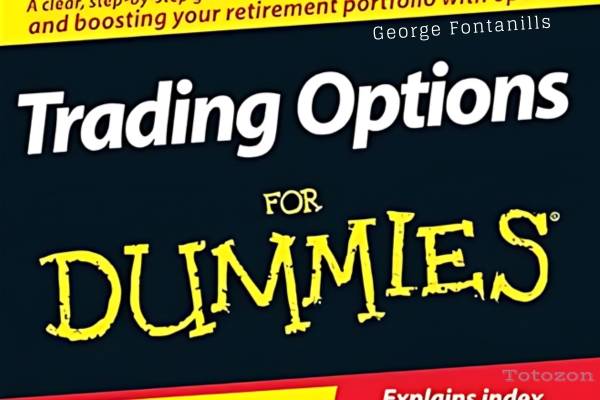
Trading Options for Dummies with George Fontanills
$6.00
File Size: Coming soon!
Delivery Time: 1–12 hours
Media Type: Online Course
Content Proof: Watch Here!
You may check content proof of “Trading Options for Dummies with George Fontanills” below:

Trading Options for Dummies with George Fontanills
Options trading can be a powerful tool for investors looking to diversify their portfolios and enhance their trading strategies. George Fontanills, a renowned expert in the field, provides clear and comprehensive guidance in his book “Trading Options for Dummies.” This article will explore the fundamental concepts, strategies, and insights presented by Fontanills, making it easier for beginners to understand and excel in options trading.
Introduction to Options Trading
What Are Options?
Options are financial instruments that give traders the right, but not the obligation, to buy or sell an underlying asset at a predetermined price within a specified time frame.
Why Trade Options?
- Leverage: Control a large position with a relatively small investment.
- Flexibility: Utilize various strategies to profit in different market conditions.
- Risk Management: Hedge against potential losses in other investments.
Understanding the Basics
Types of Options
Call Options
Call options give the holder the right to buy an asset at a specified price.
Put Options
Put options give the holder the right to sell an asset at a specified price.
Key Terms in Options Trading
Strike Price
The price at which the option can be exercised.
Expiration Date
The date on which the option expires and can no longer be exercised.
Premium
The price paid for the option.
Fundamental Concepts
Intrinsic Value vs. Extrinsic Value
Intrinsic Value
The difference between the current price of the underlying asset and the strike price of the option.
Extrinsic Value
The additional value of the option based on time remaining and volatility.
The Greeks
Delta
Measures the sensitivity of the option’s price to changes in the price of the underlying asset.
Gamma
Measures the rate of change of delta over time.
Theta
Represents the rate at which the option’s value decreases as it approaches its expiration date.
Vega
Measures the sensitivity of the option’s price to changes in volatility.
Basic Strategies for Beginners
1. Covered Call
Involves holding a long position in an asset and selling a call option on the same asset to generate income.
2. Protective Put
Involves holding a long position in an asset and buying a put option to hedge against potential losses.
3. Long Call
Buying a call option to profit from an expected increase in the price of the underlying asset.
4. Long Put
Buying a put option to profit from an expected decrease in the price of the underlying asset.
Advanced Strategies
1. Straddle
Buying both a call and a put option at the same strike price and expiration date to profit from significant price movements in either direction.
2. Strangle
Buying a call and a put option with different strike prices but the same expiration date to profit from large price movements.
3. Iron Condor
Involves selling a lower strike put and a higher strike call while buying a further out-of-the-money put and call to limit risk and profit from low volatility.
Practical Exercises
Exercise 1: Calculating Option Prices
- Step 1: Identify the current price of the underlying asset.
- Step 2: Determine the strike price and expiration date of the option.
- Step 3: Calculate the intrinsic and extrinsic value.
Exercise 2: Analyzing Delta and Gamma
- Step 1: Select an option and note its delta and gamma values.
- Step 2: Track how changes in the underlying asset’s price affect the option’s price.
- Step 3: Analyze the relationship between delta and gamma.
Exercise 3: Implementing a Covered Call Strategy
- Step 1: Choose a stock you own.
- Step 2: Sell a call option on the stock.
- Step 3: Monitor the performance and evaluate the outcome.
Common Mistakes to Avoid
1. Ignoring the Greeks
Failing to consider the Greeks can lead to unexpected losses.
2. Overleveraging
Using too much leverage can amplify losses as well as gains.
3. Lack of a Trading Plan
Trading without a plan can lead to emotional decisions and poor outcomes.
Tips for Successful Options Trading
1. Stay Informed
- Follow financial news and market trends.
- Keep up-to-date with economic indicators that can impact options prices.
2. Practice Risk Management
- Use stop-loss orders to limit potential losses.
- Diversify your options portfolio to spread risk.
3. Continuous Learning and Adaptation
- Regularly review and adjust your trading strategies.
- Stay informed about new trading techniques and market developments.
Conclusion
“Trading Options for Dummies” by George Fontanills is an invaluable resource for anyone looking to master options trading. By following the structured guidance and practical exercises outlined in the book, you can develop the skills necessary to succeed in the market. Whether you are a novice or an experienced trader, this guide offers valuable insights and strategies to enhance your trading journey.
FAQs
1. What is the primary goal of “Trading Options for Dummies”?
The primary goal is to provide a comprehensive introduction to options trading, making complex concepts accessible to beginners.
2. How do call and put options differ?
Call options give the holder the right to buy an asset, while put options give the holder the right to sell an asset.
3. What are the Greeks in options trading?
The Greeks (Delta, Gamma, Theta, and Vega) measure the sensitivity of an option’s price to various factors, such as changes in the price of the underlying asset and volatility.
4. How can I manage risk when trading options?
You can manage risk by using stop-loss orders, diversifying your options portfolio, and staying informed about market trends.
5. What is a covered call strategy?
A covered call strategy involves holding a long position in an asset while selling a call option on the same asset to generate additional income.
Be the first to review “Trading Options for Dummies with George Fontanills”
You must be logged in to post a review.
Related products

Original price was: $399.00.$23.00Current price is: $23.00.

Original price was: $699.00.$6.00Current price is: $6.00.


Original price was: $297.00.$31.00Current price is: $31.00.

Original price was: $1,497.00.$15.00Current price is: $15.00.

Original price was: $51.00.$6.00Current price is: $6.00.

Original price was: $18.00.$6.00Current price is: $6.00.

Original price was: $247.00.$28.00Current price is: $28.00.

Original price was: $1,530.00.$272.00Current price is: $272.00.

Reviews
There are no reviews yet.