
-
×
 Rockwell Day Trading - Starter Package
1 × $6.00
Rockwell Day Trading - Starter Package
1 × $6.00 -
×
 Futures Trading Secrets Home Study with Bill McCready
1 × $6.00
Futures Trading Secrets Home Study with Bill McCready
1 × $6.00 -
×
 Super Structure Trading Home Study Course
1 × $23.00
Super Structure Trading Home Study Course
1 × $23.00 -
×
 Forex & Fibonacci Day Trading Seminar - $695
1 × $6.00
Forex & Fibonacci Day Trading Seminar - $695
1 × $6.00 -
×
 Secret $100k Meeting with Russell Brunson
1 × $6.00
Secret $100k Meeting with Russell Brunson
1 × $6.00 -
×
 Butterfly and Condor Workshop with Aeromir
1 × $15.00
Butterfly and Condor Workshop with Aeromir
1 × $15.00 -
×
 Mars Vesta Cycle in Stocks Markets (Article) with Bill Meridian
1 × $6.00
Mars Vesta Cycle in Stocks Markets (Article) with Bill Meridian
1 × $6.00 -
×
 My Forex League - The Course
1 × $5.00
My Forex League - The Course
1 × $5.00 -
×
 Forex Mentor Seminar with Peter Bain
1 × $6.00
Forex Mentor Seminar with Peter Bain
1 × $6.00 -
×
 Live Online Masterclass with XSPY Trader
1 × $5.00
Live Online Masterclass with XSPY Trader
1 × $5.00 -
×
 Street Smarts & TS Code with Larry Connors & Linda Bradford Rashcke
1 × $6.00
Street Smarts & TS Code with Larry Connors & Linda Bradford Rashcke
1 × $6.00 -
×
 TradeCraft: Your Path to Peak Performance Trading By Adam Grimes
1 × $15.00
TradeCraft: Your Path to Peak Performance Trading By Adam Grimes
1 × $15.00 -
×
 The Bull Hunter with Dan Denning
1 × $6.00
The Bull Hunter with Dan Denning
1 × $6.00 -
×
 Reality Based Trading with Matt Petrallia - Trading Equilibrium
1 × $17.00
Reality Based Trading with Matt Petrallia - Trading Equilibrium
1 × $17.00 -
×
 Humbled Trader Academy
1 × $5.00
Humbled Trader Academy
1 × $5.00 -
×
 Mastering Income Spread Trading with Dave Aquino - Base Camp Trading
1 × $23.00
Mastering Income Spread Trading with Dave Aquino - Base Camp Trading
1 × $23.00 -
×
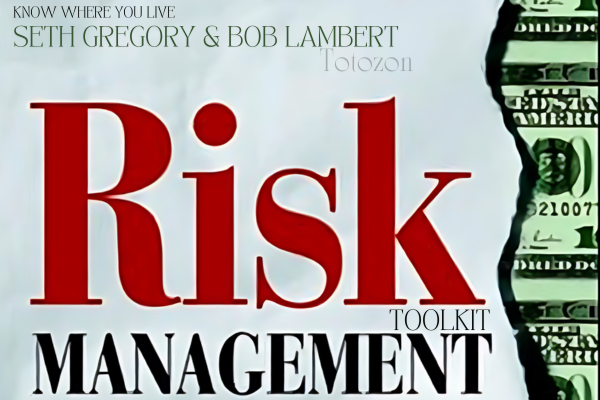 Know Where You Live. Risk Management Toolkit - Seth Gregory & Bob Lambert
1 × $6.00
Know Where You Live. Risk Management Toolkit - Seth Gregory & Bob Lambert
1 × $6.00 -
×
 Mind of a Trader with Alpesh Patel
1 × $6.00
Mind of a Trader with Alpesh Patel
1 × $6.00 -
×
 Investment Performance Measurement with Bruce Feibel
1 × $6.00
Investment Performance Measurement with Bruce Feibel
1 × $6.00 -
×
 Ichimoku Cloud Trading Course with FollowMeTrades
1 × $15.00
Ichimoku Cloud Trading Course with FollowMeTrades
1 × $15.00 -
×
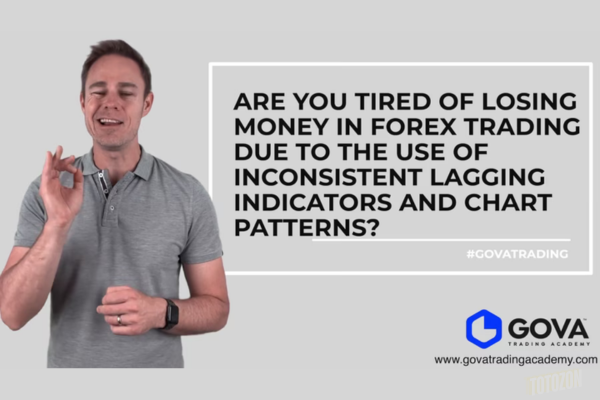 GTA Professional Course with Gova Trading Academy
1 × $5.00
GTA Professional Course with Gova Trading Academy
1 × $5.00 -
×
 Future DayTrading (German)
1 × $6.00
Future DayTrading (German)
1 × $6.00 -
×
 How to Trade Stock Options Course
1 × $6.00
How to Trade Stock Options Course
1 × $6.00 -
×
 Strategy Week: Using High Probability Options Strategies with Don Kaufman
1 × $6.00
Strategy Week: Using High Probability Options Strategies with Don Kaufman
1 × $6.00 -
×
 Finding Astrocycles with an Ephemeris - Hans Hannula
1 × $6.00
Finding Astrocycles with an Ephemeris - Hans Hannula
1 × $6.00 -
×
 Option Income Stream System 2004
1 × $6.00
Option Income Stream System 2004
1 × $6.00 -
×
 In Jeremy's Stock Market Brain
1 × $62.00
In Jeremy's Stock Market Brain
1 × $62.00 -
×
 T. Harv Eker’s All-Access
1 × $39.00
T. Harv Eker’s All-Access
1 × $39.00 -
×
 Reading & Understanding Charts with Andrew Baxter
1 × $6.00
Reading & Understanding Charts with Andrew Baxter
1 × $6.00 -
×
 Power Charting - Robert’s Indicator Webinar
1 × $6.00
Power Charting - Robert’s Indicator Webinar
1 × $6.00 -
×
 FMG Online Course with FMG Traders
1 × $6.00
FMG Online Course with FMG Traders
1 × $6.00 -
×
 Dan Sheridan 360 Degrees of Trading Class
1 × $6.00
Dan Sheridan 360 Degrees of Trading Class
1 × $6.00 -
×
 OPTIONS FOR BEGINNERS
1 × $6.00
OPTIONS FOR BEGINNERS
1 × $6.00 -
×
 Japanese Trading Systems with Tradesmart University
1 × $9.00
Japanese Trading Systems with Tradesmart University
1 × $9.00 -
×
 Real Trade Examples Volume 1 with Steve Burns
1 × $15.00
Real Trade Examples Volume 1 with Steve Burns
1 × $15.00 -
×
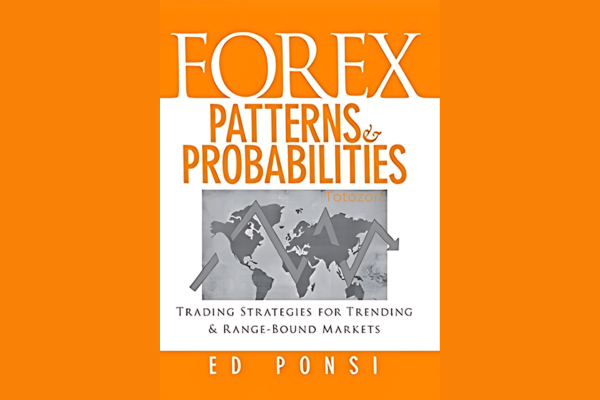 Forex Patterns and Probabilities: Trading Strategies for Trending and Range-Bound Markets with Ed Ponsi
1 × $6.00
Forex Patterns and Probabilities: Trading Strategies for Trending and Range-Bound Markets with Ed Ponsi
1 × $6.00 -
×
 Jason Bond Dvds for Traders (all 4 programs)
1 × $6.00
Jason Bond Dvds for Traders (all 4 programs)
1 × $6.00 -
×
 Linear Regression 3030 with David Elliott
1 × $6.00
Linear Regression 3030 with David Elliott
1 × $6.00 -
×
 The Trading Blueprint with Brad Goh - The Trading Geek
1 × $5.00
The Trading Blueprint with Brad Goh - The Trading Geek
1 × $5.00 -
×
 Optionpit - Mastering Iron Condors and Butterflies
1 × $15.00
Optionpit - Mastering Iron Condors and Butterflies
1 × $15.00 -
×
 MahadFX Lifetime Discord Access
1 × $20.00
MahadFX Lifetime Discord Access
1 × $20.00 -
×
 Advent Forex Course with Cecil Robles
1 × $6.00
Advent Forex Course with Cecil Robles
1 × $6.00 -
×
 Jim Rickards Intelligence Triggers with Agora Financial
1 × $5.00
Jim Rickards Intelligence Triggers with Agora Financial
1 × $5.00 -
×
 Forecast for 2010 with Larry Williams
1 × $6.00
Forecast for 2010 with Larry Williams
1 × $6.00 -
×
 Investment Valuation
1 × $6.00
Investment Valuation
1 × $6.00 -
×
 Signals
1 × $6.00
Signals
1 × $6.00 -
×
 Get Rich with Dividends
1 × $6.00
Get Rich with Dividends
1 × $6.00 -
×
 Forex Income Engine 1.0 with Bill Poulos
1 × $6.00
Forex Income Engine 1.0 with Bill Poulos
1 × $6.00 -
×
 Algo Trading Masterclass with Ali Casey - StatOasis
1 × $23.00
Algo Trading Masterclass with Ali Casey - StatOasis
1 × $23.00

The Three Secrets to Trading Momentum Indicators with David Penn
$6.00
File Size: Coming soon!
Delivery Time: 1–12 hours
Media Type: Online Course
Content Proof: Watch Here!
You may check content proof of “The Three Secrets to Trading Momentum Indicators with David Penn” below:
The Three Secrets to Trading Momentum Indicators with David Penn
Introduction
Momentum indicators are powerful tools in the world of trading. David Penn, a renowned trading expert, sheds light on these invaluable instruments in his guide, “The Three Secrets to Trading Momentum Indicators.” Let’s explore these secrets and how they can transform your trading strategies.
What Are Momentum Indicators?
Momentum indicators measure the speed and change of price movements. They help traders identify the strength of a trend and potential reversal points.
Why Use Momentum Indicators?
Momentum indicators provide insights that are not always visible through price movements alone. They are essential for confirming trends and spotting potential entry and exit points.
Types of Momentum Indicators
- Relative Strength Index (RSI)
- Moving Average Convergence Divergence (MACD)
- Stochastic Oscillator
Secret #1: Understanding the Underlying Trend
Before using momentum indicators, it’s crucial to understand the underlying trend.
Identifying Trends
Trends can be categorized into:
- Uptrends: Characterized by higher highs and higher lows.
- Downtrends: Characterized by lower highs and lower lows.
- Sideways Trends: Occur when prices move within a horizontal range.
Using Moving Averages
Moving averages smooth out price data to help identify the direction of the trend.
Combining Indicators with Trends
Momentum indicators are more effective when used in conjunction with trend analysis. For instance, in an uptrend, traders should look for buying opportunities when momentum indicators signal strength.
Secret #2: Timing Your Entries and Exits
Proper timing is critical in trading. Momentum indicators can help pinpoint the best moments to enter and exit trades.
Relative Strength Index (RSI)
RSI measures the speed and change of price movements on a scale of 0 to 100. It helps identify overbought and oversold conditions.
Interpreting RSI Values
- Above 70: Overbought conditions, potential sell signal.
- Below 30: Oversold conditions, potential buy signal.
Moving Average Convergence Divergence (MACD)
MACD is a trend-following momentum indicator that shows the relationship between two moving averages.
Using MACD for Entries and Exits
- Signal Line Crossovers: When the MACD line crosses above the signal line, it’s a buy signal. When it crosses below, it’s a sell signal.
- Divergence: When the price moves in the opposite direction of the MACD, it indicates a potential reversal.
Stochastic Oscillator
The stochastic oscillator compares a particular closing price to a range of prices over a certain period.
Using Stochastic for Timing
- Above 80: Indicates overbought conditions.
- Below 20: Indicates oversold conditions.
Secret #3: Managing Risk Effectively
Effective risk management is the cornerstone of successful trading.
Setting Stop-Loss Orders
Stop-loss orders automatically close a position at a predetermined price, limiting potential losses.
How to Set Stop-Loss Orders
Place stop-loss orders based on volatility and the specific momentum indicator signals.
Position Sizing
Determining the correct position size is crucial for managing risk.
Calculating Position Size
Position size should be based on the distance to the stop-loss and the percentage of your account you’re willing to risk.
Combining Secrets for Maximum Results
Integrating these three secrets can significantly enhance your trading performance.
Creating a Trading Plan
A solid trading plan includes:
- Trend Analysis
- Momentum Indicator Signals
- Risk Management Strategies
Continuous Learning and Adaptation
The market is always evolving. Continuously refine your strategies and stay informed about new developments.
Common Mistakes to Avoid
Avoiding common pitfalls can save you from costly mistakes.
Over-Reliance on Indicators
Indicators should complement, not replace, your overall trading strategy.
Ignoring Risk Management
Never underestimate the importance of managing risk.
Emotional Trading
Stick to your plan and avoid making decisions based on emotions.
Practical Examples
Applying these secrets in real trading scenarios can illustrate their effectiveness.
Example 1: Trading with RSI
In an uptrend, wait for the RSI to drop below 30 and then rise above it before entering a buy position.
Example 2: Using MACD for Confirmation
Combine MACD crossovers with trend analysis to confirm entry and exit points.
Conclusion
“The Three Secrets to Trading Momentum Indicators” by David Penn offers invaluable insights into mastering momentum trading. By understanding trends, timing entries and exits, and managing risk effectively, traders can enhance their trading performance and achieve consistent results.
FAQs
1. What is the main purpose of momentum indicators?
Momentum indicators measure the speed and change of price movements, helping traders identify trend strength and potential reversal points.
2. How can RSI be used in trading?
RSI helps identify overbought and oversold conditions, indicating potential entry and exit points based on the speed and change of price movements.
3. What is the significance of MACD crossovers?
MACD crossovers signal potential buy or sell opportunities when the MACD line crosses above or below the signal line.
4. Why is risk management important in trading?
Risk management is crucial for minimizing potential losses and protecting your trading capital, ensuring long-term success.
5. How can traders avoid emotional trading?
Traders can avoid emotional trading by sticking to a well-defined trading plan and using indicators to make informed decisions.
Be the first to review “The Three Secrets to Trading Momentum Indicators with David Penn”
You must be logged in to post a review.
Related products

Original price was: $1,849.00.$15.00Current price is: $15.00.

Original price was: $997.00.$13.00Current price is: $13.00.

Forex Trading
Original price was: $500.00.$5.00Current price is: $5.00.

Original price was: $299.00.$8.00Current price is: $8.00.

Original price was: $999.00.$5.00Current price is: $5.00.

Forex Trading
Original price was: $550.00.$5.00Current price is: $5.00.
Original price was: $4,995.00.$15.00Current price is: $15.00.

Forex Trading
Quantamentals – The Next Great Forefront Of Trading and Investing with Trading Markets
Original price was: $1,495.00.$8.00Current price is: $8.00.

Forex Trading
Original price was: $397.00.$31.00Current price is: $31.00.

Original price was: $695.00.$41.00Current price is: $41.00.
Forex Trading
Original price was: $2,000.00.$23.00Current price is: $23.00.

Original price was: $139.00.$23.00Current price is: $23.00.

Forex Trading
Original price was: $125.00.$17.00Current price is: $17.00.

Original price was: $197.00.$5.00Current price is: $5.00.

Forex Trading
The Complete Guide to Multiple Time Frame Analysis & Reading Price Action with Aiman Almansoori
Original price was: $1,399.00.$13.00Current price is: $13.00.

Original price was: $2,120.00.$15.00Current price is: $15.00.

Original price was: $649.00.$20.00Current price is: $20.00.
Forex Trading
Original price was: $697.00.$5.00Current price is: $5.00.

Original price was: $497.00.$11.00Current price is: $11.00.

Original price was: $700.00.$39.00Current price is: $39.00.
Reviews
There are no reviews yet.