
-
×
 Advent Forex Course with Cecil Robles
1 × $6.00
Advent Forex Course with Cecil Robles
1 × $6.00 -
×
 Options Bootcamp with Sid Woolfolk
1 × $6.00
Options Bootcamp with Sid Woolfolk
1 × $6.00 -
×
 Home Run Options Trading Course with Dave Aquino - Base Camp Trading
1 × $11.00
Home Run Options Trading Course with Dave Aquino - Base Camp Trading
1 × $11.00 -
×
 Crypto Trading Academy with Cheeky Investor - Aussie Day Trader
1 × $13.00
Crypto Trading Academy with Cheeky Investor - Aussie Day Trader
1 × $13.00 -
×
 Profitable Strategies with Gemify Academy
1 × $10.00
Profitable Strategies with Gemify Academy
1 × $10.00 -
×
 TRADING NFX Course with Andrew NFX
1 × $5.00
TRADING NFX Course with Andrew NFX
1 × $5.00 -
×
 Equity Trader 101 Course with KeyStone Trading
1 × $6.00
Equity Trader 101 Course with KeyStone Trading
1 × $6.00 -
×
 Futures Trading (German)
1 × $6.00
Futures Trading (German)
1 × $6.00 -
×
 FXStreet Unrecorded Webinars Sept & Oct, 2011 with Sam Seiden
1 × $6.00
FXStreet Unrecorded Webinars Sept & Oct, 2011 with Sam Seiden
1 × $6.00 -
×
 The Orderflow Masterclass with PrimeTrading
1 × $17.00
The Orderflow Masterclass with PrimeTrading
1 × $17.00 -
×
 Psycho-Paper 96 with Charles Drummond
1 × $6.00
Psycho-Paper 96 with Charles Drummond
1 × $6.00 -
×
 Pablo Order Flow Education with Pablo
1 × $6.00
Pablo Order Flow Education with Pablo
1 × $6.00 -
×
 30 Trading Classics with 3T Live
1 × $5.00
30 Trading Classics with 3T Live
1 × $5.00 -
×
 How I've Achieved Triple-Digit Returns Daytrading: 4 Hours A Day with David Floyd
1 × $6.00
How I've Achieved Triple-Digit Returns Daytrading: 4 Hours A Day with David Floyd
1 × $6.00 -
×
 The 80% Solution S&P Systems with Bruce Babcock
1 × $6.00
The 80% Solution S&P Systems with Bruce Babcock
1 × $6.00 -
×
 How Do You Read Charts? A Guide to Classic Price Pattern Recognition Class with Professor Jeff Bierman
1 × $6.00
How Do You Read Charts? A Guide to Classic Price Pattern Recognition Class with Professor Jeff Bierman
1 × $6.00 -
×
 How Stocks Work with David L.Scott
1 × $6.00
How Stocks Work with David L.Scott
1 × $6.00 -
×
 London Close Trade 2.0 with Shirley Hudson & Vic Noble - Forex Mentor
1 × $5.00
London Close Trade 2.0 with Shirley Hudson & Vic Noble - Forex Mentor
1 × $5.00 -
×
 Quantamentals - The Next Great Forefront Of Trading and Investing with Trading Markets
1 × $8.00
Quantamentals - The Next Great Forefront Of Trading and Investing with Trading Markets
1 × $8.00 -
×
 Handbook of Integral Equations with Andrei D.Polyanin, Alexander V.Manzhirov
1 × $6.00
Handbook of Integral Equations with Andrei D.Polyanin, Alexander V.Manzhirov
1 × $6.00 -
×
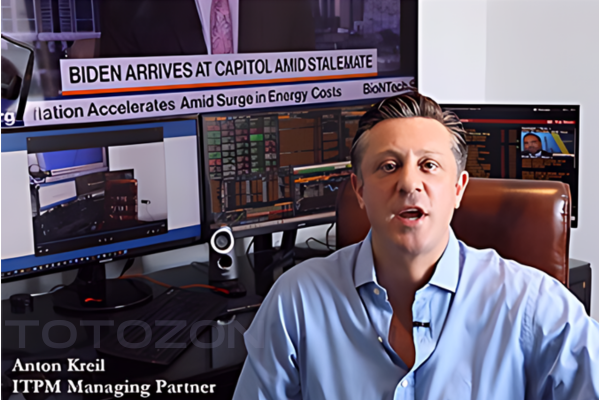 Professional Level Trading (IPLT) Online Video Series with Anton Kreil
1 × $6.00
Professional Level Trading (IPLT) Online Video Series with Anton Kreil
1 × $6.00 -
×
 Crystal Ball Pack PLUS bonus Live Trade By Pat Mitchell - Trick Trades
1 × $20.00
Crystal Ball Pack PLUS bonus Live Trade By Pat Mitchell - Trick Trades
1 × $20.00 -
×
 Options Trading & Ultimate MasterClass With Tyrone Abela - FX Evolution
1 × $54.00
Options Trading & Ultimate MasterClass With Tyrone Abela - FX Evolution
1 × $54.00 -
×
 Mergers & Acquisitions From A to Z with Andrew J.Sherman
1 × $6.00
Mergers & Acquisitions From A to Z with Andrew J.Sherman
1 × $6.00 -
×
 Developing Profitable Systems from Discretionary to Mechanical with Fred Shutzman
1 × $6.00
Developing Profitable Systems from Discretionary to Mechanical with Fred Shutzman
1 × $6.00 -
×
 Sun Tzu and the Art of War for Traders with Dean Lundell
1 × $6.00
Sun Tzu and the Art of War for Traders with Dean Lundell
1 × $6.00 -
×
 Learn To Day-Trade the E-Mini S&P 500. Simple-as-123 with Marshall Jones
1 × $6.00
Learn To Day-Trade the E-Mini S&P 500. Simple-as-123 with Marshall Jones
1 × $6.00 -
×
 Setups of a Winning Trader with Gareth Soloway
1 × $521.00
Setups of a Winning Trader with Gareth Soloway
1 × $521.00 -
×
 Market Stalkers Level 3 - Intraday Trading University
1 × $8.00
Market Stalkers Level 3 - Intraday Trading University
1 × $8.00 -
×
 The A to Z of Mathematics: A Basic Guide with Thomas Sidebotham
1 × $6.00
The A to Z of Mathematics: A Basic Guide with Thomas Sidebotham
1 × $6.00 -
×
 Sensitivity Analysis in Practice
1 × $6.00
Sensitivity Analysis in Practice
1 × $6.00 -
×
 Forecast 2024 Clarification with Larry Williams
1 × $15.00
Forecast 2024 Clarification with Larry Williams
1 × $15.00 -
×
 Electronic Trading "TNT" I Gorilla Trading Stuff with Joe Ross & Mark Cherlin
1 × $6.00
Electronic Trading "TNT" I Gorilla Trading Stuff with Joe Ross & Mark Cherlin
1 × $6.00 -
×
 Smart Money Trading Course with Prosperity Academy
1 × $5.00
Smart Money Trading Course with Prosperity Academy
1 × $5.00 -
×
 The Q’s (2nd Ed.) with Darlene Nelson
1 × $6.00
The Q’s (2nd Ed.) with Darlene Nelson
1 × $6.00 -
×
 Smart Money Concepts with MFX Trading
1 × $13.00
Smart Money Concepts with MFX Trading
1 × $13.00 -
×
 How To Become StressFree Trader with Jason Starzec
1 × $4.00
How To Become StressFree Trader with Jason Starzec
1 × $4.00 -
×
 6 (The Proper BackGround)
1 × $6.00
6 (The Proper BackGround)
1 × $6.00 -
×
 Generative AI for Asset Managers Workshop Recording with Ernest Chan
1 × $55.00
Generative AI for Asset Managers Workshop Recording with Ernest Chan
1 × $55.00 -
×
 The Adventures of the Cycle Hunter. The Trader with Craig Bttlc
1 × $6.00
The Adventures of the Cycle Hunter. The Trader with Craig Bttlc
1 × $6.00 -
×
 Futures Commodity Trading with G. Scott Martin
1 × $6.00
Futures Commodity Trading with G. Scott Martin
1 × $6.00 -
×
 Astro Gann Charting Software Wave59 V 3.6
1 × $6.00
Astro Gann Charting Software Wave59 V 3.6
1 × $6.00 -
×
 Path to Profits By Scott Redler - T3 Live
1 × $6.00
Path to Profits By Scott Redler - T3 Live
1 × $6.00 -
×
 Startup Trading Masterclass with Jack Gleason
1 × $93.00
Startup Trading Masterclass with Jack Gleason
1 × $93.00 -
×
 Swift Trader, Perfecting the Art of DayTrading with Charles Kim
1 × $6.00
Swift Trader, Perfecting the Art of DayTrading with Charles Kim
1 × $6.00 -
×
 Scalp Trading Mini Course with Jayson Casper
1 × $23.00
Scalp Trading Mini Course with Jayson Casper
1 × $23.00 -
×
 0 DTE Options Trading Workshop with Aeromir Corporation
1 × $15.00
0 DTE Options Trading Workshop with Aeromir Corporation
1 × $15.00 -
×
 Kickstart Course with Tradelikerocket
1 × $46.00
Kickstart Course with Tradelikerocket
1 × $46.00 -
×
 ProfileTraders - Advanced Market Profile (May 2014)
1 × $6.00
ProfileTraders - Advanced Market Profile (May 2014)
1 × $6.00 -
×
 Sequence Trading Course with Kevin Haggerty
1 × $4.00
Sequence Trading Course with Kevin Haggerty
1 × $4.00 -
×
 Forex Retracement Theory with CopperChips
1 × $6.00
Forex Retracement Theory with CopperChips
1 × $6.00 -
×
 The All Put Flat Butterfly with Dan Sheridan - Sheridan Options Mentoring
1 × $6.00
The All Put Flat Butterfly with Dan Sheridan - Sheridan Options Mentoring
1 × $6.00 -
×
 Trading Short TermSame Day Trades Sep 2023 with Dan Sheridan & Mark Fenton - Sheridan Options Mentoring
1 × $31.00
Trading Short TermSame Day Trades Sep 2023 with Dan Sheridan & Mark Fenton - Sheridan Options Mentoring
1 × $31.00 -
×
 Master Class Recording 2019 with Oil Trading Academy
1 × $17.00
Master Class Recording 2019 with Oil Trading Academy
1 × $17.00 -
×
 How To Read The Market Professionally with TradeSmart
1 × $27.00
How To Read The Market Professionally with TradeSmart
1 × $27.00

The Janus Factor with Gary Anderson
$6.00
File Size: Coming soon!
Delivery Time: 1–12 hours
Media Type: Online Course
Content Proof: Watch Here!
You may check content proof of “The Janus Factor with Gary Anderson” below:

The Janus Factor by Gary Anderson
In the complex world of investing, understanding the factors that drive market performance is crucial. “The Janus Factor” by Gary Anderson provides a unique perspective on these dynamics. This book explores how different market forces, represented by the dual-faced Roman god Janus, can influence investment strategies. In this article, we delve into the key concepts and insights from Anderson’s work, offering valuable guidance for investors seeking to navigate the financial markets.
Introduction to The Janus Factor
Who is Gary Anderson?
Gary Anderson is a seasoned financial analyst and author with extensive experience in investment strategy and market analysis. His book, “The Janus Factor,” offers a fresh approach to understanding market forces.
Purpose of The Janus Factor
The book aims to help investors identify and leverage the dual forces at play in the market, much like the two faces of Janus, to make informed and strategic investment decisions.
Fundamental Concepts of The Janus Factor
1. Dual Market Forces
Bull and Bear Markets
Anderson discusses the cyclical nature of bull and bear markets, highlighting the importance of recognizing these phases to adjust investment strategies accordingly.
Economic Indicators
Key economic indicators, such as GDP growth, inflation, and unemployment rates, are examined to understand their impact on market trends.
2. Investor Psychology
Fear and Greed
The Janus Factor emphasizes the role of investor psychology, particularly fear and greed, in driving market movements and creating investment opportunities.
Behavioral Finance
Understanding behavioral finance principles helps investors recognize irrational market behaviors and exploit them for profit.
Core Principles for Investors
1. Diversification
Spreading Risk
Diversification is a key strategy discussed in the book. Anderson advises spreading investments across various asset classes to mitigate risk.
Asset Allocation
Proper asset allocation ensures a balanced portfolio that can weather market volatility.
2. Timing the Market
Market Cycles
Recognizing market cycles and timing investments accordingly can significantly enhance returns. Anderson provides insights into identifying these cycles.
Technical Analysis
Using technical analysis tools to time market entries and exits is another important principle highlighted in the book.
Implementing The Janus Factor Strategies
1. Identifying Market Trends
Trend Analysis
Conduct thorough trend analysis to identify the prevailing market direction and adjust your investment strategy accordingly.
Momentum Indicators
Use momentum indicators, such as moving averages and RSI, to confirm market trends.
2. Risk Management
Setting Stop-Loss Orders
Implement stop-loss orders to protect your investments from significant declines, as emphasized by Anderson.
Position Sizing
Determine appropriate position sizes based on your risk tolerance and investment goals.
3. Leveraging Market Anomalies
Exploiting Inefficiencies
The book discusses how to exploit market inefficiencies and anomalies for profitable trading opportunities.
Arbitrage Strategies
Utilize arbitrage strategies to capitalize on price discrepancies between markets.
Advanced Investment Techniques
1. Quantitative Analysis
Data-Driven Decisions
Anderson advocates for the use of quantitative analysis to make data-driven investment decisions.
Financial Models
Develop and use financial models to predict market movements and identify investment opportunities.
2. Fundamental Analysis
Company Valuation
Perform in-depth fundamental analysis to value companies and make informed investment choices.
Earnings Reports
Analyze earnings reports and other financial statements to assess a company’s performance and growth potential.
Practical Applications of The Janus Factor
1. Building a Robust Portfolio
Balanced Approach
Construct a well-balanced portfolio that incorporates diverse asset classes and investment strategies.
Rebalancing
Regularly rebalance your portfolio to maintain your desired asset allocation and risk level.
2. Adapting to Market Changes
Flexibility
Stay flexible and be willing to adjust your strategies based on changing market conditions.
Continuous Learning
Engage in continuous learning to stay updated on new market developments and investment techniques.
3. Long-Term Perspective
Patience and Discipline
Maintain a long-term perspective, exercising patience and discipline in your investment approach.
Compounding Returns
Leverage the power of compounding returns by reinvesting profits and allowing your investments to grow over time.
Common Mistakes to Avoid
1. Overreacting to Market Volatility
Staying Calm
Avoid making impulsive decisions based on short-term market fluctuations. Stay focused on your long-term strategy.
2. Ignoring Risk Management
Importance of Risk Controls
Neglecting risk management can lead to significant losses. Always implement risk controls such as stop-loss orders and proper position sizing.
3. Following the Crowd
Independent Thinking
Resist the urge to follow the crowd. Make investment decisions based on thorough analysis and independent thinking.
Conclusion
“The Janus Factor” by Gary Anderson offers valuable insights into understanding and leveraging market forces for successful investing. By applying the principles and strategies outlined in the book, investors can enhance their ability to navigate the financial markets and achieve their investment goals. Remember, successful investing requires a combination of knowledge, discipline, and a willingness to adapt to changing market conditions.
FAQs
1. What is the main premise of The Janus Factor?
The Janus Factor focuses on understanding and leveraging the dual forces at play in the market, such as bull and bear phases, to make informed investment decisions.
2. How does investor psychology impact market movements?
Investor psychology, particularly fear and greed, can drive market movements and create investment opportunities. Understanding these behaviors helps in making strategic decisions.
3. What are some key strategies discussed in The Janus Factor?
Key strategies include diversification, timing the market, risk management, and leveraging market anomalies for profitable opportunities.
4. How can I implement the principles of The Janus Factor in my investment strategy?
Implement the principles by conducting thorough market analysis, managing risk effectively, staying flexible, and maintaining a long-term perspective.
5. Why is continuous learning important in investing?
Continuous learning helps investors stay updated on market developments, new investment techniques, and emerging trends, enhancing their ability to make informed decisions.
Be the first to review “The Janus Factor with Gary Anderson”
You must be logged in to post a review.
Related products

Original price was: $4,995.00.$15.00Current price is: $15.00.

Original price was: $895.00.$15.00Current price is: $15.00.

Original price was: $799.00.$15.00Current price is: $15.00.

Original price was: $139.00.$23.00Current price is: $23.00.

Original price was: $1,200.00.$23.00Current price is: $23.00.
Forex Trading
Original price was: $4,997.00.$27.00Current price is: $27.00.
Forex Trading
Quantamentals – The Next Great Forefront Of Trading and Investing with Trading Markets
Original price was: $1,495.00.$8.00Current price is: $8.00.
Forex Trading
Original price was: $249.00.$15.00Current price is: $15.00.

Forex Trading
Original price was: $1,898.00.$10.00Current price is: $10.00.

Original price was: $450.00.$23.00Current price is: $23.00.

Forex Trading
Original price was: $799.00.$15.00Current price is: $15.00.

Original price was: $310.00.$23.00Current price is: $23.00.

Forex Trading
Original price was: $499.00.$15.00Current price is: $15.00.
Forex Trading
Original price was: $999.00.$15.00Current price is: $15.00.

Forex Trading
Original price was: $239.00.$8.00Current price is: $8.00.

Original price was: $695.00.$41.00Current price is: $41.00.
Forex Trading
Original price was: $397.00.$31.00Current price is: $31.00.
Forex Trading
Original price was: $125.00.$17.00Current price is: $17.00.

Forex Trading
Original price was: $2,995.00.$31.00Current price is: $31.00.

Original price was: $299.00.$8.00Current price is: $8.00.

Reviews
There are no reviews yet.