
-
×
 Algo Trading Masterclass with Ali Casey - StatOasis
1 × $23.00
Algo Trading Masterclass with Ali Casey - StatOasis
1 × $23.00 -
×
 Investment Strategies for the 21th Century with Frank Amstrong
1 × $6.00
Investment Strategies for the 21th Century with Frank Amstrong
1 × $6.00 -
×
 Investing in Corporate Bonds and Credit Risk with Frank Hagenstein
1 × $6.00
Investing in Corporate Bonds and Credit Risk with Frank Hagenstein
1 × $6.00 -
×
 You can be a Stock Market Genious with Joel Greenblaat
1 × $6.00
You can be a Stock Market Genious with Joel Greenblaat
1 × $6.00 -
×
 Staying Alive in the Markets (Video & Manual) with Mark Cook
1 × $6.00
Staying Alive in the Markets (Video & Manual) with Mark Cook
1 × $6.00 -
×
 Video On Demand Pathway with Trade With Profile
1 × $5.00
Video On Demand Pathway with Trade With Profile
1 × $5.00 -
×
 Quantitative Business Valuation with Jay Abrams
1 × $6.00
Quantitative Business Valuation with Jay Abrams
1 × $6.00 -
×
 Volume Profile 2023 (Order Flow Pack) with Trader Dale
1 × $5.00
Volume Profile 2023 (Order Flow Pack) with Trader Dale
1 × $5.00 -
×
 Profiletraders - Market Profile Day Trading
1 × $15.00
Profiletraders - Market Profile Day Trading
1 × $15.00 -
×
 30 Day Masterclass with Joe Elite Trader Hub ICT
1 × $6.00
30 Day Masterclass with Joe Elite Trader Hub ICT
1 × $6.00 -
×
 Passages To Profitability: A Comprehensive Guide To Channel Trading with Professor Jeff Bierman, CMT
1 × $6.00
Passages To Profitability: A Comprehensive Guide To Channel Trading with Professor Jeff Bierman, CMT
1 × $6.00 -
×
 Prasna Tantra. Horary Astrology with Bangalore Venkata Raman
1 × $6.00
Prasna Tantra. Horary Astrology with Bangalore Venkata Raman
1 × $6.00 -
×
 Live in London (5 DVD) with Martin Pring
1 × $6.00
Live in London (5 DVD) with Martin Pring
1 × $6.00 -
×
 Commodity Futures Traders Club (CTCN) Issues 01 – 77
1 × $6.00
Commodity Futures Traders Club (CTCN) Issues 01 – 77
1 × $6.00 -
×
 Mind & Markets. An Advanced Study Course of Stock Market Education (1951) with Bert Larson
1 × $6.00
Mind & Markets. An Advanced Study Course of Stock Market Education (1951) with Bert Larson
1 × $6.00 -
×
 Optionetics 2007 - Home Study Course, MP3
1 × $6.00
Optionetics 2007 - Home Study Course, MP3
1 × $6.00 -
×
 3-Day Day Trading Seminar Online CD with John Carter & Hubert Senters
1 × $6.00
3-Day Day Trading Seminar Online CD with John Carter & Hubert Senters
1 × $6.00 -
×
 Private Mentorship with ANICO Capital
1 × $10.00
Private Mentorship with ANICO Capital
1 × $10.00 -
×
 Indicator Effectiveness Testing & System Creation with David Vomund
1 × $6.00
Indicator Effectiveness Testing & System Creation with David Vomund
1 × $6.00 -
×
 EFT – The Art of Delivery with Gary Craig
1 × $5.00
EFT – The Art of Delivery with Gary Craig
1 × $5.00 -
×
 Fibonacci Trading & Dynamic Profit Targeting with Base Camp Trading
1 × $15.00
Fibonacci Trading & Dynamic Profit Targeting with Base Camp Trading
1 × $15.00 -
×
 SnD SMC Course
1 × $10.00
SnD SMC Course
1 × $10.00 -
×
 Selling Options for Income, Profits & Opportunistic Hedge Trading Management with Powercycletrading
1 × $69.00
Selling Options for Income, Profits & Opportunistic Hedge Trading Management with Powercycletrading
1 × $69.00 -
×
 Options, Futures & Other Derivatives . Solutions Manual
1 × $6.00
Options, Futures & Other Derivatives . Solutions Manual
1 × $6.00 -
×
 Rockwell Trading - Can You Make A Living Day Trading - 2 DVD
1 × $6.00
Rockwell Trading - Can You Make A Living Day Trading - 2 DVD
1 × $6.00 -
×
 FlowRider Trading Course with Boris Schlossberg and Kathy Lien - Bkforex
1 × $15.00
FlowRider Trading Course with Boris Schlossberg and Kathy Lien - Bkforex
1 × $15.00 -
×
 Options 101 - The Basics and Beyond Class A 5-Part Course with Don Kaufman
1 × $6.00
Options 101 - The Basics and Beyond Class A 5-Part Course with Don Kaufman
1 × $6.00 -
×
 Setups of a Winning Trader with Gareth Soloway
1 × $521.00
Setups of a Winning Trader with Gareth Soloway
1 × $521.00 -
×
 Market Stalkers Level 3 - Intraday Trading University
1 × $8.00
Market Stalkers Level 3 - Intraday Trading University
1 × $8.00 -
×
 ProfileTraders - Swing and Price Analysis (May 2014)
1 × $6.00
ProfileTraders - Swing and Price Analysis (May 2014)
1 × $6.00 -
×
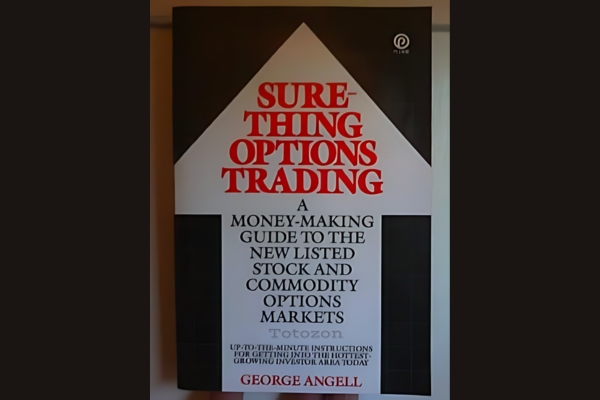 Sure-thing Options Trading: A Money-Making Guide to the New Listed Stock and Commodity Options Markets - George Angell
1 × $6.00
Sure-thing Options Trading: A Money-Making Guide to the New Listed Stock and Commodity Options Markets - George Angell
1 × $6.00 -
×
 Follow the Fed to Investment Success with Douglas Roberts
1 × $6.00
Follow the Fed to Investment Success with Douglas Roberts
1 × $6.00 -
×
 Option Greeks Class with Don Kaufman
1 × $6.00
Option Greeks Class with Don Kaufman
1 × $6.00 -
×
 Rise Precision Latest Course
1 × $10.00
Rise Precision Latest Course
1 × $10.00 -
×
 Channel Analysis. The Key to Improved Timing of Trades with Brian J.Millard
1 × $6.00
Channel Analysis. The Key to Improved Timing of Trades with Brian J.Millard
1 × $6.00 -
×
 Game Plan of a Winning Trader with Mike Podwojski & Vic Noble
1 × $6.00
Game Plan of a Winning Trader with Mike Podwojski & Vic Noble
1 × $6.00 -
×
 On Board Fanta Sea One Seminar with Felix Homogratus
1 × $6.00
On Board Fanta Sea One Seminar with Felix Homogratus
1 × $6.00 -
×
 Master Trader Technical Strategies with Greg Capra - Master Trader
1 × $5.00
Master Trader Technical Strategies with Greg Capra - Master Trader
1 × $5.00 -
×
 Inner Circle Trader
1 × $6.00
Inner Circle Trader
1 × $6.00 -
×
 Investment Philosophies
1 × $6.00
Investment Philosophies
1 × $6.00 -
×
 Profit.ly - Bitcoin Basics
1 × $6.00
Profit.ly - Bitcoin Basics
1 × $6.00 -
×
 How To Flip All Those “Hard To Flip” Deals
1 × $6.00
How To Flip All Those “Hard To Flip” Deals
1 × $6.00 -
×
 Trading Short TermSame Day Trades Sep 2023 with Dan Sheridan & Mark Fenton - Sheridan Options Mentoring
1 × $31.00
Trading Short TermSame Day Trades Sep 2023 with Dan Sheridan & Mark Fenton - Sheridan Options Mentoring
1 × $31.00 -
×
 The A14 Weekly Option Strategy Workshop with Amy Meissner
1 × $23.00
The A14 Weekly Option Strategy Workshop with Amy Meissner
1 × $23.00 -
×
 The Naked Eye: Raw Data Analytics with Edgar Torres - Raw Data Analytics
1 × $8.00
The Naked Eye: Raw Data Analytics with Edgar Torres - Raw Data Analytics
1 × $8.00 -
×
 Crystal Ball Pack PLUS bonus Live Trade By Pat Mitchell - Trick Trades
1 × $20.00
Crystal Ball Pack PLUS bonus Live Trade By Pat Mitchell - Trick Trades
1 × $20.00
Foundations of Technical Analysis (Article) with Andrew W.Lo
$6.00
File Size: Coming soon!
Delivery Time: 1–12 hours
Media Type: Online Course
Content Proof: Watch Here!
You may check content proof of “Foundations of Technical Analysis (Article) with Andrew W.Lo” below:

Foundations of Technical Analysis (Article) by Andrew W. Lo
Introduction to Technical Analysis
Technical analysis is a crucial tool for investors and traders seeking to understand market behavior. Andrew W. Lo’s work on the foundations of technical analysis offers invaluable insights into its principles and applications.
What is Technical Analysis?
Technical analysis involves analyzing historical price data and volume to forecast future market movements. Unlike fundamental analysis, which focuses on a company’s financial health, technical analysis is rooted in the study of market action.
Key Principles of Technical Analysis
- Market Action Discounts Everything: Prices reflect all known information.
- Price Moves in Trends: Prices move in observable trends.
- History Tends to Repeat Itself: Patterns and trends are recurring.
The Evolution of Technical Analysis
Technical analysis has a rich history, evolving over centuries from simple chart patterns to sophisticated algorithms.
Historical Background
- 17th Century: Japanese candlestick charts were developed.
- Dow Theory: Charles Dow’s work in the late 19th century laid the groundwork for modern technical analysis.
- Modern Era: Advancements in computing power have led to more complex models and algorithms.
Andrew W. Lo’s Contributions
Andrew W. Lo has significantly advanced the field of technical analysis through his research and theories.
Adaptive Markets Hypothesis
Lo’s Adaptive Markets Hypothesis (AMH) integrates behavioral economics with traditional financial theories, suggesting that market efficiency evolves over time.
Behavioral Technical Analysis
Lo emphasizes the role of psychology in technical analysis, acknowledging that human behavior significantly impacts market trends and patterns.
Core Concepts in Technical Analysis
Understanding the core concepts of technical analysis is essential for effective trading and investment.
Support and Resistance Levels
- Support: A price level where a downtrend can be expected to pause due to a concentration of demand.
- Resistance: A price level where an uptrend can be expected to pause due to a concentration of selling interest.
Trend Lines
Trend lines are straight lines drawn on a chart to connect significant price points, indicating the general direction of the market.
Chart Patterns
Chart patterns are formations created by the price movements of securities, which help predict future price movements.
Common Technical Indicators
Technical indicators are mathematical calculations based on price, volume, or open interest that help traders make informed decisions.
Moving Averages
Moving averages smooth out price data to identify the direction of the trend. Common types include the simple moving average (SMA) and the exponential moving average (EMA).
Relative Strength Index (RSI)
RSI measures the speed and change of price movements, providing signals of overbought or oversold conditions.
MACD (Moving Average Convergence Divergence)
MACD is a trend-following momentum indicator that shows the relationship between two moving averages of a security’s price.
Application of Technical Analysis
Applying technical analysis effectively requires a combination of skills and tools.
Analyzing Price Charts
Start by identifying the trend, then look for patterns and key levels of support and resistance.
Using Technical Indicators
Combine multiple indicators to confirm signals and improve accuracy.
Developing Trading Strategies
Develop a strategy based on your analysis, incorporating risk management and entry/exit points.
Advantages of Technical Analysis
Technical analysis offers several benefits to traders and investors.
Market Timing
It helps in determining the optimal times to enter or exit a market.
Quantitative Approach
Provides a systematic method for analyzing market data and making decisions.
Broad Applicability
Can be applied to various markets, including stocks, commodities, and forex.
Limitations of Technical Analysis
Despite its benefits, technical analysis has limitations that traders should be aware of.
Subjectivity
Interpretation of charts and patterns can be subjective, leading to different conclusions.
Lagging Indicators
Many technical indicators are lagging, meaning they may not provide timely signals.
Market Anomalies
Unpredictable market events can disrupt technical patterns and indicators.
Case Studies of Technical Analysis
Examining real-world examples can provide deeper insights into the effectiveness of technical analysis.
Historical Market Trends
Analyzing past market trends and patterns can help understand how technical analysis works in practice.
Successful Trading Models
Study successful trading models that utilize technical analysis to see how they achieve consistent results.
Future of Technical Analysis
The future of technical analysis looks promising with ongoing advancements in technology and data analytics.
AI and Machine Learning
Artificial intelligence and machine learning are revolutionizing technical analysis by providing more accurate predictions and insights.
Big Data
Big data analytics enables the processing of vast amounts of market data, enhancing the precision of technical analysis.
Conclusion
Technical analysis, as explored by Andrew W. Lo, provides a robust framework for understanding and predicting market movements. By mastering its principles and tools, traders and investors can make more informed decisions and improve their market performance.
Frequently Asked Questions:
1. What is the main focus of technical analysis?
Technical analysis focuses on analyzing historical price and volume data to forecast future market movements.
2. How does the Adaptive Markets Hypothesis relate to technical analysis?
The Adaptive Markets Hypothesis suggests that market efficiency evolves over time, incorporating behavioral economics into traditional financial theories.
3. What are support and resistance levels?
Support levels are price points where a downtrend can pause due to demand, while resistance levels are where an uptrend can pause due to selling interest.
4. What is the role of moving averages in technical analysis?
Moving averages smooth out price data to identify the direction of the trend, helping traders make informed decisions.
5. How can AI and machine learning enhance technical analysis?
AI and machine learning can provide more accurate predictions and insights by processing large amounts of market data and identifying complex patterns.
Be the first to review “Foundations of Technical Analysis (Article) with Andrew W.Lo”
You must be logged in to post a review.
Related products

Forex Trading
Original price was: $500.00.$5.00Current price is: $5.00.
Forex Trading
Original price was: $397.00.$31.00Current price is: $31.00.

Original price was: $450.00.$23.00Current price is: $23.00.

Forex Trading
Original price was: $2,995.00.$31.00Current price is: $31.00.
Forex Trading
Original price was: $2,000.00.$23.00Current price is: $23.00.
Original price was: $649.00.$20.00Current price is: $20.00.

Original price was: $497.00.$31.00Current price is: $31.00.

Original price was: $497.00.$11.00Current price is: $11.00.

Original price was: $197.00.$5.00Current price is: $5.00.

Forex Trading
Original price was: $125.00.$17.00Current price is: $17.00.

Forex Trading
Original price was: $239.00.$8.00Current price is: $8.00.

Forex Trading
Original price was: $1,098.00.$39.00Current price is: $39.00.

Original price was: $139.00.$23.00Current price is: $23.00.

Original price was: $895.00.$15.00Current price is: $15.00.

Forex Trading
Original price was: $799.00.$15.00Current price is: $15.00.

Original price was: $299.00.$8.00Current price is: $8.00.

Original price was: $997.00.$13.00Current price is: $13.00.

Original price was: $1,800.00.$54.00Current price is: $54.00.

Forex Trading
Original price was: $550.00.$5.00Current price is: $5.00.

Forex Trading
Original price was: $249.00.$15.00Current price is: $15.00.
Reviews
There are no reviews yet.