
-
×
 Market Structure Matters with Haim Bodek
1 × $62.00
Market Structure Matters with Haim Bodek
1 × $62.00 -
×
 CFA Level 1,2 & 3 Complete Course 2010 48 CD’s with Schweser
1 × $6.00
CFA Level 1,2 & 3 Complete Course 2010 48 CD’s with Schweser
1 × $6.00 -
×
 WondaFX Signature Strategy with WondaFX
1 × $5.00
WondaFX Signature Strategy with WondaFX
1 × $5.00 -
×
 Professional Trader Course
1 × $5.00
Professional Trader Course
1 × $5.00 -
×
 Market Analysis Companion for Metastock with Martin Pring
1 × $6.00
Market Analysis Companion for Metastock with Martin Pring
1 × $6.00 -
×
 Candlestick Trading Forum Trading Seminar with Stephen W.Bigalow
1 × $4.00
Candlestick Trading Forum Trading Seminar with Stephen W.Bigalow
1 × $4.00 -
×
 Zap Seminar - Ablesys
1 × $6.00
Zap Seminar - Ablesys
1 × $6.00 -
×
 Super Conference 2020 - Premier Coaching Package with Vince Vora
1 × $109.00
Super Conference 2020 - Premier Coaching Package with Vince Vora
1 × $109.00 -
×
 Mean Reversion Strategy with The Chartist
1 × $78.00
Mean Reversion Strategy with The Chartist
1 × $78.00 -
×
 CMT Association Entire Webinars
1 × $31.00
CMT Association Entire Webinars
1 × $31.00 -
×
 Portfolio Management using Machine Learning: Hierarchical Risk Parity
1 × $39.00
Portfolio Management using Machine Learning: Hierarchical Risk Parity
1 × $39.00 -
×
 Computerized Trading. Maximizing Day Trading and Overnight Profits with Mark Jurik
1 × $6.00
Computerized Trading. Maximizing Day Trading and Overnight Profits with Mark Jurik
1 × $6.00 -
×
 Bootcamp and eBook with Jjwurldin
1 × $24.00
Bootcamp and eBook with Jjwurldin
1 × $24.00 -
×
 The Prop Trading Code with Brannigan Barrett - Axia Futures
1 × $23.00
The Prop Trading Code with Brannigan Barrett - Axia Futures
1 × $23.00 -
×
 Currency Trading for Dummies with Mark Galant
1 × $6.00
Currency Trading for Dummies with Mark Galant
1 × $6.00 -
×
 Winning Stock Selection Simplified (Vol I, II & III) with Peter Worden
1 × $6.00
Winning Stock Selection Simplified (Vol I, II & III) with Peter Worden
1 × $6.00 -
×
 Examination Book Morning Section (1999)
1 × $6.00
Examination Book Morning Section (1999)
1 × $6.00 -
×
 Mao, Marx & the Market: Capitalist Adventures in Russia and China with Dean LeBaro
1 × $6.00
Mao, Marx & the Market: Capitalist Adventures in Russia and China with Dean LeBaro
1 × $6.00 -
×
 How Big Money Trades A Key Aspect of Systems Thinking - Van Tharp and Chuck Whitman – Van Tharp
1 × $46.00
How Big Money Trades A Key Aspect of Systems Thinking - Van Tharp and Chuck Whitman – Van Tharp
1 × $46.00 -
×
 Investment Psychology. Explained Classic Strategies to Beat the Markets with Martin Pring
1 × $6.00
Investment Psychology. Explained Classic Strategies to Beat the Markets with Martin Pring
1 × $6.00 -
×
 Elliott Wave Street Course with Juan Maldonado
1 × $17.00
Elliott Wave Street Course with Juan Maldonado
1 × $17.00 -
×
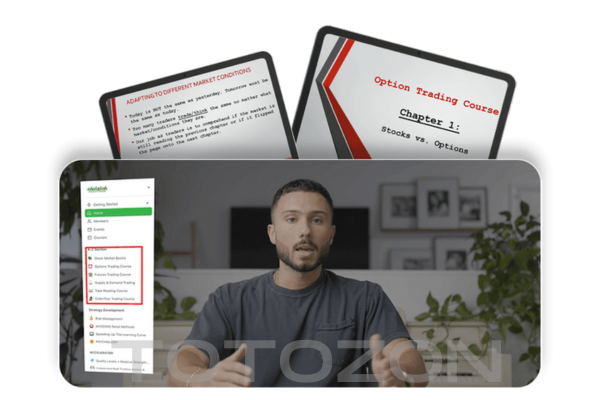 A- Z Educational Trading Course with InvestiTrade
1 × $39.00
A- Z Educational Trading Course with InvestiTrade
1 × $39.00 -
×
 Trading Connors VIX Reversals Tradestation Files with Laurence A. Connors & Gregory J. Che
1 × $6.00
Trading Connors VIX Reversals Tradestation Files with Laurence A. Connors & Gregory J. Che
1 × $6.00 -
×
 The EAP Training Program (Apr 2019)
1 × $6.00
The EAP Training Program (Apr 2019)
1 × $6.00 -
×
 Astro Models (techedgecycles.com) with Yuri Shramenko
1 × $6.00
Astro Models (techedgecycles.com) with Yuri Shramenko
1 × $6.00 -
×
 Fantastic 4 Trading Strategies
1 × $15.00
Fantastic 4 Trading Strategies
1 × $15.00 -
×
 The Price Action Manual, 2nd Ed 2008 with Bryce Gilmore
1 × $4.00
The Price Action Manual, 2nd Ed 2008 with Bryce Gilmore
1 × $4.00 -
×
 Fractal Markets FX (SMC)
1 × $5.00
Fractal Markets FX (SMC)
1 × $5.00 -
×
 The Complete Guide to Option Selling with James Cordier
1 × $6.00
The Complete Guide to Option Selling with James Cordier
1 × $6.00 -
×
 Fibonacci Swing Trader 2.0 with Frank Paul - Forexmentor
1 × $6.00
Fibonacci Swing Trader 2.0 with Frank Paul - Forexmentor
1 × $6.00 -
×
 PDFT (Price Driven Forex Trading) Course with Avi Frister
1 × $6.00
PDFT (Price Driven Forex Trading) Course with Avi Frister
1 × $6.00 -
×
 OrderFlows Trader Package, (Sep 2015)
1 × $54.00
OrderFlows Trader Package, (Sep 2015)
1 × $54.00 -
×
 Pattern Recognition & Trading Decisions with Chris Satchwell
1 × $6.00
Pattern Recognition & Trading Decisions with Chris Satchwell
1 × $6.00 -
×
 SQX Mentorship with Tip Toe Hippo
1 × $23.00
SQX Mentorship with Tip Toe Hippo
1 × $23.00 -
×
 How to Collect Income Being Short with Don Kaufman
1 × $6.00
How to Collect Income Being Short with Don Kaufman
1 × $6.00 -
×
 Stock Market Winners with Maria Crawford Scott, John Bajkowski
1 × $6.00
Stock Market Winners with Maria Crawford Scott, John Bajkowski
1 × $6.00 -
×
 The Illustrated Guide to Technical Analysis Signals and Phrases with Constance Brown
1 × $6.00
The Illustrated Guide to Technical Analysis Signals and Phrases with Constance Brown
1 × $6.00 -
×
 Crystal Ball Pack PLUS bonus Live Trade By Pat Mitchell - Trick Trades
1 × $20.00
Crystal Ball Pack PLUS bonus Live Trade By Pat Mitchell - Trick Trades
1 × $20.00 -
×
 Futures Spread Trading Intro Course with Thetradingframework
1 × $6.00
Futures Spread Trading Intro Course with Thetradingframework
1 × $6.00 -
×
 Candlesticks Explained with Martin Pring
1 × $6.00
Candlesticks Explained with Martin Pring
1 × $6.00 -
×
 The Dick Davis Dividend: Straight Talk on Making Money from 40 Years on Wall Street with Dick Davis
1 × $6.00
The Dick Davis Dividend: Straight Talk on Making Money from 40 Years on Wall Street with Dick Davis
1 × $6.00 -
×
 How to Trade a Vertical Market
1 × $93.00
How to Trade a Vertical Market
1 × $93.00 -
×
 Ron Wagner - Creating a Profitable Trading & Investing Plan + Techniques to Perfect Your Intraday GAP
1 × $6.00
Ron Wagner - Creating a Profitable Trading & Investing Plan + Techniques to Perfect Your Intraday GAP
1 × $6.00 -
×
 Optionetics 2007 - Home Study Course, MP3
1 × $6.00
Optionetics 2007 - Home Study Course, MP3
1 × $6.00 -
×
 Forex Avenger Trading System with David Curran
1 × $6.00
Forex Avenger Trading System with David Curran
1 × $6.00 -
×
 Algo Wizard Essentials Course with Srategy Quant
1 × $13.00
Algo Wizard Essentials Course with Srategy Quant
1 × $13.00 -
×
 Short Swing Trading v6.0 with David Smith
1 × $6.00
Short Swing Trading v6.0 with David Smith
1 × $6.00 -
×
 Fibonacci Mastery Course: Complete Guide to Trading with Fib By Todd Gordon
1 × $62.00
Fibonacci Mastery Course: Complete Guide to Trading with Fib By Todd Gordon
1 × $62.00 -
×
 Just What I Said: Bloomberg Economics Columnist Takes on Bonds, Banks, Budgets, and Bubbles with Caroline Baum
1 × $6.00
Just What I Said: Bloomberg Economics Columnist Takes on Bonds, Banks, Budgets, and Bubbles with Caroline Baum
1 × $6.00 -
×
 Stealth Trader (Ebook) with Andy Jordan - Trading Educators
1 × $132.00
Stealth Trader (Ebook) with Andy Jordan - Trading Educators
1 × $132.00 -
×
 The Aftermath + Jack Savage Extras (How To Trade Gold) with FXSavages
1 × $6.00
The Aftermath + Jack Savage Extras (How To Trade Gold) with FXSavages
1 × $6.00 -
×
 Precision Timing Your Options Trades Using Fibonacci with Trading Analysis
1 × $15.00
Precision Timing Your Options Trades Using Fibonacci with Trading Analysis
1 × $15.00 -
×
 Essentials in Quantitative Trading QT01 By HangukQuant's
1 × $23.00
Essentials in Quantitative Trading QT01 By HangukQuant's
1 × $23.00

10 Best Swing Trading Patterns & Strategies with Dave Landry
$4.00
File Size: Coming soon!
Delivery Time: 1–12 hours
Media Type: Online Course
10 Best Swing Trading Patterns & Strategies with Dave Landry
Introduction
Swing trading is a popular strategy that capitalizes on short- to medium-term price movements in the stock market. In this article, we delve into the 10 best swing trading patterns and strategies championed by renowned trader Dave Landry. These methods are designed to help traders identify profitable opportunities and maximize their returns.
What is Swing Trading?
Swing trading involves holding positions for several days to weeks, aiming to profit from expected price moves. Unlike day trading, which requires constant monitoring, swing trading offers more flexibility, making it ideal for those with other commitments.
Why Choose Swing Trading?
- Flexibility: Less time-intensive than day trading.
- Potential for High Returns: Captures significant price swings.
- Accessibility: Suitable for beginners and experienced traders alike.
Dave Landry’s Swing Trading Philosophy
Dave Landry is a well-known trader and author with a practical approach to swing trading. His strategies focus on simplicity and effectiveness, making them accessible to traders at all levels.
Core Principles
- Trend Following: Trade in the direction of the prevailing trend.
- Pattern Recognition: Identify repeatable chart patterns.
- Risk Management: Use stop-loss orders to protect capital.
1. The Bowtie Pattern
Identifying the Bowtie Pattern
The Bowtie pattern is a trend reversal signal that occurs when three moving averages converge and then spread out. This pattern can indicate a shift in market sentiment.
Trading the Bowtie Pattern
- Entry Point: Enter when the moving averages start to diverge.
- Exit Point: Set a stop-loss below the recent low (for long positions).
2. The First Thrust Pattern
Understanding the First Thrust Pattern
This pattern signifies the beginning of a new trend following a sharp price movement. It’s characterized by a strong price thrust in the direction of the new trend.
Trading the First Thrust Pattern
- Entry Point: Enter at the close of the first thrust bar.
- Exit Point: Use trailing stops to lock in profits.
3. The Trend Knockout (TKO) Pattern
Spotting the TKO Pattern
The TKO pattern is a continuation signal in an established trend. It occurs when a price pullback “knocks out” weak hands, providing a buying opportunity.
Trading the TKO Pattern
- Entry Point: Enter after the pullback shows signs of reversing.
- Exit Point: Place a stop-loss below the pullback low.
4. The Pullback Strategy
Recognizing Pullbacks
Pullbacks are temporary reversals in a trend, providing opportunities to enter trades at better prices. They are often followed by a continuation of the trend.
Trading Pullbacks
- Entry Point: Enter when the price resumes the trend direction.
- Exit Point: Set a stop-loss just below the pullback low.
5. The Persistent Pullback Strategy
Defining Persistent Pullbacks
A persistent pullback shows a series of small, consecutive price movements against the trend, indicating strong underlying support.
Trading Persistent Pullbacks
- Entry Point: Enter when the pullback loses momentum.
- Exit Point: Use a tight stop-loss to manage risk.
6. The Cup and Handle Pattern
Identifying the Cup and Handle
This bullish continuation pattern resembles a cup with a handle. It indicates a period of consolidation followed by a breakout.
Trading the Cup and Handle
- Entry Point: Enter on the breakout above the handle’s resistance.
- Exit Point: Place a stop-loss below the handle’s low.
7. The Flag Pattern
Understanding Flag Patterns
Flag patterns are short-term continuation patterns that occur after a sharp price movement, indicating a brief consolidation before the trend resumes.
Trading Flag Patterns
- Entry Point: Enter on the breakout from the flag pattern.
- Exit Point: Use a stop-loss below the flag’s low.
8. The Wedge Pattern
Spotting Wedge Patterns
Wedge patterns form when price moves within converging trend lines, signaling a potential reversal or continuation depending on the direction of the breakout.
Trading Wedge Patterns
- Entry Point: Enter on the breakout from the wedge.
- Exit Point: Set a stop-loss below the recent low (for upward breakouts).
9. The Double Bottom Pattern
Recognizing Double Bottoms
A double bottom is a bullish reversal pattern that forms after two unsuccessful attempts to break below a support level.
Trading Double Bottoms
- Entry Point: Enter on the breakout above the pattern’s high.
- Exit Point: Place a stop-loss below the recent low.
10. The Head and Shoulders Pattern
Identifying Head and Shoulders
The head and shoulders pattern is a reversal pattern that indicates a shift from bullish to bearish (or vice versa). It’s composed of a peak (head) flanked by two smaller peaks (shoulders).
Trading Head and Shoulders
- Entry Point: Enter on the breakout below the neckline (for bearish reversals).
- Exit Point: Set a stop-loss above the right shoulder.
Conclusion
Mastering swing trading patterns and strategies with Dave Landry’s guidance can significantly enhance your trading success. By understanding and applying these techniques, you can capitalize on market movements and achieve consistent profitability. Remember, the key to successful swing trading lies in patience, discipline, and continuous learning.
Commonly Asked Questions:
- Business Model Innovation: Accept the truth of a legitimate business! Our strategy is organising a group buy in which participants share the costs. We use these cash to acquire popular courses from sale pages and make them available to people with limited financial resources. Despite the authors’ worries, our clients love the cost and accessibility we give.
- The Legal Environment: Yes or No The legality of our activity is ambiguous. While we don’t have specific permission from the course authors to resell the material, there is a technicality at work. The author did not specify any limits on resale when purchasing the course. This legal intricacy is both an opportunity for us and a boon for individuals looking for low-cost access.
- Quality Control: Uncovering the Truth
Getting to the heart of the issue – quality. Purchasing the course straight from the sale page guarantees that all documents and resources are the same as those obtained through traditional channels.
However, we distinguish ourselves by going beyond personal research and resale. It is crucial to note that we are not the official course providers, which means that the following premium services are not included in our package:
- There are no scheduled coaching calls or sessions with the author.
- Access to the author’s private Facebook group or web portal is not permitted.
- No access to the author’s private membership forum.
- There is no direct email support available from the author or their team.
We operate independently, with the goal of bridging the pricing gap without the extra services provided by official course channels. Your comprehension of our distinct approach is much appreciated.
Be the first to review “10 Best Swing Trading Patterns & Strategies with Dave Landry”
You must be logged in to post a review.
Related products

Original price was: $999.00.$5.00Current price is: $5.00.

Original price was: $2,120.00.$15.00Current price is: $15.00.

Forex Trading
Original price was: $397.00.$31.00Current price is: $31.00.

Forex Trading
Quantamentals – The Next Great Forefront Of Trading and Investing with Trading Markets
Original price was: $1,495.00.$8.00Current price is: $8.00.

Original price was: $695.00.$41.00Current price is: $41.00.

Original price was: $1,849.00.$15.00Current price is: $15.00.

Original price was: $4,995.00.$15.00Current price is: $15.00.
Forex Trading
Original price was: $2,997.00.$23.00Current price is: $23.00.
Forex Trading
Original price was: $850.00.$23.00Current price is: $23.00.

Original price was: $497.00.$31.00Current price is: $31.00.

Original price was: $997.00.$13.00Current price is: $13.00.

Original price was: $139.00.$23.00Current price is: $23.00.

Original price was: $299.00.$8.00Current price is: $8.00.

Forex Trading
Original price was: $125.00.$17.00Current price is: $17.00.

Forex Trading
Original price was: $249.00.$15.00Current price is: $15.00.

Forex Trading
Original price was: $697.00.$5.00Current price is: $5.00.
Original price was: $1,200.00.$23.00Current price is: $23.00.

Forex Trading
The Complete Guide to Multiple Time Frame Analysis & Reading Price Action with Aiman Almansoori
Original price was: $1,399.00.$13.00Current price is: $13.00.

Forex Trading
Original price was: $799.00.$15.00Current price is: $15.00.

Original price was: $997.00.$8.00Current price is: $8.00.

Reviews
There are no reviews yet.