
-
×
 Beginners Guide to How SimplerOptions Uses ThinkorSwim with Henry Gambell
1 × $15.00
Beginners Guide to How SimplerOptions Uses ThinkorSwim with Henry Gambell
1 × $15.00 -
×
 Inner Cicle Trader - ICT Methods with Michael Huddleston
1 × $5.00
Inner Cicle Trader - ICT Methods with Michael Huddleston
1 × $5.00 -
×
 The Oxford Handbook of Political Theory with John Dryzek, Bonnie Honig & Anne Phillips
1 × $6.00
The Oxford Handbook of Political Theory with John Dryzek, Bonnie Honig & Anne Phillips
1 × $6.00 -
×
 The Works (Full Educational Course) with Waves 618
1 × $39.00
The Works (Full Educational Course) with Waves 618
1 × $39.00 -
×
 Alpesh Patel Indicator with Alpesh Patel
1 × $62.00
Alpesh Patel Indicator with Alpesh Patel
1 × $62.00 -
×
 Mastering the Stock Market with Andrew Baxter
1 × $6.00
Mastering the Stock Market with Andrew Baxter
1 × $6.00 -
×
 Forex Trading Make Your First Trader Today with Corey Halliday
1 × $6.00
Forex Trading Make Your First Trader Today with Corey Halliday
1 × $6.00 -
×
 Value Investing Bootcamp with Nick Kraakman
1 × $15.00
Value Investing Bootcamp with Nick Kraakman
1 × $15.00 -
×
 Trade with Precision Price Action Course Silver+Bronze By Nick McDonald
1 × $116.00
Trade with Precision Price Action Course Silver+Bronze By Nick McDonald
1 × $116.00 -
×
 ETF and Leveraged ETF Trading Summit
1 × $23.00
ETF and Leveraged ETF Trading Summit
1 × $23.00 -
×
 Mindover Markets Enhanced: The Intensive Series 2 with Jim Dalton
1 × $20.00
Mindover Markets Enhanced: The Intensive Series 2 with Jim Dalton
1 × $20.00 -
×
 The Big Picture Collection with Barbara Rockefeller
1 × $6.00
The Big Picture Collection with Barbara Rockefeller
1 × $6.00 -
×
 MAM EA (Unlocked) with Christopher Wilson
1 × $6.00
MAM EA (Unlocked) with Christopher Wilson
1 × $6.00 -
×
 OFA Ninja Full Software Suite v7.9.1.5
1 × $54.00
OFA Ninja Full Software Suite v7.9.1.5
1 × $54.00 -
×
 White Phoenix’s The Smart (Money) Approach to Trading with Jayson Casper
1 × $39.00
White Phoenix’s The Smart (Money) Approach to Trading with Jayson Casper
1 × $39.00 -
×
 Price Action Trading 101 By Steve Burns
1 × $15.00
Price Action Trading 101 By Steve Burns
1 × $15.00 -
×
 Art of Yen Course (Feb 2014)
1 × $23.00
Art of Yen Course (Feb 2014)
1 × $23.00 -
×
 Hustle Trading FX Course
1 × $10.00
Hustle Trading FX Course
1 × $10.00 -
×
 Special Bootcamp with Smart Earners Academy
1 × $5.00
Special Bootcamp with Smart Earners Academy
1 × $5.00 -
×
 Trend Following: How Great Traders Make Millions in Up or Down Markets with Michael Covel
1 × $6.00
Trend Following: How Great Traders Make Millions in Up or Down Markets with Michael Covel
1 × $6.00 -
×
 Trading Forecasts Manual with Yuri Shramenko
1 × $4.00
Trading Forecasts Manual with Yuri Shramenko
1 × $4.00 -
×
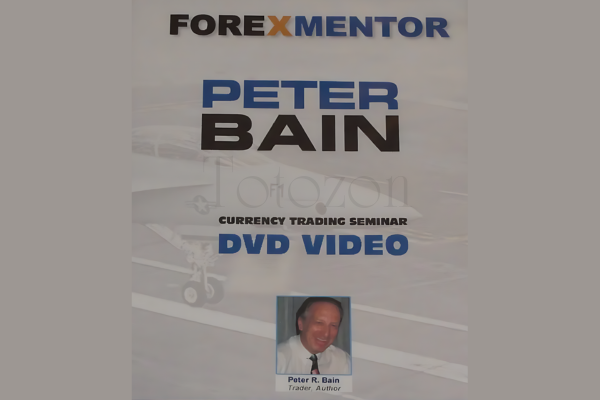 Currency Trading Seminar with Peter Bain
1 × $6.00
Currency Trading Seminar with Peter Bain
1 × $6.00 -
×
 Technical Analysis with Alexander Elder Video Series
1 × $6.00
Technical Analysis with Alexander Elder Video Series
1 × $6.00 -
×
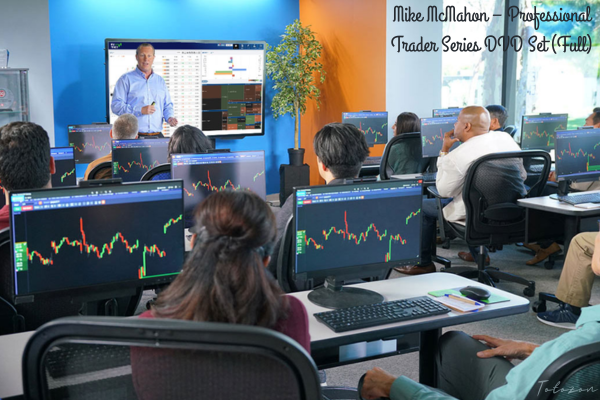 Professional Trader Series DVD Set (Full)
1 × $23.00
Professional Trader Series DVD Set (Full)
1 × $23.00 -
×
 Advanced Spread Trading with Guy Bower - MasterClass Trader
1 × $15.00
Advanced Spread Trading with Guy Bower - MasterClass Trader
1 × $15.00 -
×
 Vega Modified Butterfly Class with Jay Bailey - Sheridan Options Mentoring
1 × $31.00
Vega Modified Butterfly Class with Jay Bailey - Sheridan Options Mentoring
1 × $31.00 -
×
 Trading Indicators for the 21st Century
1 × $6.00
Trading Indicators for the 21st Century
1 × $6.00 -
×
 Fig Combo Course
1 × $5.00
Fig Combo Course
1 × $5.00 -
×
 Practical Applications of Candlestick Charts with Gary Wagner
1 × $6.00
Practical Applications of Candlestick Charts with Gary Wagner
1 × $6.00 -
×
 Gold. Symmetrycs Trading Method with Joseph Rondione
1 × $6.00
Gold. Symmetrycs Trading Method with Joseph Rondione
1 × $6.00 -
×
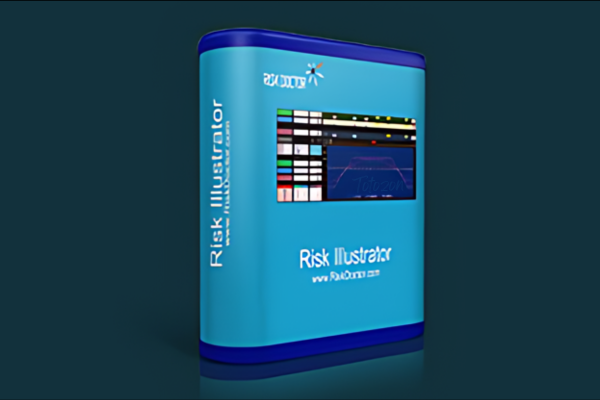 RiskIllustrator By Charles Cottle - The Risk Doctor
1 × $31.00
RiskIllustrator By Charles Cottle - The Risk Doctor
1 × $31.00 -
×
 NORMAN HALLETT SIMPLE TRADING PLANS
1 × $31.00
NORMAN HALLETT SIMPLE TRADING PLANS
1 × $31.00 -
×
 Compass Trading System with Right Line Trading
1 × $39.00
Compass Trading System with Right Line Trading
1 × $39.00
Sacredscience – W.T.Foster – Sunspots and Weather
$6.00
File Size: Cooming soon!
Delivery Time: 1–12 hours
Media Type: Online Course
Content Proof: Watch Here!
You may check content proof of “Sacredscience – W.T.Foster – Sunspots and Weather” below:

Exploring the Mystical Link: W.T. Foster’s Insights on Sunspots and Weather
The intriguing work of W.T. Foster under the banner of Sacredscience delves into the esoteric connection between sunspots and weather patterns. This exploration not only sheds light on the celestial influences on Earth’s meteorological conditions but also bridges the gap between astrophysics and everyday weather phenomena. Let’s dive into the details of how sunspots potentially influence our weather systems.
Introduction to Sacredscience and W.T. Foster
What is Sacredscience?
Sacredscience is an approach that combines ancient wisdom with modern scientific principles to explore natural phenomena from a holistic perspective.
Who was W.T. Foster?
W.T. Foster was a pioneering meteorologist known for his controversial yet fascinating theories linking solar activities, particularly sunspots, with weather patterns on Earth.
The Theory of Sunspots Affecting Weather
Understanding Sunspots
Sunspots are temporary phenomena on the Sun’s surface that appear darker than the surrounding areas due to their lower temperatures. These are indicative of magnetic activity.
How Sunspots Influence Weather
Foster proposed that the magnetic disturbances caused by sunspots could influence Earth’s weather systems, potentially leading to significant climatic shifts.
Historical Perspectives on Sunspots and Weather
Ancient Observations
Historically, civilizations have observed changes in weather patterns corresponding with variations in solar activity, supporting some of Foster’s views.
Foster’s Contributions
Foster documented and analyzed these correlations extensively, advocating for the predictive potential of solar activities in meteorology.
Scientific Studies and Modern Views
Research Supporting Foster’s Theories
Several contemporary studies have found links between solar cycles and climatic variations, suggesting a potential scientific basis for Foster’s observations.
Skepticism in the Scientific Community
Despite some supportive findings, many in the scientific community remain skeptical of the direct causative relationship between sunspots and weather.
Implications for Weather Forecasting
Enhancing Predictive Models
Incorporating solar activity into weather prediction models could improve their accuracy, especially for long-term forecasts.
Challenges and Limitations
The complexity of Earth’s atmospheric systems makes it difficult to isolate the effects of sunspots from other influencing variables.
Cultural Impact of Foster’s Theories
Influence on Popular Culture
Foster’s ideas have permeated into popular culture, influencing how people perceive the impact of celestial bodies on daily weather.
Educational Contributions
His work has also sparked interest in educational circles, prompting discussions on interdisciplinary approaches to science education.
Relevance of Sunspot Studies Today
Climate Change Research
Understanding the solar influences on climate could be crucial in the context of global warming and climate change debates.
Future Research Directions
Ongoing research continues to explore the extent and mechanisms through which solar activities affect Earth’s climate.
Conclusion
W.T. Foster’s exploration of sunspots and their impact on weather through Sacredscience offers a fascinating glimpse into the potential cosmic influences on our planet. While his theories require further validation, they encourage a broader perspective on the interconnectedness of celestial and terrestrial dynamics.

FAQs
What exactly are sunspots?
Sunspots are cooler, darker spots on the Sun’s surface due to intense magnetic activity.
How did Foster link sunspots to weather?
He suggested that magnetic disturbances from sunspots could influence Earth’s atmospheric conditions, affecting weather patterns.
Are Foster’s theories widely accepted today?
While intriguing, Foster’s theories are not widely accepted without skepticism due to the complexity of proving direct causative links.
How could this research affect future weather predictions?
Integrating solar activity data could potentially enhance the accuracy of long-term weather forecasting models.
What can we learn from Foster’s approach?
Foster’s work reminds us of the value of considering interdisciplinary approaches in understanding complex systems like weather.
Be the first to review “Sacredscience – W.T.Foster – Sunspots and Weather”
You must be logged in to post a review.
Related products

Original price was: $139.00.$23.00Current price is: $23.00.

Forex Trading
Original price was: $797.00.$10.00Current price is: $10.00.

Original price was: $997.00.$13.00Current price is: $13.00.

Forex Trading
Original price was: $397.00.$31.00Current price is: $31.00.
Forex Trading
Original price was: $1,098.00.$39.00Current price is: $39.00.

Forex Trading
Original price was: $850.00.$23.00Current price is: $23.00.

Forex Trading
The Complete Guide to Multiple Time Frame Analysis & Reading Price Action with Aiman Almansoori
Original price was: $1,399.00.$13.00Current price is: $13.00.

Original price was: $497.00.$31.00Current price is: $31.00.
Original price was: $700.00.$39.00Current price is: $39.00.

Forex Trading
Original price was: $2,997.00.$23.00Current price is: $23.00.

Original price was: $999.00.$5.00Current price is: $5.00.

Forex Trading
Original price was: $249.00.$15.00Current price is: $15.00.

Forex Trading
Quantamentals – The Next Great Forefront Of Trading and Investing with Trading Markets
Original price was: $1,495.00.$8.00Current price is: $8.00.

Original price was: $695.00.$41.00Current price is: $41.00.

Original price was: $1,800.00.$54.00Current price is: $54.00.

Forex Trading
Original price was: $500.00.$5.00Current price is: $5.00.

Forex Trading
Original price was: $4,997.00.$27.00Current price is: $27.00.

Forex Trading
Original price was: $499.00.$15.00Current price is: $15.00.

Original price was: $799.00.$15.00Current price is: $15.00.

Forex Trading
Original price was: $2,995.00.$31.00Current price is: $31.00.

Reviews
There are no reviews yet.