
-
×
 Sacredscience - Sepharial Arcana – Rubber
1 × $6.00
Sacredscience - Sepharial Arcana – Rubber
1 × $6.00 -
×
 Option, Futures and Other Derivates 9th Edition
1 × $6.00
Option, Futures and Other Derivates 9th Edition
1 × $6.00 -
×
 How to avoid the GAP
1 × $6.00
How to avoid the GAP
1 × $6.00 -
×
 Stochastic Calculus with Alan Bain
1 × $6.00
Stochastic Calculus with Alan Bain
1 × $6.00 -
×
 My Forex League - The Course
1 × $5.00
My Forex League - The Course
1 × $5.00 -
×
 Superleverage The Only Sensible Way to Speculate with Steve Sarnoff
1 × $6.00
Superleverage The Only Sensible Way to Speculate with Steve Sarnoff
1 × $6.00 -
×
 Option Hydra - Mar 2020 Edition - Basics with Rajandran R
1 × $23.00
Option Hydra - Mar 2020 Edition - Basics with Rajandran R
1 × $23.00 -
×
 Futures & Options for Dummies with Joe Duarte
1 × $6.00
Futures & Options for Dummies with Joe Duarte
1 × $6.00 -
×
 Marder Videos Reports 2019-2022 with Kevin Marder
1 × $104.00
Marder Videos Reports 2019-2022 with Kevin Marder
1 × $104.00 -
×
 How To Read The Market Professionally with TradeSmart
1 × $27.00
How To Read The Market Professionally with TradeSmart
1 × $27.00 -
×
 The Delphi Scalper 4 (delphiscalper.com) with Jason Fielder
1 × $6.00
The Delphi Scalper 4 (delphiscalper.com) with Jason Fielder
1 × $6.00 -
×
 White Phoenix’s The Smart (Money) Approach to Trading with Jayson Casper
1 × $39.00
White Phoenix’s The Smart (Money) Approach to Trading with Jayson Casper
1 × $39.00 -
×
 Pattern Cycles with Alan Farley
1 × $6.00
Pattern Cycles with Alan Farley
1 × $6.00 -
×
 Complete Guide to Online Stock Market Investing (2nd Edition) with Alexander Davidson
1 × $6.00
Complete Guide to Online Stock Market Investing (2nd Edition) with Alexander Davidson
1 × $6.00 -
×
 Mastering Risk Modeling with Excel by Alastair Day
1 × $6.00
Mastering Risk Modeling with Excel by Alastair Day
1 × $6.00 -
×
 Candle Charting Essentials & Beyond Volume 1 & 2 with Steve Nison - Candle Charts
1 × $15.00
Candle Charting Essentials & Beyond Volume 1 & 2 with Steve Nison - Candle Charts
1 × $15.00 -
×
 TradeCraft: Your Path to Peak Performance Trading By Adam Grimes
1 × $15.00
TradeCraft: Your Path to Peak Performance Trading By Adam Grimes
1 × $15.00 -
×
 Advanced Spread Trading with Guy Bower - MasterClass Trader
1 × $15.00
Advanced Spread Trading with Guy Bower - MasterClass Trader
1 × $15.00 -
×
 Mastering Collar Trades Pro with Vince Vora - TradingWins
1 × $6.00
Mastering Collar Trades Pro with Vince Vora - TradingWins
1 × $6.00 -
×
 Daily Market Review 2009-2012 (Video 16 GB) with David Vallieres
1 × $6.00
Daily Market Review 2009-2012 (Video 16 GB) with David Vallieres
1 × $6.00 -
×
 Stop Loss Secrets
1 × $6.00
Stop Loss Secrets
1 × $6.00 -
×
 Advanced Cycles with Nick Santiago - InTheMoneyStocks
1 × $171.00
Advanced Cycles with Nick Santiago - InTheMoneyStocks
1 × $171.00 -
×
 Growing Rich with Growth Stocks: Wall Street's Top Money Managers Reveal the 12 Rules for Investment Success - Kirk Kazanjian
1 × $6.00
Growing Rich with Growth Stocks: Wall Street's Top Money Managers Reveal the 12 Rules for Investment Success - Kirk Kazanjian
1 × $6.00 -
×
 Guide to Scanning for Potential Stock Trades class with Jeff Bierman
1 × $6.00
Guide to Scanning for Potential Stock Trades class with Jeff Bierman
1 × $6.00 -
×
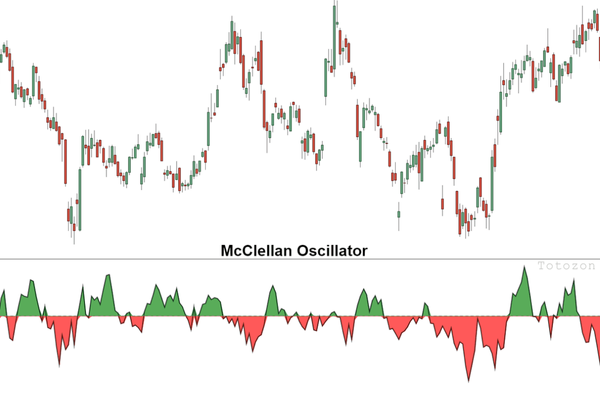 The McClellan Oscillator and Other Tools for with Tom McClellan
1 × $6.00
The McClellan Oscillator and Other Tools for with Tom McClellan
1 × $6.00 -
×
 Investment Leadership & Portfolio Management with Brian Singer
1 × $6.00
Investment Leadership & Portfolio Management with Brian Singer
1 × $6.00 -
×
 The Handbook of Pairs Trading with Douglas Ehrman
1 × $6.00
The Handbook of Pairs Trading with Douglas Ehrman
1 × $6.00 -
×
 Hawkeye Indicators for eSignal + Manual (janarps.com)
1 × $6.00
Hawkeye Indicators for eSignal + Manual (janarps.com)
1 × $6.00 -
×
 International Mergers & Acquisitions Activity Since 1990 with Greg Gregoriou & Luc Renneboog
1 × $6.00
International Mergers & Acquisitions Activity Since 1990 with Greg Gregoriou & Luc Renneboog
1 × $6.00 -
×
 Dynamic Time Cycles with Peter Eliades
1 × $6.00
Dynamic Time Cycles with Peter Eliades
1 × $6.00 -
×
 George Bayer Squarring the Circle for Excel
1 × $6.00
George Bayer Squarring the Circle for Excel
1 × $6.00 -
×
 Scalp Strategy and Flipping Small Accounts with Opes Trading Group
1 × $5.00
Scalp Strategy and Flipping Small Accounts with Opes Trading Group
1 × $5.00 -
×
 Five Trading Trends of 2005 with Dan Denning
1 × $6.00
Five Trading Trends of 2005 with Dan Denning
1 × $6.00 -
×
 Elite Price Action Tutorials with Wmd4x
1 × $8.00
Elite Price Action Tutorials with Wmd4x
1 × $8.00 -
×
 NXT Level FX with Investors Domain
1 × $5.00
NXT Level FX with Investors Domain
1 × $5.00 -
×
 EasyLanguage Home Study Course PDF Book + CD
1 × $6.00
EasyLanguage Home Study Course PDF Book + CD
1 × $6.00 -
×
 How to be a Sector Investor with Larry Hungerford & Steve Hungerford
1 × $4.00
How to be a Sector Investor with Larry Hungerford & Steve Hungerford
1 × $4.00 -
×
 Currency Trading for Dummies with Mark Galant
1 × $6.00
Currency Trading for Dummies with Mark Galant
1 × $6.00 -
×
 High Probability Trading Using Elliott Wave And Fibonacci Analysis withVic Patel - Forex Training Group
1 × $10.00
High Probability Trading Using Elliott Wave And Fibonacci Analysis withVic Patel - Forex Training Group
1 × $10.00 -
×
 The Options Applications Handbook: Hedging and Speculating Techniques for Professional Investors - Erik Banks & Paul Siegel
1 × $6.00
The Options Applications Handbook: Hedging and Speculating Techniques for Professional Investors - Erik Banks & Paul Siegel
1 × $6.00 -
×
 Volatility Trading with Fractal Flow Pro
1 × $15.00
Volatility Trading with Fractal Flow Pro
1 × $15.00 -
×
 Simpler Options - Insider’s Guide to Generating Income using Options Strategies Course (Oct 2014)
1 × $6.00
Simpler Options - Insider’s Guide to Generating Income using Options Strategies Course (Oct 2014)
1 × $6.00 -
×
 Global Equity Investing By Alberto Vivanti & Perry Kaufman
1 × $6.00
Global Equity Investing By Alberto Vivanti & Perry Kaufman
1 × $6.00 -
×
 Elite Mentorship Home Study - 3T Live with Sami Abusaad
1 × $5.00
Elite Mentorship Home Study - 3T Live with Sami Abusaad
1 × $5.00 -
×
 Setups of a Winning Trader with Gareth Soloway
1 × $521.00
Setups of a Winning Trader with Gareth Soloway
1 × $521.00 -
×
 Knowing Where the Energy is Coming From with Charles Drummond
1 × $6.00
Knowing Where the Energy is Coming From with Charles Drummond
1 × $6.00 -
×
 Defending Options with Simpler Options
1 × $6.00
Defending Options with Simpler Options
1 × $6.00 -
×
 Month 01 to 08 2018
1 × $62.00
Month 01 to 08 2018
1 × $62.00 -
×
 More on the Short Cycles of Interest Rates (Article) with Arie Melnik, Alan Kraus
1 × $6.00
More on the Short Cycles of Interest Rates (Article) with Arie Melnik, Alan Kraus
1 × $6.00 -
×
 Market Neutral Strategies with Bruce I.Jacobs & Kenneth N.Levy
1 × $6.00
Market Neutral Strategies with Bruce I.Jacobs & Kenneth N.Levy
1 × $6.00 -
×
 Detecting Trend Direction & Strength (Article) with Barbara Star
1 × $6.00
Detecting Trend Direction & Strength (Article) with Barbara Star
1 × $6.00 -
×
 The High probability Intraday Trading System with Doc Severson
1 × $6.00
The High probability Intraday Trading System with Doc Severson
1 × $6.00 -
×
 Bond Market Course with The Macro Compass
1 × $15.00
Bond Market Course with The Macro Compass
1 × $15.00 -
×
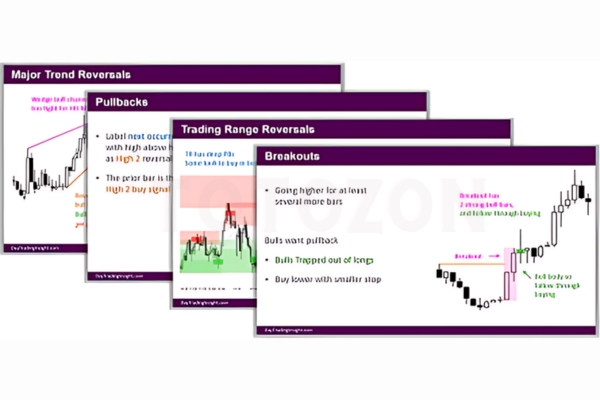 Day Trading Insight with Al Brooks
1 × $10.00
Day Trading Insight with Al Brooks
1 × $10.00 -
×
 Forex Trading For Beginners with John Jagerson - Investopedia Academy
1 × $6.00
Forex Trading For Beginners with John Jagerson - Investopedia Academy
1 × $6.00 -
×
 The Candlestick Training Series with Timon Weller
1 × $6.00
The Candlestick Training Series with Timon Weller
1 × $6.00 -
×
 Neural Networks in Trading with Dr. Ernest P. Chan
1 × $31.00
Neural Networks in Trading with Dr. Ernest P. Chan
1 × $31.00 -
×
 Forex Mentor 2007 with Peter Bain
1 × $6.00
Forex Mentor 2007 with Peter Bain
1 × $6.00 -
×
 Handbook for Enviroment Risk Decision Making with C.Richard Cothern
1 × $6.00
Handbook for Enviroment Risk Decision Making with C.Richard Cothern
1 × $6.00 -
×
 ICT Prodigy Trading Course – $650K in Payouts with Alex Solignani
1 × $15.00
ICT Prodigy Trading Course – $650K in Payouts with Alex Solignani
1 × $15.00
Stock Market Science and Technique
$15.00
File Size: Coming soon!
Delivery Time: 1–12 hours
Media Type: Online Course
Master Stock Market Science and Techniques
Introduction
Trading in the stock market is often seen as an art, but there is a strong scientific foundation behind successful trading strategies. Understanding the science and techniques behind stock market trading can significantly enhance your ability to make informed decisions.
The Basics of Stock Market Science
What is Stock Market Science?
Stock market science involves using quantitative analysis, mathematical models, and empirical research to understand market behavior. It provides a systematic approach to analyzing stocks and predicting market trends.
Why is Science Important in Trading?
Applying scientific methods to trading helps reduce emotional bias and improves the accuracy of predictions. It allows traders to base their decisions on data and evidence rather than intuition.
Key Concepts in Stock Market Science
Market Efficiency
The Efficient Market Hypothesis (EMH) suggests that stock prices fully reflect all available information. Understanding market efficiency helps traders develop strategies that exploit inefficiencies.
Technical Analysis
Technical analysis involves studying past market data, primarily price and volume, to forecast future price movements. Key tools include charts, indicators, and patterns.
Fundamental Analysis
Fundamental analysis focuses on evaluating a company’s financial health by analyzing financial statements, industry conditions, and economic factors. It helps in determining a stock’s intrinsic value.
Essential Techniques in Stock Market Trading
Charting and Patterns
Understanding Charts
Charts are visual representations of stock prices over time. They are fundamental tools for technical analysis.
Identifying Patterns
Patterns like head and shoulders, double tops, and flags can indicate potential market movements. Learning to recognize these patterns is crucial for technical traders.
Indicators and Oscillators
Moving Averages
Moving averages smooth out price data to identify trends. Common types include simple moving averages (SMA) and exponential moving averages (EMA).
Relative Strength Index (RSI)
RSI measures the speed and change of price movements. It helps identify overbought or oversold conditions in the market.
Quantitative Techniques
Statistical Analysis
Using statistical methods like regression analysis and probability theory helps in understanding market behavior and making predictions.
Algorithmic Trading
Algorithmic trading involves using computer programs to execute trades based on predefined criteria. It leverages speed and accuracy to capitalize on market opportunities.
Developing a Trading Strategy
Setting Goals and Objectives
Define your trading goals, whether they are short-term gains or long-term investments. Clear objectives guide your strategy development.
Risk Management
Effective risk management involves setting stop-loss orders, diversifying your portfolio, and determining position sizes to protect your capital.
Backtesting Strategies
Backtesting involves testing a trading strategy on historical data to ensure its effectiveness before applying it in real markets.
Tools for Stock Market Science
Trading Platforms
Platforms like Thinkorswim, MetaTrader, and TradingView offer advanced charting tools and analytics for traders.
Data Sources
Reliable data sources such as Bloomberg, Reuters, and Yahoo Finance provide the necessary information for analysis and decision-making.
Applying Science to Improve Trading Performance
Analyzing Market Trends
Use scientific methods to analyze trends and identify profitable opportunities. Trend analysis helps in making informed trading decisions.
Evaluating Stock Performance
Regularly evaluate the performance of your stock portfolio using scientific techniques to ensure it aligns with your investment goals.
Adapting to Market Changes
Markets are dynamic, and successful traders adapt their strategies based on new information and changing conditions. Continuous learning and adaptation are key.
The Role of Psychology in Trading
Understanding Behavioral Finance
Behavioral finance studies how psychological factors influence market behavior. It helps traders understand common biases and improve decision-making.
Managing Emotions
Trading can be emotional. Techniques such as mindfulness and maintaining a trading journal can help manage emotions and stay focused.
Conclusion
Mastering the stock market requires a blend of art and science. By understanding and applying scientific techniques, traders can make more informed decisions, reduce risks, and improve their chances of success. Embrace the science behind trading, and you’ll find yourself better equipped to navigate the complexities of the stock market.

Commonly Asked Questions:
- Business Model Innovation: Accept the truth of a legitimate business! Our strategy is organising a group buy in which participants share the costs. We use these cash to acquire popular courses from sale pages and make them available to people with limited financial resources. Despite the authors’ worries, our clients love the cost and accessibility we give.
- The Legal Environment: Yes or No The legality of our activity is ambiguous. While we don’t have specific permission from the course authors to resell the material, there is a technicality at work. The author did not specify any limits on resale when purchasing the course. This legal intricacy is both an opportunity for us and a boon for individuals looking for low-cost access.
- Quality Control: Uncovering the Truth
Getting to the heart of the issue – quality. Purchasing the course straight from the sale page guarantees that all documents and resources are the same as those obtained through traditional channels.
However, we distinguish ourselves by going beyond personal research and resale. It is crucial to note that we are not the official course providers, which means that the following premium services are not included in our package:
- There are no scheduled coaching calls or sessions with the author.
- Access to the author’s private Facebook group or web portal is not permitted.
- No access to the author’s private membership forum.
- There is no direct email support available from the author or their team.
We operate independently, with the goal of bridging the pricing gap without the extra services provided by official course channels. Your comprehension of our distinct approach is much appreciated.
Be the first to review “Stock Market Science and Technique”
You must be logged in to post a review.
Related products

Forex Trading
Original price was: $125.00.$17.00Current price is: $17.00.
Original price was: $999.00.$5.00Current price is: $5.00.

Forex Trading
Original price was: $500.00.$5.00Current price is: $5.00.

Forex Trading
The Complete Guide to Multiple Time Frame Analysis & Reading Price Action with Aiman Almansoori
Original price was: $1,399.00.$13.00Current price is: $13.00.

Forex Trading
Original price was: $1,898.00.$10.00Current price is: $10.00.
Forex Trading
Original price was: $797.00.$10.00Current price is: $10.00.

Forex Trading
Original price was: $697.00.$5.00Current price is: $5.00.

Forex Trading
Original price was: $850.00.$23.00Current price is: $23.00.

Forex Trading
Original price was: $550.00.$5.00Current price is: $5.00.

Forex Trading
Original price was: $249.00.$15.00Current price is: $15.00.

Original price was: $997.00.$8.00Current price is: $8.00.

Original price was: $799.00.$15.00Current price is: $15.00.

Original price was: $310.00.$23.00Current price is: $23.00.

Original price was: $1,200.00.$23.00Current price is: $23.00.

Original price was: $997.00.$13.00Current price is: $13.00.

Forex Trading
Original price was: $799.00.$15.00Current price is: $15.00.
Original price was: $2,120.00.$15.00Current price is: $15.00.

Original price was: $649.00.$20.00Current price is: $20.00.
Original price was: $700.00.$39.00Current price is: $39.00.

Original price was: $1,800.00.$54.00Current price is: $54.00.

Reviews
There are no reviews yet.