
-
×
 Fed Balance Sheet 201 with Joseph Wang - Central Banking 101
1 × $10.00
Fed Balance Sheet 201 with Joseph Wang - Central Banking 101
1 × $10.00 -
×
 Crash Profits Make Money When Stocks Sink and Soar with Martin D.Weiss
1 × $6.00
Crash Profits Make Money When Stocks Sink and Soar with Martin D.Weiss
1 × $6.00 -
×
 EasyLanguage Home Study Course PDF Book + CD
1 × $6.00
EasyLanguage Home Study Course PDF Book + CD
1 × $6.00 -
×
 Foundation & Application of the Market with Jim Dalton - JimDalton Trading
1 × $5.00
Foundation & Application of the Market with Jim Dalton - JimDalton Trading
1 × $5.00 -
×
 Simulating Continuous Fuzzy Systems with James Buckley & Leonard Jowers
1 × $6.00
Simulating Continuous Fuzzy Systems with James Buckley & Leonard Jowers
1 × $6.00 -
×
 The Janus Factor with Gary Anderson
1 × $6.00
The Janus Factor with Gary Anderson
1 × $6.00 -
×
 How to Find the Most Profitable Stocks with Mubarak Shah
1 × $6.00
How to Find the Most Profitable Stocks with Mubarak Shah
1 × $6.00 -
×
 PFAZoneSuite [Trading Indicator] 2017
1 × $109.00
PFAZoneSuite [Trading Indicator] 2017
1 × $109.00 -
×
 eASCTrend Pro 6.0 Video Tutorials with Ablesys
1 × $6.00
eASCTrend Pro 6.0 Video Tutorials with Ablesys
1 × $6.00 -
×
 Original Curriculum with Home Options Trading Course
1 × $6.00
Original Curriculum with Home Options Trading Course
1 × $6.00 -
×
 Fundamentals of Futures & Options Markets (4th Ed.)
1 × $6.00
Fundamentals of Futures & Options Markets (4th Ed.)
1 × $6.00 -
×
 Fundamentals 101: A Comprehensive Guide to Macroeconomic, Industry, and Financial Statement Analysis Class with Jeff Bierman
1 × $6.00
Fundamentals 101: A Comprehensive Guide to Macroeconomic, Industry, and Financial Statement Analysis Class with Jeff Bierman
1 × $6.00 -
×
 Forecasting Profits Using Price & Time with Ed Gately
1 × $6.00
Forecasting Profits Using Price & Time with Ed Gately
1 × $6.00 -
×
 Startup Trading Masterclass with Jack Gleason
1 × $93.00
Startup Trading Masterclass with Jack Gleason
1 × $93.00 -
×
 Game-Maker Forex Trading System
1 × $6.00
Game-Maker Forex Trading System
1 × $6.00 -
×
 5-Week Portfolio (No Bonus) - Criticaltrading
1 × $39.00
5-Week Portfolio (No Bonus) - Criticaltrading
1 × $39.00 -
×
 Forex Trading Using Fibonacci & Elliott Wave with Todd Gordon
1 × $6.00
Forex Trading Using Fibonacci & Elliott Wave with Todd Gordon
1 × $6.00 -
×
 Day Trading and Swing Trading Futures with Price Action by Humberto Malaspina
1 × $5.00
Day Trading and Swing Trading Futures with Price Action by Humberto Malaspina
1 × $5.00 -
×
 The Orderflows Trade Opportunities Encyclopedia with Michael Valtos
1 × $8.00
The Orderflows Trade Opportunities Encyclopedia with Michael Valtos
1 × $8.00 -
×
 Sea Lanes & Pipelines with Bernard D.Cole
1 × $6.00
Sea Lanes & Pipelines with Bernard D.Cole
1 × $6.00 -
×
 All Candlestick Patterns Tested And Ranked with Quantified Strategies
1 × $8.00
All Candlestick Patterns Tested And Ranked with Quantified Strategies
1 × $8.00 -
×
 Secrets of An Electronic Futures Trader with Larry Levin
1 × $6.00
Secrets of An Electronic Futures Trader with Larry Levin
1 × $6.00 -
×
 Futures Trading (German)
1 × $6.00
Futures Trading (German)
1 × $6.00 -
×
 A Game Plan for Investing in the 21st Century with Thomas J.Dorsey
1 × $6.00
A Game Plan for Investing in the 21st Century with Thomas J.Dorsey
1 × $6.00 -
×
 The LP Trading Course
1 × $13.00
The LP Trading Course
1 × $13.00 -
×
 The Market Geometry Basic Seminar DVD with Market Geometry
1 × $31.00
The Market Geometry Basic Seminar DVD with Market Geometry
1 × $31.00 -
×
 CFA Level 2 - Examination Book Afternoon Section (1999)
1 × $6.00
CFA Level 2 - Examination Book Afternoon Section (1999)
1 × $6.00 -
×
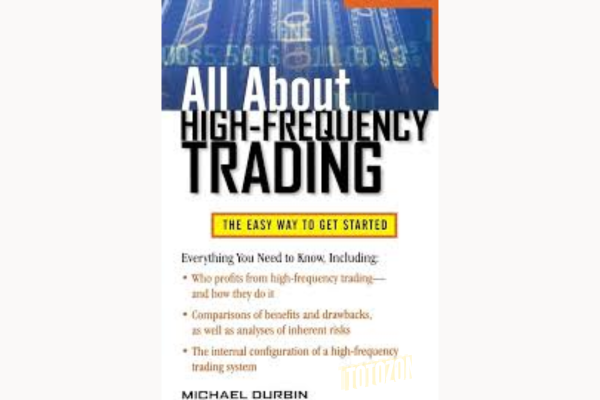 All About High-Frequency Trading with Michael Durbin
1 × $6.00
All About High-Frequency Trading with Michael Durbin
1 × $6.00 -
×
 Trading The Hobbs Triple Crown Strategy with Derrik Hobbs
1 × $6.00
Trading The Hobbs Triple Crown Strategy with Derrik Hobbs
1 × $6.00 -
×
 Complete Trading System with Segma Singh
1 × $6.00
Complete Trading System with Segma Singh
1 × $6.00 -
×
 Trading Short TermSame Day Trades Sep 2023 with Dan Sheridan & Mark Fenton - Sheridan Options Mentoring
1 × $31.00
Trading Short TermSame Day Trades Sep 2023 with Dan Sheridan & Mark Fenton - Sheridan Options Mentoring
1 × $31.00
Measuring Risk in Complex Stochastic Systems with J.Franke, W. Hardle, G. Stahl
$6.00
File Size: Coming soon!
Delivery Time: 1–12 hours
Media Type: Online Course
Content Proof: Watch Here!
You may check content proof of “Measuring Risk in Complex Stochastic Systems with J.Franke, W. Hardle, G. Stahl” below:

Measuring Risk in Complex Stochastic Systems with J.Franke, W. Hardle, G. Stahl
Navigating the intricate world of stochastic systems is a daunting task that requires not only theoretical knowledge but also practical insight. The work of J.Franke, W. Hardle, and G. Stahl has been instrumental in developing methodologies to measure and manage risk in these systems. This article explores their contributions and methods in detail, providing you with a clear understanding of how risk is quantified in complex stochastic environments.
Introduction to Stochastic Systems
Understanding Stochasticity
Stochastic systems are characterized by their inherent randomness and unpredictability, making risk measurement a complex task.
The Significance of Risk Measurement
Accurately measuring risk is essential for decision-making in finance, engineering, and other fields where outcomes are uncertain.
Key Concepts Introduced by Franke, Hardle, and Stahl
Probabilistic Models
They advocate using probabilistic models to understand and predict the behavior of stochastic systems.
Risk Metrics
Introduction to various risk metrics that are crucial for assessing the potential threats in stochastic models.
Methodologies for Risk Assessment
Statistical Tools and Techniques
Exploring the statistical tools that Franke, Hardle, and Stahl frequently use to dissect complex data.
Quantitative Analysis
How quantitative analysis is applied to model and predict risk factors effectively.
Case Studies and Applications
Finance and Investment
Detailed analysis of how these methodologies apply to financial markets and investment risk management.
Environmental Science
Utilizing stochastic models to predict environmental risks and their impacts.
Advancements in Technology and Software
Computational Tools
Review of the latest software and tools that enhance the accuracy of risk measurement in stochastic systems.
Machine Learning Techniques
How machine learning is being integrated into stochastic risk assessment.
Challenges in Measuring Risk
Dealing with Uncertainty
The inherent challenges of predicting uncertain outcomes in stochastic systems.
Modeling Limitations
Discussion on the limitations of current models and what the future holds for improvements.
Educational Resources and Further Reading
Books and Publications by Franke, Hardle, and Stahl
Guidance on where to find more of their groundbreaking work.
Workshops and Seminars
Information on upcoming seminars and workshops where these experts share their insights.
Practical Tips for Practitioners
Best Practices
Advice on best practices in applying stochastic models in various industries.
Continual Learning
The importance of keeping updated with the latest research and methodologies in risk measurement.
Conclusion
The methodologies developed by J.Franke, W. Hardle, and G. Stahl have significantly advanced our ability to measure risk in stochastic systems. Their work not only provides the theoretical framework but also practical tools that can be applied across multiple disciplines. As we continue to confront uncertainties in various aspects of life and industry, their contributions will undoubtedly play a crucial role in shaping our approach to risk management.
FAQs
What is a stochastic system?
A stochastic system is one that involves a process influenced by random variables.
Why is measuring risk important in stochastic systems?
Measuring risk helps in making informed decisions and preparing for potential adverse outcomes.
Can these methodologies be applied to any industry?
Yes, these methodologies are versatile and can be adapted to various fields including finance, healthcare, and environmental science.
How can one start learning about stochastic risk measurement?
Beginning with basic probability and statistics courses is recommended, followed by specialized studies in stochastic processes.
Where can I access tools for stochastic risk analysis?
Many statistical software packages and online platforms offer tools specifically designed for stochastic risk analysis.
Be the first to review “Measuring Risk in Complex Stochastic Systems with J.Franke, W. Hardle, G. Stahl”
You must be logged in to post a review.
Related products

Original price was: $997.00.$8.00Current price is: $8.00.

Original price was: $895.00.$15.00Current price is: $15.00.

Forex Trading
Original price was: $2,997.00.$23.00Current price is: $23.00.

Original price was: $1,200.00.$23.00Current price is: $23.00.

Original price was: $997.00.$13.00Current price is: $13.00.

Original price was: $700.00.$39.00Current price is: $39.00.

Forex Trading
Original price was: $2,000.00.$23.00Current price is: $23.00.

Original price was: $497.00.$31.00Current price is: $31.00.

Forex Trading
Original price was: $797.00.$10.00Current price is: $10.00.

Original price was: $695.00.$41.00Current price is: $41.00.

Original price was: $999.00.$5.00Current price is: $5.00.

Original price was: $197.00.$5.00Current price is: $5.00.

Forex Trading
Original price was: $999.00.$15.00Current price is: $15.00.

Forex Trading
Original price was: $550.00.$5.00Current price is: $5.00.

Forex Trading
Original price was: $799.00.$15.00Current price is: $15.00.

Forex Trading
Original price was: $2,995.00.$31.00Current price is: $31.00.

Original price was: $310.00.$23.00Current price is: $23.00.

Original price was: $1,800.00.$54.00Current price is: $54.00.

Forex Trading
Original price was: $850.00.$23.00Current price is: $23.00.

Forex Trading
Original price was: $249.00.$15.00Current price is: $15.00.
Reviews
There are no reviews yet.