
-
×
 Advanced Options Trading with Lucas Downey
1 × $15.00
Advanced Options Trading with Lucas Downey
1 × $15.00 -
×
 Starter Guide to Investing Stocks, Crypto & Precious Metals with Ryan Hogue
1 × $5.00
Starter Guide to Investing Stocks, Crypto & Precious Metals with Ryan Hogue
1 × $5.00 -
×
 Natural Squares Calculator with Lambert-Gann Educators
1 × $6.00
Natural Squares Calculator with Lambert-Gann Educators
1 × $6.00 -
×
 Bird Watch in Lion Country 2010 Ed with Dirk Du Toit
1 × $6.00
Bird Watch in Lion Country 2010 Ed with Dirk Du Toit
1 × $6.00 -
×
 Traders Winning Edge with Adrienne Laris Toghraie
1 × $6.00
Traders Winning Edge with Adrienne Laris Toghraie
1 × $6.00 -
×
 8 Successful Iron Condor Methodologies with Dan Sheridan
1 × $23.00
8 Successful Iron Condor Methodologies with Dan Sheridan
1 × $23.00 -
×
 AM Trader - Strategy Training Course
1 × $23.00
AM Trader - Strategy Training Course
1 × $23.00 -
×
 Learn To Fish Part III - How To Swing Trade for Consistent Gains with Daniel
1 × $15.00
Learn To Fish Part III - How To Swing Trade for Consistent Gains with Daniel
1 × $15.00 -
×
 Accelerated Learning Techniques in Action with Colin Rose, Jayne Nicholl & Malcolm Nicholl
1 × $6.00
Accelerated Learning Techniques in Action with Colin Rose, Jayne Nicholl & Malcolm Nicholl
1 × $6.00 -
×
 Profit Wave Trade Strategy with Base Camp Trading
1 × $4.00
Profit Wave Trade Strategy with Base Camp Trading
1 × $4.00 -
×
 Quantitative Trading Strategies (1st Edition) with Lars Kestner
1 × $6.00
Quantitative Trading Strategies (1st Edition) with Lars Kestner
1 × $6.00 -
×
 Option Strategies with Courtney Smith
1 × $6.00
Option Strategies with Courtney Smith
1 × $6.00 -
×
 Forex Master Method Evolution with Russ Horn
1 × $6.00
Forex Master Method Evolution with Russ Horn
1 × $6.00 -
×
 Equity Trader 101 Course with KeyStone Trading
1 × $6.00
Equity Trader 101 Course with KeyStone Trading
1 × $6.00 -
×
 The Active Investor Blueprint with Steve Nison - Candle Charts
1 × $23.00
The Active Investor Blueprint with Steve Nison - Candle Charts
1 × $23.00 -
×
 Advanced Trading System 2020
1 × $179.00
Advanced Trading System 2020
1 × $179.00 -
×
 4D Bootcamp with Black Rabbit
1 × $10.00
4D Bootcamp with Black Rabbit
1 × $10.00 -
×
 KASH-FX JOURNAL
1 × $10.00
KASH-FX JOURNAL
1 × $10.00 -
×
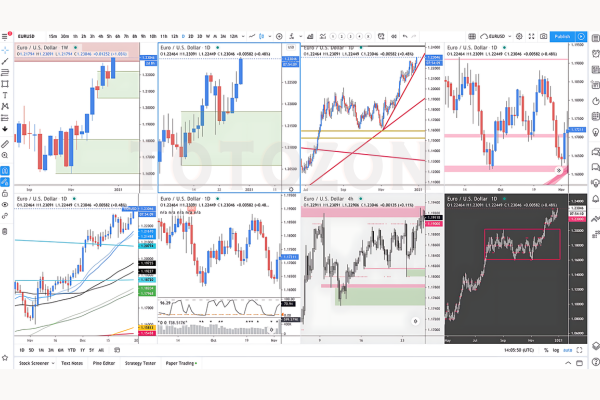 Supply And Demand Zone Trading Course with Trading180
1 × $5.00
Supply And Demand Zone Trading Course with Trading180
1 × $5.00 -
×
 Scalp Strategy and Flipping Small Accounts with Opes Trading Group
1 × $5.00
Scalp Strategy and Flipping Small Accounts with Opes Trading Group
1 × $5.00 -
×
 Flex EA Correlated Hedge V1.02
1 × $6.00
Flex EA Correlated Hedge V1.02
1 × $6.00 -
×
 Fractal Markets FX (SMC)
1 × $5.00
Fractal Markets FX (SMC)
1 × $5.00 -
×
 Inner Circle Trader
1 × $6.00
Inner Circle Trader
1 × $6.00 -
×
 The Complete Guide to Option Selling with James Cordier
1 × $6.00
The Complete Guide to Option Selling with James Cordier
1 × $6.00 -
×
 Profit Generating System with Brian Williams
1 × $6.00
Profit Generating System with Brian Williams
1 × $6.00 -
×
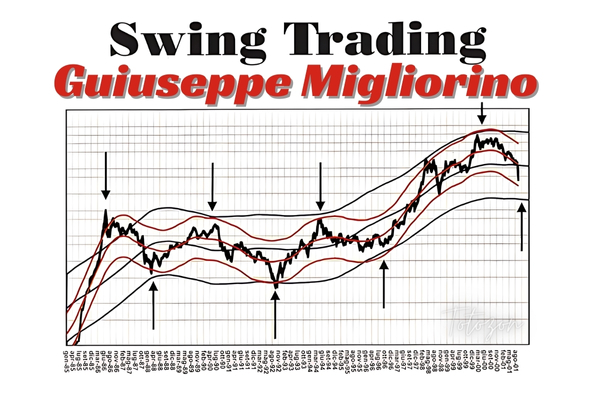 Swing Trading (Italian) with Guiuseppe Migliorino
1 × $6.00
Swing Trading (Italian) with Guiuseppe Migliorino
1 × $6.00 -
×
 30 Trading Classics with 3T Live
1 × $5.00
30 Trading Classics with 3T Live
1 × $5.00 -
×
 6 (The Proper BackGround)
1 × $6.00
6 (The Proper BackGround)
1 × $6.00 -
×
 Royal Exchange Forex with Jan Teslar
1 × $6.00
Royal Exchange Forex with Jan Teslar
1 × $6.00 -
×
 Module III - Peak Formation Trades with FX MindShift
1 × $6.00
Module III - Peak Formation Trades with FX MindShift
1 × $6.00 -
×
 Options Bootcamp with Sid Woolfolk
1 × $6.00
Options Bootcamp with Sid Woolfolk
1 × $6.00 -
×
 The Master Indicator 2023 with Lance Ippolito
1 × $101.00
The Master Indicator 2023 with Lance Ippolito
1 × $101.00 -
×
 Indicator Effectiveness Testing & System Creation with David Vomund
1 × $6.00
Indicator Effectiveness Testing & System Creation with David Vomund
1 × $6.00 -
×
 Astro Cycles with Larry Pesavento
1 × $6.00
Astro Cycles with Larry Pesavento
1 × $6.00 -
×
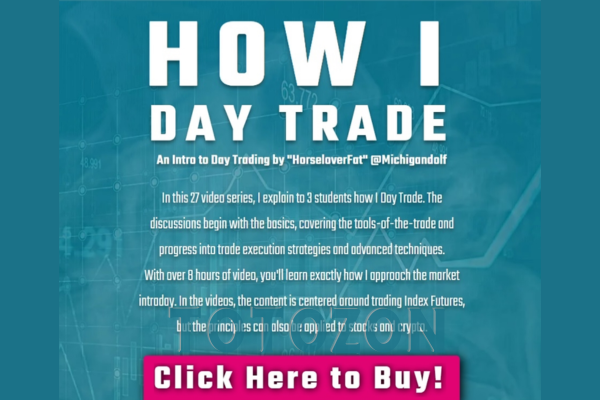 How I Day Trade Course with Traderade
1 × $15.00
How I Day Trade Course with Traderade
1 × $15.00 -
×
 MACK - PATS Simple ES Scalping Strategy
1 × $15.00
MACK - PATS Simple ES Scalping Strategy
1 × $15.00 -
×
 The Best Option Trading Course with David Jaffee - Best Stock Strategy
1 × $15.00
The Best Option Trading Course with David Jaffee - Best Stock Strategy
1 × $15.00 -
×
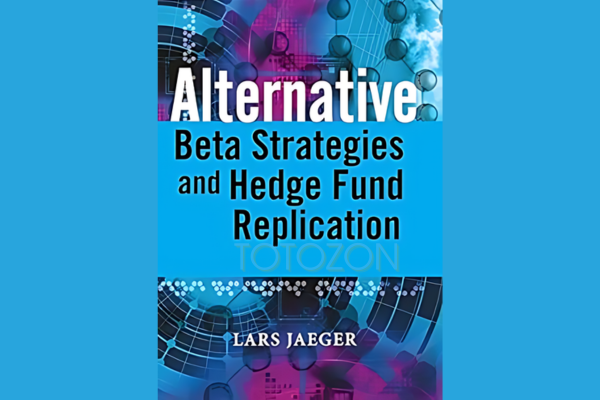 Alternative Beta Strategies & Hedge Fund Replication with Lars Jaeger & Jeffrey Pease
1 × $6.00
Alternative Beta Strategies & Hedge Fund Replication with Lars Jaeger & Jeffrey Pease
1 × $6.00 -
×
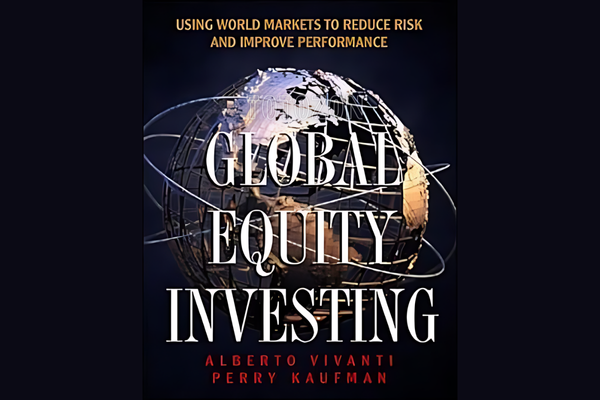 Global Equity Investing By Alberto Vivanti & Perry Kaufman
1 × $6.00
Global Equity Investing By Alberto Vivanti & Perry Kaufman
1 × $6.00 -
×
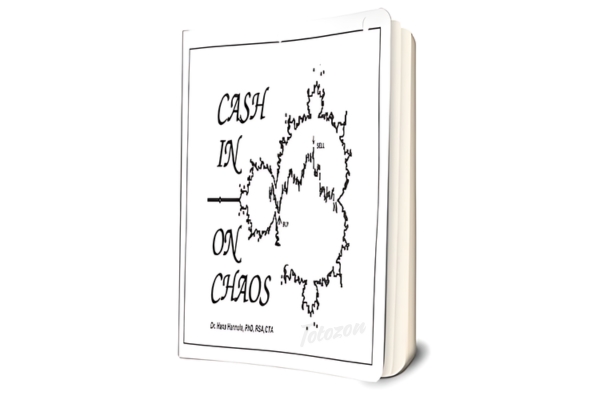 The Chaos Course. Cash in on Chaos with Hans Hannula
1 × $6.00
The Chaos Course. Cash in on Chaos with Hans Hannula
1 × $6.00
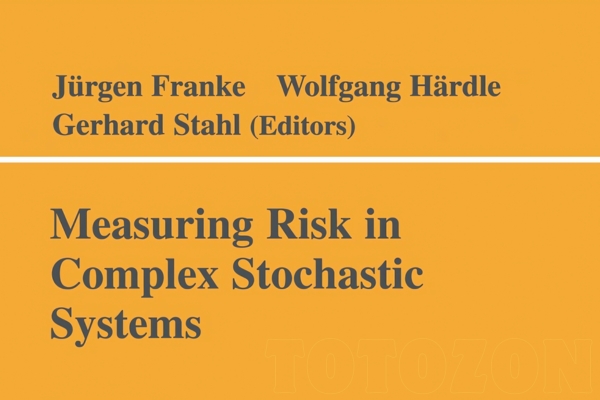
Measuring Risk in Complex Stochastic Systems with J.Franke, W. Hardle, G. Stahl
$6.00
File Size: Coming soon!
Delivery Time: 1–12 hours
Media Type: Online Course
Content Proof: Watch Here!
You may check content proof of “Measuring Risk in Complex Stochastic Systems with J.Franke, W. Hardle, G. Stahl” below:

Measuring Risk in Complex Stochastic Systems with J.Franke, W. Hardle, G. Stahl
Navigating the intricate world of stochastic systems is a daunting task that requires not only theoretical knowledge but also practical insight. The work of J.Franke, W. Hardle, and G. Stahl has been instrumental in developing methodologies to measure and manage risk in these systems. This article explores their contributions and methods in detail, providing you with a clear understanding of how risk is quantified in complex stochastic environments.
Introduction to Stochastic Systems
Understanding Stochasticity
Stochastic systems are characterized by their inherent randomness and unpredictability, making risk measurement a complex task.
The Significance of Risk Measurement
Accurately measuring risk is essential for decision-making in finance, engineering, and other fields where outcomes are uncertain.
Key Concepts Introduced by Franke, Hardle, and Stahl
Probabilistic Models
They advocate using probabilistic models to understand and predict the behavior of stochastic systems.
Risk Metrics
Introduction to various risk metrics that are crucial for assessing the potential threats in stochastic models.
Methodologies for Risk Assessment
Statistical Tools and Techniques
Exploring the statistical tools that Franke, Hardle, and Stahl frequently use to dissect complex data.
Quantitative Analysis
How quantitative analysis is applied to model and predict risk factors effectively.
Case Studies and Applications
Finance and Investment
Detailed analysis of how these methodologies apply to financial markets and investment risk management.
Environmental Science
Utilizing stochastic models to predict environmental risks and their impacts.
Advancements in Technology and Software
Computational Tools
Review of the latest software and tools that enhance the accuracy of risk measurement in stochastic systems.
Machine Learning Techniques
How machine learning is being integrated into stochastic risk assessment.
Challenges in Measuring Risk
Dealing with Uncertainty
The inherent challenges of predicting uncertain outcomes in stochastic systems.
Modeling Limitations
Discussion on the limitations of current models and what the future holds for improvements.
Educational Resources and Further Reading
Books and Publications by Franke, Hardle, and Stahl
Guidance on where to find more of their groundbreaking work.
Workshops and Seminars
Information on upcoming seminars and workshops where these experts share their insights.
Practical Tips for Practitioners
Best Practices
Advice on best practices in applying stochastic models in various industries.
Continual Learning
The importance of keeping updated with the latest research and methodologies in risk measurement.
Conclusion
The methodologies developed by J.Franke, W. Hardle, and G. Stahl have significantly advanced our ability to measure risk in stochastic systems. Their work not only provides the theoretical framework but also practical tools that can be applied across multiple disciplines. As we continue to confront uncertainties in various aspects of life and industry, their contributions will undoubtedly play a crucial role in shaping our approach to risk management.
FAQs
What is a stochastic system?
A stochastic system is one that involves a process influenced by random variables.
Why is measuring risk important in stochastic systems?
Measuring risk helps in making informed decisions and preparing for potential adverse outcomes.
Can these methodologies be applied to any industry?
Yes, these methodologies are versatile and can be adapted to various fields including finance, healthcare, and environmental science.
How can one start learning about stochastic risk measurement?
Beginning with basic probability and statistics courses is recommended, followed by specialized studies in stochastic processes.
Where can I access tools for stochastic risk analysis?
Many statistical software packages and online platforms offer tools specifically designed for stochastic risk analysis.
Be the first to review “Measuring Risk in Complex Stochastic Systems with J.Franke, W. Hardle, G. Stahl”
You must be logged in to post a review.
Related products

Forex Trading
Quantamentals – The Next Great Forefront Of Trading and Investing with Trading Markets
Original price was: $1,495.00.$8.00Current price is: $8.00.

Original price was: $997.00.$13.00Current price is: $13.00.

Forex Trading
Original price was: $550.00.$5.00Current price is: $5.00.

Forex Trading
Original price was: $125.00.$17.00Current price is: $17.00.

Forex Trading
Original price was: $2,997.00.$23.00Current price is: $23.00.

Original price was: $997.00.$8.00Current price is: $8.00.

Original price was: $2,120.00.$15.00Current price is: $15.00.

Forex Trading
Original price was: $4,997.00.$27.00Current price is: $27.00.

Forex Trading
Original price was: $239.00.$8.00Current price is: $8.00.

Forex Trading
Original price was: $799.00.$15.00Current price is: $15.00.

Original price was: $139.00.$23.00Current price is: $23.00.
Original price was: $1,849.00.$15.00Current price is: $15.00.

Forex Trading
Original price was: $2,995.00.$31.00Current price is: $31.00.

Forex Trading
Original price was: $797.00.$10.00Current price is: $10.00.

Original price was: $497.00.$31.00Current price is: $31.00.

Forex Trading
Original price was: $397.00.$31.00Current price is: $31.00.

Original price was: $700.00.$39.00Current price is: $39.00.

Original price was: $197.00.$5.00Current price is: $5.00.

Forex Trading
The Complete Guide to Multiple Time Frame Analysis & Reading Price Action with Aiman Almansoori
Original price was: $1,399.00.$13.00Current price is: $13.00.

Original price was: $1,200.00.$23.00Current price is: $23.00.
Reviews
There are no reviews yet.