
-
×
 The Newly Revised Hal Method of Cyclic Analysis with Walter Bressert
1 × $5.00
The Newly Revised Hal Method of Cyclic Analysis with Walter Bressert
1 × $5.00 -
×
 3 Technical Indicators to Help You Ride the Elliott Wave Trend with Chris Carolan
1 × $6.00
3 Technical Indicators to Help You Ride the Elliott Wave Trend with Chris Carolan
1 × $6.00 -
×
 Forex Candlestick System. High Profit Forex Trading with B.M.Davis
1 × $6.00
Forex Candlestick System. High Profit Forex Trading with B.M.Davis
1 × $6.00 -
×
 Professional Trader Course
1 × $5.00
Professional Trader Course
1 × $5.00 -
×
 Volume Profile 2023 (Elite Pack) with Trader Dale
1 × $5.00
Volume Profile 2023 (Elite Pack) with Trader Dale
1 × $5.00 -
×
 Getting Started in Value Investing with Charles Mizrahi
1 × $6.00
Getting Started in Value Investing with Charles Mizrahi
1 × $6.00 -
×
 Options 101 - The Basics and Beyond Class A 5-Part Course with Don Kaufman
1 × $6.00
Options 101 - The Basics and Beyond Class A 5-Part Course with Don Kaufman
1 × $6.00 -
×
 A Trader’s Guide To Discipline
1 × $6.00
A Trader’s Guide To Discipline
1 × $6.00 -
×
 Getting New Insights from Old Indicators with Martin Pring
1 × $6.00
Getting New Insights from Old Indicators with Martin Pring
1 × $6.00 -
×
 The Aftermath + Jack Savage Extras (How To Trade Gold) with FXSavages
1 × $6.00
The Aftermath + Jack Savage Extras (How To Trade Gold) with FXSavages
1 × $6.00 -
×
 Simpler Options - Weekly Butterflies for Income
1 × $6.00
Simpler Options - Weekly Butterflies for Income
1 × $6.00 -
×
 Expert Forex Systems with Andrew Fields
1 × $6.00
Expert Forex Systems with Andrew Fields
1 × $6.00 -
×
 Advanced Iron Condor Course in 2021
1 × $6.00
Advanced Iron Condor Course in 2021
1 × $6.00 -
×
 Pristine - Greg Capra – Sentiment Internal Indicators. Winning Swing & Position Trading
1 × $6.00
Pristine - Greg Capra – Sentiment Internal Indicators. Winning Swing & Position Trading
1 × $6.00 -
×
 The Handbook of Alternative Investments with Darrell R.Jobman
1 × $6.00
The Handbook of Alternative Investments with Darrell R.Jobman
1 × $6.00 -
×
 Scalp Strategy and Flipping Small Accounts with Opes Trading Group
1 × $5.00
Scalp Strategy and Flipping Small Accounts with Opes Trading Group
1 × $5.00 -
×
 The Best Option Trading Course with David Jaffee - Best Stock Strategy
1 × $15.00
The Best Option Trading Course with David Jaffee - Best Stock Strategy
1 × $15.00 -
×
 SnD SMC Course
1 × $10.00
SnD SMC Course
1 × $10.00 -
×
 SPIKED COLLARS (Dynamic Hedging)
1 × $15.00
SPIKED COLLARS (Dynamic Hedging)
1 × $15.00 -
×
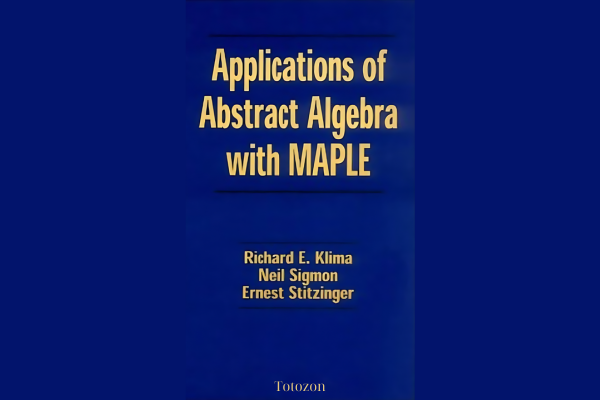 Applications of Abstract Algebra with Maple - Richard E.Kline, Neil Sigmon, Ernst Stitzinger
1 × $6.00
Applications of Abstract Algebra with Maple - Richard E.Kline, Neil Sigmon, Ernst Stitzinger
1 × $6.00 -
×
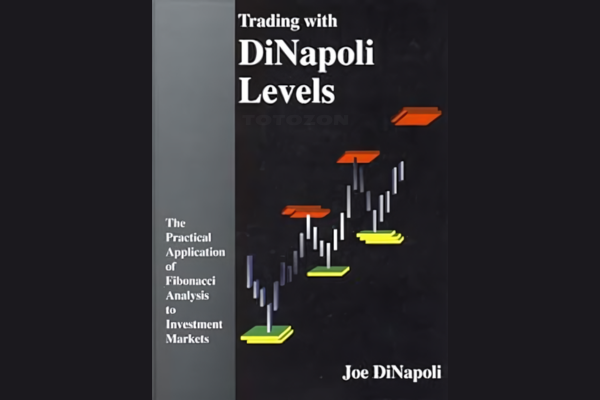 The Practical Application of Fibonacci Analysis to Investment Markets
1 × $6.00
The Practical Application of Fibonacci Analysis to Investment Markets
1 × $6.00 -
×
 How to Buy Stocks Before They Skyrocket
1 × $6.00
How to Buy Stocks Before They Skyrocket
1 × $6.00 -
×
 The Orderflows Trade Opportunities Encyclopedia with Michael Valtos
1 × $8.00
The Orderflows Trade Opportunities Encyclopedia with Michael Valtos
1 × $8.00
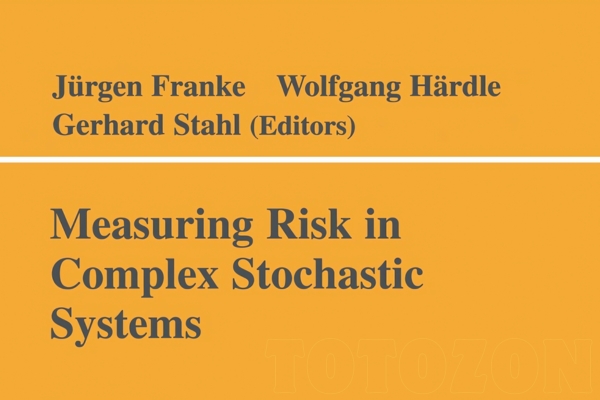
Measuring Risk in Complex Stochastic Systems with J.Franke, W. Hardle, G. Stahl
$6.00
File Size: Coming soon!
Delivery Time: 1–12 hours
Media Type: Online Course
Content Proof: Watch Here!
You may check content proof of “Measuring Risk in Complex Stochastic Systems with J.Franke, W. Hardle, G. Stahl” below:

Measuring Risk in Complex Stochastic Systems with J.Franke, W. Hardle, G. Stahl
Navigating the intricate world of stochastic systems is a daunting task that requires not only theoretical knowledge but also practical insight. The work of J.Franke, W. Hardle, and G. Stahl has been instrumental in developing methodologies to measure and manage risk in these systems. This article explores their contributions and methods in detail, providing you with a clear understanding of how risk is quantified in complex stochastic environments.
Introduction to Stochastic Systems
Understanding Stochasticity
Stochastic systems are characterized by their inherent randomness and unpredictability, making risk measurement a complex task.
The Significance of Risk Measurement
Accurately measuring risk is essential for decision-making in finance, engineering, and other fields where outcomes are uncertain.
Key Concepts Introduced by Franke, Hardle, and Stahl
Probabilistic Models
They advocate using probabilistic models to understand and predict the behavior of stochastic systems.
Risk Metrics
Introduction to various risk metrics that are crucial for assessing the potential threats in stochastic models.
Methodologies for Risk Assessment
Statistical Tools and Techniques
Exploring the statistical tools that Franke, Hardle, and Stahl frequently use to dissect complex data.
Quantitative Analysis
How quantitative analysis is applied to model and predict risk factors effectively.
Case Studies and Applications
Finance and Investment
Detailed analysis of how these methodologies apply to financial markets and investment risk management.
Environmental Science
Utilizing stochastic models to predict environmental risks and their impacts.
Advancements in Technology and Software
Computational Tools
Review of the latest software and tools that enhance the accuracy of risk measurement in stochastic systems.
Machine Learning Techniques
How machine learning is being integrated into stochastic risk assessment.
Challenges in Measuring Risk
Dealing with Uncertainty
The inherent challenges of predicting uncertain outcomes in stochastic systems.
Modeling Limitations
Discussion on the limitations of current models and what the future holds for improvements.
Educational Resources and Further Reading
Books and Publications by Franke, Hardle, and Stahl
Guidance on where to find more of their groundbreaking work.
Workshops and Seminars
Information on upcoming seminars and workshops where these experts share their insights.
Practical Tips for Practitioners
Best Practices
Advice on best practices in applying stochastic models in various industries.
Continual Learning
The importance of keeping updated with the latest research and methodologies in risk measurement.
Conclusion
The methodologies developed by J.Franke, W. Hardle, and G. Stahl have significantly advanced our ability to measure risk in stochastic systems. Their work not only provides the theoretical framework but also practical tools that can be applied across multiple disciplines. As we continue to confront uncertainties in various aspects of life and industry, their contributions will undoubtedly play a crucial role in shaping our approach to risk management.
FAQs
What is a stochastic system?
A stochastic system is one that involves a process influenced by random variables.
Why is measuring risk important in stochastic systems?
Measuring risk helps in making informed decisions and preparing for potential adverse outcomes.
Can these methodologies be applied to any industry?
Yes, these methodologies are versatile and can be adapted to various fields including finance, healthcare, and environmental science.
How can one start learning about stochastic risk measurement?
Beginning with basic probability and statistics courses is recommended, followed by specialized studies in stochastic processes.
Where can I access tools for stochastic risk analysis?
Many statistical software packages and online platforms offer tools specifically designed for stochastic risk analysis.
Be the first to review “Measuring Risk in Complex Stochastic Systems with J.Franke, W. Hardle, G. Stahl”
You must be logged in to post a review.
Related products
Original price was: $299.00.$8.00Current price is: $8.00.

Forex Trading
Original price was: $125.00.$17.00Current price is: $17.00.

Original price was: $4,995.00.$15.00Current price is: $15.00.

Original price was: $799.00.$15.00Current price is: $15.00.

Forex Trading
Original price was: $4,997.00.$27.00Current price is: $27.00.

Forex Trading
Original price was: $249.00.$15.00Current price is: $15.00.

Forex Trading
Original price was: $500.00.$5.00Current price is: $5.00.

Original price was: $695.00.$41.00Current price is: $41.00.

Original price was: $997.00.$13.00Current price is: $13.00.

Forex Trading
Original price was: $499.00.$15.00Current price is: $15.00.

Forex Trading
Original price was: $239.00.$8.00Current price is: $8.00.

Forex Trading
Original price was: $850.00.$23.00Current price is: $23.00.

Forex Trading
Original price was: $797.00.$10.00Current price is: $10.00.

Forex Trading
Original price was: $397.00.$31.00Current price is: $31.00.

Original price was: $197.00.$5.00Current price is: $5.00.

Forex Trading
Original price was: $1,098.00.$39.00Current price is: $39.00.

Forex Trading
Original price was: $2,997.00.$23.00Current price is: $23.00.

Original price was: $1,800.00.$54.00Current price is: $54.00.

Original price was: $139.00.$23.00Current price is: $23.00.

Forex Trading
Original price was: $799.00.$15.00Current price is: $15.00.
Reviews
There are no reviews yet.