
-
×
 The Complete Guide to Multiple Time Frame Analysis & Reading Price Action with Aiman Almansoori
1 × $13.00
The Complete Guide to Multiple Time Frame Analysis & Reading Price Action with Aiman Almansoori
1 × $13.00 -
×
 The Prop Trading Code with Brannigan Barrett - Axia Futures
1 × $23.00
The Prop Trading Code with Brannigan Barrett - Axia Futures
1 × $23.00 -
×
 $20 – 52k 20 pips a day challange with Rafał Zuchowicz - TopMasterTrader
1 × $5.00
$20 – 52k 20 pips a day challange with Rafał Zuchowicz - TopMasterTrader
1 × $5.00 -
×
 WondaFX Signature Strategy with WondaFX
1 × $5.00
WondaFX Signature Strategy with WondaFX
1 × $5.00 -
×
 How To Read The Market Professionally with TradeSmart
1 × $27.00
How To Read The Market Professionally with TradeSmart
1 × $27.00 -
×
 AI For Traders with Trading Markets
1 × $31.00
AI For Traders with Trading Markets
1 × $31.00 -
×
 Compass Trading System with Right Line Trading
1 × $39.00
Compass Trading System with Right Line Trading
1 × $39.00 -
×
 White Phoenix’s The Smart (Money) Approach to Trading with Jayson Casper
1 × $39.00
White Phoenix’s The Smart (Money) Approach to Trading with Jayson Casper
1 × $39.00 -
×
 The Indices Orderflow Masterclass with The Forex Scalpers
1 × $23.00
The Indices Orderflow Masterclass with The Forex Scalpers
1 × $23.00 -
×
 The Orderflows Trade Opportunities Encyclopedia with Michael Valtos
1 × $8.00
The Orderflows Trade Opportunities Encyclopedia with Michael Valtos
1 × $8.00 -
×
 ICT Prodigy Trading Course – $650K in Payouts with Alex Solignani
1 × $15.00
ICT Prodigy Trading Course – $650K in Payouts with Alex Solignani
1 × $15.00 -
×
 Ultimate Trading Course with Dodgy's Dungeon
1 × $8.00
Ultimate Trading Course with Dodgy's Dungeon
1 × $8.00 -
×
 The Trading Blueprint with Brad Goh - The Trading Geek
1 × $5.00
The Trading Blueprint with Brad Goh - The Trading Geek
1 × $5.00 -
×
 The Naked Eye: Raw Data Analytics with Edgar Torres - Raw Data Analytics
1 × $8.00
The Naked Eye: Raw Data Analytics with Edgar Torres - Raw Data Analytics
1 × $8.00 -
×
 Advanced Spread Trading with Guy Bower - MasterClass Trader
1 × $15.00
Advanced Spread Trading with Guy Bower - MasterClass Trader
1 × $15.00 -
×
 Scalp Strategy and Flipping Small Accounts with Opes Trading Group
1 × $5.00
Scalp Strategy and Flipping Small Accounts with Opes Trading Group
1 × $5.00 -
×
 Best of the Best: Collars with Amy Meissner & Scott Ruble
1 × $15.00
Best of the Best: Collars with Amy Meissner & Scott Ruble
1 × $15.00 -
×
 The Best Option Trading Course with David Jaffee - Best Stock Strategy
1 × $15.00
The Best Option Trading Course with David Jaffee - Best Stock Strategy
1 × $15.00 -
×
 Butterfly and Condor Workshop with Aeromir
1 × $15.00
Butterfly and Condor Workshop with Aeromir
1 × $15.00 -
×
 Home Run Options Trading Course with Dave Aquino - Base Camp Trading
1 × $11.00
Home Run Options Trading Course with Dave Aquino - Base Camp Trading
1 × $11.00 -
×
 The Orderflow Masterclass with PrimeTrading
1 × $17.00
The Orderflow Masterclass with PrimeTrading
1 × $17.00 -
×
 Options Trading & Ultimate MasterClass With Tyrone Abela - FX Evolution
1 × $54.00
Options Trading & Ultimate MasterClass With Tyrone Abela - FX Evolution
1 × $54.00 -
×
 Matrix Spread Options Trading Course with Base Camp Trading
1 × $31.00
Matrix Spread Options Trading Course with Base Camp Trading
1 × $31.00 -
×
 The A14 Weekly Option Strategy Workshop with Amy Meissner
1 × $23.00
The A14 Weekly Option Strategy Workshop with Amy Meissner
1 × $23.00 -
×
 Algo Trading Masterclass with Ali Casey - StatOasis
1 × $23.00
Algo Trading Masterclass with Ali Casey - StatOasis
1 × $23.00 -
×
 High Probability Trading Using Elliott Wave And Fibonacci Analysis withVic Patel - Forex Training Group
1 × $10.00
High Probability Trading Using Elliott Wave And Fibonacci Analysis withVic Patel - Forex Training Group
1 × $10.00 -
×
 Order flow self-study training program with iMFtracker
1 × $10.00
Order flow self-study training program with iMFtracker
1 × $10.00 -
×
 Bond Market Course with The Macro Compass
1 × $15.00
Bond Market Course with The Macro Compass
1 × $15.00 -
×
 Deep Dive Butterfly Trading Strategy Class with SJG Trades
1 × $41.00
Deep Dive Butterfly Trading Strategy Class with SJG Trades
1 × $41.00 -
×
 W. D Gann 's Square Of 9 Applied To Modern Markets with Sean Avidar - Hexatrade350
1 × $23.00
W. D Gann 's Square Of 9 Applied To Modern Markets with Sean Avidar - Hexatrade350
1 × $23.00 -
×
 Forecast 2024 Clarification with Larry Williams
1 × $15.00
Forecast 2024 Clarification with Larry Williams
1 × $15.00
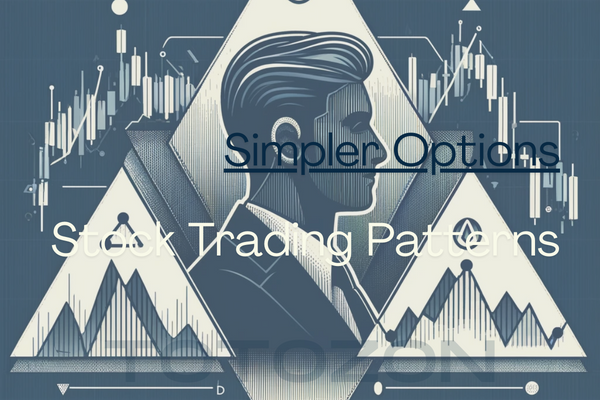
Simpler Options – Stock Trading Patterns
$6.00
File Size: Cooming soon!
Delivery Time: 1–12 hours
Media Type: Online Course
Content Proof: Watch Here!
You may check content proof of “Simpler Options – Stock Trading Patterns” below:

Simpler Options – Stock Trading Patterns
Introduction
When diving into the world of stock trading, understanding the language of charts is crucial. In this guide, we’ll explore various stock trading patterns that are essential for traders at all levels. These patterns not only signal potential market movements but also help in making informed trading decisions.
Understanding Stock Trading Patterns
Stock trading patterns are visual representations of stock prices over time. They are used by traders to predict future market behavior based on historical data.
What is a Stock Trading Pattern?
It’s a formation appearing on stock charts that provides insight into the possible future movements of a stock price.
Common Types of Trading Patterns
Let’s break down some of the most reliable patterns used in stock trading.
1. Head and Shoulders
This is a reversal pattern that predicts a change in price direction. It is one of the most reliable patterns in trading.
How to Spot It
- Left Shoulder: A price peak followed by a decline.
- Head: A higher peak followed by a decline.
- Right Shoulder: A lower peak followed by a decline.
2. Double Top and Double Bottom
These are powerful reversal patterns seen at the peaks and troughs of trend cycles.
Double Top
- Indicates a potential bearish reversal after a strong uptrend.
- Recognized by two consecutive peaks of similar height.
Double Bottom
- Suggests a bullish reversal following a downtrend.
- Identified by two consecutive troughs.
The Importance of Trend Lines
Trend lines are straight lines drawn over price highs or below price lows to show the prevailing direction of price.
How to Use Trend Lines
- Support Trend Lines: Drawn below price lows.
- Resistance Trend Lines: Drawn above price highs.
Trading Triangles
Triangles are continuation patterns that can signal either a bullish or bearish continuation, depending on the market context.
Types of Triangles
- Ascending Triangle: Bullish pattern formed by a flat resistance line and rising support line.
- Descending Triangle: Bearish pattern with a flat support line and a descending resistance line.
- Symmetrical Triangle: Formed by lower highs and higher lows converging to a point.
Candlestick Patterns
Candlesticks are used to describe and predict movements in stock prices.
Key Candlestick Patterns
- Bullish Engulfing: A small black candle followed by a large white candle.
- Bearish Engulfing: A small white candle followed by a large black candle.
Strategies for Trading Patterns
Using stock trading patterns effectively requires strategic planning and continuous monitoring.
Steps to Trade Successfully
- Identify the Pattern: Recognize the pattern formation early.
- Confirm with Indicators: Use other indicators for confirmation.
- Plan Your Entry and Exit: Decide when to enter and when to exit the trade.
Risks and Considerations
While trading patterns offer great insights, they are not foolproof. Misinterpretation and external market factors can affect their reliability.
How to Mitigate Risks
- Diversify Your Portfolio: Don’t rely solely on pattern recognition.
- Stay Informed: Keep up with market news and events.
Conclusion
Stock trading patterns are invaluable tools for traders, offering insights into market trends and potential price movements. By mastering these patterns, you can enhance your trading strategy and increase your potential for success.
FAQs
- What is the most reliable stock trading pattern?
- The Head and Shoulders pattern is widely regarded as one of the most reliable indicators of a trend reversal.
- Can trading patterns predict stock prices accurately?
- While not foolproof, trading patterns can provide insights into potential price movements.
- How important are candlestick patterns in day trading?
- Candlestick patterns are crucial as they provide quick and clear insights into market sentiment.
- Do professional traders use technical analysis patterns?
- Yes, many professional traders use technical analysis and patterns as part of their trading strategies.
- What is the best way to learn stock trading patterns?
- Studying historical data, using trading simulations, and following expert analyses are effective ways to learn.
Be the first to review “Simpler Options – Stock Trading Patterns”
You must be logged in to post a review.
Related products

Original price was: $997.00.$13.00Current price is: $13.00.

Forex Trading
Original price was: $2,997.00.$23.00Current price is: $23.00.
Forex Trading
The Complete Guide to Multiple Time Frame Analysis & Reading Price Action with Aiman Almansoori
Original price was: $1,399.00.$13.00Current price is: $13.00.
Original price was: $999.00.$5.00Current price is: $5.00.
Original price was: $997.00.$8.00Current price is: $8.00.
Original price was: $299.00.$8.00Current price is: $8.00.

Forex Trading
Quantamentals – The Next Great Forefront Of Trading and Investing with Trading Markets
Original price was: $1,495.00.$8.00Current price is: $8.00.
Original price was: $139.00.$23.00Current price is: $23.00.

Forex Trading
Original price was: $397.00.$31.00Current price is: $31.00.
Forex Trading
Original price was: $249.00.$15.00Current price is: $15.00.
Original price was: $1,200.00.$23.00Current price is: $23.00.

Original price was: $4,995.00.$15.00Current price is: $15.00.
Forex Trading
Original price was: $799.00.$15.00Current price is: $15.00.

Forex Trading
Original price was: $999.00.$15.00Current price is: $15.00.
Original price was: $450.00.$23.00Current price is: $23.00.
Original price was: $497.00.$31.00Current price is: $31.00.
Original price was: $1,849.00.$15.00Current price is: $15.00.
Original price was: $799.00.$15.00Current price is: $15.00.
Original price was: $310.00.$23.00Current price is: $23.00.
Original price was: $700.00.$39.00Current price is: $39.00.
Reviews
There are no reviews yet.