
-
×
 Advanced Trading Course with Edney Pinheiro
1 × $5.00
Advanced Trading Course with Edney Pinheiro
1 × $5.00 -
×
 WondaFX Signature Strategy with WondaFX
1 × $5.00
WondaFX Signature Strategy with WondaFX
1 × $5.00 -
×
 Pristine - Dan Gibby – Market Preparation Trading Gaps & Trading the Open
1 × $6.00
Pristine - Dan Gibby – Market Preparation Trading Gaps & Trading the Open
1 × $6.00 -
×
 $20 – 52k 20 pips a day challange with Rafał Zuchowicz - TopMasterTrader
1 × $5.00
$20 – 52k 20 pips a day challange with Rafał Zuchowicz - TopMasterTrader
1 × $5.00 -
×
 The Complete Guide to Multiple Time Frame Analysis & Reading Price Action with Aiman Almansoori
1 × $13.00
The Complete Guide to Multiple Time Frame Analysis & Reading Price Action with Aiman Almansoori
1 × $13.00 -
×
 Diary of an Internet Trader with Alpesh Patel
1 × $6.00
Diary of an Internet Trader with Alpesh Patel
1 × $6.00 -
×
 Advanced Nasdaq Trading Techniques with Alan Rich
1 × $6.00
Advanced Nasdaq Trading Techniques with Alan Rich
1 × $6.00 -
×
 Stock Cycles with Michael Alexander
1 × $6.00
Stock Cycles with Michael Alexander
1 × $6.00 -
×
 Jason Bond Dvds for Traders (all 4 programs)
1 × $6.00
Jason Bond Dvds for Traders (all 4 programs)
1 × $6.00 -
×
 RROP Course 2023
1 × $5.00
RROP Course 2023
1 × $5.00 -
×
 Street-Smart Chart Reading – Volume 1 – The Rudiments with Donald G.Worden
1 × $6.00
Street-Smart Chart Reading – Volume 1 – The Rudiments with Donald G.Worden
1 × $6.00 -
×
 Knowing Where the Energy is Coming From with Charles Drummond
1 × $6.00
Knowing Where the Energy is Coming From with Charles Drummond
1 × $6.00 -
×
 LARGE CAP MOMENTUM STRATEGY with Nick Radge
1 × $179.00
LARGE CAP MOMENTUM STRATEGY with Nick Radge
1 × $179.00 -
×
 Cash In On Chaos with Hans Hannula
1 × $6.00
Cash In On Chaos with Hans Hannula
1 × $6.00 -
×
 FMG Online Course with FMG Traders
1 × $6.00
FMG Online Course with FMG Traders
1 × $6.00 -
×
 The Random Character of Interest Rates with Joseph Murphy
1 × $6.00
The Random Character of Interest Rates with Joseph Murphy
1 × $6.00 -
×
 Bird Watching in Lion Country. Retail Forex Explained with Dirk Du Toit
1 × $4.00
Bird Watching in Lion Country. Retail Forex Explained with Dirk Du Toit
1 × $4.00 -
×
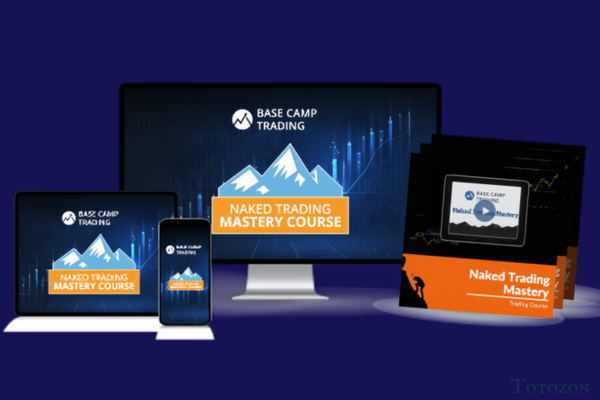 Naked Trading Mastery
1 × $39.00
Naked Trading Mastery
1 × $39.00 -
×
 TenfoldFX Academy Course with Kenneth John
1 × $17.00
TenfoldFX Academy Course with Kenneth John
1 × $17.00 -
×
 Forecast 2024 Clarification with Larry Williams
1 × $15.00
Forecast 2024 Clarification with Larry Williams
1 × $15.00 -
×
 The Indices Orderflow Masterclass with The Forex Scalpers
1 × $23.00
The Indices Orderflow Masterclass with The Forex Scalpers
1 × $23.00 -
×
 Investment Psychology. Explained Classic Strategies to Beat the Markets with Martin Pring
1 × $6.00
Investment Psychology. Explained Classic Strategies to Beat the Markets with Martin Pring
1 × $6.00 -
×
 Stock Trading Simplified - 3 DVD + PDF Workbook with John Person
1 × $6.00
Stock Trading Simplified - 3 DVD + PDF Workbook with John Person
1 × $6.00 -
×
 Simpler Options - Ultimate Guide to Debit Spreads – Nov 2014
1 × $6.00
Simpler Options - Ultimate Guide to Debit Spreads – Nov 2014
1 × $6.00 -
×
 Forex Trading Course with Mike Norman
1 × $17.00
Forex Trading Course with Mike Norman
1 × $17.00 -
×
 Options University - FX Technical Analysis
1 × $6.00
Options University - FX Technical Analysis
1 × $6.00 -
×
 The Naked Eye: Raw Data Analytics with Edgar Torres - Raw Data Analytics
1 × $8.00
The Naked Eye: Raw Data Analytics with Edgar Torres - Raw Data Analytics
1 × $8.00 -
×
 Options Trading & Ultimate MasterClass With Tyrone Abela - FX Evolution
1 × $54.00
Options Trading & Ultimate MasterClass With Tyrone Abela - FX Evolution
1 × $54.00 -
×
 Connors on Advanced Trading Strategies with Larry Connors
1 × $6.00
Connors on Advanced Trading Strategies with Larry Connors
1 × $6.00 -
×
 Activedaytrader - Elite Earnings Pusuit
1 × $54.00
Activedaytrader - Elite Earnings Pusuit
1 × $54.00 -
×
 E-mini Weekly Options Income with Peter Titus
1 × $15.00
E-mini Weekly Options Income with Peter Titus
1 × $15.00 -
×
 Capital Flows and Crises with Barry Eichengreen
1 × $6.00
Capital Flows and Crises with Barry Eichengreen
1 × $6.00 -
×
 Trading Decoded with Axia Futures
1 × $31.00
Trading Decoded with Axia Futures
1 × $31.00 -
×
 Investment Fables with Aswath Damodaran
1 × $6.00
Investment Fables with Aswath Damodaran
1 × $6.00 -
×
 Market Masters. How Traders Think Trade And Invest with Jake Bernstein
1 × $6.00
Market Masters. How Traders Think Trade And Invest with Jake Bernstein
1 × $6.00 -
×
 The Prop Trading Code with Brannigan Barrett - Axia Futures
1 × $23.00
The Prop Trading Code with Brannigan Barrett - Axia Futures
1 × $23.00
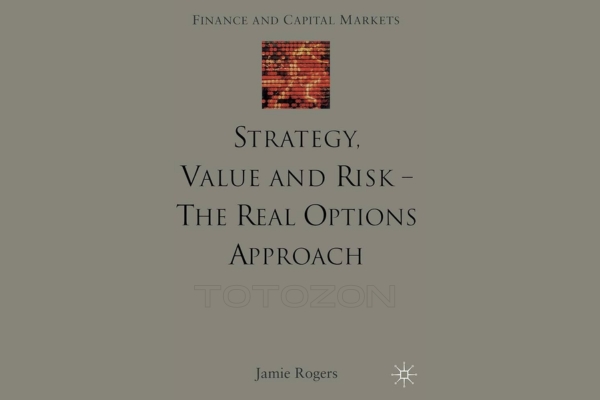
Strategy, Value and Risk – The Real Options Approach with Jamie Rogers
$6.00
File Size: Coming soon!
Delivery Time: 1–12 hours
Media Type: Online Course
Content Proof: Watch Here!
You may check content proof of “Strategy, Value and Risk – The Real Options Approach with Jamie Rogers” below:

Strategy, Value and Risk – The Real Options Approach with Jamie Rogers
Introduction
In the dynamic world of business and finance, understanding how to manage strategy, value, and risk is crucial. Jamie Rogers’ Real Options Approach provides a framework for making informed decisions in uncertain environments. This article will explore the fundamentals of this approach, its applications, and how it can benefit your business strategy.
What is the Real Options Approach?
Defining Real Options
Real options are financial concepts applied to real-world investment opportunities. They give businesses the flexibility to adapt and make decisions as new information becomes available.
Why Use the Real Options Approach?
The Real Options Approach helps in valuing flexibility and strategic decision-making under uncertainty. It’s particularly useful in industries where future conditions are highly unpredictable.
Fundamentals of the Real Options Approach
1. Understanding Option Value
Option value represents the potential benefits of future opportunities. This concept is central to the Real Options Approach, providing a quantifiable measure of flexibility.
2. Types of Real Options
There are several types of real options, including:
- Expansion Options: Opportunities to scale up operations.
- Abandonment Options: The option to cease operations if they become unprofitable.
- Switching Options: Flexibility to switch between different inputs or outputs.
3. Strategic Decision Making
The Real Options Approach integrates strategic decision-making with financial analysis, ensuring that decisions are both economically sound and strategically aligned.
Application of the Real Options Approach
Case Studies in Various Industries
1. Technology Sector
In the tech industry, where innovation and rapid change are constants, the Real Options Approach helps companies decide when to invest in new technologies or enter new markets.
2. Energy Sector
Energy companies use real options to manage investments in new projects, considering factors like fluctuating oil prices and regulatory changes.
3. Pharmaceuticals
Pharmaceutical firms apply real options to manage research and development projects, deciding when to continue, expand, or abandon projects based on new data.
Implementing the Real Options Approach
Step-by-Step Guide
1. Identify Opportunities
Start by identifying potential investment opportunities that may benefit from flexibility.
2. Evaluate Risks and Uncertainties
Assess the risks and uncertainties associated with each opportunity. This includes market conditions, regulatory environments, and technological advancements.
3. Calculate Option Value
Use financial models to calculate the value of each option, considering both potential benefits and costs.
4. Make Informed Decisions
Based on the calculated option values, make decisions that align with your strategic goals and risk tolerance.
Advantages of the Real Options Approach
Flexibility in Decision Making
The approach provides the flexibility to adapt to changing conditions, reducing the risk of committing to a single course of action.
Improved Risk Management
By considering a range of possible outcomes, businesses can better manage risks and avoid costly mistakes.
Enhanced Strategic Planning
Integrating real options into strategic planning ensures that financial and strategic considerations are aligned.
Challenges and Limitations
Complexity in Valuation
Valuing real options can be complex and requires sophisticated financial models and expertise.
Data Requirements
Accurate data is essential for assessing risks and calculating option values. This can be a significant challenge in uncertain environments.
Implementation Costs
Implementing the Real Options Approach can be costly, particularly for small businesses with limited resources.
Future Directions
Integration with Advanced Analytics
The integration of real options with advanced analytics and machine learning can enhance decision-making capabilities, providing deeper insights into complex scenarios.
Broader Applications
As the approach evolves, its applications may expand beyond traditional industries, benefiting a wider range of sectors.
Conclusion
The Real Options Approach, as articulated by Jamie Rogers, offers a powerful framework for managing strategy, value, and risk. By incorporating flexibility into decision-making processes, businesses can navigate uncertainty more effectively and capitalize on future opportunities.
FAQs
1. What is the main benefit of the Real Options Approach?
The main benefit is the flexibility it provides in decision-making, allowing businesses to adapt to changing conditions and manage risks more effectively.
2. How does the Real Options Approach differ from traditional financial analysis?
Unlike traditional financial analysis, which often assumes a static environment, the Real Options Approach accounts for uncertainty and the value of flexibility in strategic decisions.
3. Can small businesses use the Real Options Approach?
Yes, although the approach can be complex and costly, small businesses can benefit from its principles by applying simplified models and focusing on key strategic decisions.
4. What industries benefit most from the Real Options Approach?
Industries characterized by high uncertainty and rapid change, such as technology, energy, and pharmaceuticals, benefit significantly from this approach.
5. How can the Real Options Approach be integrated with advanced analytics?
Integration with advanced analytics involves using machine learning and data analysis tools to enhance the valuation of real options and improve decision-making processes.
Be the first to review “Strategy, Value and Risk – The Real Options Approach with Jamie Rogers”
You must be logged in to post a review.
Related products

Forex Trading
Original price was: $1,098.00.$39.00Current price is: $39.00.

Forex Trading
Original price was: $499.00.$15.00Current price is: $15.00.

Forex Trading
Original price was: $1,898.00.$10.00Current price is: $10.00.

Original price was: $695.00.$41.00Current price is: $41.00.

Original price was: $310.00.$23.00Current price is: $23.00.

Original price was: $895.00.$15.00Current price is: $15.00.
Forex Trading
The Complete Guide to Multiple Time Frame Analysis & Reading Price Action with Aiman Almansoori
Original price was: $1,399.00.$13.00Current price is: $13.00.
Original price was: $450.00.$23.00Current price is: $23.00.

Original price was: $1,849.00.$15.00Current price is: $15.00.

Original price was: $299.00.$8.00Current price is: $8.00.

Original price was: $497.00.$11.00Current price is: $11.00.

Forex Trading
Original price was: $797.00.$10.00Current price is: $10.00.

Forex Trading
Original price was: $125.00.$17.00Current price is: $17.00.
Original price was: $997.00.$8.00Current price is: $8.00.

Original price was: $497.00.$31.00Current price is: $31.00.

Original price was: $139.00.$23.00Current price is: $23.00.

Original price was: $649.00.$20.00Current price is: $20.00.

Forex Trading
Original price was: $799.00.$15.00Current price is: $15.00.

Forex Trading
Original price was: $999.00.$15.00Current price is: $15.00.
Original price was: $1,800.00.$54.00Current price is: $54.00.

Reviews
There are no reviews yet.