
-
×
 Candlestick Charting Explained with Greg Morris
1 × $8.00
Candlestick Charting Explained with Greg Morris
1 × $8.00 -
×
 White Phoenix’s The Smart (Money) Approach to Trading with Jayson Casper
1 × $39.00
White Phoenix’s The Smart (Money) Approach to Trading with Jayson Casper
1 × $39.00 -
×
 Compass Trading System with Right Line Trading
1 × $39.00
Compass Trading System with Right Line Trading
1 × $39.00 -
×
 Follow the Leader Trading System with Anthony Gibson
1 × $6.00
Follow the Leader Trading System with Anthony Gibson
1 × $6.00 -
×
 Traders: Risks, Decisions, and Management in Financial Markets - Mark Fenton-O’Creevy, Nigel Nicholson, Emma Soane & Paul Willman
1 × $6.00
Traders: Risks, Decisions, and Management in Financial Markets - Mark Fenton-O’Creevy, Nigel Nicholson, Emma Soane & Paul Willman
1 × $6.00 -
×
 Handbook of Integral Equations with Andrei D.Polyanin, Alexander V.Manzhirov
1 × $6.00
Handbook of Integral Equations with Andrei D.Polyanin, Alexander V.Manzhirov
1 × $6.00 -
×
 The Orderflows Trade Opportunities Encyclopedia with Michael Valtos
1 × $8.00
The Orderflows Trade Opportunities Encyclopedia with Michael Valtos
1 × $8.00 -
×
 The Apple Way with Jeffrey Cruikshank
1 × $6.00
The Apple Way with Jeffrey Cruikshank
1 × $6.00 -
×
 The Naked Eye: Raw Data Analytics with Edgar Torres - Raw Data Analytics
1 × $8.00
The Naked Eye: Raw Data Analytics with Edgar Torres - Raw Data Analytics
1 × $8.00 -
×
 Master Moving Averages - Profit Multiplying Techniques with Nick Santiago - InTheMoneyStocks
1 × $54.00
Master Moving Averages - Profit Multiplying Techniques with Nick Santiago - InTheMoneyStocks
1 × $54.00 -
×
 Best of the Best: Collars with Amy Meissner & Scott Ruble
1 × $15.00
Best of the Best: Collars with Amy Meissner & Scott Ruble
1 × $15.00 -
×
 Developing the Psychological Trader’s Edge with Robin Dayne
1 × $6.00
Developing the Psychological Trader’s Edge with Robin Dayne
1 × $6.00 -
×
 Commitments of Traders : Strategies for Tracking the Market and Trading Profitably with Floyd Upperman
1 × $6.00
Commitments of Traders : Strategies for Tracking the Market and Trading Profitably with Floyd Upperman
1 × $6.00 -
×
 RSI Unleashed: Building a Comprehensive Trading Framework By Doc Severson
1 × $6.00
RSI Unleashed: Building a Comprehensive Trading Framework By Doc Severson
1 × $6.00 -
×
 Advanced Spread Trading with Guy Bower - MasterClass Trader
1 × $15.00
Advanced Spread Trading with Guy Bower - MasterClass Trader
1 × $15.00 -
×
 8 Strategies for Day Trading
1 × $31.00
8 Strategies for Day Trading
1 × $31.00 -
×
 Basic Options Course Cash Flow. Diversification. Flexibility with Michael Drew
1 × $6.00
Basic Options Course Cash Flow. Diversification. Flexibility with Michael Drew
1 × $6.00 -
×
 ICT Prodigy Trading Course – $650K in Payouts with Alex Solignani
1 × $15.00
ICT Prodigy Trading Course – $650K in Payouts with Alex Solignani
1 × $15.00 -
×
 Altucher’s Top 1% Advisory Newsletter 2016 with James Altucher
1 × $6.00
Altucher’s Top 1% Advisory Newsletter 2016 with James Altucher
1 × $6.00 -
×
 Active Investment Management: Finding and Harnessing Investment Skill with Charles Jackson
1 × $6.00
Active Investment Management: Finding and Harnessing Investment Skill with Charles Jackson
1 × $6.00 -
×
 Elite Mentorship Home Study - 3T Live with Sami Abusaad
1 × $5.00
Elite Mentorship Home Study - 3T Live with Sami Abusaad
1 × $5.00 -
×
 FasTrack Premium with Note Conference
1 × $78.00
FasTrack Premium with Note Conference
1 × $78.00 -
×
 Storehouse Tutorial Group Videos
1 × $23.00
Storehouse Tutorial Group Videos
1 × $23.00 -
×
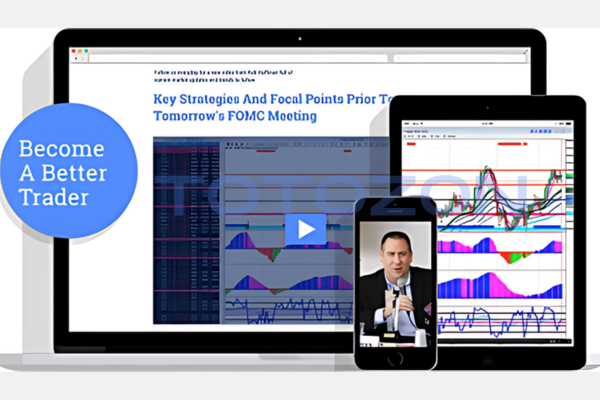 Rob’s Swing Trading Methods with Rob Hoffman
1 × $39.00
Rob’s Swing Trading Methods with Rob Hoffman
1 × $39.00 -
×
 3 Day Master Advanced Workshop Seminar (Video & Manuals 8.48 GB)
1 × $6.00
3 Day Master Advanced Workshop Seminar (Video & Manuals 8.48 GB)
1 × $6.00 -
×
 3 Volatility Strategies with Quantified Strategies
1 × $23.00
3 Volatility Strategies with Quantified Strategies
1 × $23.00 -
×
 5 Essential Building Blocks to Successful Trading Workshop with Steve "Slim" Miller
1 × $6.00
5 Essential Building Blocks to Successful Trading Workshop with Steve "Slim" Miller
1 × $6.00 -
×
 How To Become StressFree Trader with Jason Starzec
1 × $4.00
How To Become StressFree Trader with Jason Starzec
1 × $4.00 -
×
 Ezaih Academy 2024 Mentorship with Ezaih
1 × $54.00
Ezaih Academy 2024 Mentorship with Ezaih
1 × $54.00 -
×
 A+ Setups Big Caps Options with Jtrader
1 × $6.00
A+ Setups Big Caps Options with Jtrader
1 × $6.00 -
×
 Advanced Strategies in Forex Trading with Don Schellenberg
1 × $6.00
Advanced Strategies in Forex Trading with Don Schellenberg
1 × $6.00 -
×
 Profits in the Stock Market with Harold Gartley
1 × $6.00
Profits in the Stock Market with Harold Gartley
1 × $6.00 -
×
 Advanced Cycles with Nick Santiago - InTheMoneyStocks
1 × $171.00
Advanced Cycles with Nick Santiago - InTheMoneyStocks
1 × $171.00 -
×
 Fibonacci – CCI Workshop Recording Series (2006 & 2008)
1 × $6.00
Fibonacci – CCI Workshop Recording Series (2006 & 2008)
1 × $6.00 -
×
 Simulating Continuous Fuzzy Systems with James Buckley & Leonard Jowers
1 × $6.00
Simulating Continuous Fuzzy Systems with James Buckley & Leonard Jowers
1 × $6.00 -
×
 How to Buy Stocks Before They Skyrocket
1 × $6.00
How to Buy Stocks Before They Skyrocket
1 × $6.00 -
×
 Big Boy Volume Spread Analysis + Advanced Price Action Mastery Course with Kai Sheng Chew
1 × $15.00
Big Boy Volume Spread Analysis + Advanced Price Action Mastery Course with Kai Sheng Chew
1 × $15.00 -
×
 The Indices Orderflow Masterclass with The Forex Scalpers
1 × $23.00
The Indices Orderflow Masterclass with The Forex Scalpers
1 × $23.00 -
×
 TRADING NFX Course with Andrew NFX
1 × $5.00
TRADING NFX Course with Andrew NFX
1 × $5.00 -
×
 The Box Strategy with Blue Capital Academy
1 × $23.00
The Box Strategy with Blue Capital Academy
1 × $23.00 -
×
 The A14 Weekly Option Strategy Workshop with Amy Meissner
1 × $23.00
The A14 Weekly Option Strategy Workshop with Amy Meissner
1 × $23.00

Quantamentals – The Next Great Forefront Of Trading and Investing with Trading Markets
Original price was: $1,495.00.$8.00Current price is: $8.00.
File Size: 10.4 GB
Delivery Time: 1–12 hours
Media Type: Online Course
Content Proof: Watch Here!
You may check content proof of “Quantamentals – The Next Great Forefront Of Trading and Investing with Trading Markets” below:
Quantamentals – The Next Great Forefront Of Trading and Investing with Trading Markets
Introduction
In the rapidly evolving world of trading and investing, new strategies and methodologies continually emerge, promising to revolutionize the field. One such approach that has gained significant traction is Quantamentals. This innovative blend of quantitative analysis and fundamental analysis is reshaping how traders and investors make decisions. In this article, we will explore Quantamentals, its key principles, benefits, and how it stands to change the landscape of trading and investing.
What is Quantamentals?
Definition and Origins
Quantamentals combines quantitative analysis (the use of mathematical and statistical models) with fundamental analysis (the evaluation of a company’s financial health and market position). This hybrid approach leverages the strengths of both methods to provide a more comprehensive view of the market.
Why Quantamentals Matters
By integrating quantitative and fundamental analysis, Quantamentals aims to enhance the accuracy of predictions and improve investment outcomes. This approach allows for more data-driven decisions, reducing the reliance on subjective judgment.
Key Components of Quantamentals
Quantitative Analysis
Mathematical Models
Quantitative analysis relies on mathematical models to analyze historical data and identify patterns. These models can predict future price movements and market trends.
Statistical Techniques
Statistical techniques such as regression analysis, time series analysis, and machine learning algorithms play a crucial role in quantitative analysis.
Fundamental Analysis
Financial Statements
Fundamental analysis involves evaluating a company’s financial statements, including balance sheets, income statements, and cash flow statements, to assess its financial health.
Market Position
Understanding a company’s market position, competitive advantages, and industry trends is essential in fundamental analysis.
How Quantamentals Works
Data Collection and Integration
Gathering Data
The first step in Quantamentals is gathering a vast amount of data from various sources, including financial statements, market data, and economic indicators.
Data Integration
Integrating quantitative and fundamental data creates a comprehensive dataset that can be analyzed to uncover insights and trends.
Model Development
Building Predictive Models
Develop predictive models using historical data to forecast future market movements. These models can be continually refined and improved based on new data.
Backtesting
Backtesting involves testing the models on historical data to evaluate their accuracy and reliability. This step is crucial for validating the models before applying them to real-world scenarios.
Implementation and Execution
Trading Strategies
Develop trading strategies based on the insights gained from the models. These strategies can be automated or executed manually, depending on the trader’s preference.
Continuous Monitoring
Regularly monitor the performance of the models and strategies, making adjustments as needed to ensure optimal performance.
Benefits of Quantamentals
Enhanced Decision-Making
Combining quantitative and fundamental analysis provides a more holistic view of the market, leading to better-informed decisions.
Improved Accuracy
Quantitative models can identify patterns and trends that might not be apparent through fundamental analysis alone, enhancing the accuracy of predictions.
Data-Driven Approach
Quantamentals relies on data rather than subjective judgment, reducing the risk of emotional or biased decisions.
Challenges and Considerations
Data Quality
Ensuring high-quality, reliable data is crucial for the accuracy of Quantamentals models. Poor data quality can lead to incorrect predictions and suboptimal investment decisions.
Model Complexity
Developing and maintaining complex quantitative models require specialized knowledge and skills. This complexity can be a barrier for some traders and investors.
Integration of Methods
Successfully integrating quantitative and fundamental analysis requires a deep understanding of both methodologies. Balancing these approaches can be challenging but is essential for the success of Quantamentals.
Quantamentals in Action
Case Study: Successful Implementation
Company Analysis
Analyze a company’s financial health using fundamental analysis, considering factors such as revenue, profit margins, and debt levels.
Model Application
Apply quantitative models to predict future stock price movements based on historical data and market trends.
Investment Decision
Combine insights from both analyses to make an informed investment decision, resulting in improved returns and reduced risk.
Tools and Resources
Software and Platforms
Leverage advanced trading software and platforms that support Quantamentals, such as Bloomberg Terminal, QuantConnect, and Python programming for model development.
Educational Resources
- Online courses and webinars on Quantamentals.
- Books and articles by experts in quantitative and fundamental analysis.
Future of Quantamentals
Technological Advancements
As technology continues to advance, the capabilities of Quantamentals will expand. Artificial intelligence and machine learning will play increasingly significant roles in enhancing model accuracy and predictive power.
Increased Adoption
More traders and investors are expected to adopt Quantamentals as they recognize its potential to improve investment outcomes. This trend will lead to further innovation and refinement of the approach.
Conclusion
Quantamentals represents the next great forefront of trading and investing, combining the best of quantitative and fundamental analysis to provide a powerful, data-driven approach. By leveraging the strengths of both methods, traders and investors can make more informed decisions, enhance accuracy, and ultimately achieve better results. Embrace Quantamentals today to stay ahead in the ever-evolving financial markets.
Frequently Asked Questions:
- Business Model Innovation:
Embrace our legitimate business model! We organize group buys, allowing participants to share costs for popular courses, making them accessible to those with limited financial resources. Our approach ensures affordability and accessibility, despite author concerns. - The Legal Environment:
The legality of our activity is uncertain. While we lack specific permission from course authors, there’s a technicality: authors didn’t impose resale limits upon course purchase. This presents both an opportunity for us and a benefit for individuals seeking low-cost access. - Quality Control:
Unveiling the Truth
Quality is paramount. Purchasing courses directly from sales pages ensures consistency with traditionally obtained materials. However, we’re not official course providers and don’t offer premium services:
- No scheduled coaching calls or sessions with the author.
- No access to the author’s private Facebook group or web portal.
- No entry to the author’s private membership forum.
- Direct email support from the author or their team is unavailable. Operating independently, we aim to bridge the pricing gap without additional services provided by official channels. Your understanding of our unique approach is valued.
Be the first to review “Quantamentals – The Next Great Forefront Of Trading and Investing with Trading Markets”
You must be logged in to post a review.
Related products

Forex Trading
Original price was: $799.00.$15.00Current price is: $15.00.
Forex Trading
Original price was: $1,098.00.$39.00Current price is: $39.00.
Original price was: $799.00.$15.00Current price is: $15.00.

Forex Trading
Original price was: $550.00.$5.00Current price is: $5.00.

Original price was: $997.00.$13.00Current price is: $13.00.
Original price was: $997.00.$8.00Current price is: $8.00.

Original price was: $649.00.$20.00Current price is: $20.00.

Forex Trading
Original price was: $125.00.$17.00Current price is: $17.00.

Forex Trading
Original price was: $2,997.00.$23.00Current price is: $23.00.
Original price was: $299.00.$8.00Current price is: $8.00.

Forex Trading
Original price was: $397.00.$31.00Current price is: $31.00.

Forex Trading
Original price was: $249.00.$15.00Current price is: $15.00.
Original price was: $700.00.$39.00Current price is: $39.00.

Forex Trading
Original price was: $999.00.$15.00Current price is: $15.00.

Forex Trading
Original price was: $697.00.$5.00Current price is: $5.00.

Original price was: $197.00.$5.00Current price is: $5.00.
Original price was: $450.00.$23.00Current price is: $23.00.

Forex Trading
Original price was: $2,995.00.$31.00Current price is: $31.00.

Forex Trading
The Complete Guide to Multiple Time Frame Analysis & Reading Price Action with Aiman Almansoori
Original price was: $1,399.00.$13.00Current price is: $13.00.

Original price was: $497.00.$31.00Current price is: $31.00.

Reviews
There are no reviews yet.