
-
×
 Profiting In Bull Or Bear Markets with George Dagnino
1 × $6.00
Profiting In Bull Or Bear Markets with George Dagnino
1 × $6.00 -
×
 Fibonacci for the Active Trader with Derrik Hobbs
1 × $6.00
Fibonacci for the Active Trader with Derrik Hobbs
1 × $6.00 -
×
 Essentials in Quantitative Trading QT01 By HangukQuant's
1 × $23.00
Essentials in Quantitative Trading QT01 By HangukQuant's
1 × $23.00 -
×
 Forex Trading MasterClass with Torero Traders School
1 × $5.00
Forex Trading MasterClass with Torero Traders School
1 × $5.00 -
×
 WickOrTreat Trading Course with WickOrTreat
1 × $6.00
WickOrTreat Trading Course with WickOrTreat
1 × $6.00 -
×
 3 Volatility Strategies with Quantified Strategies
1 × $23.00
3 Volatility Strategies with Quantified Strategies
1 × $23.00 -
×
 Mastermind Bootcamp + Core Concepts Mastery with DreamsFX
1 × $6.00
Mastermind Bootcamp + Core Concepts Mastery with DreamsFX
1 × $6.00 -
×
 Butterfly and Condor Workshop with Aeromir
1 × $15.00
Butterfly and Condor Workshop with Aeromir
1 × $15.00 -
×
 The Adventures of the Cycle Hunter. The Analyst with Craig Bttlc
1 × $6.00
The Adventures of the Cycle Hunter. The Analyst with Craig Bttlc
1 × $6.00 -
×
 The PPS Trading System with Curtis Arnold
1 × $6.00
The PPS Trading System with Curtis Arnold
1 × $6.00 -
×
 Confidence to Hypnotize
1 × $6.00
Confidence to Hypnotize
1 × $6.00 -
×
 Behavioral Trading with Woody Dorsey
1 × $6.00
Behavioral Trading with Woody Dorsey
1 × $6.00 -
×
 European Members - March 2023 with Stockbee
1 × $5.00
European Members - March 2023 with Stockbee
1 × $5.00 -
×
 CBOT Seminar on Market Profile (101 & 102) with Alex Benjamin
1 × $6.00
CBOT Seminar on Market Profile (101 & 102) with Alex Benjamin
1 × $6.00 -
×
 Elite Keys to Trading Success Class
1 × $23.00
Elite Keys to Trading Success Class
1 × $23.00 -
×
 Peter Borish Online Trader Program
1 × $15.00
Peter Borish Online Trader Program
1 × $15.00 -
×
 Algo Trading Masterclass with Ali Casey - StatOasis
1 × $23.00
Algo Trading Masterclass with Ali Casey - StatOasis
1 × $23.00 -
×
 The STRAT Execution Basics with Jermaine McGruder
1 × $31.00
The STRAT Execution Basics with Jermaine McGruder
1 × $31.00 -
×
 Precise Planetary Timing for Stock Trading
1 × $6.00
Precise Planetary Timing for Stock Trading
1 × $6.00 -
×
 Fundamentals of the Securities Industry with William A.Rini
1 × $6.00
Fundamentals of the Securities Industry with William A.Rini
1 × $6.00 -
×
 Increasing Vertical Spread Probabilities with Technical Analysis with Doc Severson
1 × $6.00
Increasing Vertical Spread Probabilities with Technical Analysis with Doc Severson
1 × $6.00 -
×
 How To Read The Market Professionally with TradeSmart
1 × $27.00
How To Read The Market Professionally with TradeSmart
1 × $27.00 -
×
 How To Trade Forex Using Support & Resistance Levels with Vic Noble
1 × $6.00
How To Trade Forex Using Support & Resistance Levels with Vic Noble
1 × $6.00 -
×
 Starter Guide to Investing Stocks, Crypto & Precious Metals with Ryan Hogue
1 × $5.00
Starter Guide to Investing Stocks, Crypto & Precious Metals with Ryan Hogue
1 × $5.00 -
×
 Crystal Ball Pack PLUS bonus Live Trade By Pat Mitchell - Trick Trades
1 × $20.00
Crystal Ball Pack PLUS bonus Live Trade By Pat Mitchell - Trick Trades
1 × $20.00 -
×
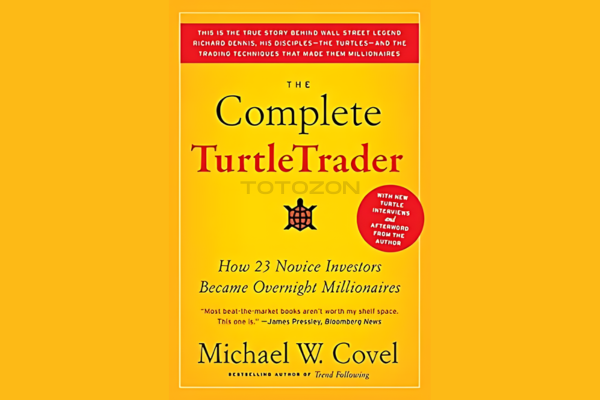 The Complete Turtle Trader with Michael Covel
1 × $6.00
The Complete Turtle Trader with Michael Covel
1 × $6.00 -
×
 NJAT Trading Course with Not Just A Trade
1 × $6.00
NJAT Trading Course with Not Just A Trade
1 × $6.00 -
×
 Perfect Publishing System Elite with Johnny Andrews
1 × $6.00
Perfect Publishing System Elite with Johnny Andrews
1 × $6.00 -
×
 Fibonacci Trading Course - Money Management & Trend Analysis
1 × $6.00
Fibonacci Trading Course - Money Management & Trend Analysis
1 × $6.00 -
×
 Four Dimensional Stock Market Structures & Cycles with Bradley Cowan
1 × $6.00
Four Dimensional Stock Market Structures & Cycles with Bradley Cowan
1 × $6.00 -
×
 Multi Asset Class Investment Strategy with Guy Fraser-Sampson
1 × $6.00
Multi Asset Class Investment Strategy with Guy Fraser-Sampson
1 × $6.00 -
×
 Smart Money Trading Course with Prosperity Academy
1 × $5.00
Smart Money Trading Course with Prosperity Academy
1 × $5.00 -
×
 The Prop Trading Code with Brannigan Barrett - Axia Futures
1 × $23.00
The Prop Trading Code with Brannigan Barrett - Axia Futures
1 × $23.00 -
×
 Traders Winning Edge (Presentation) with Adrienne Laris Toghraie
1 × $6.00
Traders Winning Edge (Presentation) with Adrienne Laris Toghraie
1 × $6.00 -
×
 Learn how to trade Volatility 75 Index Technical Analysis with Patrick Muke
1 × $6.00
Learn how to trade Volatility 75 Index Technical Analysis with Patrick Muke
1 × $6.00 -
×
 Foundations of Stock & Options. Home Study Course
1 × $6.00
Foundations of Stock & Options. Home Study Course
1 × $6.00 -
×
 Planetary Economic Forecasting with Bill Meridian
1 × $6.00
Planetary Economic Forecasting with Bill Meridian
1 × $6.00 -
×
 Algohub 2023 Full Completed with Algohub
1 × $5.00
Algohub 2023 Full Completed with Algohub
1 × $5.00 -
×
 Storehouse Tutorial Group Videos
1 × $23.00
Storehouse Tutorial Group Videos
1 × $23.00 -
×
 Forecast 2024 Clarification with Larry Williams
1 × $15.00
Forecast 2024 Clarification with Larry Williams
1 × $15.00 -
×
 Index Funds with Mark Hebner
1 × $6.00
Index Funds with Mark Hebner
1 × $6.00 -
×
 Practical Astro with Ruth Miller & Iam Williams
1 × $6.00
Practical Astro with Ruth Miller & Iam Williams
1 × $6.00 -
×
 Advanced Course with Jtrader
1 × $6.00
Advanced Course with Jtrader
1 × $6.00 -
×
 3 Short Selling Strategies - Trading Strategy Bundles – Quantified Strategies
1 × $39.00
3 Short Selling Strategies - Trading Strategy Bundles – Quantified Strategies
1 × $39.00 -
×
 Ultimate Trading Course with Dodgy's Dungeon
1 × $8.00
Ultimate Trading Course with Dodgy's Dungeon
1 × $8.00
Portfolio Management using Machine Learning: Hierarchical Risk Parity
Original price was: $599.00.$39.00Current price is: $39.00.
File Size: 161 MB
Delivery Time: 1–12 hours
Media Type: Online Course
Content Proof: Watch Here!
You may check content proof of “Portfolio Management using Machine Learning: Hierarchical Risk Parity” below:
Portfolio Management using Machine Learning: Hierarchical Risk Parity
In the realm of finance, where every decision holds weighty consequences, the integration of machine learning has revolutionized portfolio management. Among the innovative techniques, one stands out for its efficacy: Hierarchical Risk Parity (HRP). This method not only addresses traditional portfolio management challenges but also enhances risk management through the utilization of machine learning algorithms.
Understanding Portfolio Management
Defining Portfolio Management
Portfolio management involves the art and science of making decisions about investment mix and policy, matching investments to objectives, asset allocation, and balancing risk against performance.
Challenges in Traditional Portfolio Management
Traditional portfolio management faces challenges like lack of diversification, inefficient risk allocation, and difficulties in rebalancing portfolios.
The Emergence of Machine Learning in Finance
Integration of Machine Learning
Machine learning algorithms analyze vast amounts of data to identify patterns and make predictions, providing insights that enhance decision-making processes.
Advantages of Machine Learning in Portfolio Management
- Improved Decision Making: Machine learning algorithms can process data at a speed and scale that surpasses human capabilities, enabling more informed investment decisions.
- Enhanced Risk Management: Machine learning models can identify and assess risks more accurately, leading to better risk mitigation strategies.
- Increased Efficiency: Automation of repetitive tasks frees up time for portfolio managers to focus on strategic decision-making.
Hierarchical Risk Parity (HRP)
Understanding HRP
Hierarchical Risk Parity is a portfolio optimization technique that allocates risk across assets in a hierarchical structure. It aims to achieve better diversification and risk management by considering the covariance structure of assets.
Key Components of HRP
- Clustering: Assets are grouped into clusters based on their correlation.
- Hierarchical Structure: Clusters are arranged hierarchically, with higher-level clusters representing broader asset categories.
- Risk Parity Optimization: Risk is allocated within and across clusters to achieve parity, ensuring each asset contributes equally to the portfolio’s overall risk.
Benefits of HRP
- Improved Diversification: HRP allocates risk more evenly across assets, reducing concentration risk.
- Enhanced Risk Management: By considering the covariance structure, HRP identifies and mitigates systemic risks effectively.
- Adaptability: HRP can accommodate various asset classes and market conditions, making it a versatile tool for portfolio managers.
Implementing HRP with Machine Learning
Data Collection and Preprocessing
- Data Collection: Historical financial data for relevant assets is collected from various sources.
- Data Preprocessing: The data is cleaned, normalized, and transformed to make it suitable for analysis.
Model Training
- Feature Selection: Relevant features that influence asset returns and risk are identified.
- Algorithm Selection: Machine learning algorithms such as clustering algorithms and optimization techniques are chosen based on the nature of the problem.
- Model Training: The model is trained using historical data to learn patterns and relationships between assets.
Portfolio Construction and Optimization
- Asset Allocation: HRP is applied to allocate assets based on risk contributions.
- Portfolio Optimization: The portfolio is optimized to achieve desired risk-return characteristics while adhering to constraints such as investment objectives and regulatory requirements.
Conclusion
In conclusion, the integration of machine learning, particularly Hierarchical Risk Parity, has transformed portfolio management by enhancing diversification, risk management, and decision-making processes. By leveraging data-driven insights and advanced algorithms, portfolio managers can navigate complex market dynamics more effectively, ultimately maximizing returns while mitigating risks.
FAQs
1. What is the role of machine learning in portfolio management? Machine learning algorithms analyze data to identify patterns and make predictions, improving decision-making processes and risk management in portfolio management.
2. How does Hierarchical Risk Parity differ from traditional portfolio optimization techniques? Hierarchical Risk Parity considers the covariance structure of assets and allocates risk across clusters, resulting in better diversification and risk management compared to traditional techniques.
3. Can Hierarchical Risk Parity accommodate different types of assets? Yes, Hierarchical Risk Parity can accommodate various asset classes and market conditions, making it a versatile tool for portfolio managers.
4. What are the key benefits of implementing Hierarchical Risk Parity with machine learning? The benefits include improved diversification, enhanced risk management, and adaptability to different market conditions.
5. How does data preprocessing contribute to the effectiveness of HRP? Data preprocessing ensures that the input data is clean, normalized, and transformed, enabling accurate analysis and model training for Hierarchical Risk Parity.
Be the first to review “Portfolio Management using Machine Learning: Hierarchical Risk Parity”
You must be logged in to post a review.
Related products

Original price was: $895.00.$15.00Current price is: $15.00.

Original price was: $4,995.00.$15.00Current price is: $15.00.
Forex Trading
Original price was: $799.00.$15.00Current price is: $15.00.

Original price was: $695.00.$41.00Current price is: $41.00.
Forex Trading
Original price was: $239.00.$8.00Current price is: $8.00.

Original price was: $799.00.$15.00Current price is: $15.00.

Forex Trading
Original price was: $999.00.$15.00Current price is: $15.00.

Original price was: $1,849.00.$15.00Current price is: $15.00.

Forex Trading
Original price was: $1,098.00.$39.00Current price is: $39.00.

Original price was: $497.00.$11.00Current price is: $11.00.

Forex Trading
Original price was: $1,898.00.$10.00Current price is: $10.00.

Original price was: $497.00.$31.00Current price is: $31.00.

Original price was: $997.00.$8.00Current price is: $8.00.

Original price was: $450.00.$23.00Current price is: $23.00.

Original price was: $700.00.$39.00Current price is: $39.00.

Original price was: $197.00.$5.00Current price is: $5.00.
Original price was: $1,200.00.$23.00Current price is: $23.00.

Forex Trading
Original price was: $2,995.00.$31.00Current price is: $31.00.

Original price was: $310.00.$23.00Current price is: $23.00.

Original price was: $139.00.$23.00Current price is: $23.00.

Reviews
There are no reviews yet.