
-
×
 Essentials in Quantitative Trading QT01 By HangukQuant's
1 × $23.00
Essentials in Quantitative Trading QT01 By HangukQuant's
1 × $23.00 -
×
 Ultimate Trading Course with Dodgy's Dungeon
1 × $8.00
Ultimate Trading Course with Dodgy's Dungeon
1 × $8.00 -
×
 Crypto Trading Academy with Cheeky Investor - Aussie Day Trader
1 × $13.00
Crypto Trading Academy with Cheeky Investor - Aussie Day Trader
1 × $13.00 -
×
 The Best Option Trading Course with David Jaffee - Best Stock Strategy
1 × $15.00
The Best Option Trading Course with David Jaffee - Best Stock Strategy
1 × $15.00 -
×
 Forecast 2024 Clarification with Larry Williams
1 × $15.00
Forecast 2024 Clarification with Larry Williams
1 × $15.00 -
×
 TRADING NFX Course with Andrew NFX
1 × $5.00
TRADING NFX Course with Andrew NFX
1 × $5.00 -
×
 High Probability Trading Using Elliott Wave And Fibonacci Analysis withVic Patel - Forex Training Group
1 × $10.00
High Probability Trading Using Elliott Wave And Fibonacci Analysis withVic Patel - Forex Training Group
1 × $10.00 -
×
 Matrix Spread Options Trading Course with Base Camp Trading
1 × $31.00
Matrix Spread Options Trading Course with Base Camp Trading
1 × $31.00 -
×
 The Orderflows Trade Opportunities Encyclopedia with Michael Valtos
1 × $8.00
The Orderflows Trade Opportunities Encyclopedia with Michael Valtos
1 × $8.00 -
×
 Deep Dive Butterfly Trading Strategy Class with SJG Trades
1 × $41.00
Deep Dive Butterfly Trading Strategy Class with SJG Trades
1 × $41.00 -
×
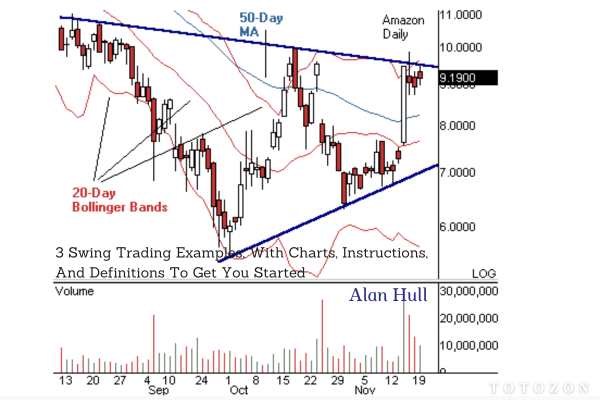 3 Swing Trading Examples, With Charts, Instructions, And Definitions To Get You Started by Alan Farley
1 × $6.00
3 Swing Trading Examples, With Charts, Instructions, And Definitions To Get You Started by Alan Farley
1 × $6.00 -
×
 The A14 Weekly Option Strategy Workshop with Amy Meissner
1 × $23.00
The A14 Weekly Option Strategy Workshop with Amy Meissner
1 × $23.00 -
×
 The Complete Guide to Multiple Time Frame Analysis & Reading Price Action with Aiman Almansoori
1 × $13.00
The Complete Guide to Multiple Time Frame Analysis & Reading Price Action with Aiman Almansoori
1 × $13.00 -
×
 3 Volatility Strategies with Quantified Strategies
1 × $23.00
3 Volatility Strategies with Quantified Strategies
1 × $23.00 -
×
 The Prop Trading Code with Brannigan Barrett - Axia Futures
1 × $23.00
The Prop Trading Code with Brannigan Barrett - Axia Futures
1 × $23.00 -
×
 Advanced Spread Trading with Guy Bower - MasterClass Trader
1 × $15.00
Advanced Spread Trading with Guy Bower - MasterClass Trader
1 × $15.00 -
×
 Home Run Options Trading Course with Dave Aquino - Base Camp Trading
1 × $11.00
Home Run Options Trading Course with Dave Aquino - Base Camp Trading
1 × $11.00 -
×
 Crystal Ball Pack PLUS bonus Live Trade By Pat Mitchell - Trick Trades
1 × $20.00
Crystal Ball Pack PLUS bonus Live Trade By Pat Mitchell - Trick Trades
1 × $20.00 -
×
 Bond Market Course with The Macro Compass
1 × $15.00
Bond Market Course with The Macro Compass
1 × $15.00 -
×
 0 DTE Options Trading Workshop with Aeromir Corporation
1 × $15.00
0 DTE Options Trading Workshop with Aeromir Corporation
1 × $15.00 -
×
 Scalp Strategy and Flipping Small Accounts with Opes Trading Group
1 × $5.00
Scalp Strategy and Flipping Small Accounts with Opes Trading Group
1 × $5.00 -
×
 Compass Trading System with Right Line Trading
1 × $39.00
Compass Trading System with Right Line Trading
1 × $39.00 -
×
 Options Trading & Ultimate MasterClass With Tyrone Abela - FX Evolution
1 × $54.00
Options Trading & Ultimate MasterClass With Tyrone Abela - FX Evolution
1 × $54.00 -
×
 ICT Prodigy Trading Course – $650K in Payouts with Alex Solignani
1 × $15.00
ICT Prodigy Trading Course – $650K in Payouts with Alex Solignani
1 × $15.00 -
×
 Quantamentals - The Next Great Forefront Of Trading and Investing with Trading Markets
1 × $8.00
Quantamentals - The Next Great Forefront Of Trading and Investing with Trading Markets
1 × $8.00 -
×
 The Raptor 10 Momentum Methodology Course
1 × $6.00
The Raptor 10 Momentum Methodology Course
1 × $6.00 -
×
 W. D Gann 's Square Of 9 Applied To Modern Markets with Sean Avidar - Hexatrade350
1 × $23.00
W. D Gann 's Square Of 9 Applied To Modern Markets with Sean Avidar - Hexatrade350
1 × $23.00
A Comparison of Popular Trading Systems (2nd Ed.) with Lars Kestner
$6.00
File Size: Coming soon!
Delivery Time: 1–12 hours
Media Type: Online Course
Content Proof: Watch Here!
You may check content proof of “A Comparison of Popular Trading Systems (2nd Ed.) with Lars Kestner” below:

A Comparison of Popular Trading Systems (2nd Ed.) with Lars Kestner
Trading systems are the backbone of successful market strategies, offering systematic approaches to buying and selling financial instruments. In “A Comparison of Popular Trading Systems (2nd Ed.)”, Lars Kestner provides a detailed analysis of various trading systems, highlighting their strengths and weaknesses. This article delves into Kestner’s insights and compares some of the most popular trading systems in the market.
Understanding Trading Systems
What is a Trading System?
A trading system is a set of rules and procedures designed to guide trading decisions. These systems can be manual or automated and are based on technical indicators, statistical models, or a combination of both.
Why Use Trading Systems?
Trading systems help remove emotional biases from trading, ensuring consistency and discipline. They provide a structured approach to entering and exiting trades based on predefined criteria.
Types of Trading Systems
Trend-Following Systems
Trend-following systems aim to capitalize on market trends by identifying and riding sustained movements in price. They typically use moving averages and breakout indicators.
Mean Reversion Systems
Mean reversion systems are based on the idea that prices will revert to their historical averages. These systems identify overbought or oversold conditions and trade accordingly.
Momentum Trading Systems
Momentum trading systems focus on stocks or other assets that have shown strong price movements. The strategy involves buying high and selling higher, capitalizing on market momentum.
Arbitrage Trading Systems
Arbitrage trading systems exploit price discrepancies between related markets or instruments. They involve simultaneous buying and selling to profit from the price differences.
Key Components of Trading Systems
Entry and Exit Rules
Clear entry and exit rules are crucial for any trading system. These rules define when to open and close positions, ensuring consistency in trading decisions.
Risk Management
Risk management is integral to trading systems. It involves setting stop-loss levels, position sizing, and diversification to minimize potential losses.
Backtesting
Backtesting evaluates a trading system’s performance using historical data. This process helps refine the system and ensures it works under various market conditions.
Comparing Popular Trading Systems
Moving Average Crossover
The moving average crossover system is a simple trend-following strategy. It involves buying when a short-term moving average crosses above a long-term moving average and selling when the reverse occurs.
Strengths:
- Easy to implement
- Effective in trending markets
Weaknesses:
- Generates false signals in sideways markets
Bollinger Bands
Bollinger Bands are used in mean reversion systems. They consist of a moving average and two standard deviation lines. Trades are made when prices touch or cross the bands.
Strengths:
- Identifies overbought and oversold conditions
- Adaptive to market volatility
Weaknesses:
- Not effective in strong trending markets
Relative Strength Index (RSI)
RSI is a momentum indicator that measures the speed and change of price movements. It identifies overbought and oversold conditions, signaling potential reversals.
Strengths:
- Provides clear buy and sell signals
- Useful in identifying divergences
Weaknesses:
- Can generate false signals in volatile markets
Pair Trading
Pair trading is a market-neutral strategy that involves buying and selling two correlated assets. The goal is to profit from the relative price movements between the pair.
Strengths:
- Reduces market risk
- Profits from price discrepancies
Weaknesses:
- Requires sophisticated analysis
- Potential for significant losses if correlations break down
High-Frequency Trading (HFT)
HFT involves executing a large number of trades at high speeds. It uses advanced algorithms to capitalize on small price movements.
Strengths:
- Profits from minute price discrepancies
- High potential for returns
Weaknesses:
- Requires substantial technological infrastructure
- Regulatory scrutiny
Implementing a Trading System
Define Your Objectives
Before choosing a trading system, define your objectives, including risk tolerance, investment horizon, and return expectations.
Develop and Test Your System
Develop a trading system based on your chosen strategy. Use backtesting to refine the system and ensure it performs well under various market conditions.
Monitor and Adjust
Regularly monitor your trading system’s performance and make adjustments as needed. Market conditions change, and your system should adapt accordingly.
Conclusion
Lars Kestner’s “A Comparison of Popular Trading Systems (2nd Ed.)” offers valuable insights into the world of trading systems. By understanding the strengths and weaknesses of different systems, traders can make informed decisions and develop strategies that align with their goals. Whether you prefer trend-following, mean reversion, momentum, or arbitrage, the key is to remain disciplined, manage risk effectively, and stay adaptable in an ever-changing market.
FAQs
1. What is the primary benefit of using a trading system?
- Trading systems remove emotional biases, ensuring consistency and discipline in trading decisions.
2. How does backtesting improve a trading system?
- Backtesting evaluates the system’s performance on historical data, helping refine the rules and ensuring robustness under various market conditions.
3. What are the main types of trading systems?
- The main types include trend-following, mean reversion, momentum, and arbitrage trading systems.
4. How does risk management play a role in trading systems?
- Risk management involves setting stop-loss levels, position sizing, and diversification to minimize potential losses and protect capital.
5. Why is it important to monitor and adjust trading systems?
- Regular monitoring and adjustments ensure the system remains effective and adapts to changing market conditions.
Be the first to review “A Comparison of Popular Trading Systems (2nd Ed.) with Lars Kestner”
You must be logged in to post a review.
Related products
Original price was: $695.00.$41.00Current price is: $41.00.
Original price was: $299.00.$8.00Current price is: $8.00.
Forex Trading
The Complete Guide to Multiple Time Frame Analysis & Reading Price Action with Aiman Almansoori
Original price was: $1,399.00.$13.00Current price is: $13.00.
Original price was: $310.00.$23.00Current price is: $23.00.

Forex Trading
Original price was: $4,997.00.$27.00Current price is: $27.00.

Forex Trading
Original price was: $397.00.$31.00Current price is: $31.00.
Forex Trading
Original price was: $797.00.$10.00Current price is: $10.00.
Original price was: $497.00.$31.00Current price is: $31.00.

Original price was: $197.00.$5.00Current price is: $5.00.

Forex Trading
Original price was: $550.00.$5.00Current price is: $5.00.
Forex Trading
Original price was: $999.00.$15.00Current price is: $15.00.
Forex Trading
Original price was: $500.00.$5.00Current price is: $5.00.

Original price was: $997.00.$8.00Current price is: $8.00.
Original price was: $1,800.00.$54.00Current price is: $54.00.

Original price was: $450.00.$23.00Current price is: $23.00.
Original price was: $997.00.$13.00Current price is: $13.00.

Original price was: $700.00.$39.00Current price is: $39.00.
Forex Trading
Quantamentals – The Next Great Forefront Of Trading and Investing with Trading Markets
Original price was: $1,495.00.$8.00Current price is: $8.00.
Original price was: $999.00.$5.00Current price is: $5.00.
Forex Trading
Original price was: $499.00.$15.00Current price is: $15.00.

Reviews
There are no reviews yet.