
-
×
 Algo Trading Masterclass with Ali Casey - StatOasis
1 × $23.00
Algo Trading Masterclass with Ali Casey - StatOasis
1 × $23.00 -
×
 Forecast 2024 Clarification with Larry Williams
1 × $15.00
Forecast 2024 Clarification with Larry Williams
1 × $15.00 -
×
 TRADING NFX Course with Andrew NFX
1 × $5.00
TRADING NFX Course with Andrew NFX
1 × $5.00 -
×
 Options Trading & Ultimate MasterClass With Tyrone Abela - FX Evolution
1 × $54.00
Options Trading & Ultimate MasterClass With Tyrone Abela - FX Evolution
1 × $54.00 -
×
 Trading Short TermSame Day Trades Sep 2023 with Dan Sheridan & Mark Fenton - Sheridan Options Mentoring
1 × $31.00
Trading Short TermSame Day Trades Sep 2023 with Dan Sheridan & Mark Fenton - Sheridan Options Mentoring
1 × $31.00 -
×
 0 DTE Options Trading Workshop with Aeromir Corporation
1 × $15.00
0 DTE Options Trading Workshop with Aeromir Corporation
1 × $15.00 -
×
 High Probability Trading Using Elliott Wave And Fibonacci Analysis withVic Patel - Forex Training Group
1 × $10.00
High Probability Trading Using Elliott Wave And Fibonacci Analysis withVic Patel - Forex Training Group
1 × $10.00 -
×
 Bond Market Course with The Macro Compass
1 × $15.00
Bond Market Course with The Macro Compass
1 × $15.00 -
×
 The Orderflows Trade Opportunities Encyclopedia with Michael Valtos
1 × $8.00
The Orderflows Trade Opportunities Encyclopedia with Michael Valtos
1 × $8.00 -
×
 The Complete Value Investing Course (Updated 2019) with Wealthy Education
1 × $6.00
The Complete Value Investing Course (Updated 2019) with Wealthy Education
1 × $6.00 -
×
 W. D Gann 's Square Of 9 Applied To Modern Markets with Sean Avidar - Hexatrade350
1 × $23.00
W. D Gann 's Square Of 9 Applied To Modern Markets with Sean Avidar - Hexatrade350
1 × $23.00 -
×
 Home Run Options Trading Course with Dave Aquino - Base Camp Trading
1 × $11.00
Home Run Options Trading Course with Dave Aquino - Base Camp Trading
1 × $11.00 -
×
 Matrix Spread Options Trading Course with Base Camp Trading
1 × $31.00
Matrix Spread Options Trading Course with Base Camp Trading
1 × $31.00 -
×
 Pairs Trading: Quantitative Methods and Analysis with Ganapathy Vidyamurthy
1 × $6.00
Pairs Trading: Quantitative Methods and Analysis with Ganapathy Vidyamurthy
1 × $6.00 -
×
 Crystal Ball Pack PLUS bonus Live Trade By Pat Mitchell - Trick Trades
1 × $20.00
Crystal Ball Pack PLUS bonus Live Trade By Pat Mitchell - Trick Trades
1 × $20.00 -
×
 Advanced Spread Trading with Guy Bower - MasterClass Trader
1 × $15.00
Advanced Spread Trading with Guy Bower - MasterClass Trader
1 × $15.00 -
×
 Essentials in Quantitative Trading QT01 By HangukQuant's
1 × $23.00
Essentials in Quantitative Trading QT01 By HangukQuant's
1 × $23.00 -
×
 ICT Prodigy Trading Course – $650K in Payouts with Alex Solignani
1 × $15.00
ICT Prodigy Trading Course – $650K in Payouts with Alex Solignani
1 × $15.00 -
×
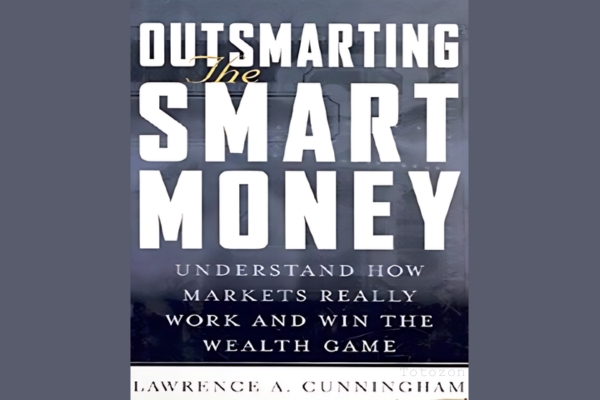 Outsmarting the Smart Money with Lawrence A.Cunningham
1 × $6.00
Outsmarting the Smart Money with Lawrence A.Cunningham
1 × $6.00 -
×
 The Indices Orderflow Masterclass with The Forex Scalpers
1 × $23.00
The Indices Orderflow Masterclass with The Forex Scalpers
1 × $23.00 -
×
 The Gold Standard in Trading Education with Six Figure Capital
1 × $5.00
The Gold Standard in Trading Education with Six Figure Capital
1 × $5.00 -
×
 Scalp Strategy and Flipping Small Accounts with Opes Trading Group
1 × $5.00
Scalp Strategy and Flipping Small Accounts with Opes Trading Group
1 × $5.00 -
×
 $20 – 52k 20 pips a day challange with Rafał Zuchowicz - TopMasterTrader
1 × $5.00
$20 – 52k 20 pips a day challange with Rafał Zuchowicz - TopMasterTrader
1 × $5.00 -
×
 Compass Trading System with Right Line Trading
1 × $39.00
Compass Trading System with Right Line Trading
1 × $39.00 -
×
 Best of the Best: Collars with Amy Meissner & Scott Ruble
1 × $15.00
Best of the Best: Collars with Amy Meissner & Scott Ruble
1 × $15.00 -
×
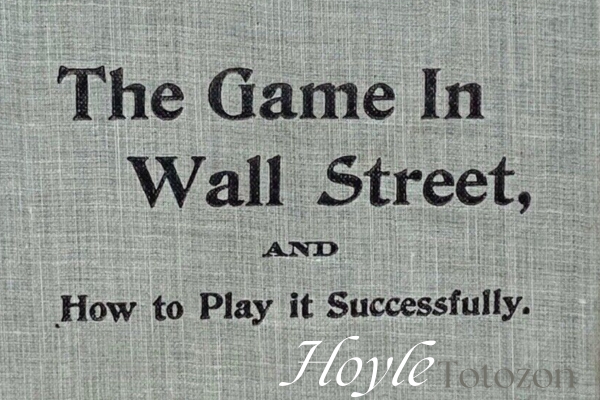 The Game In WallStreet & How to Play it Successfully with Hoyle
1 × $6.00
The Game In WallStreet & How to Play it Successfully with Hoyle
1 × $6.00 -
×
 Our 3 Bread and Butter Trades In This Low IV Market Advanced Class with Day Trading Zones
1 × $39.00
Our 3 Bread and Butter Trades In This Low IV Market Advanced Class with Day Trading Zones
1 × $39.00 -
×
 WondaFX Signature Strategy with WondaFX
1 × $5.00
WondaFX Signature Strategy with WondaFX
1 × $5.00 -
×
 How To Read The Market Professionally with TradeSmart
1 × $27.00
How To Read The Market Professionally with TradeSmart
1 × $27.00 -
×
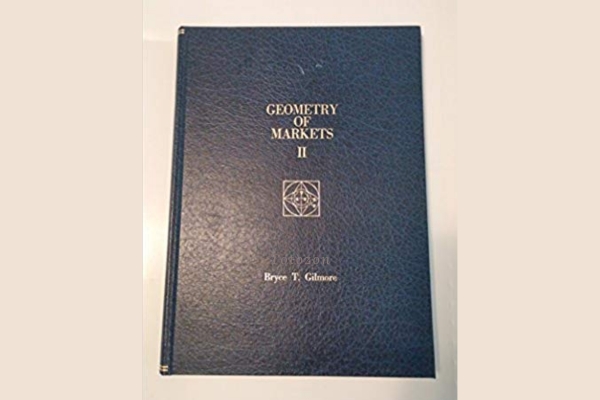 Geometry of Markets II with Bruce Gilmore
1 × $6.00
Geometry of Markets II with Bruce Gilmore
1 × $6.00 -
×
 Trading NQ At The US Open with TradeSmart
1 × $10.00
Trading NQ At The US Open with TradeSmart
1 × $10.00 -
×
 Quantamentals - The Next Great Forefront Of Trading and Investing with Trading Markets
1 × $8.00
Quantamentals - The Next Great Forefront Of Trading and Investing with Trading Markets
1 × $8.00 -
×
 The Future of Investing with Chris Skinner
1 × $6.00
The Future of Investing with Chris Skinner
1 × $6.00 -
×
 The Gorilla Game (Revised Ed.) with Greoffrey A.Moore & Paul Johnson
1 × $6.00
The Gorilla Game (Revised Ed.) with Greoffrey A.Moore & Paul Johnson
1 × $6.00 -
×
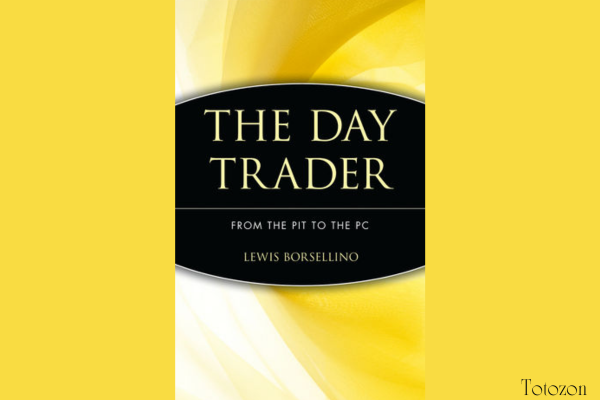 The Day Trader: From the Pit to the PC with Lewis Borsellino
1 × $6.00
The Day Trader: From the Pit to the PC with Lewis Borsellino
1 × $6.00 -
×
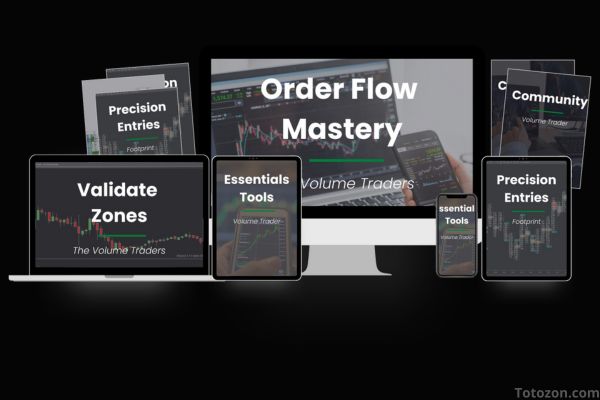 Order Flow Mastery (New 2024) with The Volume Traders
1 × $24.00
Order Flow Mastery (New 2024) with The Volume Traders
1 × $24.00 -
×
 Power Charting - Robert’s Indicator Webinar
1 × $6.00
Power Charting - Robert’s Indicator Webinar
1 × $6.00 -
×
 The Handbook of Pairs Trading with Douglas Ehrman
1 × $6.00
The Handbook of Pairs Trading with Douglas Ehrman
1 × $6.00 -
×
 Orderflows Gems 2-Private Sessions with Mike Valtos
1 × $20.00
Orderflows Gems 2-Private Sessions with Mike Valtos
1 × $20.00 -
×
 The Great Reflation with Anthony Boeckh
1 × $6.00
The Great Reflation with Anthony Boeckh
1 × $6.00 -
×
 Outsmarting Wall Street (3rd Ed) with Daniel Alan Seiver
1 × $6.00
Outsmarting Wall Street (3rd Ed) with Daniel Alan Seiver
1 × $6.00 -
×
 Planetary Economic Forecasting with Bill Meridian
1 × $6.00
Planetary Economic Forecasting with Bill Meridian
1 × $6.00 -
×
 The Fundamentals of Options Trading Basis with Joseph Frey
1 × $6.00
The Fundamentals of Options Trading Basis with Joseph Frey
1 × $6.00 -
×
 The Delphi Scalper 4 (delphiscalper.com) with Jason Fielder
1 × $6.00
The Delphi Scalper 4 (delphiscalper.com) with Jason Fielder
1 × $6.00 -
×
 PayTrading with Eric Shawn
1 × $6.00
PayTrading with Eric Shawn
1 × $6.00 -
×
 Perfect Publishing System Elite with Johnny Andrews
1 × $6.00
Perfect Publishing System Elite with Johnny Andrews
1 × $6.00 -
×
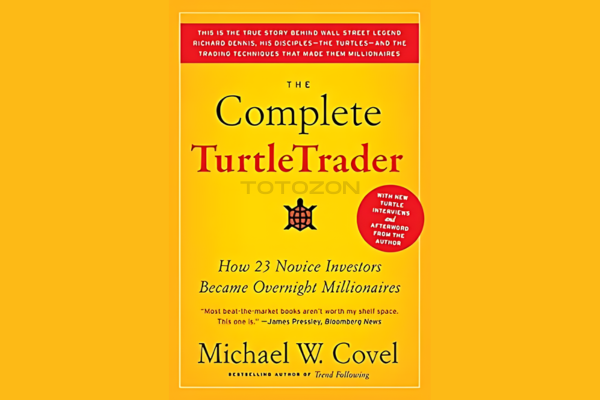 The Complete Turtle Trader with Michael Covel
1 × $6.00
The Complete Turtle Trader with Michael Covel
1 × $6.00 -
×
 Peak Capital Trading Bootcamp with Andrew Aziz
1 × $5.00
Peak Capital Trading Bootcamp with Andrew Aziz
1 × $5.00 -
×
 Pattern Cycles with Alan Farley
1 × $6.00
Pattern Cycles with Alan Farley
1 × $6.00 -
×
 The Great Depression with David Burg
1 × $6.00
The Great Depression with David Burg
1 × $6.00 -
×
 The Day Trading ES Futures Blueprint Class with Corey Rosenbloom
1 × $6.00
The Day Trading ES Futures Blueprint Class with Corey Rosenbloom
1 × $6.00 -
×
 OneUmbrellaFX
1 × $5.00
OneUmbrellaFX
1 × $5.00 -
×
 The Crypto Code with Joel Peterson - Adam Short
1 × $15.00
The Crypto Code with Joel Peterson - Adam Short
1 × $15.00 -
×
 Picking the Best Stocks & Strategies for every Option Trade with James Bittman
1 × $6.00
Picking the Best Stocks & Strategies for every Option Trade with James Bittman
1 × $6.00 -
×
 Planetary Harmonics of Speculative Markets with Larry Pesavento
1 × $6.00
Planetary Harmonics of Speculative Markets with Larry Pesavento
1 × $6.00 -
×
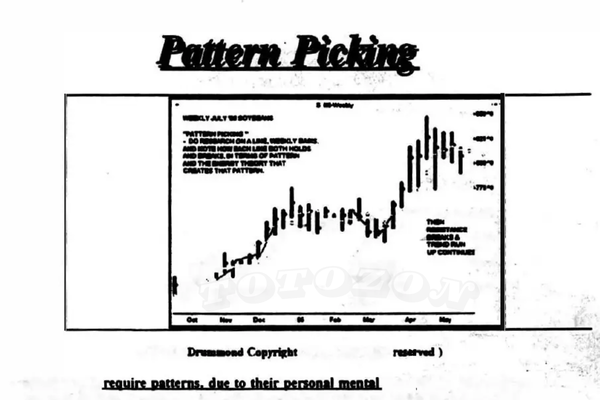 Pattern Picking with Charles Drummond
1 × $6.00
Pattern Picking with Charles Drummond
1 × $6.00 -
×
 Pattern Recognition: A Fundamental Introduction to Japanese Candlestick Charting Techniques Class with Jeff Bierman
1 × $6.00
Pattern Recognition: A Fundamental Introduction to Japanese Candlestick Charting Techniques Class with Jeff Bierman
1 × $6.00 -
×
 P.A.T Trading Course (Low Video Quality) with Martin Cole
1 × $6.00
P.A.T Trading Course (Low Video Quality) with Martin Cole
1 × $6.00 -
×
 FX SpeedRunner
1 × $5.00
FX SpeedRunner
1 × $5.00 -
×
 Order flow self-study training program with iMFtracker
1 × $10.00
Order flow self-study training program with iMFtracker
1 × $10.00 -
×
 TradeCraft: Your Path to Peak Performance Trading By Adam Grimes
1 × $15.00
TradeCraft: Your Path to Peak Performance Trading By Adam Grimes
1 × $15.00 -
×
 The Trading Blueprint with Brad Goh - The Trading Geek
1 × $5.00
The Trading Blueprint with Brad Goh - The Trading Geek
1 × $5.00
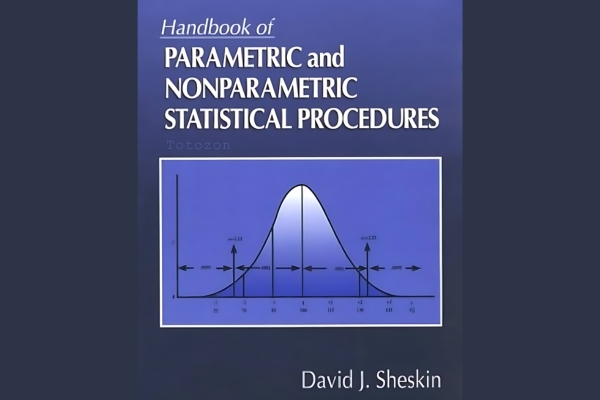
HandBook of Parametric and Nonparametric Statistical Procedures with David J.Sheskin
$6.00
File Size: Coming soon!
Delivery Time: 1–12 hours
Media Type: Online Course
Content Proof: Watch Here!
You may check content proof of “HandBook of Parametric and Nonparametric Statistical Procedures with David J.Sheskin” below:

HandBook of Parametric and Nonparametric Statistical Procedures with David J. Sheskin
Introduction
Statistics play a crucial role in various fields, from scientific research to business analysis. David J. Sheskin’s “Handbook of Parametric and Nonparametric Statistical Procedures” is an invaluable resource for anyone looking to deepen their understanding of statistical methods. This comprehensive guide offers insights into both parametric and nonparametric techniques, ensuring readers can apply the most appropriate methods to their data analysis needs.
Understanding Parametric Statistical Procedures
Parametric statistical procedures rely on assumptions about the population distribution from which the samples are drawn. These methods are powerful and efficient when their assumptions are met.
Key Assumptions of Parametric Methods
- Normal Distribution: The data should follow a normal distribution.
- Homogeneity of Variance: The variance within each group should be approximately equal.
- Interval or Ratio Scale: Data should be measured on an interval or ratio scale.
Common Parametric Tests
- t-Tests: Compare the means of two groups.
- ANOVA (Analysis of Variance): Compare the means of three or more groups.
- Regression Analysis: Explore relationships between variables.
t-Tests
t-Tests are used to determine if there is a significant difference between the means of two groups. There are two main types:
- Independent t-Test: Compares means from two different groups.
- Paired t-Test: Compares means from the same group at different times.
ANOVA
ANOVA tests whether the means of three or more groups are significantly different. It helps in identifying the presence of variation among group means.
Regression Analysis
Regression analysis examines the relationship between dependent and independent variables, helping to predict outcomes and understand relationships.
Exploring Nonparametric Statistical Procedures
Nonparametric procedures do not rely on stringent assumptions about the population distribution. They are more flexible and can be used with ordinal data or when parametric assumptions are violated.
Advantages of Nonparametric Methods
- Fewer Assumptions: Do not require normal distribution.
- Flexibility: Can be used with ordinal data.
- Robustness: Less affected by outliers and non-normality.
Common Nonparametric Tests
- Mann-Whitney U Test: Compares differences between two independent groups.
- Wilcoxon Signed-Rank Test: Compares differences between two related groups.
- Kruskal-Wallis Test: Compares differences between three or more independent groups.
Mann-Whitney U Test
The Mann-Whitney U Test is used to determine if there is a difference in the distributions of two independent groups. It is the nonparametric alternative to the independent t-test.
Wilcoxon Signed-Rank Test
This test compares the differences between paired observations, similar to the paired t-test but for nonparametric data.
Kruskal-Wallis Test
The Kruskal-Wallis Test extends the Mann-Whitney U Test to more than two groups. It tests whether samples originate from the same distribution.
Choosing Between Parametric and Nonparametric Methods
Selecting the right statistical method depends on the data characteristics and the assumptions that can be justified.
When to Use Parametric Methods
- When the data is normally distributed.
- When the sample size is large.
- When the data meets the assumptions of homogeneity of variance and scale.
When to Use Nonparametric Methods
- When the data is not normally distributed.
- When the sample size is small.
- When dealing with ordinal data or non-homogeneous variances.
Steps to Decide
- Assess Data Distribution: Use visual (e.g., histograms) and statistical tests (e.g., Shapiro-Wilk test) to check normality.
- Consider Data Scale: Determine if data is on an interval, ratio, or ordinal scale.
- Evaluate Sample Size: Small sample sizes often necessitate nonparametric methods.
Practical Applications
Understanding and applying the correct statistical procedures is crucial across various fields.
Scientific Research
Researchers use these methods to analyze experimental data, draw conclusions, and validate hypotheses.
Examples
- Medical Studies: Comparing treatment effects using t-tests or ANOVA.
- Psychological Research: Analyzing behavioral data with nonparametric tests.
Business Analysis
In business, statistical methods help in making data-driven decisions, forecasting, and quality control.
Examples
- Market Research: Analyzing customer satisfaction with nonparametric tests.
- Financial Analysis: Using regression analysis to predict market trends.
Advanced Topics
Sheskin’s handbook also covers advanced topics for those looking to deepen their statistical knowledge.
Multivariate Analysis
Multivariate analysis involves examining multiple variables simultaneously to understand complex relationships.
Types of Multivariate Analysis
- Factor Analysis: Identifies underlying factors in data.
- Cluster Analysis: Groups similar observations.
Survival Analysis
Survival analysis deals with time-to-event data, common in medical research for studying patient survival times.
Key Techniques
- Kaplan-Meier Estimator: Estimates survival probabilities.
- Cox Proportional Hazards Model: Analyzes the effect of variables on survival time.
Conclusion
David J. Sheskin’s “Handbook of Parametric and Nonparametric Statistical Procedures” is an essential resource for anyone involved in data analysis. By understanding both parametric and nonparametric methods, researchers and analysts can choose the most appropriate techniques for their data, ensuring accurate and reliable results.
FAQs
1. What is the main difference between parametric and nonparametric methods?
Parametric methods rely on assumptions about the population distribution, while nonparametric methods do not.
2. When should I use a nonparametric test?
Use nonparametric tests when your data is not normally distributed, the sample size is small, or you are dealing with ordinal data.
3. What are some common parametric tests?
Common parametric tests include t-tests, ANOVA, and regression analysis.
4. How do I decide which statistical method to use?
Assess the data distribution, scale, and sample size to decide between parametric and nonparametric methods.
5. What are the advantages of using nonparametric methods?
Nonparametric methods are more flexible, require fewer assumptions, and are robust to outliers and non-normality.
Be the first to review “HandBook of Parametric and Nonparametric Statistical Procedures with David J.Sheskin”
You must be logged in to post a review.
Related products

Forex Trading
Original price was: $799.00.$15.00Current price is: $15.00.
Forex Trading
Original price was: $850.00.$23.00Current price is: $23.00.

Original price was: $997.00.$8.00Current price is: $8.00.
Original price was: $999.00.$5.00Current price is: $5.00.

Forex Trading
Original price was: $2,997.00.$23.00Current price is: $23.00.
Forex Trading
Original price was: $999.00.$15.00Current price is: $15.00.
Original price was: $4,995.00.$15.00Current price is: $15.00.

Original price was: $997.00.$13.00Current price is: $13.00.

Forex Trading
The Complete Guide to Multiple Time Frame Analysis & Reading Price Action with Aiman Almansoori
Original price was: $1,399.00.$13.00Current price is: $13.00.

Original price was: $695.00.$41.00Current price is: $41.00.
Original price was: $799.00.$15.00Current price is: $15.00.
Original price was: $450.00.$23.00Current price is: $23.00.
Original price was: $2,120.00.$15.00Current price is: $15.00.
Forex Trading
Quantamentals – The Next Great Forefront Of Trading and Investing with Trading Markets
Original price was: $1,495.00.$8.00Current price is: $8.00.
Forex Trading
Original price was: $697.00.$5.00Current price is: $5.00.
Forex Trading
Original price was: $249.00.$15.00Current price is: $15.00.

Forex Trading
Original price was: $239.00.$8.00Current price is: $8.00.
Original price was: $139.00.$23.00Current price is: $23.00.
Forex Trading
Original price was: $500.00.$5.00Current price is: $5.00.
Forex Trading
Original price was: $397.00.$31.00Current price is: $31.00.
Reviews
There are no reviews yet.