
-
×
 Contrarian Investing with Anthony M.Gallea, William Patalon
1 × $6.00
Contrarian Investing with Anthony M.Gallea, William Patalon
1 × $6.00 -
×
 TOP Gamma Bundle with TopTrade Tools
1 × $69.00
TOP Gamma Bundle with TopTrade Tools
1 × $69.00 -
×
 The Trading Blueprint with Brad Goh - The Trading Geek
1 × $5.00
The Trading Blueprint with Brad Goh - The Trading Geek
1 × $5.00 -
×
 Forecast 2024 Clarification with Larry Williams
1 × $15.00
Forecast 2024 Clarification with Larry Williams
1 × $15.00 -
×
 Intra-Day Trading Nasdaq Futures Class with Tony Rago
1 × $6.00
Intra-Day Trading Nasdaq Futures Class with Tony Rago
1 × $6.00 -
×
 The Chaos Course. Cash in on Chaos with Hans Hannula
1 × $6.00
The Chaos Course. Cash in on Chaos with Hans Hannula
1 × $6.00 -
×
 The Insider's Guide to 52 Homes in 52 Weeks: Acquire Your Real Estate Fortune Today with Dolf De Roos
1 × $6.00
The Insider's Guide to 52 Homes in 52 Weeks: Acquire Your Real Estate Fortune Today with Dolf De Roos
1 × $6.00 -
×
 Ultimate Trading Course with Dodgy's Dungeon
1 × $8.00
Ultimate Trading Course with Dodgy's Dungeon
1 × $8.00 -
×
 Applying Fibonacci Analysis to Price Action
1 × $6.00
Applying Fibonacci Analysis to Price Action
1 × $6.00 -
×
 Ambush Trading Method on Wheat & Corn with Marco Mayer
1 × $4.00
Ambush Trading Method on Wheat & Corn with Marco Mayer
1 × $4.00 -
×
 Butterfly and Condor Workshop with Aeromir
1 × $15.00
Butterfly and Condor Workshop with Aeromir
1 × $15.00 -
×
 The Great Divergence: China, Europe, and the Making of the Modern World Economy with Kenneth Pomeranz
1 × $6.00
The Great Divergence: China, Europe, and the Making of the Modern World Economy with Kenneth Pomeranz
1 × $6.00 -
×
 Donald Delves – Stock Options and the New Rules of Corporate Accountability
1 × $6.00
Donald Delves – Stock Options and the New Rules of Corporate Accountability
1 × $6.00 -
×
 Forex Trader Package 2010
1 × $15.00
Forex Trader Package 2010
1 × $15.00 -
×
 TradeCraft: Your Path to Peak Performance Trading By Adam Grimes
1 × $15.00
TradeCraft: Your Path to Peak Performance Trading By Adam Grimes
1 × $15.00 -
×
 Top 20 VSA Principles & How to Trade Them
1 × $31.00
Top 20 VSA Principles & How to Trade Them
1 × $31.00 -
×
 Trading MasterMind Course
1 × $23.00
Trading MasterMind Course
1 × $23.00 -
×
 Programming in Python For Traders with Trading Markets
1 × $15.00
Programming in Python For Traders with Trading Markets
1 × $15.00 -
×
 Strategic Swing Trader with Sami Abusaad
1 × $6.00
Strategic Swing Trader with Sami Abusaad
1 × $6.00 -
×
 Arcane 2.0 Course
1 × $6.00
Arcane 2.0 Course
1 × $6.00 -
×
 Advanced Trading Applications of Candlestick Charting with Gary S.Wagner & Bradley L.Matheny
1 × $6.00
Advanced Trading Applications of Candlestick Charting with Gary S.Wagner & Bradley L.Matheny
1 × $6.00 -
×
 Be Smart, Act Fast, Get Rich with Charles Payne
1 × $6.00
Be Smart, Act Fast, Get Rich with Charles Payne
1 × $6.00 -
×
 5-Day Master Trader Program 2022 with Mark Minervini
1 × $31.00
5-Day Master Trader Program 2022 with Mark Minervini
1 × $31.00 -
×
 Candlestick & Pivot Point Strategies with John L.Person
1 × $6.00
Candlestick & Pivot Point Strategies with John L.Person
1 × $6.00 -
×
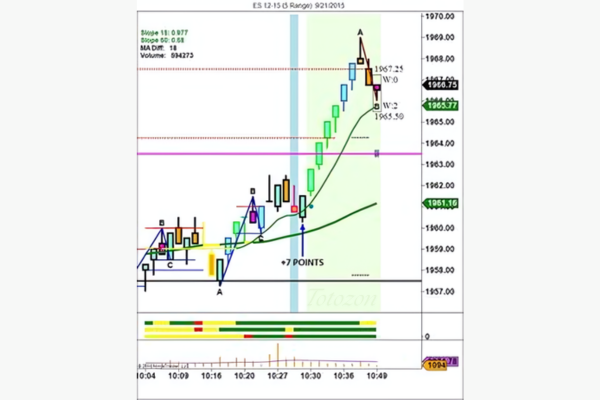 Right Line Trading IndicatorSuite (May 2015)
1 × $31.00
Right Line Trading IndicatorSuite (May 2015)
1 × $31.00 -
×
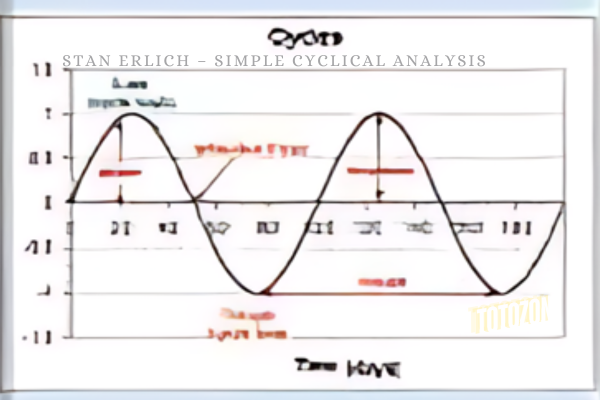 Simple Cyclical Analysis with Stan Erlich
1 × $6.00
Simple Cyclical Analysis with Stan Erlich
1 × $6.00 -
×
 Confessions of a Pit Trader 2003 with Rick Burgess
1 × $6.00
Confessions of a Pit Trader 2003 with Rick Burgess
1 × $6.00 -
×
 Stock Market Rules (2nd Ed.) with Michael Sheimo
1 × $6.00
Stock Market Rules (2nd Ed.) with Michael Sheimo
1 × $6.00 -
×
 5-Step-Trading Stocks I and II with Lex Van Dam
1 × $4.00
5-Step-Trading Stocks I and II with Lex Van Dam
1 × $4.00 -
×
 Trading for a Bright Future with Martin Cole
1 × $6.00
Trading for a Bright Future with Martin Cole
1 × $6.00 -
×
 How to Trade a Vertical Market with Armstrong Economics
1 × $155.00
How to Trade a Vertical Market with Armstrong Economics
1 × $155.00 -
×
 The First Time Investors Workbook with Joe Jonh Duran & Larry Chambers
1 × $6.00
The First Time Investors Workbook with Joe Jonh Duran & Larry Chambers
1 × $6.00 -
×
 TRADING NFX Course with Andrew NFX
1 × $5.00
TRADING NFX Course with Andrew NFX
1 × $5.00 -
×
 Online Investing Hacks with Bonnie Biafore
1 × $6.00
Online Investing Hacks with Bonnie Biafore
1 × $6.00 -
×
 How I Make A Living Daytrading Stocks with David Floyd
1 × $4.00
How I Make A Living Daytrading Stocks with David Floyd
1 × $4.00 -
×
 Complete Forex Training Series with 4 x Made Easy
1 × $6.00
Complete Forex Training Series with 4 x Made Easy
1 × $6.00 -
×
 Getting Started in Forex Trading Strategies with Michael Duane Archer
1 × $6.00
Getting Started in Forex Trading Strategies with Michael Duane Archer
1 × $6.00 -
×
 A Comparison of Twelve Technical Trading Systems with Louis Lukac
1 × $6.00
A Comparison of Twelve Technical Trading Systems with Louis Lukac
1 × $6.00 -
×
 The Adventures of the Cycle Hunter. The Analyst with Craig Bttlc
1 × $6.00
The Adventures of the Cycle Hunter. The Analyst with Craig Bttlc
1 × $6.00 -
×
 WondaFX Signature Strategy with WondaFX
1 × $5.00
WondaFX Signature Strategy with WondaFX
1 × $5.00 -
×
 Cheatcode Trend System with Dominique Woodson
1 × $15.00
Cheatcode Trend System with Dominique Woodson
1 × $15.00 -
×
 The Vital Few vs. the Trivial Many: Invest with the Insiders, Not the Masses with George Muzea
1 × $6.00
The Vital Few vs. the Trivial Many: Invest with the Insiders, Not the Masses with George Muzea
1 × $6.00 -
×
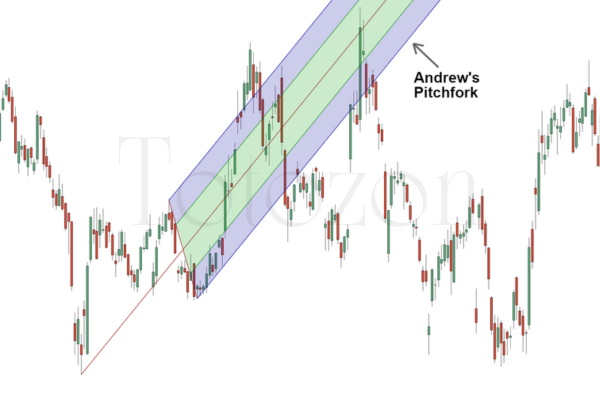 Andrews Pitchfork Basic
1 × $6.00
Andrews Pitchfork Basic
1 × $6.00 -
×
 Timing is Everything with Robert M.Barnes
1 × $6.00
Timing is Everything with Robert M.Barnes
1 × $6.00 -
×
 Vertex Investing Course (2023)
1 × $8.00
Vertex Investing Course (2023)
1 × $8.00 -
×
 Complete Cryptocurrency Trading 2021
1 × $5.00
Complete Cryptocurrency Trading 2021
1 × $5.00 -
×
 AI For Traders with Trading Markets
1 × $31.00
AI For Traders with Trading Markets
1 × $31.00 -
×
 The Hedge Bundle - SpotGamma Academy with Imran Lakha
1 × $8.00
The Hedge Bundle - SpotGamma Academy with Imran Lakha
1 × $8.00 -
×
 Blank Check Trade
1 × $31.00
Blank Check Trade
1 × $31.00 -
×
 The Prop Trading Code with Brannigan Barrett - Axia Futures
1 × $23.00
The Prop Trading Code with Brannigan Barrett - Axia Futures
1 × $23.00 -
×
 Strategy Factory Workshop with Kevin Davey - KJ Trading Systems
1 × $5.00
Strategy Factory Workshop with Kevin Davey - KJ Trading Systems
1 × $5.00 -
×
 Advanced Spread Trading with Guy Bower - MasterClass Trader
1 × $15.00
Advanced Spread Trading with Guy Bower - MasterClass Trader
1 × $15.00 -
×
 Mission Million Money Management Course
1 × $31.00
Mission Million Money Management Course
1 × $31.00 -
×
 The Stock Rocket Trading System with Dave Wooding
1 × $6.00
The Stock Rocket Trading System with Dave Wooding
1 × $6.00 -
×
 A Really Friendly Guide to Wavelets with C.Vallens
1 × $6.00
A Really Friendly Guide to Wavelets with C.Vallens
1 × $6.00 -
×
 The Astrology of the Old Testament or The Lost World Regained with Karl Anderson
1 × $6.00
The Astrology of the Old Testament or The Lost World Regained with Karl Anderson
1 × $6.00 -
×
 Electronic Trading "TNT" II How - To Win Trading Stuff with Joe Ross & Mark Cherlin
1 × $6.00
Electronic Trading "TNT" II How - To Win Trading Stuff with Joe Ross & Mark Cherlin
1 × $6.00 -
×
 Essentials in Quantitative Trading QT01 By HangukQuant's
1 × $23.00
Essentials in Quantitative Trading QT01 By HangukQuant's
1 × $23.00 -
×
 3 Technical Indicators to Help You Ride the Elliott Wave Trend with Chris Carolan
1 × $6.00
3 Technical Indicators to Help You Ride the Elliott Wave Trend with Chris Carolan
1 × $6.00 -
×
 Harmonic Vibrations with Larry Pesavento
1 × $6.00
Harmonic Vibrations with Larry Pesavento
1 × $6.00 -
×
 Advanced Stock Trading Course + Strategies
1 × $15.00
Advanced Stock Trading Course + Strategies
1 × $15.00 -
×
 The Inve$tment A$trology Articles with Alan Richter
1 × $6.00
The Inve$tment A$trology Articles with Alan Richter
1 × $6.00 -
×
 Practical Approach to Ninjatrader 8 Platform with Rajandran R
1 × $6.00
Practical Approach to Ninjatrader 8 Platform with Rajandran R
1 × $6.00 -
×
 $20 – 52k 20 pips a day challange with Rafał Zuchowicz - TopMasterTrader
1 × $5.00
$20 – 52k 20 pips a day challange with Rafał Zuchowicz - TopMasterTrader
1 × $5.00 -
×
 The Dynamic Trend Confirmation Indicator with Alphashark
1 × $54.00
The Dynamic Trend Confirmation Indicator with Alphashark
1 × $54.00 -
×
 The New Electronic Traders with Jonathan R.Aspartore
1 × $6.00
The New Electronic Traders with Jonathan R.Aspartore
1 × $6.00 -
×
 Pristine - Greg Capra – Sentiment Internal Indicators. Winning Swing & Position Trading
1 × $6.00
Pristine - Greg Capra – Sentiment Internal Indicators. Winning Swing & Position Trading
1 × $6.00

Pairs Trading: Quantitative Methods and Analysis with Ganapathy Vidyamurthy
Original price was: $82.00.$6.00Current price is: $6.00.
File Size: Coming soon!
Delivery Time: 1–12 hours
Media Type: Online Course
Content Proof: Watch Here!
You may check content proof of “Pairs Trading: Quantitative Methods and Analysis with Ganapathy Vidyamurthy” below:

Pairs Trading: Quantitative Methods and Analysis with Ganapathy Vidyamurthy
Pairs trading is a market-neutral strategy that involves trading two correlated securities to exploit price discrepancies. Ganapathy Vidyamurthy, a renowned expert in quantitative finance, provides an in-depth analysis of this strategy in his work. In this article, we will explore the fundamentals of pairs trading, the quantitative methods involved, and practical applications based on Vidyamurthy’s insights.
Introduction to Pairs Trading
What is Pairs Trading?
Pairs trading is a statistical arbitrage strategy where two correlated securities are traded simultaneously. Traders buy the undervalued security and sell the overvalued one, aiming to profit from the convergence of their prices.
Who is Ganapathy Vidyamurthy?
Ganapathy Vidyamurthy is a leading expert in quantitative finance, known for his contributions to pairs trading strategies and quantitative analysis. His methodologies provide a robust framework for implementing pairs trading effectively.
Fundamental Concepts of Pairs Trading
1. Market Neutrality
Definition
Pairs trading is market-neutral, meaning it is designed to profit regardless of market direction. This reduces exposure to market risk.
2. Correlation and Cointegration
Correlation
Correlation measures the degree to which two securities move in relation to each other. High correlation is essential for pairs trading.
Cointegration
Cointegration indicates a long-term equilibrium relationship between two securities, suggesting that price deviations are temporary and will revert to the mean.
Quantitative Methods in Pairs Trading
1. Identifying Pairs
Statistical Techniques
Use statistical methods such as Pearson’s correlation coefficient and Johansen’s cointegration test to identify suitable pairs for trading.
2. Spread Calculation
Price Spread
The price spread is the difference between the prices of the two securities. Monitoring the spread helps identify trading opportunities.
Z-Score Calculation
The Z-score measures the number of standard deviations the current spread is from the mean. A high absolute Z-score indicates a potential trading signal.
3. Trading Signals
Entry and Exit Points
Enter a trade when the Z-score exceeds a certain threshold (e.g., ±2). Exit the trade when the spread reverts to the mean.
Stop-Loss and Take-Profit Levels
Set stop-loss and take-profit levels to manage risk and lock in profits.
Implementing Pairs Trading Strategies
1. Data Collection and Analysis
Historical Data
Collect historical price data for the selected pairs. Use this data to analyze correlation and cointegration.
2. Backtesting
Simulating Trades
Backtest the strategy using historical data to evaluate its performance. This helps identify potential issues and refine the strategy.
3. Execution
Automated Trading Systems
Implement the strategy using automated trading systems to execute trades quickly and efficiently.
4. Monitoring and Adjusting
Real-Time Analysis
Continuously monitor the performance of the strategy and make adjustments as needed based on real-time data.
Advantages of Pairs Trading
1. Reduced Market Risk
Hedging
Pairs trading hedges against market risk by taking long and short positions simultaneously.
2. Consistent Returns
Exploiting Inefficiencies
The strategy can generate consistent returns by exploiting temporary price inefficiencies between correlated securities.
Challenges in Pairs Trading
1. Identifying Suitable Pairs
Data-Intensive
Finding pairs that are both highly correlated and cointegrated requires extensive data analysis.
2. Transaction Costs
Impact on Profits
High transaction costs can erode profits, especially for frequent trades. Efficient execution and cost management are crucial.
3. Model Risk
Assumptions and Limitations
Quantitative models rely on historical data and assumptions that may not always hold true in the future.
Case Study: Applying Vidyamurthy’s Methods
1. Selecting Pairs
Example
Consider a pair of stocks from the same industry, such as Coca-Cola and PepsiCo. These companies are likely to be correlated due to their similar business models.
2. Analyzing Data
Statistical Tests
Perform statistical tests to confirm correlation and cointegration. Calculate the spread and Z-score to identify trading signals.
3. Executing Trades
Entry and Exit
Enter trades based on Z-score thresholds and monitor the positions. Exit when the spread reverts to the mean or reaches the stop-loss/take-profit levels.
Risk Management in Pairs Trading
1. Diversification
Multiple Pairs
Trade multiple pairs to diversify risk and reduce the impact of any single pair’s performance.
2. Capital Allocation
Risk Limits
Allocate capital based on risk limits and ensure no single trade can significantly impact the overall portfolio.
3. Regular Review
Performance Evaluation
Regularly review the performance of the strategy and adjust parameters as needed to optimize returns.
Conclusion
Pairs trading, as explained by Ganapathy Vidyamurthy, offers a robust and market-neutral strategy for exploiting price inefficiencies. By understanding and applying quantitative methods, traders can enhance their ability to identify profitable pairs, manage risk, and achieve consistent returns. Continuous monitoring and adaptation are key to maintaining the effectiveness of this strategy in changing market conditions.
FAQs
1. What is pairs trading?
Pairs trading is a market-neutral strategy involving the simultaneous buying and selling of two correlated securities to profit from price discrepancies.
2. How does pairs trading reduce market risk?
Pairs trading reduces market risk by taking both long and short positions, hedging against overall market movements.
3. What are the key quantitative methods in pairs trading?
Key methods include identifying correlated and cointegrated pairs, calculating the spread and Z-score, and backtesting the strategy.
4. Why is cointegration important in pairs trading?
Cointegration indicates a long-term equilibrium relationship between two securities, suggesting that price deviations are temporary and will revert to the mean.
5. What are common challenges in pairs trading?
Challenges include identifying suitable pairs, managing transaction costs, and addressing model risk due to assumptions and data limitations.
Be the first to review “Pairs Trading: Quantitative Methods and Analysis with Ganapathy Vidyamurthy”
You must be logged in to post a review.
Related products

Original price was: $310.00.$23.00Current price is: $23.00.

Original price was: $497.00.$31.00Current price is: $31.00.

Original price was: $497.00.$11.00Current price is: $11.00.
Forex Trading
Original price was: $249.00.$15.00Current price is: $15.00.

Forex Trading
Original price was: $2,000.00.$23.00Current price is: $23.00.

Forex Trading
Original price was: $4,997.00.$27.00Current price is: $27.00.
Forex Trading
Original price was: $697.00.$5.00Current price is: $5.00.

Forex Trading
Original price was: $499.00.$15.00Current price is: $15.00.

Original price was: $700.00.$39.00Current price is: $39.00.
Forex Trading
Original price was: $2,995.00.$31.00Current price is: $31.00.

Original price was: $799.00.$15.00Current price is: $15.00.

Original price was: $1,800.00.$54.00Current price is: $54.00.
Original price was: $197.00.$5.00Current price is: $5.00.

Original price was: $997.00.$8.00Current price is: $8.00.

Original price was: $695.00.$41.00Current price is: $41.00.
Forex Trading
Original price was: $239.00.$8.00Current price is: $8.00.

Forex Trading
Quantamentals – The Next Great Forefront Of Trading and Investing with Trading Markets
Original price was: $1,495.00.$8.00Current price is: $8.00.

Original price was: $1,849.00.$15.00Current price is: $15.00.

Original price was: $299.00.$8.00Current price is: $8.00.
Original price was: $1,200.00.$23.00Current price is: $23.00.

Reviews
There are no reviews yet.