
-
×
 AI For Traders with Trading Markets
1 × $31.00
AI For Traders with Trading Markets
1 × $31.00 -
×
 ePass Platinum
1 × $31.00
ePass Platinum
1 × $31.00 -
×
 All Access Online Trading Course with Steve Luke
1 × $6.00
All Access Online Trading Course with Steve Luke
1 × $6.00 -
×
 Introduction to Stocks & Forex
1 × $15.00
Introduction to Stocks & Forex
1 × $15.00 -
×
 The Dynamic Trading Master Course with Robert Miner
1 × $54.00
The Dynamic Trading Master Course with Robert Miner
1 × $54.00 -
×
 How to Make Money in the Futures Market … and Lots of It with Charles Drummond
1 × $6.00
How to Make Money in the Futures Market … and Lots of It with Charles Drummond
1 × $6.00 -
×
 Profits In PJs - Profitably Selling Stock Options for Passive Income with Cam Tucker
1 × $6.00
Profits In PJs - Profitably Selling Stock Options for Passive Income with Cam Tucker
1 × $6.00 -
×
 Fibonacci Analysis with Constance Brown
1 × $6.00
Fibonacci Analysis with Constance Brown
1 × $6.00 -
×
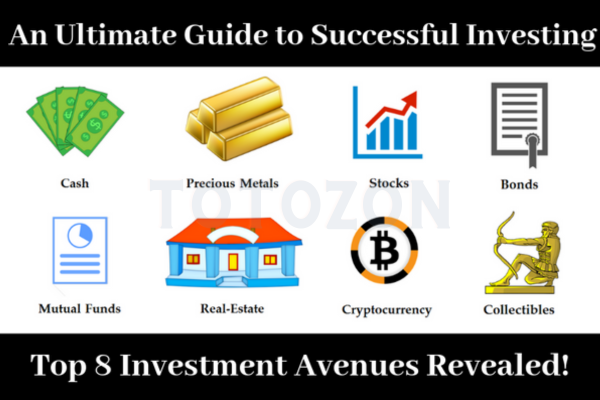 An Ultimate Guide to Successful Investing with Trading Tuitions
1 × $23.00
An Ultimate Guide to Successful Investing with Trading Tuitions
1 × $23.00 -
×
 The Compleat Day Trader with Jake Bernstein
1 × $6.00
The Compleat Day Trader with Jake Bernstein
1 × $6.00 -
×
 Fierce 10 On Demand Coaching Program with High Performance Trading
1 × $5.00
Fierce 10 On Demand Coaching Program with High Performance Trading
1 × $5.00 -
×
 Forecast 2024 Clarification with Larry Williams
1 × $15.00
Forecast 2024 Clarification with Larry Williams
1 × $15.00 -
×
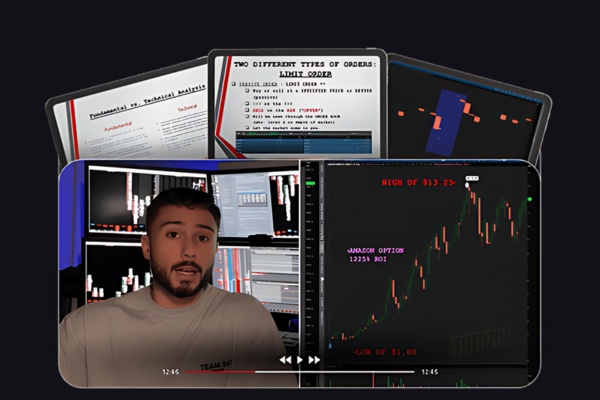 A-Z Course with InvestiTrade Academy
1 × $5.00
A-Z Course with InvestiTrade Academy
1 × $5.00 -
×
 Advanced GET 8.0 EOD
1 × $6.00
Advanced GET 8.0 EOD
1 × $6.00 -
×
 Systems Mastery Course with Chris Dover - Pollinate Trading
1 × $5.00
Systems Mastery Course with Chris Dover - Pollinate Trading
1 × $5.00 -
×
 TECHNICAL ANALYSIS MODULE
1 × $6.00
TECHNICAL ANALYSIS MODULE
1 × $6.00 -
×
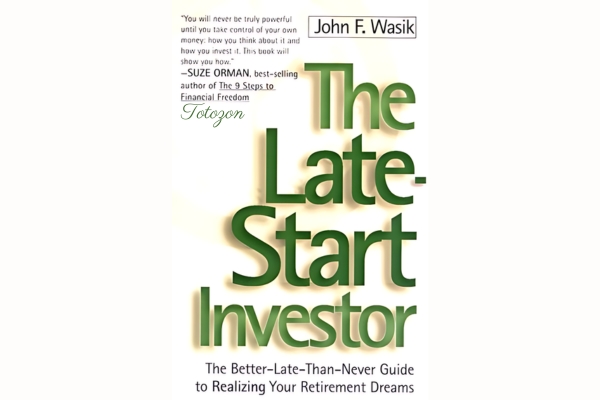 The Late-Start Investor with John Wasik
1 × $6.00
The Late-Start Investor with John Wasik
1 × $6.00 -
×
 Textbook Trading DVD with InvestorsLive
1 × $6.00
Textbook Trading DVD with InvestorsLive
1 × $6.00 -
×
 Empirical Market Microstructure
1 × $6.00
Empirical Market Microstructure
1 × $6.00 -
×
 Fibonacci Ratios with Pattern Recognition - Larry Pesavento & Steven Shapiro
1 × $6.00
Fibonacci Ratios with Pattern Recognition - Larry Pesavento & Steven Shapiro
1 × $6.00 -
×
 CANDLESTICKS APPLIED with Steve Nison & Syl Desaulniers - Candle Charts
1 × $15.00
CANDLESTICKS APPLIED with Steve Nison & Syl Desaulniers - Candle Charts
1 × $15.00 -
×
 Defending Options with Simpler Options
1 × $6.00
Defending Options with Simpler Options
1 × $6.00 -
×
 Fundamentals of Forex Trading with Joshua Garrison
1 × $5.00
Fundamentals of Forex Trading with Joshua Garrison
1 × $5.00 -
×
 Deep Dive Butterfly Trading Strategy Class with SJG Trades
1 × $41.00
Deep Dive Butterfly Trading Strategy Class with SJG Trades
1 × $41.00 -
×
 Edz Currency Trading Package with EDZ Trading Academy
1 × $5.00
Edz Currency Trading Package with EDZ Trading Academy
1 × $5.00 -
×
 Advanced Trading Techniques 2 CDs with Sammy Chua
1 × $6.00
Advanced Trading Techniques 2 CDs with Sammy Chua
1 × $6.00 -
×
 Scientific Forex with Cristina Ciurea
1 × $6.00
Scientific Forex with Cristina Ciurea
1 × $6.00 -
×
 Setups of a Winning Trader with Gareth Soloway
1 × $521.00
Setups of a Winning Trader with Gareth Soloway
1 × $521.00 -
×
 Quantamentals - The Next Great Forefront Of Trading and Investing with Trading Markets
1 × $8.00
Quantamentals - The Next Great Forefront Of Trading and Investing with Trading Markets
1 × $8.00 -
×
 Maximizing Profits with Weekly Options with Optionpit
1 × $15.00
Maximizing Profits with Weekly Options with Optionpit
1 × $15.00 -
×
 Ahead of the Curve with Joseph Ellis
1 × $6.00
Ahead of the Curve with Joseph Ellis
1 × $6.00 -
×
 Fixed Income Securities (2nd Ed.) with Bruce Tuckman
1 × $10.00
Fixed Income Securities (2nd Ed.) with Bruce Tuckman
1 × $10.00 -
×
 Developing Mindfulness: The Observer of Thought with Traders State Of Mind
1 × $6.00
Developing Mindfulness: The Observer of Thought with Traders State Of Mind
1 × $6.00 -
×
 How To Become StressFree Trader with Jason Starzec
1 × $4.00
How To Become StressFree Trader with Jason Starzec
1 × $4.00 -
×
 Futures & Options Course with Talkin Options
1 × $15.00
Futures & Options Course with Talkin Options
1 × $15.00 -
×
 Dan Sheridan Delta Force
1 × $6.00
Dan Sheridan Delta Force
1 × $6.00 -
×
 Divergence Super BluePrint with Bill Poulos
1 × $6.00
Divergence Super BluePrint with Bill Poulos
1 × $6.00 -
×
 Studies in Stock Speculation (Volume I & II) with H.J.Wolf
1 × $6.00
Studies in Stock Speculation (Volume I & II) with H.J.Wolf
1 × $6.00 -
×
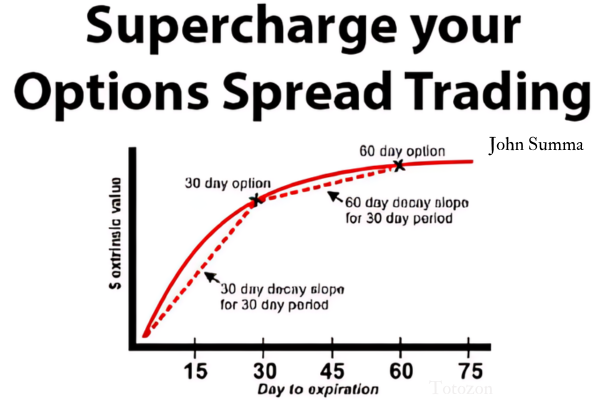 Supercharge your Options Spread Trading with John Summa
1 × $6.00
Supercharge your Options Spread Trading with John Summa
1 × $6.00 -
×
 Simpler Traders - Ultimate Guide to Debit Spreads (PREMIUM)
1 × $39.00
Simpler Traders - Ultimate Guide to Debit Spreads (PREMIUM)
1 × $39.00 -
×
 Essentials in Quantitative Trading QT01 By HangukQuant's
1 × $23.00
Essentials in Quantitative Trading QT01 By HangukQuant's
1 × $23.00 -
×
 The Age of Turbulence with Alan Greenspan
1 × $6.00
The Age of Turbulence with Alan Greenspan
1 × $6.00 -
×
 The Loyalty Effect with Frederick Reichheld
1 × $6.00
The Loyalty Effect with Frederick Reichheld
1 × $6.00 -
×
 NY 6 - Jason McDonald – Why Shorts are Hard to Find and How You Can Find Great Shorts
1 × $6.00
NY 6 - Jason McDonald – Why Shorts are Hard to Find and How You Can Find Great Shorts
1 × $6.00 -
×
 GANNacci Code Elite + Training Course
1 × $31.00
GANNacci Code Elite + Training Course
1 × $31.00 -
×
 Channel Analysis. The Key to Improved Timing of Trades with Brian J.Millard
1 × $6.00
Channel Analysis. The Key to Improved Timing of Trades with Brian J.Millard
1 × $6.00 -
×
 A Day In The Life Of A Forex Trader with Vic Noble & Shirley Hudson
1 × $23.00
A Day In The Life Of A Forex Trader with Vic Noble & Shirley Hudson
1 × $23.00 -
×
 The Art of the Trade: What I Learned (and Lost) Trading the Chicago Futures Markets - Jason Alan Jankovsky
1 × $6.00
The Art of the Trade: What I Learned (and Lost) Trading the Chicago Futures Markets - Jason Alan Jankovsky
1 × $6.00 -
×
 5 Day Bootcamp with AWFX AnthonysWorld
1 × $34.00
5 Day Bootcamp with AWFX AnthonysWorld
1 × $34.00 -
×
 Covered Calls Income Generation for Your Stocks With Don Kaufman
1 × $6.00
Covered Calls Income Generation for Your Stocks With Don Kaufman
1 × $6.00 -
×
 Japanese Trading Systems with Tradesmart University
1 × $9.00
Japanese Trading Systems with Tradesmart University
1 × $9.00 -
×
 8 Successful Iron Condor Methodologies with Dan Sheridan
1 × $23.00
8 Successful Iron Condor Methodologies with Dan Sheridan
1 × $23.00 -
×
 Day Trade Futures Online with Larry Williams
1 × $6.00
Day Trade Futures Online with Larry Williams
1 × $6.00 -
×
 Trading With an Edge with Bruce Gilmore
1 × $6.00
Trading With an Edge with Bruce Gilmore
1 × $6.00 -
×
 PFAZoneSuite [Trading Indicator] 2017
1 × $109.00
PFAZoneSuite [Trading Indicator] 2017
1 × $109.00 -
×
 3 Day Live Trading Webinar (Jan 2010)
1 × $6.00
3 Day Live Trading Webinar (Jan 2010)
1 × $6.00 -
×
 High Probability Trading Using Elliott Wave And Fibonacci Analysis withVic Patel - Forex Training Group
1 × $10.00
High Probability Trading Using Elliott Wave And Fibonacci Analysis withVic Patel - Forex Training Group
1 × $10.00

The Noise Trader Approach to Finance (Article) with Andrei Schleifer, Laurence H.Summers
$6.00
File Size: Cooming soon!
Delivery Time: 1–12 hours
Media Type: Online Course
Content Proof: Watch Here!
You may check content proof of “The Noise Trader Approach to Finance (Article) with Andrei Schleifer, Laurence H.Summers” below:

The Noise Trader Approach to Finance with Andrei Shleifer and Laurence H. Summers
Introduction to Noise Trader Theory
In the realm of finance, understanding market behavior is crucial. Andrei Shleifer and Laurence H. Summers introduced the concept of noise trading, which explores how irrational behavior affects financial markets. This article delves into the noise trader approach, its implications, and strategies for navigating such markets.
What is Noise Trading?
Definition and Concept
Noise trading refers to trading based on misinformation, irrational beliefs, or speculation rather than fundamental information. Noise traders make decisions influenced by market noise, rather than underlying financial realities.
Impact on Market Efficiency
Noise trading challenges the Efficient Market Hypothesis (EMH), which posits that markets are rational and prices reflect all available information. Noise traders create price anomalies and market inefficiencies.
Key Contributions by Shleifer and Summers
Who are Andrei Shleifer and Laurence H. Summers?
Andrei Shleifer is a renowned economist known for his work in behavioral finance, while Laurence H. Summers is an influential economist and former U.S. Treasury Secretary. Their collaboration has significantly impacted our understanding of financial markets.
The Noise Trader Approach
Their seminal work suggests that noise traders can impact asset prices significantly, causing deviations from fundamental values. These deviations can persist and create opportunities for profit.
Mechanisms of Noise Trading
Behavioral Biases
Noise traders are often influenced by cognitive biases such as overconfidence, herd behavior, and loss aversion. These biases lead to irrational decision-making.
Market Sentiment
Market sentiment, driven by noise traders, can cause price fluctuations that do not align with fundamental values. Positive or negative sentiment can drive prices away from their intrinsic value.
Speculative Bubbles
Noise trading can contribute to the formation of speculative bubbles, where asset prices inflate beyond their intrinsic value due to irrational exuberance.
Implications for Financial Markets
Market Volatility
Noise trading increases market volatility, as prices fluctuate based on irrational behavior rather than fundamentals. This can lead to unpredictable and sharp price movements.
Risk and Return
The presence of noise traders affects the risk-return profile of investments. While it can create opportunities for arbitrage, it also introduces additional risk.
Market Inefficiencies
Noise trading contributes to market inefficiencies, where prices deviate from their true value. This challenges the notion that markets are always rational and efficient.
Strategies for Navigating Noise-Driven Markets
1. Fundamental Analysis
Relying on fundamental analysis can help investors identify mispriced assets. By focusing on financial statements and intrinsic values, investors can make informed decisions.
2. Behavioral Analysis
Incorporating behavioral analysis into investment strategies can provide insights into market sentiment and potential irrational behavior.
3. Diversification
Diversifying investments across different asset classes and markets can help mitigate the risks associated with noise trading.
4. Risk Management
Implementing robust risk management practices, such as stop-loss orders and position sizing, can protect against the unpredictability caused by noise traders.
Case Studies of Noise Trading
Dot-Com Bubble
The dot-com bubble of the late 1990s is a classic example of noise trading. Irrational exuberance drove technology stock prices to unsustainable levels, followed by a sharp correction.
2008 Financial Crisis
The 2008 financial crisis highlighted the impact of noise trading in the housing market, where speculative behavior and misinformation contributed to the market collapse.
The Future of Noise Trading
Technological Advancements
Advances in technology and data analytics may help mitigate the impact of noise trading by improving information dissemination and analysis.
Regulatory Changes
Regulatory changes aimed at increasing market transparency and reducing information asymmetry can help reduce the prevalence of noise trading.
Behavioral Insights
Incorporating behavioral insights into economic models and investment strategies can provide a more comprehensive understanding of market dynamics and help manage noise trading effects.
Conclusion
The noise trader approach to finance, as explored by Andrei Shleifer and Laurence H. Summers, provides valuable insights into market behavior and inefficiencies. By understanding the impact of noise traders and implementing strategies to navigate such markets, investors can better manage risks and capitalize on opportunities. Embrace these insights, apply them diligently, and refine your investment approach to achieve better financial outcomes.
Frequently Asked Questions
What is noise trading?
Noise trading refers to trading based on misinformation, irrational beliefs, or speculation rather than fundamental information.
Who are Andrei Shleifer and Laurence H. Summers?
Andrei Shleifer is a prominent economist known for his work in behavioral finance, and Laurence H. Summers is an influential economist and former U.S. Treasury Secretary.
How does noise trading affect financial markets?
Noise trading increases market volatility, creates price anomalies, and contributes to market inefficiencies.
What strategies can help navigate noise-driven markets?
Strategies include relying on fundamental analysis, incorporating behavioral analysis, diversifying investments, and implementing robust risk management practices.
What are some examples of noise trading?
Examples include the dot-com bubble of the late 1990s and the 2008 financial crisis, where speculative behavior and misinformation led to market anomalies.
Be the first to review “The Noise Trader Approach to Finance (Article) with Andrei Schleifer, Laurence H.Summers”
You must be logged in to post a review.
Related products

Original price was: $799.00.$15.00Current price is: $15.00.

Forex Trading
Original price was: $799.00.$15.00Current price is: $15.00.

Original price was: $1,800.00.$54.00Current price is: $54.00.

Forex Trading
Original price was: $500.00.$5.00Current price is: $5.00.

Original price was: $139.00.$23.00Current price is: $23.00.

Forex Trading
Original price was: $125.00.$17.00Current price is: $17.00.

Original price was: $700.00.$39.00Current price is: $39.00.

Original price was: $197.00.$5.00Current price is: $5.00.

Forex Trading
Original price was: $397.00.$31.00Current price is: $31.00.

Original price was: $299.00.$8.00Current price is: $8.00.

Original price was: $497.00.$31.00Current price is: $31.00.

Original price was: $895.00.$15.00Current price is: $15.00.
Forex Trading
Quantamentals – The Next Great Forefront Of Trading and Investing with Trading Markets
Original price was: $1,495.00.$8.00Current price is: $8.00.

Forex Trading
Original price was: $4,997.00.$27.00Current price is: $27.00.
Forex Trading
Original price was: $850.00.$23.00Current price is: $23.00.

Forex Trading
Original price was: $2,997.00.$23.00Current price is: $23.00.

Forex Trading
Original price was: $239.00.$8.00Current price is: $8.00.

Forex Trading
Original price was: $1,098.00.$39.00Current price is: $39.00.

Original price was: $497.00.$11.00Current price is: $11.00.

Forex Trading
Original price was: $2,000.00.$23.00Current price is: $23.00.
Reviews
There are no reviews yet.