
-
×
 Advanced Spread Trading with Guy Bower - MasterClass Trader
1 × $15.00
Advanced Spread Trading with Guy Bower - MasterClass Trader
1 × $15.00 -
×
 $20 – 52k 20 pips a day challange with Rafał Zuchowicz - TopMasterTrader
1 × $5.00
$20 – 52k 20 pips a day challange with Rafał Zuchowicz - TopMasterTrader
1 × $5.00 -
×
 Home Run Options Trading Course with Dave Aquino - Base Camp Trading
1 × $11.00
Home Run Options Trading Course with Dave Aquino - Base Camp Trading
1 × $11.00 -
×
 The Orderflow Masterclass with PrimeTrading
1 × $17.00
The Orderflow Masterclass with PrimeTrading
1 × $17.00 -
×
 TradeCraft: Your Path to Peak Performance Trading By Adam Grimes
1 × $15.00
TradeCraft: Your Path to Peak Performance Trading By Adam Grimes
1 × $15.00 -
×
 Best of the Best: Collars with Amy Meissner & Scott Ruble
1 × $15.00
Best of the Best: Collars with Amy Meissner & Scott Ruble
1 × $15.00 -
×
 AI For Traders with Trading Markets
1 × $31.00
AI For Traders with Trading Markets
1 × $31.00 -
×
 Crystal Ball Pack PLUS bonus Live Trade By Pat Mitchell - Trick Trades
1 × $20.00
Crystal Ball Pack PLUS bonus Live Trade By Pat Mitchell - Trick Trades
1 × $20.00 -
×
 The Orderflows Trade Opportunities Encyclopedia with Michael Valtos
1 × $8.00
The Orderflows Trade Opportunities Encyclopedia with Michael Valtos
1 × $8.00 -
×
 The Best Option Trading Course with David Jaffee - Best Stock Strategy
1 × $15.00
The Best Option Trading Course with David Jaffee - Best Stock Strategy
1 × $15.00 -
×
 The Complete Guide to Multiple Time Frame Analysis & Reading Price Action with Aiman Almansoori
1 × $13.00
The Complete Guide to Multiple Time Frame Analysis & Reading Price Action with Aiman Almansoori
1 × $13.00 -
×
 The Indices Orderflow Masterclass with The Forex Scalpers
1 × $23.00
The Indices Orderflow Masterclass with The Forex Scalpers
1 × $23.00 -
×
 Trading Short TermSame Day Trades Sep 2023 with Dan Sheridan & Mark Fenton - Sheridan Options Mentoring
1 × $31.00
Trading Short TermSame Day Trades Sep 2023 with Dan Sheridan & Mark Fenton - Sheridan Options Mentoring
1 × $31.00 -
×
 How To Read The Market Professionally with TradeSmart
1 × $27.00
How To Read The Market Professionally with TradeSmart
1 × $27.00 -
×
 Quantamentals - The Next Great Forefront Of Trading and Investing with Trading Markets
1 × $8.00
Quantamentals - The Next Great Forefront Of Trading and Investing with Trading Markets
1 × $8.00 -
×
 W. D Gann 's Square Of 9 Applied To Modern Markets with Sean Avidar - Hexatrade350
1 × $23.00
W. D Gann 's Square Of 9 Applied To Modern Markets with Sean Avidar - Hexatrade350
1 × $23.00 -
×
 Algo Trading Masterclass with Ali Casey - StatOasis
1 × $23.00
Algo Trading Masterclass with Ali Casey - StatOasis
1 × $23.00 -
×
 Deep Dive Butterfly Trading Strategy Class with SJG Trades
1 × $41.00
Deep Dive Butterfly Trading Strategy Class with SJG Trades
1 × $41.00 -
×
 The A14 Weekly Option Strategy Workshop with Amy Meissner
1 × $23.00
The A14 Weekly Option Strategy Workshop with Amy Meissner
1 × $23.00 -
×
 White Phoenix’s The Smart (Money) Approach to Trading with Jayson Casper
1 × $39.00
White Phoenix’s The Smart (Money) Approach to Trading with Jayson Casper
1 × $39.00 -
×
 Bond Market Course with The Macro Compass
1 × $15.00
Bond Market Course with The Macro Compass
1 × $15.00
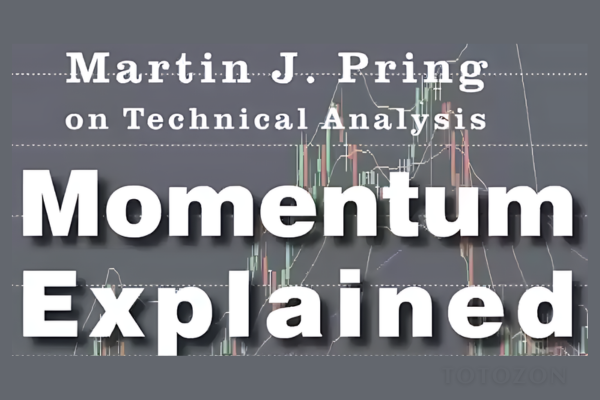
Momentum Explained
$6.00
File Size: Coming soon!
Delivery Time: 1–12 hours
Media Type: Online Course
Momentum Trading Explained: Strategies and Indicators
Introduction
In the world of trading and investing, momentum is a key concept that can significantly impact your strategy and success. But what exactly is momentum, and how can we use it to our advantage? In this article, we will explore momentum explained, breaking down its components, how it works, and how you can effectively incorporate it into your trading approach.
What is Momentum?
1. Definition of Momentum
Momentum, in the financial context, refers to the rate at which the price of a security changes. It is the tendency of an asset to continue moving in its current direction—upward or downward.
2. The Physics of Momentum
Just like in physics, where momentum is the product of mass and velocity, in trading, it involves the volume of trades and the speed of price changes.
Why Momentum Matters in Trading
1. Identifying Trends
Momentum helps traders identify and confirm trends, ensuring they enter trades at the right time.
2. Predicting Continuation
A strong momentum often suggests that a trend will continue, giving traders confidence in their positions.
3. Timing Entries and Exits
Momentum indicators can provide precise timing for entering and exiting trades.
Key Momentum Indicators
1. Relative Strength Index (RSI)
RSI measures the magnitude of recent price changes to evaluate overbought or oversold conditions.
2. Moving Average Convergence Divergence (MACD)
MACD tracks the difference between two moving averages of a security’s price and signals momentum shifts.
3. Stochastic Oscillator
This compares a particular closing price to a range of its prices over a certain period, indicating momentum strength.
Calculating Momentum
1. Simple Momentum Calculation
Momentum = Current Price – Price n Periods Ago
2. Rate of Change (ROC)
ROC = (Current Price – Price n Periods Ago) / Price n Periods Ago * 100
Using Momentum in Trading Strategies
1. Trend Following
Use momentum to confirm trends and ride the wave of strong price movements.
2. Reversal Trading
Identify overbought or oversold conditions to anticipate and trade reversals.
3. Breakout Trading
Utilize momentum indicators to identify and trade breakouts from key levels of support or resistance.
Practical Examples of Momentum Trading
1. Bullish Momentum
In a bullish scenario, momentum indicators signal strong upward price movement, suggesting buying opportunities.
2. Bearish Momentum
In a bearish scenario, momentum indicators signal strong downward price movement, suggesting selling opportunities.
Advantages of Momentum Trading
1. Potential for High Returns
Capitalizing on strong price movements can lead to significant profits.
2. Clear Signals
Momentum indicators often provide clear buy and sell signals, reducing ambiguity in trading decisions.
3. Adaptability
Momentum trading strategies can be adapted to various markets, including stocks, forex, and commodities.
Challenges of Momentum Trading
1. False Signals
Momentum indicators can sometimes produce false signals, leading to potential losses.
2. Market Volatility
Highly volatile markets can make it difficult to accurately gauge momentum.
3. Requires Quick Decision-Making
Successful momentum trading often requires the ability to make quick decisions, which can be challenging for some traders.
Risk Management in Momentum Trading
1. Setting Stop-Loss Orders
Always set stop-loss orders to protect against significant losses if the market moves against your position.
2. Position Sizing
Determine the appropriate amount of capital to risk on each trade based on your overall risk tolerance.
3. Regularly Reviewing Strategies
Regularly review and adjust your momentum trading strategies to adapt to changing market conditions.
Tools and Resources for Momentum Trading
1. Trading Platforms
Choose a trading platform that offers robust charting tools and a wide range of momentum indicators.
2. Educational Resources
Utilize books, online courses, and webinars to deepen your understanding of momentum trading.
3. Trading Communities
Join online trading communities to share insights and strategies with fellow traders.
Developing a Momentum Trading Plan
1. Define Your Goals
Clearly define your trading goals, including your desired return on investment and risk tolerance.
2. Choose Your Indicators
Select the momentum indicators that best suit your trading style and strategy.
3. Test and Refine Your Strategy
Backtest your momentum trading strategy using historical data and refine it based on your results.
Conclusion
Momentum is a powerful tool in the arsenal of traders and investors. By understanding and effectively using momentum indicators, you can enhance your trading strategy and increase your chances of success. Remember to manage your risk carefully and continuously improve your approach to adapt to the ever-changing market conditions.
Commonly Asked Questions:
- Business Model Innovation: Accept the truth of a legitimate business! Our strategy is organising a group buy in which participants share the costs. We use these cash to acquire popular courses from sale pages and make them available to people with limited financial resources. Despite the authors’ worries, our clients love the cost and accessibility we give.
- The Legal Environment: Yes or No The legality of our activity is ambiguous. While we don’t have specific permission from the course authors to resell the material, there is a technicality at work. The author did not specify any limits on resale when purchasing the course. This legal intricacy is both an opportunity for us and a boon for individuals looking for low-cost access.
- Quality Control: Uncovering the Truth
Getting to the heart of the issue – quality. Purchasing the course straight from the sale page guarantees that all documents and resources are the same as those obtained through traditional channels.
However, we distinguish ourselves by going beyond personal research and resale. It is crucial to note that we are not the official course providers, which means that the following premium services are not included in our package:
- There are no scheduled coaching calls or sessions with the author.
- Access to the author’s private Facebook group or web portal is not permitted.
- No access to the author’s private membership forum.
- There is no direct email support available from the author or their team.
We operate independently, with the goal of bridging the pricing gap without the extra services provided by official course channels. Your comprehension of our distinct approach is much appreciated.
Be the first to review “Momentum Explained”
You must be logged in to post a review.
Related products
Original price was: $450.00.$23.00Current price is: $23.00.
Forex Trading
Original price was: $2,995.00.$31.00Current price is: $31.00.
Original price was: $139.00.$23.00Current price is: $23.00.

Original price was: $999.00.$5.00Current price is: $5.00.
Original price was: $895.00.$15.00Current price is: $15.00.

Forex Trading
Original price was: $799.00.$15.00Current price is: $15.00.
Forex Trading
Original price was: $397.00.$31.00Current price is: $31.00.

Forex Trading
Original price was: $2,997.00.$23.00Current price is: $23.00.
Original price was: $497.00.$11.00Current price is: $11.00.

Forex Trading
Original price was: $1,898.00.$10.00Current price is: $10.00.
Original price was: $1,849.00.$15.00Current price is: $15.00.
Original price was: $700.00.$39.00Current price is: $39.00.

Original price was: $1,800.00.$54.00Current price is: $54.00.
Forex Trading
Original price was: $4,997.00.$27.00Current price is: $27.00.

Forex Trading
Original price was: $999.00.$15.00Current price is: $15.00.
Forex Trading
Original price was: $2,000.00.$23.00Current price is: $23.00.
Original price was: $649.00.$20.00Current price is: $20.00.

Original price was: $997.00.$8.00Current price is: $8.00.

Forex Trading
Original price was: $850.00.$23.00Current price is: $23.00.
Original price was: $299.00.$8.00Current price is: $8.00.
Reviews
There are no reviews yet.