
-
×
 ValueCharts Ultimate Bundle with Base Camp Trading
1 × $54.00
ValueCharts Ultimate Bundle with Base Camp Trading
1 × $54.00 -
×
 High Probability Trading Using Elliott Wave And Fibonacci Analysis withVic Patel - Forex Training Group
1 × $10.00
High Probability Trading Using Elliott Wave And Fibonacci Analysis withVic Patel - Forex Training Group
1 × $10.00 -
×
 Profit Generating System with Brian Williams
1 × $6.00
Profit Generating System with Brian Williams
1 × $6.00 -
×
 Fibonacci Trading & Dynamic Profit Targeting with Base Camp Trading
1 × $15.00
Fibonacci Trading & Dynamic Profit Targeting with Base Camp Trading
1 × $15.00 -
×
 White Phoenix’s The Smart (Money) Approach to Trading with Jayson Casper
1 × $39.00
White Phoenix’s The Smart (Money) Approach to Trading with Jayson Casper
1 × $39.00 -
×
 0 DTE Options Trading Workshop with Aeromir Corporation
1 × $15.00
0 DTE Options Trading Workshop with Aeromir Corporation
1 × $15.00 -
×
 5 Technical Signals You Should Not Trade Without (4 CDs) with Toni Hansen
1 × $6.00
5 Technical Signals You Should Not Trade Without (4 CDs) with Toni Hansen
1 × $6.00 -
×
 5 Basic Elliott Wave Patterns + Technical Tools = Trading Success with Jeffrey Kennedy
1 × $15.00
5 Basic Elliott Wave Patterns + Technical Tools = Trading Success with Jeffrey Kennedy
1 × $15.00 -
×
 The A to Z of Mathematics: A Basic Guide with Thomas Sidebotham
1 × $6.00
The A to Z of Mathematics: A Basic Guide with Thomas Sidebotham
1 × $6.00 -
×
 Ultimate Trading Course with Dodgy's Dungeon
1 × $8.00
Ultimate Trading Course with Dodgy's Dungeon
1 × $8.00 -
×
 Forecast 2024 Clarification with Larry Williams
1 × $15.00
Forecast 2024 Clarification with Larry Williams
1 × $15.00 -
×
 Quantamentals - The Next Great Forefront Of Trading and Investing with Trading Markets
1 × $8.00
Quantamentals - The Next Great Forefront Of Trading and Investing with Trading Markets
1 × $8.00 -
×
 Pairs Trading The Final Frontier with Don Kaufman
1 × $6.00
Pairs Trading The Final Frontier with Don Kaufman
1 × $6.00 -
×
 The Trading Blueprint with Brad Goh - The Trading Geek
1 × $5.00
The Trading Blueprint with Brad Goh - The Trading Geek
1 × $5.00 -
×
 TRADING NFX Course with Andrew NFX
1 × $5.00
TRADING NFX Course with Andrew NFX
1 × $5.00 -
×
 $20 – 52k 20 pips a day challange with Rafał Zuchowicz - TopMasterTrader
1 × $5.00
$20 – 52k 20 pips a day challange with Rafał Zuchowicz - TopMasterTrader
1 × $5.00 -
×
 How To Invest Better
1 × $6.00
How To Invest Better
1 × $6.00 -
×
 Candlestick Patterns to Master Forex Trading Price Action with Federico Sellitti
1 × $6.00
Candlestick Patterns to Master Forex Trading Price Action with Federico Sellitti
1 × $6.00 -
×
 Trading 3SMA System with Hector DeVille
1 × $6.00
Trading 3SMA System with Hector DeVille
1 × $6.00 -
×
 The Bond Book (2nd Ed.) with Annette Thau
1 × $6.00
The Bond Book (2nd Ed.) with Annette Thau
1 × $6.00 -
×
 MorningSwing Method with Austin Passamonte
1 × $6.00
MorningSwing Method with Austin Passamonte
1 × $6.00 -
×
 A Grand Supercycle Top Webinar with Steven Hochberg
1 × $6.00
A Grand Supercycle Top Webinar with Steven Hochberg
1 × $6.00 -
×
 LEAPS Trading Strategies- Powerful Techniques for Options Trading Success - Marty Kearney
1 × $6.00
LEAPS Trading Strategies- Powerful Techniques for Options Trading Success - Marty Kearney
1 × $6.00 -
×
 The Best Option Trading Course with David Jaffee - Best Stock Strategy
1 × $15.00
The Best Option Trading Course with David Jaffee - Best Stock Strategy
1 × $15.00 -
×
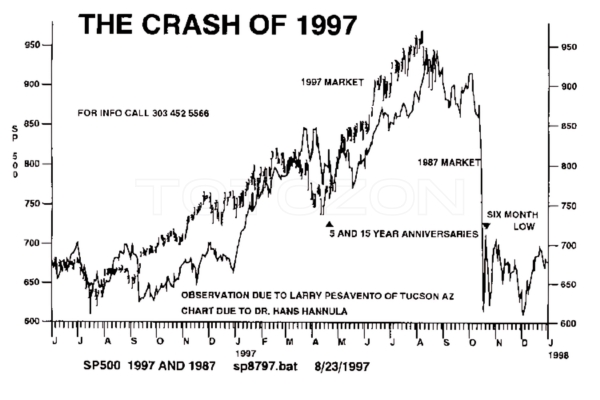 The Crash of 1997 (Article) with Hans Hannula
1 × $6.00
The Crash of 1997 (Article) with Hans Hannula
1 × $6.00 -
×
 Advanced Spread Trading with Guy Bower - MasterClass Trader
1 × $15.00
Advanced Spread Trading with Guy Bower - MasterClass Trader
1 × $15.00 -
×
 Futures Trading Secrets Home Study Course 2008 with Bill McCready
1 × $6.00
Futures Trading Secrets Home Study Course 2008 with Bill McCready
1 × $6.00 -
×
 W. D Gann 's Square Of 9 Applied To Modern Markets with Sean Avidar - Hexatrade350
1 × $23.00
W. D Gann 's Square Of 9 Applied To Modern Markets with Sean Avidar - Hexatrade350
1 × $23.00 -
×
 SQX Mentorship with Tip Toe Hippo
1 × $23.00
SQX Mentorship with Tip Toe Hippo
1 × $23.00 -
×
 The All Put Flat Butterfly with Dan Sheridan - Sheridan Options Mentoring
1 × $6.00
The All Put Flat Butterfly with Dan Sheridan - Sheridan Options Mentoring
1 × $6.00 -
×
 Gold Trading Boot Camp: How to Master the Basics and Become a Successful Commodities Investor - Gregory Weldon & Dennis Gartman
1 × $6.00
Gold Trading Boot Camp: How to Master the Basics and Become a Successful Commodities Investor - Gregory Weldon & Dennis Gartman
1 × $6.00 -
×
 Forex Fortune Factory with Nehemiah Douglass & Cottrell Phillip
1 × $5.00
Forex Fortune Factory with Nehemiah Douglass & Cottrell Phillip
1 × $5.00 -
×
 Financial Fortress with TradeSmart University
1 × $6.00
Financial Fortress with TradeSmart University
1 × $6.00 -
×
 Euro Trading Course with Bkforex
1 × $6.00
Euro Trading Course with Bkforex
1 × $6.00 -
×
 Trading as a Business with Alexander Elder
1 × $6.00
Trading as a Business with Alexander Elder
1 × $6.00 -
×
 Options Trading & Ultimate MasterClass With Tyrone Abela - FX Evolution
1 × $54.00
Options Trading & Ultimate MasterClass With Tyrone Abela - FX Evolution
1 × $54.00 -
×
 Options Academy Elevate with Simon Ree - Tao of Trading
1 × $109.00
Options Academy Elevate with Simon Ree - Tao of Trading
1 × $109.00 -
×
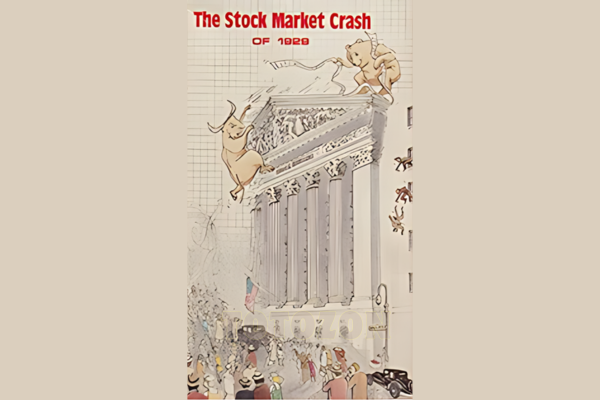 Stock Market Crash of 1929 with Aron Abrams
1 × $6.00
Stock Market Crash of 1929 with Aron Abrams
1 × $6.00 -
×
 Predators & Profits with Martin Howell & John Bogle
1 × $6.00
Predators & Profits with Martin Howell & John Bogle
1 × $6.00 -
×
 The LP Trading Course
1 × $13.00
The LP Trading Course
1 × $13.00 -
×
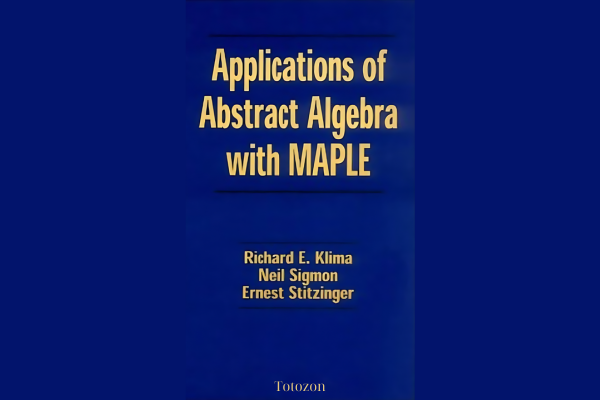 Applications of Abstract Algebra with Maple - Richard E.Kline, Neil Sigmon, Ernst Stitzinger
1 × $6.00
Applications of Abstract Algebra with Maple - Richard E.Kline, Neil Sigmon, Ernst Stitzinger
1 × $6.00 -
×
 S&P 500 Secrets + Next Level Risk Management with Tradacc
1 × $8.00
S&P 500 Secrets + Next Level Risk Management with Tradacc
1 × $8.00 -
×
 ICT Prodigy Trading Course – $650K in Payouts with Alex Solignani
1 × $15.00
ICT Prodigy Trading Course – $650K in Payouts with Alex Solignani
1 × $15.00 -
×
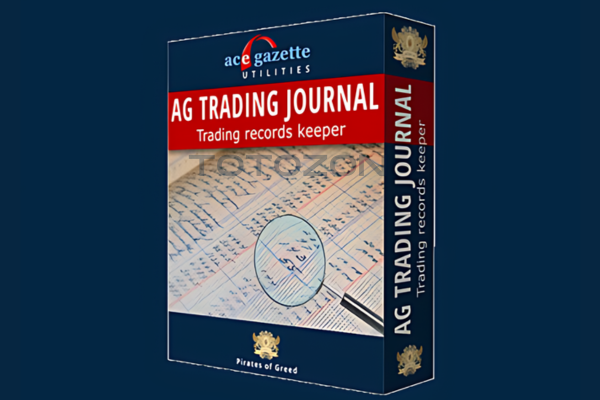 AG Trading Journal with Ace Gazette
1 × $6.00
AG Trading Journal with Ace Gazette
1 × $6.00 -
×
 Volume Profile 2023 (Order Flow Pack) with Trader Dale
1 × $5.00
Volume Profile 2023 (Order Flow Pack) with Trader Dale
1 × $5.00 -
×
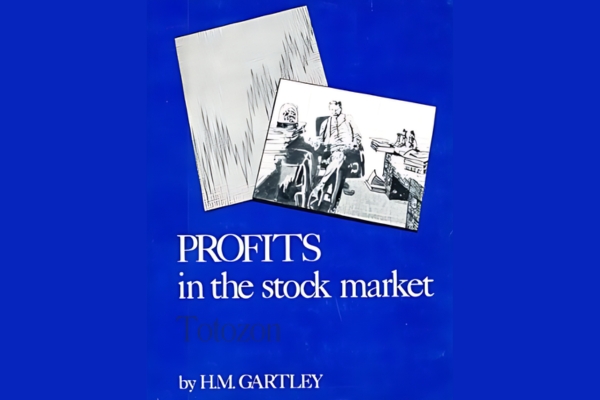 Profits in the Stock Market with Harold Gartley
1 × $6.00
Profits in the Stock Market with Harold Gartley
1 × $6.00 -
×
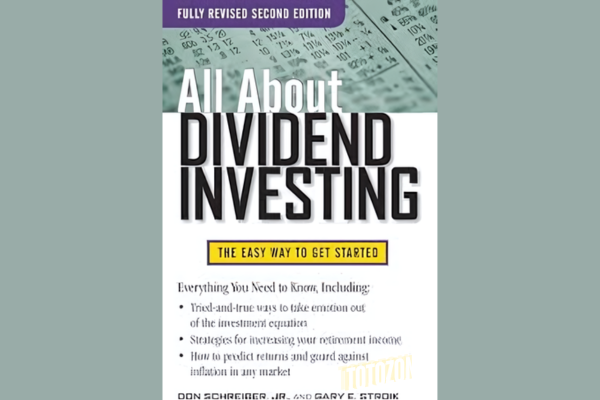 All About Dividend Investing with Don Schreiber & Gary Stroik
1 × $6.00
All About Dividend Investing with Don Schreiber & Gary Stroik
1 × $6.00 -
×
 The Orderflow Masterclass with PrimeTrading
1 × $17.00
The Orderflow Masterclass with PrimeTrading
1 × $17.00 -
×
 Strike Zone Strategy 2.0 Elite Package with Joe Rokop
1 × $39.00
Strike Zone Strategy 2.0 Elite Package with Joe Rokop
1 × $39.00 -
×
 A Game Plan for Investing in the 21st Century with Thomas J.Dorsey
1 × $6.00
A Game Plan for Investing in the 21st Century with Thomas J.Dorsey
1 × $6.00 -
×
 Butterfly and Condor Workshop with Aeromir
1 × $15.00
Butterfly and Condor Workshop with Aeromir
1 × $15.00 -
×
 Essentials in Quantitative Trading QT01 By HangukQuant's
1 × $23.00
Essentials in Quantitative Trading QT01 By HangukQuant's
1 × $23.00 -
×
 Profinacci Complete Course with Stephen A.Pierce
1 × $6.00
Profinacci Complete Course with Stephen A.Pierce
1 × $6.00 -
×
 Mastering Technical Analysis with Investi Share
1 × $23.00
Mastering Technical Analysis with Investi Share
1 × $23.00 -
×
 Master Class Recording 2019 with Oil Trading Academy
1 × $17.00
Master Class Recording 2019 with Oil Trading Academy
1 × $17.00 -
×
 The Orderflows Trade Opportunities Encyclopedia with Michael Valtos
1 × $8.00
The Orderflows Trade Opportunities Encyclopedia with Michael Valtos
1 × $8.00

Great Market Technicians of the 21st Century. Galileo, Fibonacci & Beethoven with Constance Brown
$6.00
File Size: Coming soon!
Delivery Time: 1–12 hours
Media Type: Online Course
Content Proof: Watch Here!
You may check content proof of “Great Market Technicians of the 21st Century. Galileo, Fibonacci & Beethoven with Constance Brown” below:

Great Market Technicians of the 21st Century: Galileo, Fibonacci & Beethoven with Constance Brown
Introduction
When we think of market technicians, names like Galileo, Fibonacci, and Beethoven might not immediately come to mind. Yet, through the lens of Constance Brown, these historical figures offer valuable insights into modern market analysis. Let’s explore how their principles apply to today’s financial markets.
Who is Constance Brown?
A Pioneering Market Technician
Constance Brown is a renowned market technician known for her innovative approaches to technical analysis. Her expertise spans across various market conditions, making her a trusted figure in the trading community.
Influential Works
Brown has authored several books, including “Technical Analysis for the Trading Professional,” which serve as key resources for traders worldwide.
Galileo: The Father of Modern Science
Galileo’s Contributions
Galileo Galilei revolutionized our understanding of the natural world with his scientific methods and discoveries. His emphasis on empirical evidence and observation laid the foundation for modern science.
Galileo’s Impact on Technical Analysis
In the realm of market analysis, Galileo’s method of systematic observation and data collection is mirrored in the use of charts and indicators. By observing market patterns, traders can make informed predictions.
Fibonacci: The Master of Numbers
Fibonacci Sequence
Leonardo Fibonacci introduced the world to the Fibonacci sequence, a series of numbers where each number is the sum of the two preceding ones. This sequence appears frequently in nature and financial markets.
Fibonacci Retracements
Fibonacci retracements are a popular tool among traders, used to identify potential support and resistance levels. By applying Fibonacci ratios to price movements, traders can anticipate market reversals.
Beethoven: The Musical Genius
Beethoven’s Structured Creativity
Ludwig van Beethoven, a towering figure in music, combined structure with creativity. His compositions are not only expressive but also meticulously crafted.
Applying Beethoven’s Principles to Trading
In trading, a balance between creativity and discipline is essential. Beethoven’s approach to music can inspire traders to develop structured yet flexible trading strategies.
Constance Brown’s Synthesis
Integrating Historical Insights
Brown adeptly integrates the methodologies of Galileo, Fibonacci, and Beethoven into her market analysis. This synthesis offers a comprehensive approach to understanding market dynamics.
Enhanced Technical Analysis
By drawing from these historical figures, Brown enhances traditional technical analysis, providing traders with robust tools to navigate complex markets.
Galileo’s Influence on Market Observation
Systematic Observation
Like Galileo’s meticulous observations of the stars, traders must carefully observe market trends and patterns to make informed decisions.
Empirical Data in Trading
Using empirical data, traders can validate their strategies, ensuring they are based on solid evidence rather than speculation.
Fibonacci’s Role in Market Prediction
Fibonacci Levels in Trading
Fibonacci levels are crucial for predicting market movements. By analyzing price retracements, traders can identify key levels of support and resistance.
Applying Fibonacci to Modern Markets
Fibonacci tools are widely used in various markets, from forex to stocks, providing a timeless method for market analysis.
Beethoven’s Structured Approach
Creating Trading Systems
Beethoven’s structured creativity can inspire traders to develop systematic trading plans. These plans should combine rigid rules with the flexibility to adapt to changing market conditions.
Discipline in Trading
Just as Beethoven adhered to strict musical forms, traders must maintain discipline in following their trading strategies.
Practical Applications
Day Trading with Galileo’s Methods
Day traders can benefit from Galileo’s systematic observation by closely monitoring intraday market patterns and adjusting their strategies accordingly.
Swing Trading Using Fibonacci Retracements
Swing traders can use Fibonacci retracements to identify optimal entry and exit points, enhancing their ability to capture market swings.
Long-Term Investing with Beethoven’s Principles
Long-term investors can apply Beethoven’s structured creativity by developing well-thought-out investment plans that allow for flexibility and innovation.
Common Mistakes to Avoid
Overlooking Empirical Data
Ignoring empirical data can lead to poor trading decisions. Traders must base their strategies on solid evidence.
Misapplying Fibonacci Levels
Incorrectly applying Fibonacci levels can result in missed opportunities. Proper understanding and application are essential.
Lack of Discipline
Without discipline, even the best trading plans can fail. Traders must remain committed to their strategies.
Developing a Comprehensive Trading Strategy
Incorporating Historical Insights
By integrating the insights of Galileo, Fibonacci, and Beethoven, traders can develop comprehensive strategies that account for various market factors.
Continuous Learning
Markets evolve, and so should trading strategies. Continuous learning and adaptation are key to long-term success.
Conclusion
The principles of Galileo, Fibonacci, and Beethoven, as interpreted by Constance Brown, offer valuable insights into modern market analysis. By integrating systematic observation, mathematical precision, and structured creativity, traders can enhance their strategies and achieve greater success.

FAQs
1. How does Constance Brown use Galileo’s methods in trading?
Brown applies Galileo’s systematic observation techniques to analyze market trends and patterns, providing a solid foundation for trading strategies.
2. What are Fibonacci retracements, and how are they used in trading?
Fibonacci retracements are levels used to identify potential support and resistance points by analyzing price movements. Traders use them to predict market reversals.
3. Can Beethoven’s principles be applied to trading?
Yes, Beethoven’s balance of structure and creativity can inspire traders to develop disciplined yet flexible trading strategies.
4. Why is empirical data important in trading?
Empirical data ensures that trading strategies are based on solid evidence rather than speculation, leading to more reliable decisions.
5. How can traders avoid common mistakes in market analysis?
Traders can avoid common mistakes by relying on empirical data, correctly applying Fibonacci levels, and maintaining discipline in their strategies.
Be the first to review “Great Market Technicians of the 21st Century. Galileo, Fibonacci & Beethoven with Constance Brown”
You must be logged in to post a review.
Related products

Original price was: $695.00.$41.00Current price is: $41.00.
Original price was: $895.00.$15.00Current price is: $15.00.
Forex Trading
Original price was: $799.00.$15.00Current price is: $15.00.
Forex Trading
Original price was: $125.00.$17.00Current price is: $17.00.
Original price was: $139.00.$23.00Current price is: $23.00.

Original price was: $310.00.$23.00Current price is: $23.00.
Forex Trading
Original price was: $249.00.$15.00Current price is: $15.00.

Forex Trading
Original price was: $1,098.00.$39.00Current price is: $39.00.

Original price was: $450.00.$23.00Current price is: $23.00.
Original price was: $700.00.$39.00Current price is: $39.00.

Original price was: $497.00.$31.00Current price is: $31.00.

Forex Trading
Original price was: $550.00.$5.00Current price is: $5.00.
Original price was: $197.00.$5.00Current price is: $5.00.

Original price was: $649.00.$20.00Current price is: $20.00.

Original price was: $1,200.00.$23.00Current price is: $23.00.

Forex Trading
Original price was: $4,997.00.$27.00Current price is: $27.00.
Forex Trading
Original price was: $239.00.$8.00Current price is: $8.00.
Forex Trading
Original price was: $797.00.$10.00Current price is: $10.00.

Original price was: $4,995.00.$15.00Current price is: $15.00.

Forex Trading
Original price was: $2,995.00.$31.00Current price is: $31.00.

Reviews
There are no reviews yet.