
-
×
 Fractal Markets FX (SMC)
1 × $5.00
Fractal Markets FX (SMC)
1 × $5.00 -
×
 Daryl Guppy Tutorials In Technical Analysis (2000-2001-2003-2004)
1 × $6.00
Daryl Guppy Tutorials In Technical Analysis (2000-2001-2003-2004)
1 × $6.00 -
×
 Scalp Strategy and Flipping Small Accounts with Opes Trading Group
1 × $5.00
Scalp Strategy and Flipping Small Accounts with Opes Trading Group
1 × $5.00 -
×
 Levelator Automatic Trading Machines-Russ Horn’s
1 × $23.00
Levelator Automatic Trading Machines-Russ Horn’s
1 × $23.00 -
×
 Complete Set of Members Area Files
1 × $6.00
Complete Set of Members Area Files
1 × $6.00 -
×
 MTA - Technically Speaking Newsletters
1 × $6.00
MTA - Technically Speaking Newsletters
1 × $6.00 -
×
 Volume Trader Course (SMART MONEY SYSTEM-in German)
1 × $139.00
Volume Trader Course (SMART MONEY SYSTEM-in German)
1 × $139.00 -
×
 Broke: The New American Dream with Michael Covel
1 × $6.00
Broke: The New American Dream with Michael Covel
1 × $6.00 -
×
 Fibonacci Mastery Course: Complete Guide to Trading with Fib By Todd Gordon
1 × $62.00
Fibonacci Mastery Course: Complete Guide to Trading with Fib By Todd Gordon
1 × $62.00 -
×
 Hit and Run Trading Updated Version with Jeff Cooper
1 × $6.00
Hit and Run Trading Updated Version with Jeff Cooper
1 × $6.00 -
×
 TheoTrade
1 × $31.00
TheoTrade
1 × $31.00 -
×
 Home Run Options Trading Course with Dave Aquino - Base Camp Trading
1 × $11.00
Home Run Options Trading Course with Dave Aquino - Base Camp Trading
1 × $11.00 -
×
 Price Action Stock Day Trading Course with Trade That Swing
1 × $62.00
Price Action Stock Day Trading Course with Trade That Swing
1 × $62.00 -
×
 The Prop Trading Code with Brannigan Barrett - Axia Futures
1 × $23.00
The Prop Trading Code with Brannigan Barrett - Axia Futures
1 × $23.00 -
×
 SO FX Educational Course with SO FX
1 × $5.00
SO FX Educational Course with SO FX
1 × $5.00 -
×
 Triple Play Trading Ideas & Mentoring with MarketGauge
1 × $54.00
Triple Play Trading Ideas & Mentoring with MarketGauge
1 × $54.00 -
×
 High Probability Trading Using Elliott Wave And Fibonacci Analysis withVic Patel - Forex Training Group
1 × $10.00
High Probability Trading Using Elliott Wave And Fibonacci Analysis withVic Patel - Forex Training Group
1 × $10.00 -
×
 Options Masterclass with WallStreet Trapper
1 × $13.00
Options Masterclass with WallStreet Trapper
1 × $13.00 -
×
 CMT Association Entire Webinars
1 × $31.00
CMT Association Entire Webinars
1 × $31.00 -
×
 REMORA OPTIONS TRADING (Silver Membership)
1 × $23.00
REMORA OPTIONS TRADING (Silver Membership)
1 × $23.00 -
×
 Opportunity Investing with Gerald Appel
1 × $6.00
Opportunity Investing with Gerald Appel
1 × $6.00 -
×
 Bond Market Course with The Macro Compass
1 × $15.00
Bond Market Course with The Macro Compass
1 × $15.00 -
×
 Volatility and Timing with Jay Kaeppel – The Option Trader’s Guide to Probability
1 × $6.00
Volatility and Timing with Jay Kaeppel – The Option Trader’s Guide to Probability
1 × $6.00 -
×
 How To Read The Market Professionally with TradeSmart
1 × $27.00
How To Read The Market Professionally with TradeSmart
1 × $27.00 -
×
 TRADING NFX Course with Andrew NFX
1 × $5.00
TRADING NFX Course with Andrew NFX
1 × $5.00 -
×
 Andrew Keene's Most Confident Trade Yet
1 × $54.00
Andrew Keene's Most Confident Trade Yet
1 × $54.00 -
×
 How to Stack Your Trades
1 × $6.00
How to Stack Your Trades
1 × $6.00 -
×
 TheVWAP with Zach Hurwitz
1 × $5.00
TheVWAP with Zach Hurwitz
1 × $5.00 -
×
 Unlocking the Mysteries of Trend Analysis - Rick Bensignor
1 × $6.00
Unlocking the Mysteries of Trend Analysis - Rick Bensignor
1 × $6.00 -
×
 Signature Trade from Forexia with Dylan Forexia
1 × $85.00
Signature Trade from Forexia with Dylan Forexia
1 × $85.00 -
×
 The Key to Profits in Tough Times
1 × $6.00
The Key to Profits in Tough Times
1 × $6.00 -
×
 Practical Approach to Amibroker Scanners and Exploration with Rajandran R
1 × $4.00
Practical Approach to Amibroker Scanners and Exploration with Rajandran R
1 × $4.00 -
×
 Smart Money Concepts with JordyBanks
1 × $6.00
Smart Money Concepts with JordyBanks
1 × $6.00 -
×
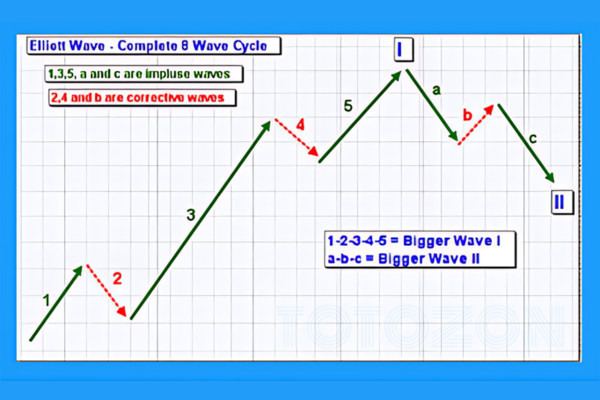 Module 4 Elliot Wave and Identify Wave Count
1 × $31.00
Module 4 Elliot Wave and Identify Wave Count
1 × $31.00 -
×
 Lifestyle Trading with L.E.A.P.S.
1 × $6.00
Lifestyle Trading with L.E.A.P.S.
1 × $6.00 -
×
 Forex 201 - Advanced Strategies with Stonehill Forex
1 × $5.00
Forex 201 - Advanced Strategies with Stonehill Forex
1 × $5.00 -
×
 The Quarters Theory with Ilian Yotov
1 × $6.00
The Quarters Theory with Ilian Yotov
1 × $6.00 -
×
 Wave Trading
1 × $23.00
Wave Trading
1 × $23.00 -
×
 All About Market Timing with Leslie N.Masonson
1 × $6.00
All About Market Timing with Leslie N.Masonson
1 × $6.00 -
×
 Four Steps to Trading Economic Indicators
1 × $6.00
Four Steps to Trading Economic Indicators
1 × $6.00 -
×
 Transforming Debt into Wealth System with John Cummuta
1 × $6.00
Transforming Debt into Wealth System with John Cummuta
1 × $6.00 -
×
 Deep Dive Butterfly Trading Strategy Class with SJG Trades
1 × $41.00
Deep Dive Butterfly Trading Strategy Class with SJG Trades
1 × $41.00 -
×
 FX Cartel Online Course
1 × $31.00
FX Cartel Online Course
1 × $31.00 -
×
 The Orderflow Masterclass with PrimeTrading
1 × $17.00
The Orderflow Masterclass with PrimeTrading
1 × $17.00
A Non-Random Walk Down Wall Street with Andrew W.Lo
$6.00
File Size: Cooming soon!
Delivery Time: 1–12 hours
Media Type: Online Course
Content Proof: Watch Here!
You may check content proof of “A Non-Random Walk Down Wall Street with Andrew W.Lo” below:

A Non-Random Walk Down Wall Street with Andrew W. Lo
Introduction to Market Efficiency
The concept of market efficiency has been a cornerstone of financial theory for decades. Andrew W. Lo’s “A Non-Random Walk Down Wall Street” challenges the traditional notion of market randomness, providing a fresh perspective on how markets truly operate.
Understanding Market Efficiency
Market efficiency refers to the extent to which stock prices reflect all available information. According to the Efficient Market Hypothesis (EMH), it’s impossible to consistently achieve higher returns than average because stock prices already incorporate all relevant information.
Efficient Market Hypothesis (EMH)
- Strong Form Efficiency: All information, public and private, is reflected in stock prices.
- Semi-Strong Form Efficiency: All public information is reflected in stock prices.
- Weak Form Efficiency: All past market information is reflected in stock prices.
Andrew W. Lo’s Perspective
Andrew W. Lo offers a compelling counter-argument to the EMH, suggesting that markets are not entirely random and that patterns can indeed be identified and exploited.
Adaptive Markets Hypothesis (AMH)
Lo’s Adaptive Markets Hypothesis (AMH) posits that market efficiency is not static but evolves over time. This hypothesis integrates principles of evolutionary biology with financial economics.
Key Insights from “A Non-Random Walk Down Wall Street”
Lo’s book provides several key insights that challenge traditional financial theories.
Market Patterns and Predictability
Lo demonstrates that certain market patterns are predictable, contradicting the notion of random market movements.
Role of Technology and Innovation
Technological advancements and innovations continuously reshape market dynamics, affecting efficiency.
Behavioral Influences
Human behavior and psychology play significant roles in market movements, contributing to anomalies and inefficiencies.
Analyzing Market Trends
To understand and predict market trends, it’s essential to analyze historical data and recognize recurring patterns.
Technical Analysis
Technical analysis involves studying historical price and volume data to identify trends and patterns.
Quantitative Analysis
Quantitative analysis uses mathematical models and algorithms to predict future market movements based on historical data.
Practical Applications of Lo’s Theories
Applying Andrew W. Lo’s theories can provide traders and investors with a strategic edge.
Trend Following Strategies
Utilize trend following strategies to capitalize on predictable market movements.
Risk Management
Implement robust risk management techniques to mitigate potential losses and capitalize on market inefficiencies.
Diversification
Diversifying investments can help manage risk and take advantage of various market conditions.
Challenges and Criticisms
Despite the advantages of Lo’s theories, there are challenges and criticisms that need to be addressed.
Complexity of Models
The mathematical models used in quantitative analysis can be complex and difficult to implement.
Market Anomalies
Unpredictable market events can disrupt established patterns and models.
Behavioral Biases
Investors’ behavioral biases can lead to irrational decisions, affecting market efficiency.
Case Studies and Examples
Examining real-world examples can provide a deeper understanding of Lo’s theories in action.
Historical Market Patterns
Analyzing historical market data can reveal patterns and trends that support Lo’s theories.
Successful Trading Strategies
Studying successful trading strategies that incorporate Lo’s principles can provide valuable insights.
The Future of Market Efficiency
The future of market efficiency will likely be influenced by ongoing technological advancements and evolving market dynamics.
Artificial Intelligence and Machine Learning
AI and machine learning have the potential to revolutionize market analysis and trading strategies.
Big Data Analytics
Big data analytics enables the processing of vast amounts of market data, enhancing the accuracy of predictions and strategies.
Conclusion
Andrew W. Lo’s “A Non-Random Walk Down Wall Street” provides a groundbreaking perspective on market efficiency, challenging traditional theories and offering new insights into market dynamics. By understanding and applying these principles, traders and investors can better navigate the complexities of the financial markets.
Commonly Asked Questions:
- Business Model Innovation: Accept the truth of a legitimate business! Our strategy is organising a group buy in which participants share the costs. We use these cash to acquire popular courses from sale pages and make them available to people with limited financial resources. Despite the authors’ worries, our clients love the cost and accessibility we give.
- The Legal Environment: Yes or No The legality of our activity is ambiguous. While we don’t have specific permission from the course authors to resell the material, there is a technicality at work. The author did not specify any limits on resale when purchasing the course. This legal intricacy is both an opportunity for us and a boon for individuals looking for low-cost access.
- Quality Control: Uncovering the Truth
Getting to the heart of the issue – quality. Purchasing the course straight from the sale page guarantees that all documents and resources are the same as those obtained through traditional channels.
However, we distinguish ourselves by going beyond personal research and resale. It is crucial to note that we are not the official course providers, which means that the following premium services are not included in our package:
- There are no scheduled coaching calls or sessions with the author.
- Access to the author’s private Facebook group or web portal is not permitted.
- No access to the author’s private membership forum.
- There is no direct email support available from the author or their team.
We operate independently, with the goal of bridging the pricing gap without the extra services provided by official course channels. Your comprehension of our distinct approach is much appreciated.
Be the first to review “A Non-Random Walk Down Wall Street with Andrew W.Lo”
You must be logged in to post a review.
Related products

Forex Trading
Original price was: $1,898.00.$10.00Current price is: $10.00.

Original price was: $310.00.$23.00Current price is: $23.00.
Original price was: $999.00.$5.00Current price is: $5.00.

Original price was: $1,849.00.$15.00Current price is: $15.00.

Forex Trading
Original price was: $697.00.$5.00Current price is: $5.00.

Forex Trading
Original price was: $2,997.00.$23.00Current price is: $23.00.

Original price was: $299.00.$8.00Current price is: $8.00.

Forex Trading
Original price was: $999.00.$15.00Current price is: $15.00.

Original price was: $497.00.$31.00Current price is: $31.00.

Forex Trading
Original price was: $2,995.00.$31.00Current price is: $31.00.

Original price was: $700.00.$39.00Current price is: $39.00.
Original price was: $1,200.00.$23.00Current price is: $23.00.

Forex Trading
Original price was: $1,098.00.$39.00Current price is: $39.00.
Forex Trading
Original price was: $4,997.00.$27.00Current price is: $27.00.
Forex Trading
Original price was: $500.00.$5.00Current price is: $5.00.
Forex Trading
Original price was: $797.00.$10.00Current price is: $10.00.

Original price was: $139.00.$23.00Current price is: $23.00.

Forex Trading
Original price was: $799.00.$15.00Current price is: $15.00.

Original price was: $4,995.00.$15.00Current price is: $15.00.

Original price was: $1,800.00.$54.00Current price is: $54.00.

Reviews
There are no reviews yet.