
-
×
 The Trading Blueprint with Brad Goh - The Trading Geek
1 × $5.00
The Trading Blueprint with Brad Goh - The Trading Geek
1 × $5.00 -
×
 The Mathematics of Money Management. Risk Analysis Techniques for Traders
1 × $6.00
The Mathematics of Money Management. Risk Analysis Techniques for Traders
1 × $6.00 -
×
 A Comprehensive Guide to Intraday Trading Strategies & Setups Class with Jeff Bierman
1 × $6.00
A Comprehensive Guide to Intraday Trading Strategies & Setups Class with Jeff Bierman
1 × $6.00 -
×
 Automatic Millionaire (Audio Book) with David Bach
1 × $6.00
Automatic Millionaire (Audio Book) with David Bach
1 × $6.00 -
×
 Definitive Guide to Order Execution Class with Don Kaufman
1 × $6.00
Definitive Guide to Order Execution Class with Don Kaufman
1 × $6.00 -
×
 Deep Reinforcement Learning in Trading with Dr. Thomas Starke
1 × $62.00
Deep Reinforcement Learning in Trading with Dr. Thomas Starke
1 × $62.00 -
×
 DayTrading the S&P 500 & TS Code with Afshin Taghechian
1 × $6.00
DayTrading the S&P 500 & TS Code with Afshin Taghechian
1 × $6.00 -
×
 Beginners Guide To Technical Analysis with Henry Gambell
1 × $15.00
Beginners Guide To Technical Analysis with Henry Gambell
1 × $15.00 -
×
 Astro Models (techedgecycles.com) with Yuri Shramenko
1 × $6.00
Astro Models (techedgecycles.com) with Yuri Shramenko
1 × $6.00 -
×
 Butterfly and Condor Workshop with Aeromir
1 × $15.00
Butterfly and Condor Workshop with Aeromir
1 × $15.00 -
×
 The Profit Magic of Stock Transaction Timing with J.M.Hurst
1 × $6.00
The Profit Magic of Stock Transaction Timing with J.M.Hurst
1 × $6.00 -
×
 Adx Mastery Complete Course
1 × $6.00
Adx Mastery Complete Course
1 × $6.00 -
×
 THE ART OF ADJUSTING IN 2017
1 × $6.00
THE ART OF ADJUSTING IN 2017
1 × $6.00 -
×
 Ichimokutrade - Ichimoku 101
1 × $15.00
Ichimokutrade - Ichimoku 101
1 × $15.00 -
×
 Advanced Spread Trading with Guy Bower - MasterClass Trader
1 × $15.00
Advanced Spread Trading with Guy Bower - MasterClass Trader
1 × $15.00 -
×
 WYCKOFF TRADING COURSE (WTC) PART I – ANALYSIS (Fall 2021) with Roman Bogomazov
1 × $209.00
WYCKOFF TRADING COURSE (WTC) PART I – ANALYSIS (Fall 2021) with Roman Bogomazov
1 × $209.00 -
×
 Masterclass 2.0 with Dave Teaches
1 × $31.00
Masterclass 2.0 with Dave Teaches
1 × $31.00 -
×
 TraderSumo Academy Course
1 × $13.00
TraderSumo Academy Course
1 × $13.00 -
×
 Master Moving Averages - Profit Multiplying Techniques with Nick Santiago - InTheMoneyStocks
1 × $54.00
Master Moving Averages - Profit Multiplying Techniques with Nick Santiago - InTheMoneyStocks
1 × $54.00 -
×
 Emini Bonds
1 × $23.00
Emini Bonds
1 × $23.00 -
×
 The Naked Eye: Raw Data Analytics with Edgar Torres - Raw Data Analytics
1 × $8.00
The Naked Eye: Raw Data Analytics with Edgar Torres - Raw Data Analytics
1 × $8.00 -
×
 Investment Strategies of Hedge Funds with Filippo Stefanini
1 × $6.00
Investment Strategies of Hedge Funds with Filippo Stefanini
1 × $6.00 -
×
 Advanced Course with Jtrader
1 × $6.00
Advanced Course with Jtrader
1 × $6.00 -
×
 Forecast 2024 Clarification with Larry Williams
1 × $15.00
Forecast 2024 Clarification with Larry Williams
1 × $15.00 -
×
 Volume Profile 2023 (Elite Pack) with Trader Dale
1 × $5.00
Volume Profile 2023 (Elite Pack) with Trader Dale
1 × $5.00 -
×
 Alternative Beta Strategies & Hedge Fund Replication with Lars Jaeger & Jeffrey Pease
1 × $6.00
Alternative Beta Strategies & Hedge Fund Replication with Lars Jaeger & Jeffrey Pease
1 × $6.00 -
×
 Profit Generating System with Brian Williams
1 × $6.00
Profit Generating System with Brian Williams
1 × $6.00 -
×
 Deep Dive Butterfly Trading Strategy Class with SJG Trades
1 × $41.00
Deep Dive Butterfly Trading Strategy Class with SJG Trades
1 × $41.00
George Lindays. 3 Peaks and the Domed House Revised with Barclay T.Leib
$6.00
File Size: Coming soon!
Delivery Time: 1–12 hours
Media Type: Online Course
Content Proof: Watch Here!
You may check content proof of “George Lindays. 3 Peaks and the Domed House Revised with Barclay T.Leib” below:

George Lindsay’s 3 Peaks and the Domed House Revised with Barclay T. Leib
Introduction to Lindsay’s Market Theory
In the world of technical analysis, George Lindsay’s introduction of the “3 Peaks and the Domed House” model stands out as a landmark. Revised by Barclay T. Leib, this theory offers deep insights into market psychology and price movements. Let’s explore how this model works and its relevance in today’s trading environment.
Understanding the Basic Concept
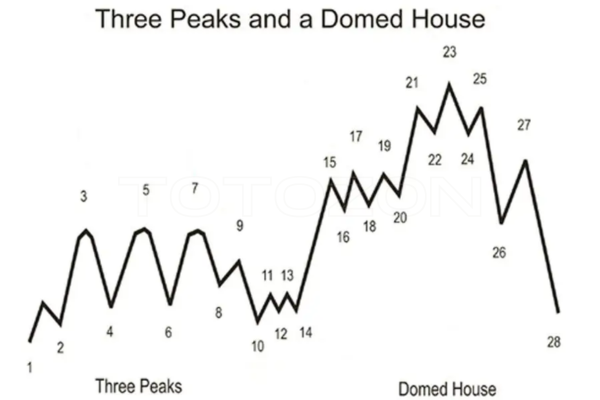
The “3 Peaks and the Domed House” model is a method used to predict market cycles through specific patterns. It depicts the stages of a market cycle, from an optimistic peak to an inevitable decline, followed by a recovery phase.
The Structure of the Model
- Three Peaks: Representing the highs before a significant downturn.
- The Domed House: Illustrating the recovery and eventual peak before another decline.
Historical Application of the Model
Analyzing Past Market Cycles
George Lindsay originally used this model to analyze the stock market in the mid-20th century. Its accuracy in predicting the timing of market tops and bottoms has been noteworthy.
Case Studies
- The 1929 Stock Market Crash
- The 1960s Bull Market
Revisions by Barclay T. Leib
Enhancements to the Original Model
Barclay T. Leib’s revisions involve modernizing Lindsay’s approach to align with contemporary market mechanisms. This includes integrating digital trading data and advanced forecasting tools.
Key Updates
- Incorporation of Algorithmic Trading Data
- Use of Advanced Statistical Methods
Practical Application in Modern Markets
How Traders Use the Model Today
Today’s traders adapt Lindsay’s model to a range of markets, including stocks, commodities, and cryptocurrencies. Its flexibility and historical track record make it a valuable tool for predicting market phases.
Techniques for Application
- Technical Analysis Software: Traders use software to identify patterns that resemble the 3 Peaks and Domed House.
- Market Timing Strategies: The model helps in planning entry and exit points.
Theoretical Implications and Critiques
Economic Theories Supporting the Model
The model ties into broader economic theories about market cycles and investor psychology, suggesting that markets move in predictable phases based on human behavior.
Critiques and Limitations
- Predictability: Some critics argue that the model’s predictions are too rigid.
- Market Complexity: Others suggest that modern markets are too complex for such a straightforward model.
Integrating with Other Market Analysis Tools
Complementary Analysis Methods
To enhance the accuracy of Lindsay’s model, traders often combine it with other analytical tools like Elliott Wave Theory and Fibonacci retracements.
Combining Tools for Enhanced Prediction
- Elliott Wave Theory for Cycle Analysis
- Fibonacci for Resistance and Support Levels
Conclusion
George Lindsay’s “3 Peaks and the Domed House” model, revised by Barclay T. Leib, continues to be a profound tool for understanding and predicting market cycles. By incorporating modern techniques and theories, traders can utilize this model to enhance their market analysis and decision-making strategies.
Frequently Asked Questions:
- What is the main benefit of using Lindsay’s model?
It provides a structured way to forecast market tops and bottoms, helping traders with timing decisions. - Can this model be applied to all financial markets?
Yes, while originally used for stocks, it can be adapted to any market with price fluctuations. - How accurate is the model in today’s digital trading age?
When combined with modern analytical tools, it remains a valuable component of market analysis. - What are the main criticisms of the model?
Critics often point to its predictability and simplicity, arguing that modern markets require more nuanced approaches. - How do revisions by Barclay T. Leib enhance the model?
Leib’s revisions modernize the model by incorporating new data and analytical methods, improving its applicability.
Be the first to review “George Lindays. 3 Peaks and the Domed House Revised with Barclay T.Leib”
You must be logged in to post a review.
Related products

Forex Trading
Original price was: $397.00.$31.00Current price is: $31.00.
Original price was: $695.00.$41.00Current price is: $41.00.

Original price was: $700.00.$39.00Current price is: $39.00.

Original price was: $4,995.00.$15.00Current price is: $15.00.
Original price was: $895.00.$15.00Current price is: $15.00.

Original price was: $310.00.$23.00Current price is: $23.00.

Original price was: $1,800.00.$54.00Current price is: $54.00.
Original price was: $997.00.$8.00Current price is: $8.00.

Forex Trading
Original price was: $1,898.00.$10.00Current price is: $10.00.

Original price was: $649.00.$20.00Current price is: $20.00.

Original price was: $139.00.$23.00Current price is: $23.00.

Original price was: $999.00.$5.00Current price is: $5.00.

Original price was: $799.00.$15.00Current price is: $15.00.

Original price was: $450.00.$23.00Current price is: $23.00.

Forex Trading
Original price was: $550.00.$5.00Current price is: $5.00.

Original price was: $997.00.$13.00Current price is: $13.00.

Forex Trading
Quantamentals – The Next Great Forefront Of Trading and Investing with Trading Markets
Original price was: $1,495.00.$8.00Current price is: $8.00.

Forex Trading
Original price was: $850.00.$23.00Current price is: $23.00.

Original price was: $2,120.00.$15.00Current price is: $15.00.

Forex Trading
Original price was: $239.00.$8.00Current price is: $8.00.
Reviews
There are no reviews yet.