
-
×
 What is Strategy with Michael E.Porter
1 × $6.00
What is Strategy with Michael E.Porter
1 × $6.00 -
×
 ETFs for the Long Run: What They Are, How They Work, and Simple Strategies for Successful Long-Term Investing - Lawrence Carrel
1 × $6.00
ETFs for the Long Run: What They Are, How They Work, and Simple Strategies for Successful Long-Term Investing - Lawrence Carrel
1 × $6.00 -
×
 How I Trade Options with Jon Najarian
1 × $4.00
How I Trade Options with Jon Najarian
1 × $4.00 -
×
 Trading with the Gods Fibonacci Series with Alan Oliver
1 × $6.00
Trading with the Gods Fibonacci Series with Alan Oliver
1 × $6.00 -
×
 Price Action Trading Manual 2010
1 × $6.00
Price Action Trading Manual 2010
1 × $6.00 -
×
 Trading Dave Landry’s Ultimate Bow Ties Strategy with Dave Landry
1 × $6.00
Trading Dave Landry’s Ultimate Bow Ties Strategy with Dave Landry
1 × $6.00 -
×
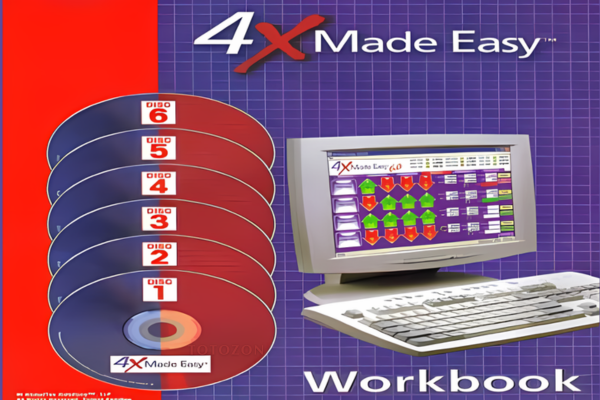 Complete Forex Training Series with 4 x Made Easy
1 × $6.00
Complete Forex Training Series with 4 x Made Easy
1 × $6.00 -
×
 Successful Stock Speculation (1922) with John James
1 × $6.00
Successful Stock Speculation (1922) with John James
1 × $6.00 -
×
 Elliott Wave Street Course with Juan Maldonado
1 × $17.00
Elliott Wave Street Course with Juan Maldonado
1 × $17.00 -
×
 TradeCraft: Your Path to Peak Performance Trading By Adam Grimes
1 × $15.00
TradeCraft: Your Path to Peak Performance Trading By Adam Grimes
1 × $15.00 -
×
 Harmonic Vibrations with Larry Pesavento
1 × $6.00
Harmonic Vibrations with Larry Pesavento
1 × $6.00 -
×
 Deep Dive Butterfly Trading Strategy Class with SJG Trades
1 × $41.00
Deep Dive Butterfly Trading Strategy Class with SJG Trades
1 × $41.00 -
×
 The Naked Eye: Raw Data Analytics with Edgar Torres - Raw Data Analytics
1 × $8.00
The Naked Eye: Raw Data Analytics with Edgar Torres - Raw Data Analytics
1 × $8.00 -
×
 Best of the Best: Collars with Amy Meissner & Scott Ruble
1 × $15.00
Best of the Best: Collars with Amy Meissner & Scott Ruble
1 × $15.00 -
×
 Short and Simple Guide to Smart Investing with Alan Lavine
1 × $6.00
Short and Simple Guide to Smart Investing with Alan Lavine
1 × $6.00 -
×
 Practical Elliott Wave Trading Strategies with Robert Miner
1 × $6.00
Practical Elliott Wave Trading Strategies with Robert Miner
1 × $6.00 -
×
 Analysis of Equity Investments: Valuation with John Stowe, Thomas Robinson, Jerald Pinto & Dennis McLeavey
1 × $6.00
Analysis of Equity Investments: Valuation with John Stowe, Thomas Robinson, Jerald Pinto & Dennis McLeavey
1 × $6.00 -
×
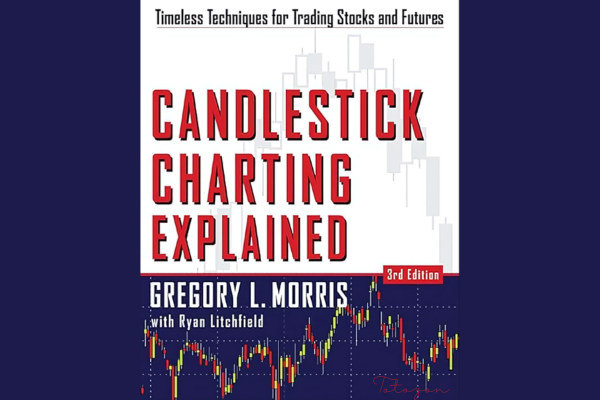 Candlestick Charting Explained with Greg Morris
1 × $8.00
Candlestick Charting Explained with Greg Morris
1 × $8.00 -
×
 ETF Profit Driver Course with Bill Poulos
1 × $6.00
ETF Profit Driver Course with Bill Poulos
1 × $6.00 -
×
 Risk Stop Loss and Position Size with Daryl Guppy
1 × $6.00
Risk Stop Loss and Position Size with Daryl Guppy
1 × $6.00 -
×
 Candlesticks Trading Course
1 × $31.00
Candlesticks Trading Course
1 × $31.00 -
×
 Forex Trading Secrets. Trading Strategies for the Forex Market
1 × $6.00
Forex Trading Secrets. Trading Strategies for the Forex Market
1 × $6.00 -
×
 The Box Strategy with Blue Capital Academy
1 × $23.00
The Box Strategy with Blue Capital Academy
1 × $23.00 -
×
 A Conservative Plan to Make $3K Monthly on $25K with Dan Sheridan – Sheridan Options Mentoring
1 × $23.00
A Conservative Plan to Make $3K Monthly on $25K with Dan Sheridan – Sheridan Options Mentoring
1 × $23.00 -
×
 Scalp Strategy and Flipping Small Accounts with Opes Trading Group
1 × $5.00
Scalp Strategy and Flipping Small Accounts with Opes Trading Group
1 × $5.00 -
×
 The Handbook of Risk with Ben Warwick
1 × $6.00
The Handbook of Risk with Ben Warwick
1 × $6.00 -
×
 SRC (Smart Raja Concepts) with Forex 101
1 × $5.00
SRC (Smart Raja Concepts) with Forex 101
1 × $5.00 -
×
 Compass Trading System with Right Line Trading
1 × $39.00
Compass Trading System with Right Line Trading
1 × $39.00

International Trade & Economic Dynamics with Koji Shimomura
Original price was: $94.00.$6.00Current price is: $6.00.
File Size: Coming soon!
Delivery Time: 1–12 hours
Media Type: Online Course
Content Proof: Watch Here!
You may check content proof of “International Trade & Economic Dynamics with Koji Shimomura” below:

International Trade & Economic Dynamics with Koji Shimomura
Introduction to International Trade
International trade is the exchange of goods and services between countries. It is a fundamental aspect of modern economies, driving growth, innovation, and cultural exchange. In this article, we explore the intricacies of international trade and economic dynamics with insights from renowned economist Koji Shimomura.
Who is Koji Shimomura?
Background and Expertise
Koji Shimomura is a prominent economist known for his extensive research in international trade and economic dynamics. His work has significantly contributed to understanding how global trade impacts economic development and international relations.
Contributions to Economics
Shimomura has authored numerous papers and books on international trade, exploring topics such as trade policies, economic integration, and the effects of globalization. His research provides valuable insights for policymakers, economists, and business leaders.
The Basics of International Trade
What is International Trade?
International trade involves the exchange of goods, services, and capital between countries. It allows nations to specialize in producing certain goods and services, leading to more efficient resource allocation and higher overall economic welfare.
Importance of International Trade
- Economic Growth: Trade stimulates economic growth by expanding markets and increasing production efficiency.
- Innovation: Exposure to international markets fosters innovation and technological advancement.
- Cultural Exchange: Trade promotes cultural exchange and mutual understanding between nations.
Theories of International Trade
Comparative Advantage
Definition
The theory of comparative advantage, introduced by David Ricardo, suggests that countries should specialize in producing goods where they have a lower opportunity cost.
Example
If Country A can produce wine more efficiently than cheese, while Country B can produce cheese more efficiently than wine, both countries benefit by specializing and trading these goods.
Heckscher-Ohlin Theory
Definition
The Heckscher-Ohlin theory posits that countries export goods that utilize their abundant factors of production and import goods that require factors in short supply.
Application
A country with abundant labor will export labor-intensive goods, while a country with abundant capital will export capital-intensive goods.
Economic Dynamics in Trade
Trade Policies and Their Impact
Tariffs and Quotas
Tariffs are taxes on imports, while quotas are limits on the quantity of goods that can be imported. Both policies can protect domestic industries but may lead to trade disputes and higher prices for consumers.
Trade Agreements
Trade agreements, such as NAFTA and the European Union, aim to reduce barriers to trade and increase economic cooperation between member countries.
Globalization and Economic Integration
Globalization refers to the increasing interconnectedness of economies through trade, investment, and technology. Economic integration involves countries coordinating their economic policies to achieve mutual benefits.
Benefits of Globalization
- Market Access: Companies gain access to larger markets.
- Efficiency: Production becomes more efficient through specialization.
- Technology Transfer: Countries benefit from the exchange of technology and knowledge.
Challenges of Globalization
- Inequality: Globalization can exacerbate economic inequality.
- Dependency: Countries may become overly dependent on international markets.
- Cultural Erosion: Rapid cultural changes can lead to the erosion of local traditions.
Koji Shimomura’s Insights on Trade Dynamics
The Role of Technology in Trade
Shimomura emphasizes the role of technology in shaping international trade dynamics. Technological advancements can lead to new trade opportunities and more efficient production methods.
Economic Policies and Trade Relations
According to Shimomura, sound economic policies are crucial for fostering positive trade relations. Policies should aim to balance domestic interests with international obligations to achieve sustainable growth.
The Future of International Trade
Shimomura predicts that future trade dynamics will be heavily influenced by digital technologies, shifting geopolitical landscapes, and evolving consumer preferences. Adapting to these changes is essential for maintaining competitive advantages.
Practical Applications of Trade Theories
For Businesses
Businesses can leverage international trade theories to make informed decisions about market entry, product development, and supply chain management.
For Policymakers
Policymakers can use these theories to design effective trade policies that promote economic growth while protecting domestic industries.
Conclusion
International trade and economic dynamics, as explored by Koji Shimomura, provide a comprehensive framework for understanding the complexities of global markets. By examining trade theories, policies, and the impact of globalization, we gain valuable insights into how international trade shapes economic development and global relations. Embracing these concepts allows us to navigate the ever-evolving landscape of international trade effectively.
FAQs
What is the significance of international trade?
International trade is crucial for economic growth, innovation, and cultural exchange. It allows countries to specialize in producing certain goods, leading to more efficient resource allocation.
Who is Koji Shimomura?
Koji Shimomura is a renowned economist known for his research in international trade and economic dynamics. His work has significantly contributed to understanding global trade’s impact on economies.
What are the main theories of international trade?
The main theories include comparative advantage and the Heckscher-Ohlin theory. These theories explain why countries trade and how they benefit from trade.
How do trade policies impact international trade?
Trade policies, such as tariffs and trade agreements, can protect domestic industries, promote economic cooperation, and influence global trade dynamics.
What are the challenges of globalization?
Challenges include economic inequality, dependency on international markets, and cultural erosion. Addressing these challenges is crucial for sustainable globalization.
Be the first to review “International Trade & Economic Dynamics with Koji Shimomura”
You must be logged in to post a review.
Related products

Original price was: $895.00.$15.00Current price is: $15.00.

Forex Trading
Original price was: $799.00.$15.00Current price is: $15.00.

Forex Trading
Original price was: $697.00.$5.00Current price is: $5.00.

Forex Trading
Original price was: $125.00.$17.00Current price is: $17.00.

Forex Trading
Original price was: $249.00.$15.00Current price is: $15.00.

Original price was: $497.00.$11.00Current price is: $11.00.

Original price was: $1,200.00.$23.00Current price is: $23.00.

Forex Trading
Original price was: $397.00.$31.00Current price is: $31.00.

Forex Trading
Original price was: $999.00.$15.00Current price is: $15.00.
Original price was: $4,995.00.$15.00Current price is: $15.00.
Forex Trading
Original price was: $1,098.00.$39.00Current price is: $39.00.

Forex Trading
Original price was: $239.00.$8.00Current price is: $8.00.

Forex Trading
Original price was: $500.00.$5.00Current price is: $5.00.

Forex Trading
Quantamentals – The Next Great Forefront Of Trading and Investing with Trading Markets
Original price was: $1,495.00.$8.00Current price is: $8.00.

Original price was: $649.00.$20.00Current price is: $20.00.

Original price was: $700.00.$39.00Current price is: $39.00.

Forex Trading
Original price was: $797.00.$10.00Current price is: $10.00.

Forex Trading
Original price was: $499.00.$15.00Current price is: $15.00.
Original price was: $999.00.$5.00Current price is: $5.00.

Original price was: $2,120.00.$15.00Current price is: $15.00.
Reviews
There are no reviews yet.