
-
×
 4D Bootcamp with Black Rabbit
1 × $10.00
4D Bootcamp with Black Rabbit
1 × $10.00 -
×
 Options Trading & Ultimate MasterClass With Tyrone Abela - FX Evolution
1 × $54.00
Options Trading & Ultimate MasterClass With Tyrone Abela - FX Evolution
1 × $54.00 -
×
 CMT Association Entire Webinars
1 × $31.00
CMT Association Entire Webinars
1 × $31.00 -
×
 Essentials in Quantitative Trading QT01 By HangukQuant's
1 × $23.00
Essentials in Quantitative Trading QT01 By HangukQuant's
1 × $23.00 -
×
 The A14 Weekly Option Strategy Workshop with Amy Meissner
1 × $23.00
The A14 Weekly Option Strategy Workshop with Amy Meissner
1 × $23.00 -
×
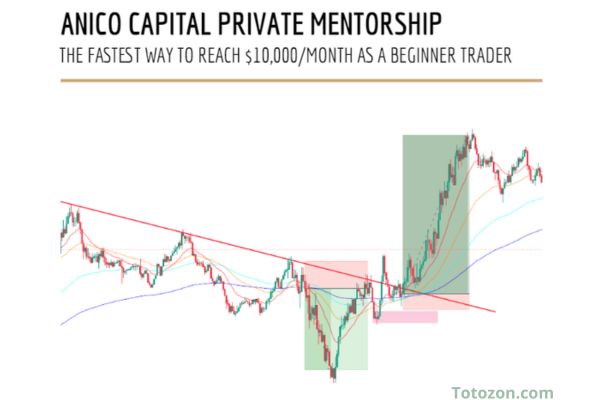 Private Mentorship with ANICO Capital
1 × $10.00
Private Mentorship with ANICO Capital
1 × $10.00 -
×
 Alternative Assets and Strategic Allocation with John Abbink
1 × $6.00
Alternative Assets and Strategic Allocation with John Abbink
1 × $6.00 -
×
 Compass Trading System with Right Line Trading
1 × $39.00
Compass Trading System with Right Line Trading
1 × $39.00 -
×
 The Aggressive Conservative Investor with Martin Whitman & Martin Shubik
1 × $6.00
The Aggressive Conservative Investor with Martin Whitman & Martin Shubik
1 × $6.00 -
×
 The Binary Trigger (Video, Books) with John Piper
1 × $6.00
The Binary Trigger (Video, Books) with John Piper
1 × $6.00 -
×
 The Trading Blueprint with Brad Goh - The Trading Geek
1 × $5.00
The Trading Blueprint with Brad Goh - The Trading Geek
1 × $5.00 -
×
 Fast Track Course with Tradelikerocket
1 × $233.00
Fast Track Course with Tradelikerocket
1 × $233.00 -
×
 Simpler Options - Stock Trading Patterns
1 × $6.00
Simpler Options - Stock Trading Patterns
1 × $6.00 -
×
 A Complete Guide to Technical Trading Tactics with John Person
1 × $6.00
A Complete Guide to Technical Trading Tactics with John Person
1 × $6.00 -
×
 Advanced Options Trading: Approaches, Tools, and Techniques for Professionals Traders with Kevin Kraus
1 × $6.00
Advanced Options Trading: Approaches, Tools, and Techniques for Professionals Traders with Kevin Kraus
1 × $6.00 -
×
 7 DAY INTENSIVE ONLINE TRADER TRAINING PROGRAMME with The Trading Framework
1 × $15.00
7 DAY INTENSIVE ONLINE TRADER TRAINING PROGRAMME with The Trading Framework
1 × $15.00 -
×
 The Systematic Trader: Maximizing Trading Systems and Money Management with David Stendahl & John Boyer
1 × $6.00
The Systematic Trader: Maximizing Trading Systems and Money Management with David Stendahl & John Boyer
1 × $6.00 -
×
 The Practical Fractal with Bill Williams
1 × $6.00
The Practical Fractal with Bill Williams
1 × $6.00 -
×
 All About Mutual Funds with Bruce Jacobs
1 × $6.00
All About Mutual Funds with Bruce Jacobs
1 × $6.00 -
×
 The TradingKey - Mastering Elliott Wave by Rob Roy 2010 + Complete Workbooks with HUBB Financial
1 × $6.00
The TradingKey - Mastering Elliott Wave by Rob Roy 2010 + Complete Workbooks with HUBB Financial
1 × $6.00 -
×
 Commodities Rising: The Reality Behind the Hype and How To Really Profit in the Commodities Market - Jeffrey Christian
1 × $6.00
Commodities Rising: The Reality Behind the Hype and How To Really Profit in the Commodities Market - Jeffrey Christian
1 × $6.00 -
×
 Orderflows Gems 2-Private Sessions with Mike Valtos
1 × $20.00
Orderflows Gems 2-Private Sessions with Mike Valtos
1 × $20.00 -
×
 Trading Short TermSame Day Trades Sep 2023 with Dan Sheridan & Mark Fenton - Sheridan Options Mentoring
1 × $31.00
Trading Short TermSame Day Trades Sep 2023 with Dan Sheridan & Mark Fenton - Sheridan Options Mentoring
1 × $31.00 -
×
 Crypto Trading Academy with Cheeky Investor - Aussie Day Trader
1 × $13.00
Crypto Trading Academy with Cheeky Investor - Aussie Day Trader
1 × $13.00 -
×
 How To Read The Market Professionally with TradeSmart
1 × $27.00
How To Read The Market Professionally with TradeSmart
1 × $27.00 -
×
 How to Profit in Gold with Jonathan Spall
1 × $6.00
How to Profit in Gold with Jonathan Spall
1 × $6.00 -
×
 W. D Gann 's Square Of 9 Applied To Modern Markets with Sean Avidar - Hexatrade350
1 × $23.00
W. D Gann 's Square Of 9 Applied To Modern Markets with Sean Avidar - Hexatrade350
1 × $23.00 -
×
 High Probability Trading Using Elliott Wave And Fibonacci Analysis withVic Patel - Forex Training Group
1 × $10.00
High Probability Trading Using Elliott Wave And Fibonacci Analysis withVic Patel - Forex Training Group
1 × $10.00

The One Trading Secret That Could Make You Rich Inside Days
$6.00
File Size: Coming soon!
Delivery Time: 1–12 hours
Media Type: Online Course
The One Trading Secret That Could Make You Rich: Inside Days
Successful trading often hinges on recognizing patterns and using them to your advantage. One such pattern, known as “Inside Days,” can significantly enhance your trading strategy. This article delves into the concept of Inside Days, explaining what they are, how to identify them, and how to leverage them for profitable trading.
Understanding Inside Days
What Are Inside Days?
Inside Days occur when the price range of a trading day is entirely within the price range of the previous day. This means the high is lower than the previous day’s high, and the low is higher than the previous day’s low.
Why Are Inside Days Important?
Inside Days indicate market consolidation and uncertainty, often preceding significant price movements. Recognizing and understanding these patterns can provide valuable trading opportunities.
Historical Context
The concept of Inside Days has been used by traders for decades. It is based on the principle that periods of low volatility (consolidation) are typically followed by periods of high volatility (breakout).
Identifying Inside Days
Chart Analysis
Candlestick Charts
Inside Days are best identified using candlestick charts. Look for a candlestick completely contained within the previous day’s candlestick.
Time Frames
Inside Days can be observed on various time frames, from intraday to daily charts. However, they are most commonly used on daily charts for greater reliability.
Technical Indicators
Bollinger Bands
Bollinger Bands can help confirm Inside Days. When the bands narrow, it indicates reduced volatility, often corresponding with Inside Days.
Relative Strength Index (RSI)
RSI can provide additional context. An Inside Day occurring near key RSI levels (such as overbought or oversold) can signal a potential breakout.
Trading Strategies Using Inside Days
Breakout Strategy
Entry Points
Enter a trade when the price breaks above the high or below the low of the Inside Day. This breakout often signals the beginning of a new trend.
Stop-Loss Orders
Place stop-loss orders just outside the opposite end of the Inside Day’s range to minimize risk.
Reversal Strategy
Identifying Reversals
Inside Days near significant support or resistance levels can indicate a potential reversal. Look for confirmation from other indicators.
Profit Targets
Set profit targets based on key resistance or support levels, Fibonacci retracements, or previous price highs and lows.
Combining Strategies
Multi-Day Patterns
Combine Inside Days with other patterns, such as Doji or Engulfing patterns, to strengthen your trade setup.
Trend Analysis
Use Inside Days in conjunction with trend analysis to determine the overall market direction and avoid false breakouts.
Practical Applications
Example Trades
Bullish Breakout
Imagine a stock trading in a range, and an Inside Day forms. If the next day’s price breaks above the Inside Day’s high, it could signal a bullish trend. Enter a long position with a stop-loss below the Inside Day’s low.
Bearish Breakout
Conversely, if the price breaks below the Inside Day’s low, it could indicate a bearish trend. Enter a short position with a stop-loss above the Inside Day’s high.
Real-Life Case Studies
Analyze historical charts to find instances of Inside Days and their outcomes. This practice helps build confidence in recognizing and trading this pattern.
Risk Management
Importance of Stop-Losses
Always use stop-loss orders to protect against unexpected market movements. Proper risk management is crucial for long-term trading success.
Position Sizing
Determine the appropriate position size based on your risk tolerance and the distance between the entry point and stop-loss.
Diversification
Avoid placing too much emphasis on a single trade or pattern. Diversify your trades across different assets and strategies to mitigate risk.
Tools and Resources
Trading Platforms
Use trading platforms that offer advanced charting tools and technical indicators. Platforms like MetaTrader, ThinkorSwim, and TradingView are popular choices.
Educational Resources
Leverage educational resources such as online courses, webinars, and trading books focused on technical analysis and trading strategies.
Mentorship and Community
Join trading communities or find a mentor to share insights, ask questions, and learn from experienced traders.
Challenges and Solutions
False Breakouts
False breakouts can occur, leading to potential losses. Use confirmation from other indicators and wait for a clear breakout before entering a trade.
Market Conditions
Inside Days can behave differently in various market conditions. Adapt your strategy based on whether the market is trending, ranging, or volatile.
Conclusion
The One Trading Secret That Could Make You Rich: Inside Days emphasizes the power of understanding and leveraging Inside Days in your trading strategy. By identifying these patterns, applying breakout or reversal strategies, and managing risk effectively, traders can enhance their chances of success. Continuous learning and practice are key to mastering this valuable trading technique.
FAQs
What is an Inside Day in trading?
An Inside Day occurs when the price range of a trading day is completely within the price range of the previous day, indicating market consolidation.
How do I identify Inside Days?
Inside Days are identified using candlestick charts, where the entire day’s candlestick is contained within the previous day’s candlestick.
What strategies can I use with Inside Days?
Common strategies include breakout and reversal strategies. Enter trades when the price breaks above or below the Inside Day’s range.
How can I manage risk when trading Inside Days?
Use stop-loss orders, determine appropriate position sizes, and diversify your trades to manage risk effectively.
Are Inside Days reliable in all market conditions?
Inside Days can be effective in various market conditions, but it’s essential to adapt your strategy based on the current market environment.
Be the first to review “The One Trading Secret That Could Make You Rich Inside Days”
You must be logged in to post a review.
Related products

Original price was: $700.00.$39.00Current price is: $39.00.

Original price was: $1,849.00.$15.00Current price is: $15.00.

Original price was: $497.00.$31.00Current price is: $31.00.
Original price was: $310.00.$23.00Current price is: $23.00.

Original price was: $895.00.$15.00Current price is: $15.00.

Forex Trading
Original price was: $125.00.$17.00Current price is: $17.00.
Original price was: $1,800.00.$54.00Current price is: $54.00.

Forex Trading
Original price was: $999.00.$15.00Current price is: $15.00.

Forex Trading
The Complete Guide to Multiple Time Frame Analysis & Reading Price Action with Aiman Almansoori
Original price was: $1,399.00.$13.00Current price is: $13.00.

Forex Trading
Original price was: $249.00.$15.00Current price is: $15.00.

Forex Trading
Original price was: $499.00.$15.00Current price is: $15.00.

Forex Trading
Original price was: $500.00.$5.00Current price is: $5.00.

Original price was: $999.00.$5.00Current price is: $5.00.

Original price was: $299.00.$8.00Current price is: $8.00.
Original price was: $139.00.$23.00Current price is: $23.00.

Original price was: $2,120.00.$15.00Current price is: $15.00.

Forex Trading
Original price was: $550.00.$5.00Current price is: $5.00.

Original price was: $997.00.$8.00Current price is: $8.00.

Original price was: $197.00.$5.00Current price is: $5.00.

Original price was: $497.00.$11.00Current price is: $11.00.

Reviews
There are no reviews yet.