
-
×
 Premium Forex Trading
1 × $31.00
Premium Forex Trading
1 × $31.00 -
×
 Ultimate Options with Andy Tanner & Corey Halliday - The Cashflow Academy
1 × $139.00
Ultimate Options with Andy Tanner & Corey Halliday - The Cashflow Academy
1 × $139.00 -
×
 Manage the Greeks & the Risk of ODTE & 1-4 day Trades for October 2023 with Sheridan Options Mentoring
1 × $85.00
Manage the Greeks & the Risk of ODTE & 1-4 day Trades for October 2023 with Sheridan Options Mentoring
1 × $85.00 -
×
 The Great Reflation with Anthony Boeckh
1 × $6.00
The Great Reflation with Anthony Boeckh
1 × $6.00 -
×
 Four Books with J.L.Lord
1 × $23.00
Four Books with J.L.Lord
1 × $23.00 -
×
 The Naked Eye: Raw Data Analytics with Edgar Torres - Raw Data Analytics
1 × $8.00
The Naked Eye: Raw Data Analytics with Edgar Torres - Raw Data Analytics
1 × $8.00 -
×
 Trade Like a Stock Market Wizard with Mark Minervini
1 × $6.00
Trade Like a Stock Market Wizard with Mark Minervini
1 × $6.00 -
×
 Developing the Psychological Trader’s Edge with Robin Dayne
1 × $6.00
Developing the Psychological Trader’s Edge with Robin Dayne
1 × $6.00 -
×
 Beating the Financial Futures Market
1 × $6.00
Beating the Financial Futures Market
1 × $6.00 -
×
 You can be a Stock Market Genious with Joel Greenblaat
1 × $6.00
You can be a Stock Market Genious with Joel Greenblaat
1 × $6.00 -
×
 Behavior and Performance of Investment Newsletter Analysts (Article) with Alok Kumar
1 × $6.00
Behavior and Performance of Investment Newsletter Analysts (Article) with Alok Kumar
1 × $6.00 -
×
 Module III - Peak Formation Trades with FX MindShift
1 × $6.00
Module III - Peak Formation Trades with FX MindShift
1 × $6.00 -
×
 Trade with Precision Price Action Course Silver+Bronze By Nick McDonald
1 × $116.00
Trade with Precision Price Action Course Silver+Bronze By Nick McDonald
1 × $116.00 -
×
 Million Dollar Bond Strategies Video with Paul Judd
1 × $6.00
Million Dollar Bond Strategies Video with Paul Judd
1 × $6.00 -
×
 Price Action Forex Trading Strategies Training Course & Members Videos with Nial Fuller
1 × $28.00
Price Action Forex Trading Strategies Training Course & Members Videos with Nial Fuller
1 × $28.00 -
×
 Precise Planetary Timing for Stock Trading
1 × $6.00
Precise Planetary Timing for Stock Trading
1 × $6.00 -
×
 Technical Analysis Entry & Exit with Andrew Baxter
1 × $6.00
Technical Analysis Entry & Exit with Andrew Baxter
1 × $6.00 -
×
 Trading to Win (Seminar WorkBook 2003) with Bruce Gilmore
1 × $6.00
Trading to Win (Seminar WorkBook 2003) with Bruce Gilmore
1 × $6.00 -
×
 Trading in the Bluff with John Templeton
1 × $6.00
Trading in the Bluff with John Templeton
1 × $6.00 -
×
 Algorithmic Rules of Trend Lines
1 × $23.00
Algorithmic Rules of Trend Lines
1 × $23.00 -
×
 Stock Trader`s Almanac 2012 with Jeffrey Hirsch & Yale Hirsch
1 × $6.00
Stock Trader`s Almanac 2012 with Jeffrey Hirsch & Yale Hirsch
1 × $6.00 -
×
 Original Charting 1936 with W.D.Gann
1 × $6.00
Original Charting 1936 with W.D.Gann
1 × $6.00 -
×
 How To Write High Converting Copy with Tej Dosa
1 × $6.00
How To Write High Converting Copy with Tej Dosa
1 × $6.00 -
×
 Advanced Spread Trading with Guy Bower - MasterClass Trader
1 × $15.00
Advanced Spread Trading with Guy Bower - MasterClass Trader
1 × $15.00 -
×
 The Greatest Trade Ever with Gregory Zuckerman
1 × $6.00
The Greatest Trade Ever with Gregory Zuckerman
1 × $6.00 -
×
 The A14 Weekly Option Strategy Workshop with Amy Meissner
1 × $23.00
The A14 Weekly Option Strategy Workshop with Amy Meissner
1 × $23.00 -
×
 Japanese Trading Systems with Tradesmart University
1 × $9.00
Japanese Trading Systems with Tradesmart University
1 × $9.00 -
×
 The Handbook of Risk with Ben Warwick
1 × $6.00
The Handbook of Risk with Ben Warwick
1 × $6.00 -
×
 The Next Big Short Class (Risk Twist Spreads) Class with Don Kaufman
1 × $6.00
The Next Big Short Class (Risk Twist Spreads) Class with Don Kaufman
1 × $6.00 -
×
 DAY TRADE (LONG & SHORT) STRATEGIES PACKAGE - The Chartist
1 × $272.00
DAY TRADE (LONG & SHORT) STRATEGIES PACKAGE - The Chartist
1 × $272.00 -
×
 ICT Trading Models with The Prop Trader
1 × $5.00
ICT Trading Models with The Prop Trader
1 × $5.00 -
×
 Quant Edge Online Home Study Course with T3 Live
1 × $39.00
Quant Edge Online Home Study Course with T3 Live
1 × $39.00 -
×
 PayTrading with Eric Shawn
1 × $6.00
PayTrading with Eric Shawn
1 × $6.00 -
×
 Home Run Options Trading Course with Dave Aquino - Base Camp Trading
1 × $11.00
Home Run Options Trading Course with Dave Aquino - Base Camp Trading
1 × $11.00 -
×
 Butterflies For Monthly Income 2016 with Dan Sheridan
1 × $15.00
Butterflies For Monthly Income 2016 with Dan Sheridan
1 × $15.00 -
×
 Options Trading & Ultimate MasterClass With Tyrone Abela - FX Evolution
1 × $54.00
Options Trading & Ultimate MasterClass With Tyrone Abela - FX Evolution
1 × $54.00 -
×
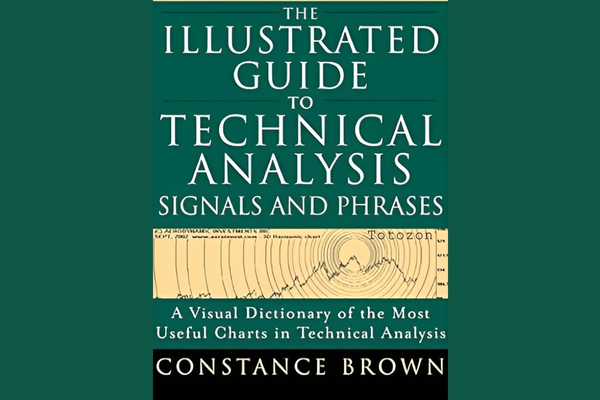 The Illustrated Guide to Technical Analysis Signals and Phrases with Constance Brown
1 × $6.00
The Illustrated Guide to Technical Analysis Signals and Phrases with Constance Brown
1 × $6.00 -
×
 How to Trade a Vertical Market with Armstrong Economics
1 × $155.00
How to Trade a Vertical Market with Armstrong Economics
1 × $155.00 -
×
 Price Action Trading Volume 1 with Fractal Flow Pro
1 × $6.00
Price Action Trading Volume 1 with Fractal Flow Pro
1 × $6.00 -
×
 Commodities for Dummies with Amine Bouchentouf
1 × $6.00
Commodities for Dummies with Amine Bouchentouf
1 × $6.00 -
×
 Steidlmayer On Markets. A New Approach to Trading with J.Peter Steidlmayer
1 × $6.00
Steidlmayer On Markets. A New Approach to Trading with J.Peter Steidlmayer
1 × $6.00 -
×
 The Heretics of Finance with Andrew Lo & Jasmina Hasanhodzic
1 × $4.00
The Heretics of Finance with Andrew Lo & Jasmina Hasanhodzic
1 × $4.00 -
×
 The Master Indicator with Elite Money Trader
1 × $5.00
The Master Indicator with Elite Money Trader
1 × $5.00 -
×
 Create Your Own Hedge Fund with Mark Wolfinger
1 × $6.00
Create Your Own Hedge Fund with Mark Wolfinger
1 × $6.00 -
×
 FOREX TRADING: Beginner's Course To Becoming A Top Trader with Karen Foo
1 × $6.00
FOREX TRADING: Beginner's Course To Becoming A Top Trader with Karen Foo
1 × $6.00 -
×
 Matrix Spread Options Trading Course with Base Camp Trading
1 × $31.00
Matrix Spread Options Trading Course with Base Camp Trading
1 × $31.00 -
×
 Spotting Solid Short-Term Opportunities
1 × $6.00
Spotting Solid Short-Term Opportunities
1 × $6.00 -
×
 WYCKOFF TRADING COURSE (WTC) PART I – ANALYSIS (Spring 2023) - Roman Bogomazov & Alessio Rutigliano
1 × $209.00
WYCKOFF TRADING COURSE (WTC) PART I – ANALYSIS (Spring 2023) - Roman Bogomazov & Alessio Rutigliano
1 × $209.00 -
×
 TLM Virtual Trading Summit 2021 with TradeLikeMike
1 × $6.00
TLM Virtual Trading Summit 2021 with TradeLikeMike
1 × $6.00 -
×
 CFA Level 2 - Sample Item Sets 2003
1 × $6.00
CFA Level 2 - Sample Item Sets 2003
1 × $6.00 -
×
 Forex Trading Bootcamp For Traders & Investors (2020)
1 × $6.00
Forex Trading Bootcamp For Traders & Investors (2020)
1 × $6.00 -
×
 Advanced Forex Mastery Course with Alpha Forex Global
1 × $5.00
Advanced Forex Mastery Course with Alpha Forex Global
1 × $5.00 -
×
 PRO COURSE Order Flow Strategy with Gova Trading Academy
1 × $5.00
PRO COURSE Order Flow Strategy with Gova Trading Academy
1 × $5.00 -
×
 4 Day Trading Bootcamp
1 × $31.00
4 Day Trading Bootcamp
1 × $31.00 -
×
 Options for Long Term Trading & Hedging with Option Pit
1 × $39.00
Options for Long Term Trading & Hedging with Option Pit
1 × $39.00 -
×
 Automatic Millionaire (Audio Book) with David Bach
1 × $6.00
Automatic Millionaire (Audio Book) with David Bach
1 × $6.00 -
×
 Scalp Strategy and Flipping Small Accounts with Opes Trading Group
1 × $5.00
Scalp Strategy and Flipping Small Accounts with Opes Trading Group
1 × $5.00 -
×
 90 Minute Cycle withThe Algo Trader
1 × $5.00
90 Minute Cycle withThe Algo Trader
1 × $5.00 -
×
 The Inve$tment A$trology Articles with Alan Richter
1 × $6.00
The Inve$tment A$trology Articles with Alan Richter
1 × $6.00 -
×
 Mind & Markets. An Advanced Study Course of Stock Market Education (1951) with Bert Larson
1 × $6.00
Mind & Markets. An Advanced Study Course of Stock Market Education (1951) with Bert Larson
1 × $6.00 -
×
 6-2-4 Winning Strategies & Systems with Jack Bernstein
1 × $6.00
6-2-4 Winning Strategies & Systems with Jack Bernstein
1 × $6.00 -
×
 ART Online 4 Weeks Home Study Course with Bennett McDowell
1 × $78.00
ART Online 4 Weeks Home Study Course with Bennett McDowell
1 × $78.00 -
×
 The Market Masters: Wall Street's Top Investment Pros Reveal How to Make Money in Both Bull and Bear Markets - Kirk Kazanjian
1 × $6.00
The Market Masters: Wall Street's Top Investment Pros Reveal How to Make Money in Both Bull and Bear Markets - Kirk Kazanjian
1 × $6.00 -
×
 Trading Online
1 × $6.00
Trading Online
1 × $6.00 -
×
 Trading Earnings Using Measured-Move Targets with Alphashark
1 × $6.00
Trading Earnings Using Measured-Move Targets with Alphashark
1 × $6.00 -
×
 The GBP USD Trading System with A.Heuscher
1 × $6.00
The GBP USD Trading System with A.Heuscher
1 × $6.00 -
×
 Evolved Trader with Mark Croock
1 × $69.00
Evolved Trader with Mark Croock
1 × $69.00 -
×
 Inside Strategies for Profiting with Options with Max Ansbacher
1 × $6.00
Inside Strategies for Profiting with Options with Max Ansbacher
1 × $6.00 -
×
 Forex Trend Line Strategy with Kelvin Lee
1 × $6.00
Forex Trend Line Strategy with Kelvin Lee
1 × $6.00 -
×
 Lifespan Investing with Clifford Pistolese
1 × $6.00
Lifespan Investing with Clifford Pistolese
1 × $6.00 -
×
 The Index Trading Course Workbook: Step-by-Step Exercises and Tests to Help You Master The Index Trading Course with George Fontanills & Tom Gentile
1 × $6.00
The Index Trading Course Workbook: Step-by-Step Exercises and Tests to Help You Master The Index Trading Course with George Fontanills & Tom Gentile
1 × $6.00 -
×
 Wall Street Stories with Edwin Lefevre
1 × $6.00
Wall Street Stories with Edwin Lefevre
1 × $6.00 -
×
 WondaFX Signature Strategy with WondaFX
1 × $5.00
WondaFX Signature Strategy with WondaFX
1 × $5.00

Inefficient Markets with Andrei Shleifer
$6.00
File Size: Cooming soon!
Delivery Time: 1–12 hours
Media Type: Online Course
Content Proof: Watch Here!
You may check content proof of “Inefficient Markets with Andrei Shleifer” below:

Inefficient Markets with Andrei Shleifer
Introduction to Inefficient Markets
The concept of market efficiency suggests that asset prices reflect all available information. However, Andrei Shleifer, a prominent economist, challenges this notion, arguing that markets can often be inefficient. This article delves into Shleifer’s insights on inefficient markets, exploring the causes, implications, and strategies for navigating them.
Understanding Market Efficiency
What is Market Efficiency?
Market efficiency, as defined by the Efficient Market Hypothesis (EMH), posits that asset prices fully reflect all available information. According to this theory, it is impossible to consistently achieve higher returns than the overall market through stock selection or market timing.
Degrees of Market Efficiency
- Weak Form Efficiency: All past trading information is reflected in stock prices.
- Semi-Strong Form Efficiency: All publicly available information is reflected in stock prices.
- Strong Form Efficiency: All information, including insider information, is reflected in stock prices.
Critique of Market Efficiency
Shleifer’s Perspective
Andrei Shleifer argues that markets are not always efficient. Behavioral biases, market frictions, and other anomalies can lead to price deviations from their true value.
Behavioral Finance
Shleifer’s work in behavioral finance highlights how psychological factors and cognitive biases influence investor behavior, leading to market inefficiencies.
Common Cognitive Biases
- Overconfidence: Investors overestimate their knowledge and abilities.
- Herd Behavior: Investors follow the crowd rather than making independent decisions.
- Loss Aversion: Investors fear losses more than they value gains, affecting their risk-taking behavior.
Causes of Market Inefficiency
1. Information Asymmetry
When some investors have access to information that others do not, it can lead to mispriced assets.
2. Limited Arbitrage
Arbitrage opportunities can correct mispricings, but when arbitrage is limited by risk, costs, or other factors, inefficiencies persist.
3. Transaction Costs
High transaction costs can prevent investors from exploiting arbitrage opportunities, allowing inefficiencies to remain.
4. Behavioral Factors
Investor psychology and behavior can cause prices to deviate from their fundamental values.
Implications of Inefficient Markets
Investment Opportunities
Inefficient markets can create opportunities for investors to achieve above-average returns by identifying mispriced assets.
Risk Management
Understanding market inefficiencies can help investors develop better risk management strategies by anticipating potential price corrections.
Market Stability
Inefficiencies can lead to market instability, as price corrections may occur suddenly, causing volatility.
Strategies for Navigating Inefficient Markets
1. Fundamental Analysis
Conducting thorough fundamental analysis can help identify mispriced assets and provide investment opportunities.
2. Behavioral Analysis
Incorporating behavioral analysis into investment strategies can help anticipate market movements driven by investor psychology.
3. Diversification
Diversifying investments across different asset classes and markets can help mitigate the risks associated with market inefficiencies.
4. Risk Management
Implementing robust risk management practices, such as stop-loss orders and position sizing, can protect against potential market corrections.
Case Studies in Market Inefficiency
Dot-Com Bubble
The late 1990s dot-com bubble exemplifies market inefficiency, where investor exuberance drove technology stock prices to unsustainable levels, followed by a sharp correction.
2008 Financial Crisis
The 2008 financial crisis highlighted inefficiencies in the housing market and financial sector, driven by poor risk management and information asymmetry.
Future of Market Efficiency
Technological Advances
Advancements in technology and data analytics may help reduce market inefficiencies by improving information dissemination and analysis.
Regulatory Changes
Regulatory changes aimed at increasing transparency and reducing information asymmetry can enhance market efficiency.
Behavioral Insights
Incorporating behavioral insights into economic models and investment strategies can provide a more comprehensive understanding of market dynamics.
Conclusion
Understanding the principles of inefficient markets as explained by Andrei Shleifer can significantly enhance investment strategies. By recognizing the causes and implications of market inefficiencies, investors can better navigate the financial markets and capitalize on opportunities. Embrace these insights, apply them diligently, and refine your approach to achieve better investment outcomes.
Frequently Asked Questions:
What are inefficient markets?
Inefficient markets are markets where asset prices do not fully reflect all available information, leading to mispricings.
Who is Andrei Shleifer?
Andrei Shleifer is a prominent economist known for his work in behavioral finance and market inefficiencies.
What causes market inefficiencies?
Market inefficiencies can be caused by information asymmetry, limited arbitrage, transaction costs, and behavioral factors.
How can investors benefit from market inefficiencies?
Investors can benefit by identifying mispriced assets through fundamental and behavioral analysis and implementing robust risk management strategies.
What are the implications of market inefficiencies?
Market inefficiencies can create investment opportunities, but they can also lead to increased risk and market instability.
Be the first to review “Inefficient Markets with Andrei Shleifer”
You must be logged in to post a review.
Related products

Forex Trading
Original price was: $999.00.$15.00Current price is: $15.00.
Original price was: $999.00.$5.00Current price is: $5.00.

Original price was: $299.00.$8.00Current price is: $8.00.

Forex Trading
Original price was: $4,997.00.$27.00Current price is: $27.00.

Forex Trading
Original price was: $1,098.00.$39.00Current price is: $39.00.
Original price was: $497.00.$11.00Current price is: $11.00.

Forex Trading
Original price was: $2,997.00.$23.00Current price is: $23.00.

Forex Trading
Original price was: $797.00.$10.00Current price is: $10.00.

Forex Trading
The Complete Guide to Multiple Time Frame Analysis & Reading Price Action with Aiman Almansoori
Original price was: $1,399.00.$13.00Current price is: $13.00.

Forex Trading
Original price was: $850.00.$23.00Current price is: $23.00.
Original price was: $895.00.$15.00Current price is: $15.00.
Forex Trading
Original price was: $550.00.$5.00Current price is: $5.00.
Original price was: $497.00.$31.00Current price is: $31.00.
Original price was: $997.00.$8.00Current price is: $8.00.

Forex Trading
Original price was: $1,898.00.$10.00Current price is: $10.00.

Forex Trading
Original price was: $2,000.00.$23.00Current price is: $23.00.

Forex Trading
Original price was: $125.00.$17.00Current price is: $17.00.

Original price was: $2,120.00.$15.00Current price is: $15.00.

Original price was: $695.00.$41.00Current price is: $41.00.

Forex Trading
Original price was: $500.00.$5.00Current price is: $5.00.

Reviews
There are no reviews yet.