
-
×
 Money Management Strategies for Serious Traders with David Stendahl
1 × $6.00
Money Management Strategies for Serious Traders with David Stendahl
1 × $6.00 -
×
 Opening Bell Income Strategy with Todd Mitchell
1 × $54.00
Opening Bell Income Strategy with Todd Mitchell
1 × $54.00 -
×
 Forex Power Strategy Course with Jason Steele
1 × $6.00
Forex Power Strategy Course with Jason Steele
1 × $6.00 -
×
 The Market Matrix
1 × $6.00
The Market Matrix
1 × $6.00 -
×
 Collection of Articles and Webinars with Sunil Mangwani [9 Videos (FLVs) + 14 eBooks
1 × $6.00
Collection of Articles and Webinars with Sunil Mangwani [9 Videos (FLVs) + 14 eBooks
1 × $6.00 -
×
 Money Attraction Bootcamp - Video + Audio + Workbook by Greg Habstritt
1 × $6.00
Money Attraction Bootcamp - Video + Audio + Workbook by Greg Habstritt
1 × $6.00 -
×
 Getting Started in Technical Analysis with Jack Schwager
1 × $6.00
Getting Started in Technical Analysis with Jack Schwager
1 × $6.00 -
×
 Real-Time Course with Rich Swannell
1 × $6.00
Real-Time Course with Rich Swannell
1 × $6.00 -
×
 CHARTCHAMPIONS Course
1 × $10.00
CHARTCHAMPIONS Course
1 × $10.00 -
×
 Investing Under Fire with Alan R.Ackerman
1 × $6.00
Investing Under Fire with Alan R.Ackerman
1 × $6.00 -
×
 Measuring Market Risk (2nd Edition) with Kevin Dowd
1 × $6.00
Measuring Market Risk (2nd Edition) with Kevin Dowd
1 × $6.00 -
×
 Getting Started in Stocks with Alvin D.Hall
1 × $6.00
Getting Started in Stocks with Alvin D.Hall
1 × $6.00 -
×
 The 30-Day Cash Flow Blueprint with Andy Tanner
1 × $31.00
The 30-Day Cash Flow Blueprint with Andy Tanner
1 × $31.00 -
×
 The Astrology of the Old Testament or The Lost World Regained with Karl Anderson
1 × $6.00
The Astrology of the Old Testament or The Lost World Regained with Karl Anderson
1 × $6.00 -
×
 Buy, Sell or Hold Manage Your Portfolio for Maximum Gain with Michaal Thomsett
1 × $6.00
Buy, Sell or Hold Manage Your Portfolio for Maximum Gain with Michaal Thomsett
1 × $6.00 -
×
 Cheatcode Trend System with Dominique Woodson
1 × $15.00
Cheatcode Trend System with Dominique Woodson
1 × $15.00 -
×
 HandBook of Parametric and Nonparametric Statistical Procedures with David J.Sheskin
1 × $6.00
HandBook of Parametric and Nonparametric Statistical Procedures with David J.Sheskin
1 × $6.00 -
×
 Handbook for Enviroment Risk Decision Making with C.Richard Cothern
1 × $6.00
Handbook for Enviroment Risk Decision Making with C.Richard Cothern
1 × $6.00 -
×
 Equities with Peter Martin
1 × $6.00
Equities with Peter Martin
1 × $6.00 -
×
 Fixed Income Securities (2nd Ed.) with Bruce Tuckman
1 × $10.00
Fixed Income Securities (2nd Ed.) with Bruce Tuckman
1 × $10.00 -
×
 Self-Mastery Course with Steven Cruz
1 × $62.00
Self-Mastery Course with Steven Cruz
1 × $62.00 -
×
 High Powered Investing with Amine Bouchentouf
1 × $6.00
High Powered Investing with Amine Bouchentouf
1 × $6.00 -
×
 Forex Trading Like Banks - Step by Step by Live Examples with Taher Assaf
1 × $6.00
Forex Trading Like Banks - Step by Step by Live Examples with Taher Assaf
1 × $6.00 -
×
 Mastering Fundamental Analysis with Michael Thomsett
1 × $6.00
Mastering Fundamental Analysis with Michael Thomsett
1 × $6.00 -
×
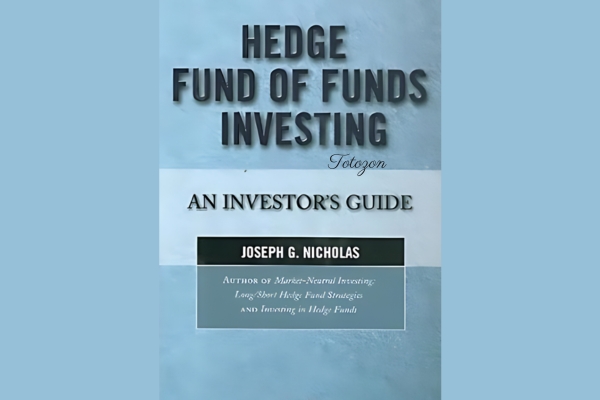 Hedge Fund of Funds Investing with Joseph Nicholas
1 × $6.00
Hedge Fund of Funds Investing with Joseph Nicholas
1 × $6.00 -
×
 Dominate Stocks (Swing Trading) 2023 with J. Bravo
1 × $5.00
Dominate Stocks (Swing Trading) 2023 with J. Bravo
1 × $5.00 -
×
 Essential Skills for Consistency in Trading Class with Don Kaufman
1 × $6.00
Essential Skills for Consistency in Trading Class with Don Kaufman
1 × $6.00 -
×
 Essentials Course & Day Trading Strategies with Bear Bull Traders
1 × $13.00
Essentials Course & Day Trading Strategies with Bear Bull Traders
1 × $13.00 -
×
 Learn Plan Profit – How To Trade Stocks
1 × $15.00
Learn Plan Profit – How To Trade Stocks
1 × $15.00 -
×
 Master Forex Fundamentals
1 × $15.00
Master Forex Fundamentals
1 × $15.00 -
×
 EasyLanguage Home Study Course PDF Book + CD
1 × $6.00
EasyLanguage Home Study Course PDF Book + CD
1 × $6.00 -
×
 E75 Forex System with James de Wet
1 × $6.00
E75 Forex System with James de Wet
1 × $6.00 -
×
 Gimme My Money Back with Ali Velshi
1 × $6.00
Gimme My Money Back with Ali Velshi
1 × $6.00 -
×
 Fractal Based Point Processes with Steven Bradley Lowen & Malvin Carl Teich
1 × $6.00
Fractal Based Point Processes with Steven Bradley Lowen & Malvin Carl Teich
1 × $6.00 -
×
 Mastering High Probability Chart Reading Methods with John Murphy
1 × $6.00
Mastering High Probability Chart Reading Methods with John Murphy
1 × $6.00 -
×
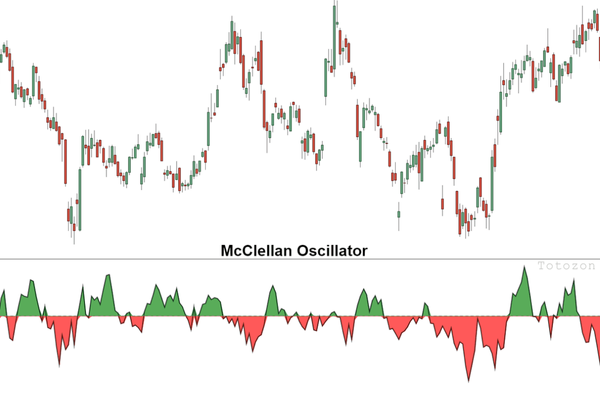 The McClellan Oscillator and Other Tools for with Tom McClellan
1 × $6.00
The McClellan Oscillator and Other Tools for with Tom McClellan
1 × $6.00 -
×
 Master Trader - Advander Management Strategies
1 × $39.00
Master Trader - Advander Management Strategies
1 × $39.00 -
×
 The Basics of the Wave Principle with Wayne Gorman
1 × $15.00
The Basics of the Wave Principle with Wayne Gorman
1 × $15.00 -
×
 Hubert Senters’ Squeeze Play Strategy & Tradestation Code with Hubert Senters
1 × $6.00
Hubert Senters’ Squeeze Play Strategy & Tradestation Code with Hubert Senters
1 × $6.00 -
×
 Order Flow Trading Advanced Masterclass with The Forex Scalpers
1 × $24.00
Order Flow Trading Advanced Masterclass with The Forex Scalpers
1 × $24.00 -
×
 Mastering Risk Modeling with Excel by Alastair Day
1 × $6.00
Mastering Risk Modeling with Excel by Alastair Day
1 × $6.00 -
×
 Euro Fractal Trading System with Cynthia Marcy, Erol Bortucene
1 × $6.00
Euro Fractal Trading System with Cynthia Marcy, Erol Bortucene
1 × $6.00 -
×
 How to Trade the New Single Stock Futures with Jack Bernstein
1 × $6.00
How to Trade the New Single Stock Futures with Jack Bernstein
1 × $6.00 -
×
 Learn Investing & Trading with Danny Devan
1 × $23.00
Learn Investing & Trading with Danny Devan
1 × $23.00 -
×
 Investing with Exchange Traded Funds Made Easy with Marvin Appel
1 × $6.00
Investing with Exchange Traded Funds Made Easy with Marvin Appel
1 × $6.00 -
×
 IRON CONDORS FOR INCOME 2017 with Sheridan Options Mentoring
1 × $6.00
IRON CONDORS FOR INCOME 2017 with Sheridan Options Mentoring
1 × $6.00 -
×
 Making Sense of Price Action: Price Action Profits with Scott Foster
1 × $54.00
Making Sense of Price Action: Price Action Profits with Scott Foster
1 × $54.00 -
×
 Futures Trading Mastery 2022 | FREE Top 45 Trading Signals!
1 × $5.00
Futures Trading Mastery 2022 | FREE Top 45 Trading Signals!
1 × $5.00 -
×
 Fibonacci Mastery Course: Complete Guide to Trading with Fib By Todd Gordon
1 × $62.00
Fibonacci Mastery Course: Complete Guide to Trading with Fib By Todd Gordon
1 × $62.00 -
×
 Algo Trading Masterclass with Ali Casey - StatOasis
1 × $23.00
Algo Trading Masterclass with Ali Casey - StatOasis
1 × $23.00 -
×
 Professional Trader Training Programme with Jarrat Davis
1 × $39.00
Professional Trader Training Programme with Jarrat Davis
1 × $39.00 -
×
 HunterFX Video Course with HunterFX
1 × $6.00
HunterFX Video Course with HunterFX
1 × $6.00 -
×
 Surefire Trading Plans with Mark McRae
1 × $6.00
Surefire Trading Plans with Mark McRae
1 × $6.00 -
×
 How to Predict and Prepare for a Stock Market Crash with Damon Verial
1 × $6.00
How to Predict and Prepare for a Stock Market Crash with Damon Verial
1 × $6.00 -
×
 Project Gorilla
1 × $5.00
Project Gorilla
1 × $5.00 -
×
 Mars Vesta Cycle in Stocks Markets (Article) with Bill Meridian
1 × $6.00
Mars Vesta Cycle in Stocks Markets (Article) with Bill Meridian
1 × $6.00 -
×
 Cash In On Chaos with Hans Hannula
1 × $6.00
Cash In On Chaos with Hans Hannula
1 × $6.00 -
×
 The Prop Trading Code with Brannigan Barrett - Axia Futures
1 × $23.00
The Prop Trading Code with Brannigan Barrett - Axia Futures
1 × $23.00

Inefficient Markets with Andrei Shleifer
$6.00
File Size: Cooming soon!
Delivery Time: 1–12 hours
Media Type: Online Course
Content Proof: Watch Here!
You may check content proof of “Inefficient Markets with Andrei Shleifer” below:

Inefficient Markets with Andrei Shleifer
Introduction to Inefficient Markets
The concept of market efficiency suggests that asset prices reflect all available information. However, Andrei Shleifer, a prominent economist, challenges this notion, arguing that markets can often be inefficient. This article delves into Shleifer’s insights on inefficient markets, exploring the causes, implications, and strategies for navigating them.
Understanding Market Efficiency
What is Market Efficiency?
Market efficiency, as defined by the Efficient Market Hypothesis (EMH), posits that asset prices fully reflect all available information. According to this theory, it is impossible to consistently achieve higher returns than the overall market through stock selection or market timing.
Degrees of Market Efficiency
- Weak Form Efficiency: All past trading information is reflected in stock prices.
- Semi-Strong Form Efficiency: All publicly available information is reflected in stock prices.
- Strong Form Efficiency: All information, including insider information, is reflected in stock prices.
Critique of Market Efficiency
Shleifer’s Perspective
Andrei Shleifer argues that markets are not always efficient. Behavioral biases, market frictions, and other anomalies can lead to price deviations from their true value.
Behavioral Finance
Shleifer’s work in behavioral finance highlights how psychological factors and cognitive biases influence investor behavior, leading to market inefficiencies.
Common Cognitive Biases
- Overconfidence: Investors overestimate their knowledge and abilities.
- Herd Behavior: Investors follow the crowd rather than making independent decisions.
- Loss Aversion: Investors fear losses more than they value gains, affecting their risk-taking behavior.
Causes of Market Inefficiency
1. Information Asymmetry
When some investors have access to information that others do not, it can lead to mispriced assets.
2. Limited Arbitrage
Arbitrage opportunities can correct mispricings, but when arbitrage is limited by risk, costs, or other factors, inefficiencies persist.
3. Transaction Costs
High transaction costs can prevent investors from exploiting arbitrage opportunities, allowing inefficiencies to remain.
4. Behavioral Factors
Investor psychology and behavior can cause prices to deviate from their fundamental values.
Implications of Inefficient Markets
Investment Opportunities
Inefficient markets can create opportunities for investors to achieve above-average returns by identifying mispriced assets.
Risk Management
Understanding market inefficiencies can help investors develop better risk management strategies by anticipating potential price corrections.
Market Stability
Inefficiencies can lead to market instability, as price corrections may occur suddenly, causing volatility.
Strategies for Navigating Inefficient Markets
1. Fundamental Analysis
Conducting thorough fundamental analysis can help identify mispriced assets and provide investment opportunities.
2. Behavioral Analysis
Incorporating behavioral analysis into investment strategies can help anticipate market movements driven by investor psychology.
3. Diversification
Diversifying investments across different asset classes and markets can help mitigate the risks associated with market inefficiencies.
4. Risk Management
Implementing robust risk management practices, such as stop-loss orders and position sizing, can protect against potential market corrections.
Case Studies in Market Inefficiency
Dot-Com Bubble
The late 1990s dot-com bubble exemplifies market inefficiency, where investor exuberance drove technology stock prices to unsustainable levels, followed by a sharp correction.
2008 Financial Crisis
The 2008 financial crisis highlighted inefficiencies in the housing market and financial sector, driven by poor risk management and information asymmetry.
Future of Market Efficiency
Technological Advances
Advancements in technology and data analytics may help reduce market inefficiencies by improving information dissemination and analysis.
Regulatory Changes
Regulatory changes aimed at increasing transparency and reducing information asymmetry can enhance market efficiency.
Behavioral Insights
Incorporating behavioral insights into economic models and investment strategies can provide a more comprehensive understanding of market dynamics.
Conclusion
Understanding the principles of inefficient markets as explained by Andrei Shleifer can significantly enhance investment strategies. By recognizing the causes and implications of market inefficiencies, investors can better navigate the financial markets and capitalize on opportunities. Embrace these insights, apply them diligently, and refine your approach to achieve better investment outcomes.
Frequently Asked Questions:
What are inefficient markets?
Inefficient markets are markets where asset prices do not fully reflect all available information, leading to mispricings.
Who is Andrei Shleifer?
Andrei Shleifer is a prominent economist known for his work in behavioral finance and market inefficiencies.
What causes market inefficiencies?
Market inefficiencies can be caused by information asymmetry, limited arbitrage, transaction costs, and behavioral factors.
How can investors benefit from market inefficiencies?
Investors can benefit by identifying mispriced assets through fundamental and behavioral analysis and implementing robust risk management strategies.
What are the implications of market inefficiencies?
Market inefficiencies can create investment opportunities, but they can also lead to increased risk and market instability.
Be the first to review “Inefficient Markets with Andrei Shleifer”
You must be logged in to post a review.
Related products

Forex Trading
Original price was: $249.00.$15.00Current price is: $15.00.

Forex Trading
Original price was: $397.00.$31.00Current price is: $31.00.

Original price was: $695.00.$41.00Current price is: $41.00.

Forex Trading
Original price was: $550.00.$5.00Current price is: $5.00.

Original price was: $4,995.00.$15.00Current price is: $15.00.

Forex Trading
Original price was: $799.00.$15.00Current price is: $15.00.

Forex Trading
Original price was: $850.00.$23.00Current price is: $23.00.

Forex Trading
Original price was: $1,098.00.$39.00Current price is: $39.00.

Forex Trading
Original price was: $2,995.00.$31.00Current price is: $31.00.

Original price was: $1,849.00.$15.00Current price is: $15.00.

Forex Trading
Original price was: $999.00.$15.00Current price is: $15.00.

Forex Trading
Original price was: $697.00.$5.00Current price is: $5.00.

Forex Trading
Original price was: $2,997.00.$23.00Current price is: $23.00.

Original price was: $2,120.00.$15.00Current price is: $15.00.

Original price was: $799.00.$15.00Current price is: $15.00.

Original price was: $139.00.$23.00Current price is: $23.00.

Original price was: $1,800.00.$54.00Current price is: $54.00.

Forex Trading
Original price was: $499.00.$15.00Current price is: $15.00.

Forex Trading
Original price was: $4,997.00.$27.00Current price is: $27.00.

Original price was: $895.00.$15.00Current price is: $15.00.

Reviews
There are no reviews yet.