
-
×
 Keynes & The Market with Justyn Walsh
1 × $6.00
Keynes & The Market with Justyn Walsh
1 × $6.00 -
×
 FX Savages Courses Collection
1 × $7.00
FX Savages Courses Collection
1 × $7.00 -
×
 Stock Cycles with Michael Alexander
1 × $6.00
Stock Cycles with Michael Alexander
1 × $6.00 -
×
 Beginner's Guide to Trading Intraday Futures Class with Don Kaufman
1 × $6.00
Beginner's Guide to Trading Intraday Futures Class with Don Kaufman
1 × $6.00 -
×
 Commodities and Commodity Derivatives: Modeling and Pricing for Agriculturals, Metals and Energy - Helyette Geman
1 × $6.00
Commodities and Commodity Derivatives: Modeling and Pricing for Agriculturals, Metals and Energy - Helyette Geman
1 × $6.00 -
×
 Dan Sheridan 360 Degrees of Trading Class
1 × $6.00
Dan Sheridan 360 Degrees of Trading Class
1 × $6.00 -
×
 The Naked Eye: Raw Data Analytics with Edgar Torres - Raw Data Analytics
1 × $8.00
The Naked Eye: Raw Data Analytics with Edgar Torres - Raw Data Analytics
1 × $8.00 -
×
 High Probability Trading Using Elliott Wave And Fibonacci Analysis withVic Patel - Forex Training Group
1 × $10.00
High Probability Trading Using Elliott Wave And Fibonacci Analysis withVic Patel - Forex Training Group
1 × $10.00 -
×
 Alexander Elder Full Courses Package
1 × $6.00
Alexander Elder Full Courses Package
1 × $6.00 -
×
 ALGO™ Online Retail - Version 2.9
1 × $155.00
ALGO™ Online Retail - Version 2.9
1 × $155.00 -
×
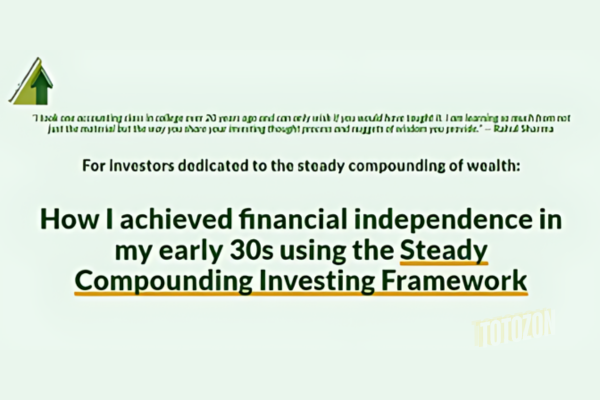 Steady Compounding Investing Academy Course with Steady Compounding
1 × $55.00
Steady Compounding Investing Academy Course with Steady Compounding
1 × $55.00 -
×
 Short-Term Trading, Long-Term Profits with John Leizman - McGraw-Hill
1 × $6.00
Short-Term Trading, Long-Term Profits with John Leizman - McGraw-Hill
1 × $6.00 -
×
 TRADING NFX Course with Andrew NFX
1 × $5.00
TRADING NFX Course with Andrew NFX
1 × $5.00 -
×
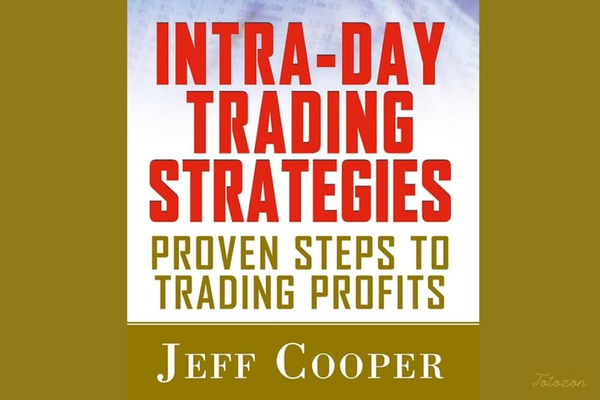 Intra-day Trading Strategies. Proven Steps to Trading Profits
1 × $6.00
Intra-day Trading Strategies. Proven Steps to Trading Profits
1 × $6.00 -
×
 SQX Mentorship with Tip Toe Hippo
1 × $23.00
SQX Mentorship with Tip Toe Hippo
1 × $23.00 -
×
 Quantamentals - The Next Great Forefront Of Trading and Investing with Trading Markets
1 × $8.00
Quantamentals - The Next Great Forefront Of Trading and Investing with Trading Markets
1 × $8.00 -
×
 Yarimi University Course
1 × $56.00
Yarimi University Course
1 × $56.00 -
×
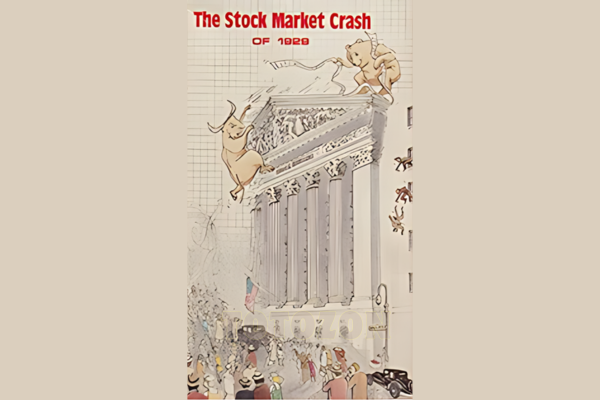 Stock Market Crash of 1929 with Aron Abrams
1 × $6.00
Stock Market Crash of 1929 with Aron Abrams
1 × $6.00 -
×
 The Handbook of Pairs Trading with Douglas Ehrman
1 × $6.00
The Handbook of Pairs Trading with Douglas Ehrman
1 × $6.00 -
×
 Crypto Trading Academy with Cheeky Investor - Aussie Day Trader
1 × $13.00
Crypto Trading Academy with Cheeky Investor - Aussie Day Trader
1 × $13.00 -
×
 7 Things You MUST Know about Forex Candlesticks
1 × $4.00
7 Things You MUST Know about Forex Candlesticks
1 × $4.00 -
×
 Trading Short TermSame Day Trades Sep 2023 with Dan Sheridan & Mark Fenton - Sheridan Options Mentoring
1 × $31.00
Trading Short TermSame Day Trades Sep 2023 with Dan Sheridan & Mark Fenton - Sheridan Options Mentoring
1 × $31.00 -
×
 W. D Gann 's Square Of 9 Applied To Modern Markets with Sean Avidar - Hexatrade350
1 × $23.00
W. D Gann 's Square Of 9 Applied To Modern Markets with Sean Avidar - Hexatrade350
1 × $23.00 -
×
 Home Run Options Trading Course with Dave Aquino - Base Camp Trading
1 × $11.00
Home Run Options Trading Course with Dave Aquino - Base Camp Trading
1 × $11.00 -
×
 Commodities for Dummies with Amine Bouchentouf
1 × $6.00
Commodities for Dummies with Amine Bouchentouf
1 × $6.00 -
×
 A14 Weekly Options Strategy Workshop 2023 with Amy Meissner - Aeromir
1 × $23.00
A14 Weekly Options Strategy Workshop 2023 with Amy Meissner - Aeromir
1 × $23.00 -
×
 Advanced Spread Trading with Guy Bower - MasterClass Trader
1 × $15.00
Advanced Spread Trading with Guy Bower - MasterClass Trader
1 × $15.00 -
×
 Futures Trading Secrets Home Study Course 2008 with Bill McCready
1 × $6.00
Futures Trading Secrets Home Study Course 2008 with Bill McCready
1 × $6.00 -
×
 Seasonal Stock Market Trends: The Definitive Guide to Calendar‐Based Stock Market Trading with Jay Kaeppel
1 × $6.00
Seasonal Stock Market Trends: The Definitive Guide to Calendar‐Based Stock Market Trading with Jay Kaeppel
1 × $6.00 -
×
 Trading Economic Data System with CopperChips
1 × $6.00
Trading Economic Data System with CopperChips
1 × $6.00 -
×
 Pricing of Bond Options with Detlef Repplinger
1 × $6.00
Pricing of Bond Options with Detlef Repplinger
1 × $6.00 -
×
 ENG Renko Mastery with International Scalpers
1 × $10.00
ENG Renko Mastery with International Scalpers
1 × $10.00 -
×
 Options On Futures Class By Mark Fenton - Sheridan Options Mentoring
1 × $6.00
Options On Futures Class By Mark Fenton - Sheridan Options Mentoring
1 × $6.00 -
×
 0 DTE Options Trading Workshop with Aeromir Corporation
1 × $15.00
0 DTE Options Trading Workshop with Aeromir Corporation
1 × $15.00 -
×
 Profiletraders - Market Profile Day Trading
1 × $15.00
Profiletraders - Market Profile Day Trading
1 × $15.00 -
×
 Essentials in Quantitative Trading QT01 By HangukQuant's
1 × $23.00
Essentials in Quantitative Trading QT01 By HangukQuant's
1 × $23.00 -
×
 Trading Non-Farm Payroll Report
1 × $6.00
Trading Non-Farm Payroll Report
1 × $6.00 -
×
 The Reducing Risk and Maximizing Returns Blueprint (Atomic Hedge Strategy) with Don Kaufman
1 × $6.00
The Reducing Risk and Maximizing Returns Blueprint (Atomic Hedge Strategy) with Don Kaufman
1 × $6.00 -
×
 The Streetsmart Guide to Timing the Stock Market with Colin Alexander
1 × $6.00
The Streetsmart Guide to Timing the Stock Market with Colin Alexander
1 × $6.00 -
×
 The Orderflow Masterclass with PrimeTrading
1 × $17.00
The Orderflow Masterclass with PrimeTrading
1 × $17.00 -
×
 Long-Term Secrets to Short-Term Trading (Ebook) with Larry Williams
1 × $6.00
Long-Term Secrets to Short-Term Trading (Ebook) with Larry Williams
1 × $6.00 -
×
 Ichimoku Cloud Triple Confirmation Indicator and Scan with AlphaShark
1 × $31.00
Ichimoku Cloud Triple Confirmation Indicator and Scan with AlphaShark
1 × $31.00 -
×
 Fast Start Barter System with Bob Meyer
1 × $31.00
Fast Start Barter System with Bob Meyer
1 × $31.00 -
×
 London Close Trade 2.0 with Shirley Hudson & Vic Noble - Forex Mentor
1 × $5.00
London Close Trade 2.0 with Shirley Hudson & Vic Noble - Forex Mentor
1 × $5.00 -
×
 Crystal Ball Pack PLUS bonus Live Trade By Pat Mitchell - Trick Trades
1 × $20.00
Crystal Ball Pack PLUS bonus Live Trade By Pat Mitchell - Trick Trades
1 × $20.00 -
×
 Stock Detective Investor: Finding Market Gems Online with Kevin Lichtman & Lynn Duke
1 × $6.00
Stock Detective Investor: Finding Market Gems Online with Kevin Lichtman & Lynn Duke
1 × $6.00 -
×
 Rounded Bottom Breakout Multimedia Course
1 × $31.00
Rounded Bottom Breakout Multimedia Course
1 × $31.00
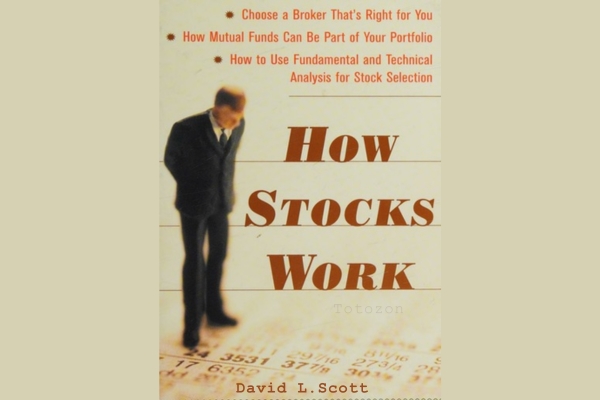
How Stocks Work with David L.Scott
$6.00
File Size: Coming soon!
Delivery Time: 1–12 hours
Media Type: Online Course
Content Proof: Watch Here!
You may check content proof of “How Stocks Work with David L.Scott” below:

How Stocks Work with David L. Scott
Introduction
Stocks are a fundamental aspect of the financial markets, offering opportunities for investment and growth. David L. Scott’s insights provide a comprehensive understanding of how stocks work, making this complex subject accessible. In this article, we will explore the mechanics of stocks, their benefits, risks, and how to invest wisely.
What are Stocks?
Stocks represent ownership in a company. When you purchase a stock, you buy a piece of the company, known as a share.
Types of Stocks
There are two main types of stocks:
- Common Stocks: These give shareholders voting rights and dividends.
- Preferred Stocks: These offer fixed dividends but usually do not provide voting rights.
Common Stocks
Common stocks are the most widely held type of stock. They entitle shareholders to vote at shareholder meetings and receive dividends.
Preferred Stocks
Preferred stocks provide fixed dividends and have priority over common stocks in the event of a liquidation. However, they typically do not come with voting rights.
How Stocks Are Traded
Stocks are bought and sold on stock exchanges, such as the New York Stock Exchange (NYSE) and NASDAQ.
Stock Exchanges
Stock exchanges are platforms where buyers and sellers meet to trade stocks. They provide liquidity and ensure fair pricing.
Major Stock Exchanges
- NYSE: Known for its stringent listing requirements.
- NASDAQ: Home to many technology companies and has less stringent requirements compared to NYSE.
How to Buy and Sell Stocks
Buying and selling stocks can be done through brokerage accounts. Investors place orders through brokers, who execute trades on their behalf.
Types of Orders
- Market Orders: Execute immediately at the current market price.
- Limit Orders: Execute only at a specified price or better.
- Stop Orders: Execute once the stock reaches a certain price.
Why Invest in Stocks?
Investing in stocks can provide significant returns and help build wealth over time.
Benefits of Investing in Stocks
- Potential for High Returns: Historically, stocks have provided higher returns compared to other investments.
- Ownership in Companies: Shareholders have a stake in the company’s success.
- Dividend Income: Many stocks pay dividends, providing a regular income stream.
Potential for High Returns
Stocks have historically outperformed other investment vehicles like bonds and savings accounts, offering greater potential for capital appreciation.
Dividend Income
Dividends are payments made by companies to shareholders, usually on a quarterly basis. They provide a source of passive income.
Risks of Investing in Stocks
While stocks offer high returns, they also come with risks.
Market Risk
The value of stocks can fluctuate due to market conditions, economic changes, and company performance.
Volatility
Stock prices can be highly volatile, with prices moving sharply in short periods.
Company Risk
Individual companies can face financial difficulties, impacting their stock prices.
Bankruptcy
If a company goes bankrupt, shareholders are the last to be paid, often resulting in significant losses.
How to Analyze Stocks
Analyzing stocks involves evaluating a company’s financial health and market position.
Fundamental Analysis
Fundamental analysis looks at financial statements, earnings, and other qualitative factors.
Key Metrics
- Earnings Per Share (EPS): Indicates profitability.
- Price-to-Earnings Ratio (P/E): Compares the company’s stock price to its earnings.
- Dividend Yield: Shows the dividend income relative to the stock price.
Technical Analysis
Technical analysis uses historical price and volume data to predict future price movements.
Common Technical Indicators
- Moving Averages: Smooth out price data to identify trends.
- Relative Strength Index (RSI): Measures the speed and change of price movements.
- Bollinger Bands: Indicate volatility and price levels.
Building a Stock Portfolio
Diversification is key to managing risk and achieving long-term growth.
Diversification
Spreading investments across different sectors and industries reduces risk.
Sector Diversification
Invest in various sectors such as technology, healthcare, and finance to mitigate sector-specific risks.
Rebalancing
Regularly adjust your portfolio to maintain your desired asset allocation.
Rebalancing Strategies
- Periodic Rebalancing: Adjusting the portfolio at regular intervals.
- Threshold Rebalancing: Adjusting when asset weights deviate significantly from targets.
David L. Scott’s Tips for Stock Investing
David L. Scott offers practical advice for investing in stocks.
Start with a Plan
Define your investment goals and risk tolerance.
Investment Goals
Identify whether you are looking for growth, income, or preservation of capital.
Do Your Research
Thoroughly research companies before investing.
Research Sources
- Financial Statements
- Analyst Reports
- News Articles
Stay Informed
Keep up with market trends and company news.
Market News Sources
- Financial News Websites
- Company Press Releases
- Stock Analysis Platforms
Conclusion
Understanding how stocks work is crucial for making informed investment decisions. With insights from David L. Scott, you can navigate the stock market with confidence, leveraging both the benefits and managing the risks effectively.
FAQs
1. What are common and preferred stocks?
Common stocks offer voting rights and dividends, while preferred stocks provide fixed dividends and usually do not offer voting rights.
2. How are stocks traded?
Stocks are traded on stock exchanges through brokerage accounts. Investors place orders that brokers execute on their behalf.
3. What are the benefits of investing in stocks?
Stocks offer potential for high returns, ownership in companies, and dividend income.
4. What are the risks of investing in stocks?
Stocks are subject to market risk and company risk, including volatility and potential bankruptcy.
5. How can I analyze stocks before investing?
Use fundamental analysis to evaluate financial health and technical analysis to predict price movements.
Be the first to review “How Stocks Work with David L.Scott”
You must be logged in to post a review.
Related products

Original price was: $1,800.00.$54.00Current price is: $54.00.
Original price was: $895.00.$15.00Current price is: $15.00.
Forex Trading
Original price was: $850.00.$23.00Current price is: $23.00.
Forex Trading
Original price was: $397.00.$31.00Current price is: $31.00.

Forex Trading
Original price was: $1,898.00.$10.00Current price is: $10.00.

Forex Trading
Original price was: $4,997.00.$27.00Current price is: $27.00.

Original price was: $700.00.$39.00Current price is: $39.00.
Forex Trading
Original price was: $797.00.$10.00Current price is: $10.00.

Original price was: $799.00.$15.00Current price is: $15.00.

Forex Trading
Original price was: $499.00.$15.00Current price is: $15.00.

Forex Trading
Original price was: $239.00.$8.00Current price is: $8.00.

Forex Trading
The Complete Guide to Multiple Time Frame Analysis & Reading Price Action with Aiman Almansoori
Original price was: $1,399.00.$13.00Current price is: $13.00.
Forex Trading
Original price was: $500.00.$5.00Current price is: $5.00.
Forex Trading
Original price was: $999.00.$15.00Current price is: $15.00.

Original price was: $2,120.00.$15.00Current price is: $15.00.

Original price was: $4,995.00.$15.00Current price is: $15.00.
Original price was: $997.00.$8.00Current price is: $8.00.

Original price was: $497.00.$31.00Current price is: $31.00.

Original price was: $695.00.$41.00Current price is: $41.00.

Original price was: $299.00.$8.00Current price is: $8.00.
Reviews
There are no reviews yet.