
-
×
 RTM + Suppy and Demand with Nora Bystra
1 × $6.00
RTM + Suppy and Demand with Nora Bystra
1 × $6.00 -
×
 How to Analyze Multifamily Investment Opportunities with Symon He & Brandon Young
1 × $6.00
How to Analyze Multifamily Investment Opportunities with Symon He & Brandon Young
1 × $6.00 -
×
 Street-Smart Chart Reading – Volume 2 – Digging Deeper with Donald G.Worden
1 × $6.00
Street-Smart Chart Reading – Volume 2 – Digging Deeper with Donald G.Worden
1 × $6.00 -
×
 Master Trader - Advander Management Strategies
1 × $39.00
Master Trader - Advander Management Strategies
1 × $39.00 -
×
 Essential Stock Picking Strategies with Daniel Strachman
1 × $6.00
Essential Stock Picking Strategies with Daniel Strachman
1 × $6.00 -
×
 Investing Online with Benton E.Gup
1 × $6.00
Investing Online with Benton E.Gup
1 × $6.00 -
×
 How To Invest Better
1 × $6.00
How To Invest Better
1 × $6.00 -
×
 Pattern, Price & Time: Using Gann Theory in Trading Systems (1st Edition) with James Hyerczyk
1 × $6.00
Pattern, Price & Time: Using Gann Theory in Trading Systems (1st Edition) with James Hyerczyk
1 × $6.00 -
×
 Quantifiable Edges – Gold Subscription with Rob Hanna
1 × $54.00
Quantifiable Edges – Gold Subscription with Rob Hanna
1 × $54.00 -
×
 Mastering Technical Analysis with Investi Share
1 × $23.00
Mastering Technical Analysis with Investi Share
1 × $23.00 -
×
 Researching your Trade
1 × $6.00
Researching your Trade
1 × $6.00 -
×
 Divorcing the Dow: Using Revolutionary Market Indicators to Profit from the Stealth Boom Ahead - Jim Troup & Sharon Michalsky
1 × $6.00
Divorcing the Dow: Using Revolutionary Market Indicators to Profit from the Stealth Boom Ahead - Jim Troup & Sharon Michalsky
1 × $6.00 -
×
 Guidelines for Analysis and Establishing a Trading Plan with Charles Drummond
1 × $6.00
Guidelines for Analysis and Establishing a Trading Plan with Charles Drummond
1 × $6.00 -
×
 Option Greeks Class with Don Kaufman
1 × $6.00
Option Greeks Class with Don Kaufman
1 × $6.00 -
×
 How to Pick Hot Reverse Merger Penny Stocks with John Lux
1 × $5.00
How to Pick Hot Reverse Merger Penny Stocks with John Lux
1 × $5.00 -
×
 Practical Speculation with Victor Niederhoffer, Laurel Kenner
1 × $6.00
Practical Speculation with Victor Niederhoffer, Laurel Kenner
1 × $6.00 -
×
 Making Sense of Price Action: Price Action Profits with Scott Foster
1 × $54.00
Making Sense of Price Action: Price Action Profits with Scott Foster
1 × $54.00 -
×
 Dominate Stocks 2020 with J. Bravo
1 × $6.00
Dominate Stocks 2020 with J. Bravo
1 × $6.00 -
×
 Option Strategies with Courtney Smith
1 × $6.00
Option Strategies with Courtney Smith
1 × $6.00 -
×
 90 Days To Trade MasterClass with Jerremy Newsome & Matt Delong - Real Life Trading
1 × $104.00
90 Days To Trade MasterClass with Jerremy Newsome & Matt Delong - Real Life Trading
1 × $104.00 -
×
 Essentials Course & Day Trading Strategies with Bear Bull Traders
1 × $13.00
Essentials Course & Day Trading Strategies with Bear Bull Traders
1 × $13.00 -
×
 Options Trading with Nick & Gareth - Nick Santiago & Gareth Soloway - InTheMoneyStocks
1 × $31.00
Options Trading with Nick & Gareth - Nick Santiago & Gareth Soloway - InTheMoneyStocks
1 × $31.00 -
×
 Secrets of a Winning Trader with Gareth Soloway
1 × $871.00
Secrets of a Winning Trader with Gareth Soloway
1 × $871.00 -
×
 George Wollsten: Expert Stock and Grain Trader with George Bayer
1 × $6.00
George Wollsten: Expert Stock and Grain Trader with George Bayer
1 × $6.00 -
×
 A Complete Guide to the Futures Markets: Fundamental Analysis, Technical Analysis, Trading, Spreads, and Options (1st Edition) - Jack Schwager
1 × $6.00
A Complete Guide to the Futures Markets: Fundamental Analysis, Technical Analysis, Trading, Spreads, and Options (1st Edition) - Jack Schwager
1 × $6.00 -
×
 Dynamic Time Cycles with Peter Eliades
1 × $6.00
Dynamic Time Cycles with Peter Eliades
1 × $6.00 -
×
 A Treasure House of Bayer. 32 Articles and Forecasts with George Bayer
1 × $6.00
A Treasure House of Bayer. 32 Articles and Forecasts with George Bayer
1 × $6.00 -
×
 Quantamentals - The Next Great Forefront Of Trading and Investing with Trading Markets
1 × $8.00
Quantamentals - The Next Great Forefront Of Trading and Investing with Trading Markets
1 × $8.00 -
×
 Neural Networks in Trading with Dr. Ernest P. Chan
1 × $31.00
Neural Networks in Trading with Dr. Ernest P. Chan
1 × $31.00 -
×
 The Geography of Money with Benjamin J.Cohen
1 × $6.00
The Geography of Money with Benjamin J.Cohen
1 × $6.00 -
×
 Traders Positioning System with Lee Gettess
1 × $4.00
Traders Positioning System with Lee Gettess
1 × $4.00 -
×
 Forecast 2024 Clarification with Larry Williams
1 × $15.00
Forecast 2024 Clarification with Larry Williams
1 × $15.00 -
×
 Options Bootcamp with Sid Woolfolk
1 × $6.00
Options Bootcamp with Sid Woolfolk
1 × $6.00 -
×
 EURUSD Trading System with CopperChips
1 × $6.00
EURUSD Trading System with CopperChips
1 × $6.00 -
×
 LEAPS Trading Strategies- Powerful Techniques for Options Trading Success - Marty Kearney
1 × $6.00
LEAPS Trading Strategies- Powerful Techniques for Options Trading Success - Marty Kearney
1 × $6.00 -
×
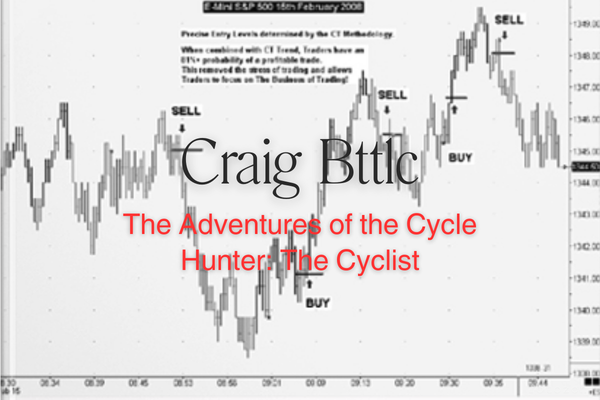 The Adventures of the Cycle Hunter. The Cyclist with Craig Bttlc
1 × $6.00
The Adventures of the Cycle Hunter. The Cyclist with Craig Bttlc
1 × $6.00 -
×
 Mergers & Acquisitions From A to Z with Andrew J.Sherman
1 × $6.00
Mergers & Acquisitions From A to Z with Andrew J.Sherman
1 × $6.00 -
×
 Scalp Strategy and Flipping Small Accounts with Opes Trading Group
1 × $5.00
Scalp Strategy and Flipping Small Accounts with Opes Trading Group
1 × $5.00 -
×
 Sea Lanes & Pipelines with Bernard D.Cole
1 × $6.00
Sea Lanes & Pipelines with Bernard D.Cole
1 × $6.00 -
×
 How Stocks Work with David L.Scott
1 × $6.00
How Stocks Work with David L.Scott
1 × $6.00 -
×
 Stock Market Investing for Financial Independence & Retiring Early with Amon & Christina
1 × $15.00
Stock Market Investing for Financial Independence & Retiring Early with Amon & Christina
1 × $15.00 -
×
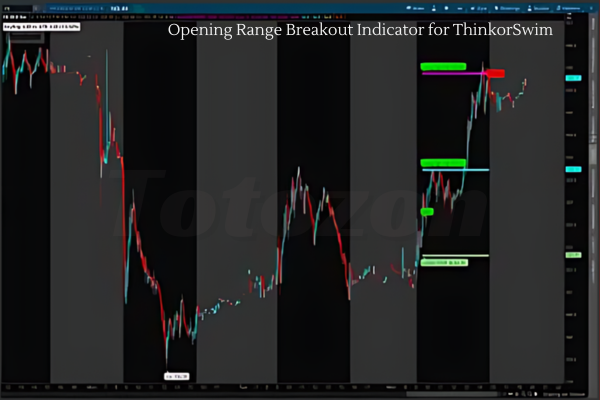 Opening Range Breakout Indicator for ThinkorSwim
1 × $6.00
Opening Range Breakout Indicator for ThinkorSwim
1 × $6.00 -
×
 BD FX Course with FX Learning
1 × $6.00
BD FX Course with FX Learning
1 × $6.00 -
×
 Pairs Trading The Final Frontier with Don Kaufman
1 × $6.00
Pairs Trading The Final Frontier with Don Kaufman
1 × $6.00 -
×
 Speculating with Futures and Traditional Commodities with Liverpool Group
1 × $6.00
Speculating with Futures and Traditional Commodities with Liverpool Group
1 × $6.00 -
×
 Candlestick Charts with Clive Lambert
1 × $6.00
Candlestick Charts with Clive Lambert
1 × $6.00 -
×
 How I Trade the QQQs with Don Miller
1 × $6.00
How I Trade the QQQs with Don Miller
1 × $6.00 -
×
 Masterclass 3.0 with RockzFX Academy
1 × $6.00
Masterclass 3.0 with RockzFX Academy
1 × $6.00 -
×
 Seasonal Stock Market Trends: The Definitive Guide to Calendar‐Based Stock Market Trading with Jay Kaeppel
1 × $6.00
Seasonal Stock Market Trends: The Definitive Guide to Calendar‐Based Stock Market Trading with Jay Kaeppel
1 × $6.00 -
×
 Freedom Challenge Course with Steven Dux
1 × $5.00
Freedom Challenge Course with Steven Dux
1 × $5.00 -
×
 Hedge Fund Market Wizards: How Winning Traders Win with Jack Schwager
1 × $6.00
Hedge Fund Market Wizards: How Winning Traders Win with Jack Schwager
1 × $6.00 -
×
 HST Mobile
1 × $31.00
HST Mobile
1 × $31.00 -
×
 Principles of Artificial Neural Networks (2nd Ed.) with Daniel Graupe
1 × $6.00
Principles of Artificial Neural Networks (2nd Ed.) with Daniel Graupe
1 × $6.00 -
×
 Investment Strategies of Hedge Funds with Filippo Stefanini
1 × $6.00
Investment Strategies of Hedge Funds with Filippo Stefanini
1 × $6.00 -
×
 Financial Markets Online – VIP Membership with James Bentley
1 × $6.00
Financial Markets Online – VIP Membership with James Bentley
1 × $6.00 -
×
 Algo Trading Masterclass with Ali Casey - StatOasis
1 × $23.00
Algo Trading Masterclass with Ali Casey - StatOasis
1 × $23.00 -
×
 Math Trading Course 2023
1 × $34.00
Math Trading Course 2023
1 × $34.00 -
×
 Financial Astrology Course with Brian James Sklenka
1 × $6.00
Financial Astrology Course with Brian James Sklenka
1 × $6.00 -
×
 Crash Profits Make Money When Stocks Sink and Soar with Martin D.Weiss
1 × $6.00
Crash Profits Make Money When Stocks Sink and Soar with Martin D.Weiss
1 × $6.00 -
×
 How to Trade Diagonal Triangles. Superior Risk Reward Trade Setups
1 × $6.00
How to Trade Diagonal Triangles. Superior Risk Reward Trade Setups
1 × $6.00 -
×
 Forex Profit Formula System with Jason Fielder
1 × $6.00
Forex Profit Formula System with Jason Fielder
1 × $6.00 -
×
 White Phoenix’s The Smart (Money) Approach to Trading with Jayson Casper
1 × $39.00
White Phoenix’s The Smart (Money) Approach to Trading with Jayson Casper
1 × $39.00
High Probability ETF Trading: 7 Professional Strategies To Improve Your ETF Trading with Larry Connors
$6.00
File Size: Coming soon!
Delivery Time: 1–12 hours
Media Type: Online Course
Content Proof: Watch Here!
You may check content proof of “High Probability ETF Trading: 7 Professional Strategies To Improve Your ETF Trading with Larry Connors” below:

High Probability ETF Trading: 7 Professional Strategies To Improve Your ETF Trading with Larry Connors
Exchange-Traded Funds (ETFs) have become a popular investment vehicle for traders seeking diversification and liquidity. To succeed in this dynamic market, you need reliable strategies. In this article, we’ll explore High Probability ETF Trading: 7 Professional Strategies To Improve Your ETF Trading with Larry Connors. Larry Connors, a veteran in the trading community, offers insights that can significantly enhance your ETF trading approach.
Introduction to ETF Trading
What Are ETFs?
ETFs are investment funds that are traded on stock exchanges, much like stocks. They hold assets such as stocks, commodities, or bonds and generally operate with an arbitrage mechanism designed to keep trading close to its net asset value.
Why Trade ETFs?
ETFs offer several benefits, including diversification, lower costs, and flexibility. They are ideal for both beginner and experienced traders looking to broaden their investment portfolio.
Strategy 1: RSI Overbought/Oversold
Understanding RSI
The Relative Strength Index (RSI) is a momentum oscillator that measures the speed and change of price movements. It ranges from 0 to 100, with readings above 70 indicating overbought conditions and below 30 indicating oversold conditions.
Implementing RSI in ETF Trading
Connors suggests using RSI to identify overbought and oversold conditions in ETFs. When the RSI drops below 30, consider it a buying opportunity, and when it rises above 70, it may be time to sell.
Strategy 2: The 2-Period RSI Pullback
Why 2-Period RSI?
The 2-period RSI is a shorter-term indicator that provides more frequent signals. It’s particularly effective for capturing short-term price movements.
How to Use It
Buy when the 2-period RSI drops below 10 and sell when it rises above 90. This strategy helps capture quick, profitable trades within a short time frame.
Strategy 3: Mean Reversion
Concept of Mean Reversion
Mean reversion is based on the idea that prices and returns eventually move back towards the mean or average.
Applying Mean Reversion in ETFs
Identify ETFs that have deviated significantly from their historical average prices. Connors recommends buying when an ETF is significantly below its mean and selling when it’s above.
Strategy 4: Trend Following
What is Trend Following?
Trend following involves buying assets that have been rising and selling those that have been falling. It’s a momentum-based strategy.
Implementing Trend Following
Use moving averages to identify trends. For example, buy when the ETF’s price is above its 200-day moving average and sell when it falls below.
Strategy 5: The ConnorsRSI Strategy
What is ConnorsRSI?
ConnorsRSI is a composite indicator combining three different components: the RSI, the duration of the up/down streak, and the magnitude of the price change.
Using ConnorsRSI
This strategy helps identify short-term mean reversion opportunities. Buy when ConnorsRSI is low (e.g., below 20) and sell when it’s high (e.g., above 80).
Strategy 6: Pair Trading
Understanding Pair Trading
Pair trading involves trading two correlated securities simultaneously, one long and one short. The idea is to profit from the relative performance between the two.
Executing Pair Trades with ETFs
Identify pairs of ETFs that typically move together. For instance, if one ETF is underperforming its pair, consider going long on the underperforming ETF and short on the outperforming one.
Strategy 7: Volatility-Based Trading
What is Volatility?
Volatility refers to the degree of variation of a trading price series over time. High volatility indicates large price movements, while low volatility indicates smaller movements.
Trading Based on Volatility
Use indicators like the VIX to gauge market volatility. Connors suggests trading ETFs that respond well to volatility signals. For example, buy volatility-sensitive ETFs when the VIX spikes and sell when it drops.
Advantages of Connors’ ETF Trading Strategies
High Probability Setups
Each strategy is designed based on historical data and statistical analysis, providing high-probability trading setups.
Diverse Approaches
From mean reversion to trend following, these strategies offer diverse approaches to suit different market conditions and trading styles.
Automation Friendly
Many of these strategies can be automated using trading platforms like TradeStation, ensuring consistent execution and minimizing human error.
Challenges and Considerations
Market Conditions
No strategy is foolproof. Market conditions can change rapidly, affecting the performance of these strategies. Stay informed and be prepared to adapt.
Emotional Discipline
Successful trading requires emotional discipline. Stick to the strategy rules and avoid making impulsive decisions based on emotions.
Continuous Learning
The market is constantly evolving. Continuously educate yourself and refine your strategies to stay ahead.
Conclusion
High Probability ETF Trading with Larry Connors offers a structured and effective approach to trading ETFs. By implementing these seven professional strategies, you can improve your trading performance and achieve greater success in the markets.
FAQs
1. What is the main advantage of using RSI in ETF trading?
RSI helps identify overbought and oversold conditions, providing timely entry and exit signals for trades.
2. How does mean reversion benefit ETF traders?
Mean reversion allows traders to capitalize on ETFs that have deviated significantly from their historical averages, profiting from their eventual return to the mean.
3. Can beginners use these strategies effectively?
Yes, but it requires a willingness to learn and practice. Starting with a simulated account can help beginners gain confidence.
4. What are the risks associated with pair trading?
Pair trading risks include correlation breakdowns and execution challenges. Proper analysis and risk management are crucial.
5. How can I stay disciplined in my trading approach?
Stick to your trading plan, avoid impulsive decisions, and continuously educate yourself to stay disciplined.
Be the first to review “High Probability ETF Trading: 7 Professional Strategies To Improve Your ETF Trading with Larry Connors”
You must be logged in to post a review.
Related products

Forex Trading
Original price was: $500.00.$5.00Current price is: $5.00.

Original price was: $4,995.00.$15.00Current price is: $15.00.

Forex Trading
Original price was: $1,898.00.$10.00Current price is: $10.00.

Forex Trading
Original price was: $1,098.00.$39.00Current price is: $39.00.

Original price was: $139.00.$23.00Current price is: $23.00.

Forex Trading
Original price was: $2,995.00.$31.00Current price is: $31.00.
Original price was: $700.00.$39.00Current price is: $39.00.

Forex Trading
Original price was: $850.00.$23.00Current price is: $23.00.

Forex Trading
Original price was: $239.00.$8.00Current price is: $8.00.
Original price was: $999.00.$5.00Current price is: $5.00.
Forex Trading
Original price was: $249.00.$15.00Current price is: $15.00.
Forex Trading
Quantamentals – The Next Great Forefront Of Trading and Investing with Trading Markets
Original price was: $1,495.00.$8.00Current price is: $8.00.

Original price was: $997.00.$13.00Current price is: $13.00.

Forex Trading
Original price was: $550.00.$5.00Current price is: $5.00.

Forex Trading
Original price was: $797.00.$10.00Current price is: $10.00.

Original price was: $2,120.00.$15.00Current price is: $15.00.

Original price was: $649.00.$20.00Current price is: $20.00.

Forex Trading
Original price was: $125.00.$17.00Current price is: $17.00.

Original price was: $450.00.$23.00Current price is: $23.00.

Forex Trading
Original price was: $799.00.$15.00Current price is: $15.00.
Reviews
There are no reviews yet.