
-
×
 How To Read The Market Professionally with TradeSmart
1 × $27.00
How To Read The Market Professionally with TradeSmart
1 × $27.00 -
×
 Essentials in Quantitative Trading QT01 By HangukQuant's
1 × $23.00
Essentials in Quantitative Trading QT01 By HangukQuant's
1 × $23.00 -
×
 Compass Trading System with Right Line Trading
1 × $39.00
Compass Trading System with Right Line Trading
1 × $39.00 -
×
 Small Account Options Trading Workshop Package with Doc Severson
1 × $6.00
Small Account Options Trading Workshop Package with Doc Severson
1 × $6.00 -
×
 Follow the Leader Trading System with Anthony Gibson
1 × $6.00
Follow the Leader Trading System with Anthony Gibson
1 × $6.00 -
×
 Crystal Ball Pack PLUS bonus Live Trade By Pat Mitchell - Trick Trades
1 × $20.00
Crystal Ball Pack PLUS bonus Live Trade By Pat Mitchell - Trick Trades
1 × $20.00 -
×
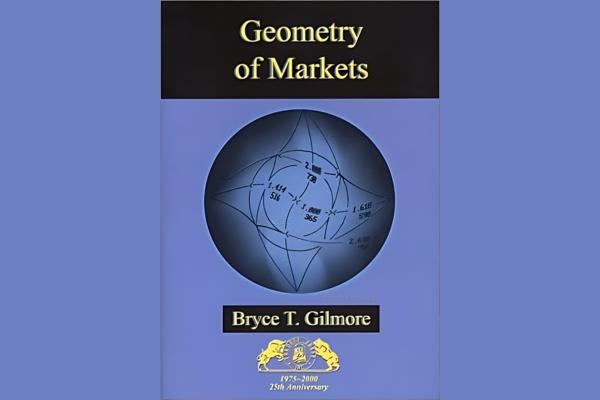 Geometry of Markets I with Bruce Gilmore
1 × $6.00
Geometry of Markets I with Bruce Gilmore
1 × $6.00 -
×
 Advanced Strategies for Option Trading Success with James Bittman
1 × $6.00
Advanced Strategies for Option Trading Success with James Bittman
1 × $6.00 -
×
 The Best Option Trading Course with David Jaffee - Best Stock Strategy
1 × $15.00
The Best Option Trading Course with David Jaffee - Best Stock Strategy
1 × $15.00 -
×
 Matrix Spread Options Trading Course with Base Camp Trading
1 × $31.00
Matrix Spread Options Trading Course with Base Camp Trading
1 × $31.00 -
×
 Advanced Spread Trading with Guy Bower - MasterClass Trader
1 × $15.00
Advanced Spread Trading with Guy Bower - MasterClass Trader
1 × $15.00 -
×
 The Naked Eye: Raw Data Analytics with Edgar Torres - Raw Data Analytics
1 × $8.00
The Naked Eye: Raw Data Analytics with Edgar Torres - Raw Data Analytics
1 × $8.00 -
×
 Quantamentals - The Next Great Forefront Of Trading and Investing with Trading Markets
1 × $8.00
Quantamentals - The Next Great Forefront Of Trading and Investing with Trading Markets
1 × $8.00 -
×
 A Day In The Life Of A Forex Trader with Vic Noble & Shirley Hudson
1 × $23.00
A Day In The Life Of A Forex Trader with Vic Noble & Shirley Hudson
1 × $23.00 -
×
 Scalp Strategy and Flipping Small Accounts with Opes Trading Group
1 × $5.00
Scalp Strategy and Flipping Small Accounts with Opes Trading Group
1 × $5.00 -
×
 Cash In On Chaos with Hans Hannula
1 × $6.00
Cash In On Chaos with Hans Hannula
1 × $6.00 -
×
 The A14 Weekly Option Strategy Workshop with Amy Meissner
1 × $23.00
The A14 Weekly Option Strategy Workshop with Amy Meissner
1 × $23.00 -
×
 Market Trader Forecasting Modeling Course
1 × $6.00
Market Trader Forecasting Modeling Course
1 × $6.00 -
×
 Forecast 2024 Clarification with Larry Williams
1 × $15.00
Forecast 2024 Clarification with Larry Williams
1 × $15.00 -
×
 HST Mobile
1 × $31.00
HST Mobile
1 × $31.00 -
×
 Options Trading & Ultimate MasterClass With Tyrone Abela - FX Evolution
1 × $54.00
Options Trading & Ultimate MasterClass With Tyrone Abela - FX Evolution
1 × $54.00 -
×
 How to Lose Money Profitably with Mark D.Cook
1 × $6.00
How to Lose Money Profitably with Mark D.Cook
1 × $6.00 -
×
 How I Get Paid $1,000 Every Friday Trading Options with Jeff Tompkins
1 × $15.00
How I Get Paid $1,000 Every Friday Trading Options with Jeff Tompkins
1 × $15.00 -
×
 How To Buy with Justin Mamis
1 × $6.00
How To Buy with Justin Mamis
1 × $6.00 -
×
 CAT 2007 Seminar with Stephen W.Bigalow
1 × $6.00
CAT 2007 Seminar with Stephen W.Bigalow
1 × $6.00 -
×
 TradeCraft: Your Path to Peak Performance Trading By Adam Grimes
1 × $15.00
TradeCraft: Your Path to Peak Performance Trading By Adam Grimes
1 × $15.00 -
×
 The Indices Orderflow Masterclass with The Forex Scalpers
1 × $23.00
The Indices Orderflow Masterclass with The Forex Scalpers
1 × $23.00 -
×
 $20 – 52k 20 pips a day challange with Rafał Zuchowicz - TopMasterTrader
1 × $5.00
$20 – 52k 20 pips a day challange with Rafał Zuchowicz - TopMasterTrader
1 × $5.00 -
×
 High Probability Trading Using Elliott Wave And Fibonacci Analysis withVic Patel - Forex Training Group
1 × $10.00
High Probability Trading Using Elliott Wave And Fibonacci Analysis withVic Patel - Forex Training Group
1 × $10.00 -
×
 Best of the Best: Collars with Amy Meissner & Scott Ruble
1 × $15.00
Best of the Best: Collars with Amy Meissner & Scott Ruble
1 × $15.00 -
×
 How to Trade Diagonal Triangles. Superior Risk Reward Trade Setups
1 × $6.00
How to Trade Diagonal Triangles. Superior Risk Reward Trade Setups
1 × $6.00 -
×
 Home Run Options Trading Course with Dave Aquino - Base Camp Trading
1 × $11.00
Home Run Options Trading Course with Dave Aquino - Base Camp Trading
1 × $11.00 -
×
 TRADING NFX Course with Andrew NFX
1 × $5.00
TRADING NFX Course with Andrew NFX
1 × $5.00 -
×
 Traders: Risks, Decisions, and Management in Financial Markets - Mark Fenton-O’Creevy, Nigel Nicholson, Emma Soane & Paul Willman
1 × $6.00
Traders: Risks, Decisions, and Management in Financial Markets - Mark Fenton-O’Creevy, Nigel Nicholson, Emma Soane & Paul Willman
1 × $6.00 -
×
 The Trading Blueprint with Brad Goh - The Trading Geek
1 × $5.00
The Trading Blueprint with Brad Goh - The Trading Geek
1 × $5.00 -
×
 Pattern Recognition: A Fundamental Introduction to Japanese Candlestick Charting Techniques Class with Jeff Bierman
1 × $6.00
Pattern Recognition: A Fundamental Introduction to Japanese Candlestick Charting Techniques Class with Jeff Bierman
1 × $6.00 -
×
 The Orderflows Trade Opportunities Encyclopedia with Michael Valtos
1 × $8.00
The Orderflows Trade Opportunities Encyclopedia with Michael Valtos
1 × $8.00 -
×
 How Do You Read Charts? A Guide to Classic Price Pattern Recognition Class with Professor Jeff Bierman
1 × $6.00
How Do You Read Charts? A Guide to Classic Price Pattern Recognition Class with Professor Jeff Bierman
1 × $6.00 -
×
 An Introduction to Capital Markets with Andrew M.Chisholm
1 × $6.00
An Introduction to Capital Markets with Andrew M.Chisholm
1 × $6.00 -
×
 Butterfly and Condor Workshop with Aeromir
1 × $15.00
Butterfly and Condor Workshop with Aeromir
1 × $15.00 -
×
 4D Bootcamp with Black Rabbit
1 × $10.00
4D Bootcamp with Black Rabbit
1 × $10.00 -
×
 Ultimate Trading Course with Dodgy's Dungeon
1 × $8.00
Ultimate Trading Course with Dodgy's Dungeon
1 × $8.00 -
×
 4 Strategies That Will Make You a Professional Day Trader with Jerremy Newsome
1 × $6.00
4 Strategies That Will Make You a Professional Day Trader with Jerremy Newsome
1 × $6.00 -
×
 Deep Dive Butterfly Trading Strategy Class with SJG Trades
1 × $41.00
Deep Dive Butterfly Trading Strategy Class with SJG Trades
1 × $41.00 -
×
 10x Trade Formula Master Collection
1 × $54.00
10x Trade Formula Master Collection
1 × $54.00 -
×
 Risk Stop Loss and Position Size with Daryl Guppy
1 × $6.00
Risk Stop Loss and Position Size with Daryl Guppy
1 × $6.00 -
×
 Forex Project Advanced Course with Tyler Crowell
1 × $5.00
Forex Project Advanced Course with Tyler Crowell
1 × $5.00 -
×
 White Phoenix’s The Smart (Money) Approach to Trading with Jayson Casper
1 × $39.00
White Phoenix’s The Smart (Money) Approach to Trading with Jayson Casper
1 × $39.00
Hedge Funds for Dummies
$6.00
File Size: Coming soon!
Delivery Time: 1–12 hours
Media Type: Online Course
Hedge Funds for Dummies
Introduction to Hedge Funds
Hedge funds can seem like a mystery wrapped in an enigma, especially for beginners. Let’s unravel this financial phenomenon step by step.
What is a Hedge Fund?
A hedge fund is an investment vehicle that pools capital from accredited investors or institutional investors and invests in a variety of assets, often with complex strategies.
Key Characteristics of Hedge Funds
- Private Investment Partnerships: Hedge funds are typically private and only open to qualified investors.
- Wide Range of Investments: These funds can invest in equities, bonds, commodities, currencies, derivatives, and more.
- Active Management: Hedge fund managers employ aggressive strategies to generate high returns.
History of Hedge Funds
The first hedge fund was created in 1949 by Alfred Winslow Jones. His innovative use of short selling and leverage laid the groundwork for the modern hedge fund industry.
Evolution Over Time
- 1960s-1980s: Hedge funds remained relatively obscure.
- 1990s: The industry gained prominence with notable successes and failures.
- 2000s-Present: Hedge funds have become a significant part of the financial ecosystem.
How Hedge Funds Work
Understanding the inner workings of hedge funds is crucial for any aspiring investor.
Fund Structure
Hedge funds are structured as limited partnerships, with the manager acting as the general partner and investors as limited partners.
Investment Strategies
- Long/Short Equity: Buying undervalued stocks and shorting overvalued ones.
- Market Neutral: Balancing long and short positions to mitigate market risk.
- Global Macro: Taking positions based on economic and political views of entire countries.
Hedge Fund Strategies
Hedge fund strategies are as diverse as the funds themselves. Here are a few common ones:
Equity Hedge
Investing in equity and equity-related instruments, often combining long and short positions.
Event-Driven
Investing based on events such as mergers, acquisitions, or bankruptcies.
Relative Value
Exploiting price differences between related securities.
Managed Futures
Trading futures contracts and options on futures.
Advantages of Hedge Funds
Why should an investor consider hedge funds? Here are some benefits:
Potential for High Returns
Hedge funds often aim for absolute returns, regardless of market conditions.
Diversification
Including hedge funds in a portfolio can reduce overall risk due to their diverse strategies.
Expert Management
Hedge funds are typically managed by experienced professionals with significant market expertise.
Risks of Hedge Funds
However, hedge funds are not without their risks. It’s important to be aware of the potential downsides.
High Fees
Hedge funds usually charge high management and performance fees.
Illiquidity
Investors may need to lock up their money for several years.
Leverage Risk
The use of borrowed money can amplify losses.
Regulations Governing Hedge Funds
Hedge funds operate under a different regulatory framework compared to mutual funds.
Accredited Investors
Only accredited investors with significant financial resources can invest in hedge funds.
Disclosure Requirements
Hedge funds are not required to disclose their holdings publicly, offering more privacy but less transparency.
How to Invest in Hedge Funds
Interested in investing in a hedge fund? Here’s a basic guide:
Finding a Hedge Fund
Research and select a fund that aligns with your investment goals.
Due Diligence
Perform thorough due diligence to understand the fund’s strategy, risks, and performance history.
Investment Process
- Initial Investment: Typically requires a significant minimum investment.
- Ongoing Monitoring: Regularly review fund performance and market conditions.
Popular Hedge Funds
Some hedge funds have achieved legendary status. Here are a few well-known names:
Bridgewater Associates
Founded by Ray Dalio, it’s the largest hedge fund in the world.
Renaissance Technologies
Known for its quantitative strategies and high returns.
Paulson & Co.
Gained fame for profiting from the 2008 financial crisis.
Conclusion
Hedge funds offer a unique investment opportunity with the potential for high returns and diversification. However, they come with significant risks and high fees. Proper due diligence and a clear understanding of their workings are crucial for anyone considering this investment avenue.
Frequently Asked Questions:
1. What is the minimum investment for a hedge fund?
Minimum investments typically range from $100,000 to $1 million or more.
2. Are hedge funds suitable for all investors?
No, they are usually only suitable for accredited investors with significant financial resources and risk tolerance.
3. How do hedge funds differ from mutual funds?
Hedge funds use more aggressive strategies and are less regulated compared to mutual funds.
4. Can hedge funds guarantee returns?
No, hedge funds cannot guarantee returns and come with significant risks.
5. How can I learn more about specific hedge funds?
Research online, consult financial advisors, and review hedge fund databases and industry reports.
Be the first to review “Hedge Funds for Dummies”
You must be logged in to post a review.
Related products

Forex Trading
Original price was: $2,995.00.$31.00Current price is: $31.00.
Original price was: $695.00.$41.00Current price is: $41.00.
Original price was: $310.00.$23.00Current price is: $23.00.

Original price was: $997.00.$13.00Current price is: $13.00.
Original price was: $299.00.$8.00Current price is: $8.00.
Forex Trading
Original price was: $239.00.$8.00Current price is: $8.00.
Forex Trading
Original price was: $797.00.$10.00Current price is: $10.00.

Forex Trading
Original price was: $2,000.00.$23.00Current price is: $23.00.
Original price was: $1,800.00.$54.00Current price is: $54.00.
Forex Trading
Original price was: $500.00.$5.00Current price is: $5.00.

Forex Trading
Original price was: $550.00.$5.00Current price is: $5.00.
Forex Trading
Original price was: $697.00.$5.00Current price is: $5.00.
Forex Trading
Original price was: $799.00.$15.00Current price is: $15.00.

Forex Trading
The Complete Guide to Multiple Time Frame Analysis & Reading Price Action with Aiman Almansoori
Original price was: $1,399.00.$13.00Current price is: $13.00.
Original price was: $895.00.$15.00Current price is: $15.00.
Original price was: $497.00.$31.00Current price is: $31.00.
Forex Trading
Original price was: $850.00.$23.00Current price is: $23.00.

Forex Trading
Original price was: $397.00.$31.00Current price is: $31.00.
Original price was: $4,995.00.$15.00Current price is: $15.00.

Forex Trading
Original price was: $999.00.$15.00Current price is: $15.00.

Reviews
There are no reviews yet.